Category Archives: antimicrobial resistance

Research – Zoonoses, foodborne outbreaks and antimicrobial resistance guidance for reporting 2022 data

EFSA

Abstract

This technical report of the European Food Safety Authority (EFSA) presents the guidance to reporting European Union (EU) Member States and non‐Member States in data transmission using extensible markup language (XML) data transfer covering the reporting of isolate‐based quantitative antimicrobial resistance data, as well as reporting of prevalence data on zoonoses and microbiological agents and contaminants in food, foodborne outbreak data, animal population data and disease status data. For data collection purposes, EFSA has created the Data Collection Framework (DCF) application. The present report provides data dictionaries to guide the reporting of information deriving from 2022 under the framework of Directive 2003/99/EC, Regulation (EU) 2017/625, Commission Implementing Regulation (EU) 2019/627 and Commission Implementing Decision (EU) 2020/1729. The objective is to explain in detail the individual data elements that are included in the EFSA data models to be used for XML data transmission through the DCF. In particular, the data elements to be reported are explained, including information about the data type, a reference to the list of allowed terms and any additional business rule or requirement that may apply.

Research – Manual for reporting on zoonoses and zoonotic agents, within the framework of Directive 2003/99/EC, and on some other pathogenic microbiological agents for information derived from the year 2022

EFSA

Abstract

This reporting manual provides guidance to European Union (EU) Member States (MSs) for reporting on zoonoses and zoonotic agents in animals, food and feed under the framework of Directive 2003/99/EC, Regulation (EU) 2017/625, Commission Implementing Regulation (EU) 2019/627 and of Commission Delegated Regulation (EU) 2018/772 and also on the reporting of other pathogenic microbiological agents or contaminants in food. The objective of this manual is to harmonise and streamline reporting by MSs to ensure that the data collected are relevant and comparable for analysis at the EU level. This manual covers all the zoonoses and zoonotic agents included under the current data collection system run by the European Food Safety Authority (EFSA). Detailed instructions are provided on the reporting of data in tables and information in text forms. The instructions given relate to the description of the sampling and monitoring schemes applied by the MSs, as well as the monitoring results. Special reference is made to data elements which allow trend watching over time and the analysis of sources of zoonotic agents at the EU level. This manual is specifically aimed at guiding the reporting of information deriving from the year 2022.

Research – Study on bacterial infection in older individuals

News Medical

The older population is prone to microbial infections, which can lead to death. Hence, it is important to understand why this group is vulnerable to microbial infection, especially bacterial infection. A recent Scientific Reports study linked data from two sources to understand the determining factors for microbial infection in the older population in the UK.

The prevalence of bacterial infection significantly increases with age. According to English surveillance data, the incidence of Escherichia coli (E. coli) bacteria is around ten times more in men who are between 45 and 64 years of age and around 100 times more in men above 75 years of age, compared to the younger age group, i.e., those between 15 and 44 years of age. Similar trends were observed with Staphylococcus aureusStreptococcus pneumoniae, and Streptococcus pyogenes bacteria.

Currently, there is no clear explanation for why older individuals are more vulnerable to microbial infections. Nevertheless, environmental risk factors, such as nutrition, lifestyle, and housing, have been deemed possible contributing factors. In addition, the levels of C reactive proteins (CRP) could contribute to individual infection risk.

Serological studies have indicated that aging is associated with a gradual decrease in adaptive immunity, i.e., T-cell responses and antibody levels, which leads to an increase in pneumococcal pneumonia and herpes zoster infections.

In addition to radiological imaging, microbiological sampling (e.g., blood, urine, sputum, peritoneal fluid, and cerebrospinal fluid) can also be used to diagnose an infection by identifying the causal organism of the infection. In England, microbiological specimens are typically processed in hospital laboratories under the National Health Service.

About the Study

The current study used a large-scale population cohort, namely the UK Biobank (UKB), to understand the determining factors of bacterial infection and how it influences subsequent health-related problems.

UKB is a prospective cohort that contains information on around 500,000 men and women aged between 40 and 69 between 2006 and 2010. Initially, this cohort was designed to evaluate the environmental and genetic determinants that lead to common life-threatening diseases.

Public Health England (PHE) has established a second-generation surveillance system (SGSS) to monitor and improve public health. The SGSS dataset contains regularly updated information on human pathogens, such as Campylobacter, Salmonella, and other foodborne pathogens. Additionally, it contains antimicrobial test reports against important pathogens.

The current study demonstrated the possibility of linking UKB prospective cohort data with a national dataset containing information on microbial culture in England (SGSS).

Research – Antimicrobial Phage Spray Effective Against Foodborne Bacteria, Including Multidrug Resistant E. Coli

Food Safety.Com

Researchers at McMaster University have developed a new, highly effective tool to mitigate bacterial contamination of foods, including pathogens displaying antimicrobial resistance (AMR). The technology involves the application of bacteriophages (phages)—benign viruses that eat bacteria—to goods in the form of microgels.

Phages are natural predators to bacteria, and because phages attack bacteria in a highly targeted manner, they can be used in food and agriculture without disturbing the balance of microbial communities. Phage products have been approved by the US Food and Drug Administration (FDA) for controlling dangerous bacterial contaminants such as Escherichia coli in food products. Though they do not affect the taste, texture, and nutritional quality of foods, phages are not widely used by industry due to challenges with delivery and stability of phage products.

Research – Bacterial Attachment and Biofilm Formation on Antimicrobial Sealants and Stainless Steel Surfaces

MDPI

Biofilm of antibiotic resistant bacteria

Biofilms are highly resistant to external forces, especially chemicals. Hence, alternative control strategies, like antimicrobial substances, are forced. Antimicrobial surfaces can inhibit and reduce microbial adhesion to surfaces, preventing biofilm formation. Thus, this research aimed to investigate the bacterial attachment and biofilm formation on different sealants and stainless steel (SS) surfaces with or without antimicrobials on two Gram-positive biofilm forming bacterial strains. Antimicrobial surfaces were either incorporated or coated with anti-microbial, -fungal or/and bactericidal agents. Attachment (after 3 h) and early-stage biofilm formation (after 48 h) of Staphylococcus capitis (S. capitis) and Microbacterium lacticum (M. lacticum) onto different surfaces were assessed using the plate count method. In general, bacterial adhesion on sealants was lower compared to adhesion on SS, for surfaces with and without antimicrobials. Antimicrobial coatings on SS surfaces played a role in reducing early-stage biofilm formation for S. capitis, however, no effects were observed for M. lacticum. S. capitis adhesion and biofilm formation were reduced by 8% and 25%, respectively, on SS coated with an antimicrobial substance (SS_4_M), compared to the same surface without the antimicrobial coating (SS_4_control). Incorporation of both antifungicidal and bactericidal agents (S_5_FB) significantly reduced (p ≤ 0.05) early-stage biofilm formation of M. lacticum, compared to the other sealants incoportating either solely antifungal agents (S_2_F) or no active compound (S_control). Furthermore, the thickness of the coating layer correlated weakly with the antimicrobial effect. Hence, equipment manufacturers and food producers should carefully select antimicrobial surfaces as their effects on bacterial adhesion and early-stage biofilm formation depend on the active agent and bacterial species.

Research – Pet Reptiles in Poland as a Potential Source of Transmission of Salmonella

MDPI

Reptiles are considered a potential source of Salmonella transmission to humans.
The aim of this research was to determine the incidence of Salmonella in pet reptiles in Poland and to examine Salmonella isolates with regard to their biochemical characteristics, serotype, antimicrobial susceptibility, and pathogenic and zoonotic potential.
The research material consisted of 67 reptile faeces samples. The taxonomic affiliation of the Salmonella isolates was determined by MALDI-TOF mass spectrometry, biochemical analyses, and serotyping; whole genome sequencing (WGS) analysis was performed on three isolates whose serotype could not be determined by agglutination. The antimicrobial susceptibility of the Salmonella isolates was determined by the broth dilution method, and in the case of some antimicrobials by the disk diffusion method.
The pathogenic and zoonotic potential of the identified serotypes was estimated based on available reports and case studies. The presence of Salmonella was confirmed in 71.6% of faecal samples, with the highest incidence (87.1%) recorded for snakes, followed by lizards (77.8%) and turtles (38.9%). All isolates (n = 51) belonged to the species S. enterica, predominantly to subspecies I (66.7%) and IIIb (25.5%). Among these, 25 serotypes were identified, including 10 that had previously been confirmed to cause reptile-associated salmonellosis (RAS). Salmonella isolates were susceptible to all antimicrobial substances used except streptomycin, to which 9.8% of the strains showed resistance.
None of the strains contained corresponding resistance genes. The study demonstrates that pet reptiles kept in Poland are a significant reservoir of Salmonella and contribute to knowledge of the characteristics of reptilian Salmonella strains. Due to the risk of salmonellosis, contact with these animals requires special hygiene rules.

UK – AMR in Campylobacter in UK chicken over the last 20 years

FSA

Campylobacter kswfoodworld

The Food Standards Agency (FSA) has published a report analysing 20 years of data on antimicrobial resistance (AMR) in Campylobacter from retail chicken in the UK.

The study aimed to assess any trends during this 20-year period and provides a baseline against which to evaluate future, hoped-for reductions in AMR.

AMR is when bacteria adapt to become resistant to the killing effects of antimicrobials, such as antibiotics. This resistance subsequently makes such infections in humans more difficult to treat using drugs.  AMR can develop in any bacteria, including Campylobacter. Campylobacter is the main cause of bacterial food poisoning in the developed world and it is estimated that there are in excess of half a million cases annually in the UK.

The FSA’s Science lead in Microbiological Risk Assessment, Dr Paul Cook, said:

“While the data shows a marked increase in AMR in Campylobacter to certain antimicrobials, it is encouraging that there has been no significant increase in resistance since 2014.

“Any increase of AMR in Campylobacter is a concern and continued surveillance is essential. We will continue to carry out AMR surveillance in chicken and other meats and to monitor any long-term trends in resistance, while promoting good food hygiene practice to reduce exposure to AMR bacteria and protect consumer safety.”

Since its formation in 2000, the FSA has commissioned several UK-wide retail surveys and sampling studies that involved testing for Campylobacter in chicken. A significant proportion of the Campylobacter isolates detected were further tested to assess resistance to a range of antimicrobials.

Key findings from this report vary between the five main types of antimicrobial drugs included in the study. Resistance to quinolones (ciprofloxacin and nalidixic acid) and tetracycline was common in the most prevalent types of Campylobacter from chicken (Campylobacter jejuni and Campylobacter coli). In comparison, resistance to erythromycin and streptomycin was much rarer in the Campylobacter isolates examined.  Gentamicin resistance was very rare.

There are effective ways for consumers to reduce exposure to AMR bacteria. This includes cleaning surfaces properly, cooking food thoroughly, chilling food at the correct temperature and handling food hygienically so it doesn’t cross contaminate other foods or surfaces. For any fruit or vegetables consumed raw, make sure they are washed thoroughly or peeled as this will help to remove any visible dirt or bacterial contamination.

For more information on AMR, including an ‘FSA Explains’ video, visit our dedicated AMR webpage. The research report is available on our research pages.

Research Paper Sunlight Parameters Influence the Survival and Decline of Salmonella and Escherichia coli in Water

Journal of Food Protection

The effect of variations in temperature, ultraviolet (UV) radiation, and sunlight intensity on generic Escherichia coli , E. coli O157:H7, Salmonella Newport and antibiotic resistant (ABR) variants of E. coli O157:H7 and S . Newport exposed to sunlight was evaluated. Bacterial strains suspended in sterile deionized water at a concentration of 8 log CFU/ml were exposed to sunlight on three different days for 180 min; control treatments were stored in the dark. The mean temperature of 30.08 and 26.57℃ on day 1 and 3 were significantly different (p<0.05). The UV intensity was significantly different on all three days and sunlight intensity significantly differed on day 3 (p<0.05). Bacterial population decline positively correlated with temperature, sunlight and UV intensity. Differences in bacterial population declines differed among specie, antibiotic resistance (ABR) profile and day of exposure. (p<0.05). On days 1 and 2, the populations of generic E. coli dropped below the limit of detection (1 log CFU/ml) while the % of live cells was 67% and 6.6% respectively. The artificial neural network model developed to predict bacterial survival under different environmental conditions suggested that Salmonella cells were more resistant than E. coli . The ABR strains had significantly higher viable cells after sunlight exposure (p<0.05). Sunlight exposed cells resuscitated in TSB varied in maximum population density and maximum growth rate based on bacterial species and presence of antibiotic resistance. Morphological changes such as viable but non-culturable (VBNC) state transition and filament formation was detected in sub-populations of sunlight exposed bacteria. Daily fluctuations in UV and sunlight intensity can result in significant variations in bacterial decline and recovery.

Research – Antimicrobial Susceptibility and Molecular Characterization of Escherichia coli Recovered from Milk and Related Samples

MDPI

There is a rising concern about illnesses resulting from milk consumption due to contamination by pathogenic microorganisms including Escherichia coli. This study examined the occurrence and antimicrobial susceptibility of E. coli isolated from cow milk and related samples. Furthermore, partial sequencing was done to ascertain the genetic relatedness and possible cross contamination among the samples. In all, 250 samples, that is, 50 each of raw milk, cow teat, milkers’ hands, milking utensils, and fecal matter of cows, were cultured for the identification of E. coli. E. coli was detected in 101/250 samples (40.4%). Milk and fecal samples recorded the highest percentages of 68.0% and 66.0%, respectively. Forty-two (42) E. coli strains examined for antimicrobial resistance showed an overall 25.5% resistance, 15.0% intermediate resistance, and 59.5% susceptibility. The isolates had a high level of resistance to teicoplanin (100.0%), but were susceptible to chloramphenicol (95.2%) and azithromycin (92.9%). The Multiple Antibiotic Resistance (MAR) index pattern ranged from 0.1 to 0.5, and 40.5% exhibited multiple drug resistance. The E. coli strains formed 11 haplotypes, and a phylogenic tree analysis showed relatedness among the isolates in other African countries. This observation is an indication of cross contamination among the milk and its related samples. View Full-Text

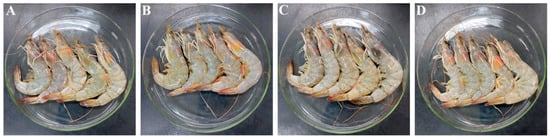
Research – Efficacy of 405 nm Light-Emitting Diode Illumination and Citral Used Alone and in Combination for Inactivation of Vibrio parahaemolyticus on Shrimp

MDPI

Vibrio parahaemolyticus is a widely distributed pathogen, which is frequently the lead cause of infections related to seafood consumption. The objective of the present study was to investigate the antimicrobial effect of the combination of 405 nm light-emitting diode (LED) and citral on V. parahaemolyticus. The antimicrobial effect of LED illumination and citral was evaluated on V. parahaemolyticus not only in phosphate-buffered saline (PBS) but also on shrimp. Quality changes of shrimp were determined by sensory evaluation. Changes in bacteria cell membrane morphology, cell membrane permeability, cell lipid oxidation level, and DNA degradation were examined to provide insights into the antimicrobial mechanism. The combination of LED treatments and citral had better antimicrobial effects than either treatment alone. LED combined with 0.1 mg/mL of citral effectively reduced V. parahaemolyticus from 6.5 log CFU/mL to below the detection limit in PBS. Combined treatment caused a 3.5 log reduction of the pathogen on shrimp within 20 min and a 6 log reduction within 2 h without significant changes in the sensory score. Furthermore, combined LED and citral treatment affected V. parahaemolyticus cellular morphology and outer membrane integrity. The profile of the comet assay and DNA fragmentation analysis revealed that combination treatment did not cause a breakdown of bacterial genomic DNA. In conclusion, LED may act synergistically with citral. They have the potential to be developed as novel microbial intervention strategies. View Full-Text