Category Archives: aflatoxin m1

RASFF Alerts – Aflatoxin – Dried Figs – Brazil Nuts – Peanut Butter – Dried Figs – Groundnuts – Nutmeg – Hazelnut Kernels – Tonka Beans – Peanuts

RASFF

Aflatoxins beyond the limits in Brazil nuts in shell from Brazil in Italy

RASFF

Aflatoxins beyond the legal limits in dried figs from Turkey in Slovenia

RASFF

Aflatoxin B1 in peanut butter from India in Belgium

RASFF

Aflatoxin in Dried Figs from Turkey in the Netherlands

RASFF

Aflatoxins in groundnuts from India in Italy

RASFF

Aflatoxins in nutmeg from Indonesia in the Netherlands

RASFF

Aflatoxins in natural hazelnut kernels 11/13 mm from Georgia in Bulgaria, France and Germany

RASFF

Aflatoxin and Ochratoxin in Nutmeg from the UK in the Netherlands.

RASFF

Aflatoxins in ground organic tonka beans from Brazil in Austria, France, Germany, Greece and Switzerland

RASFF

Aflatoxins in peanuts from Egypt in Germany and Slovakia

Research – Mycotoxins Affecting Animals, Foods, Humans, and Plants: Types, Occurrence, Toxicities, Action Mechanisms, Prevention, and Detoxification Strategies—A Revisit

MDPI

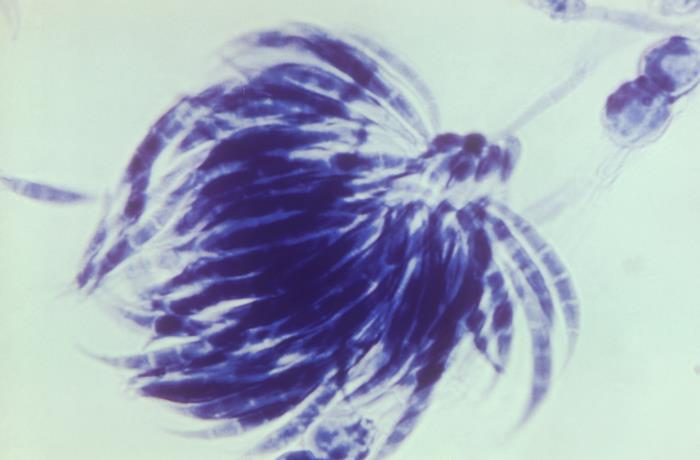
CDC Fusarium1

Mycotoxins are produced by fungi and are known to be toxic to humans and animals. Common mycotoxins include aflatoxins, ochratoxins, zearalenone, patulin, sterigmatocystin, citrinin, ergot alkaloids, deoxynivalenol, fumonisins, trichothecenes, Alternaria toxins, tremorgenic mycotoxins, fusarins, 3-nitropropionic acid, cyclochlorotine, sporidesmin, etc. These mycotoxins can pose several health risks to both animals and humans, including death. As several mycotoxins simultaneously occur in nature, especially in foods and feeds, the detoxification and/or total removal of mycotoxins remains challenging. Moreover, given that the volume of scientific literature regarding mycotoxins is steadily on the rise, there is need for continuous synthesis of the body of knowledge. To supplement existing information, knowledge of mycotoxins affecting animals, foods, humans, and plants, with more focus on types, toxicity, and prevention measures, including strategies employed in detoxification and removal, were revisited in this work. Our synthesis revealed that mycotoxin decontamination, control, and detoxification strategies cut across pre-and post-harvest preventive measures. In particular, pre-harvest measures can include good agricultural practices, fertilization/irrigation, crop rotation, using resistant varieties of crops, avoiding insect damage, early harvesting, maintaining adequate humidity, and removing debris from the preceding harvests. On the other hand, post-harvest measures can include processing, chemical, biological, and physical measures. Additionally, chemical-based methods and other emerging strategies for mycotoxin detoxification can involve the usage of chitosan, ozone, nanoparticles, and plant extracts. View Full-Text

Research – Assessment of aflatoxin B1 in animal feed and aflatoxin M1 in raw milk samples of different species of milking animals from Punjab, Pakistan

Wiley Online

The research was designed to investigate the amount of aflatoxin B1 (AFB1) in animal feed (corn, wheat bran, peanut cake, soybean meal, and cotton seed meal) and aflatoxin M1 (AFM1) in raw milk of animals (cow milk, buffalo milk, goat milk and sheep milk), from Punjab, Pakistan collected March 2017 till February 2018. The samples were examined with liquid chromatography, with a fluorescence detector. The findings demonstrated that 126 (65.3%) out of 193 samples of animal feed were found positive with AFB1, and 88 (45.6%) samples have levels higher than 5 μg/kg; positive samples are those whose levels of AFM1 ≥ LOD. The highest average amount of AFB1 was found in mustard oil cake meal (25.0 ± 4.5 μg/kg). Out of 278 samples of milk, 134 (48.2%) were found positive with AFM1, and 48 (17.3%) samples have levels of AFM1 higher than the European Union legal limit (i.e., 50 ng/L). The highest mean level of 70.5 ± 10.5 ng/L was found in raw milk of buffalo. The levels of AFM1 in milk from the urban region versus suburb region showed a significant difference (at α 0.05) except sheep milk samples, which presented a significant difference at α 0.01. Samples, 65 (64.4%) out of 140 from the urban region, and 69 (50%) from the suburb region were found positive with AFM1 in milk samples. The amount of AFB1 in animal feed and AFM1 in milk samples are comparatively high and could pose health hazards for local consumers.

Research -Iran’s ministry talks contaminated milk, polluted corn rumors

Trend News Agency

All the food products in Iran are under control of the country’s Ministry of Health and there’s no production outside of the set standards, said the Head of Agricultural Jihad Ministry of Iran Abbas Keshavarz, Trend reports via ISNA.

Keshavarz was commenting on rumors that milk in Iran is contaminated with aflatoxin.

Aflatoxicosis is the disease caused by the consumption of high levels of aflatoxins. At low levels of intake, usually there are no visual symptoms of aflatoxicosis, and as such the problem is often unnoticed. However, high concentrations of aflatoxins, or prolonged exposure at low levels, cause visual symptoms in cattle, and especially in young calves.

The diagnosis of aflatoxicosis is often difficult because of the variation in clinical signs, gross pathological conditions, and the presence of secondary infectious diseases due to the suppression of the immune system. In addition, under commercial conditions, more than one mycotoxin may be present in any contaminated feed, and this makes definitive diagnosis of aflatoxicosis quite difficult.

The carry over rate of aflatoxins from contaminated feed into milk in dairy cows is considered to average 1–2%. However, in high yielding cows, which consume significant amounts of concentrated feeds, the carry over rate of aflatoxin M1 into milk can reach 6.2%.

Keshavarz pointed out that the level of standards in the country are strict.

“Not one kilogram of polluted corn has entered the country, so there’s nothing to worry about,” he said, referring to more rumors about Iran importing polluted corn.

Also, Keshavarz pointed to the per capita consumption of agricultural inputs in the country and stated that on average

He also pointed to the per capita consumption of agricultural inputs in the country and stated that on average Iran has the pessticide consumption at around 30,000 tons and more than 80 percent of pesticides are produced domestically.

“Fertilizer consumption is also about 3 million tons, more than 2.6 million of which produced domestically,” he said.

India – Aflatoxin M1 – FSSAI may bring animal feed under its purview in view of Aflatoxin M1

FNBNEWS

FSSAI is actively considering to bring the subject of ‘animal feed’ under its purview, after the findings of the ‘National Milk Quality Survey,’ which found presence of Aflatoxin M1, a cancer causing toxin in many milk samples.

The FSSAI has made a recommendation to Ministry of Health in this regard to consider amendment into the FSS Act to bring the subject of ‘Animal Feed’ under FSSAI’s ambit.

The Ministry of Health is learnt to have accepted the proposal, which will bring the amendment for the approval of Parliament soon.

Nearly 6 per cent samples of milk out of 6,432 were tested positive for presence of Aflatoxin M1. The toxin is produced by a fungi which is found in certain animal feed including maize, peanuts and cotton seeds.

The residue of Aflatoxin M1 remains present in milk which is a cause of worry and therefore the apex food regulator wants a control over the animal feed to reduce the chances of aflatoxin passing into milk.