Author Archives: KSW

Information – E. coli O157:H7 can be a deadly Bug

Food Poison Journal

Escherichia coli O157:H7 (commonly referred to as E. coli O157) is a particularly dangerous strain of *E. coli* bacteria that can cause severe and life-threatening symptoms in humans. Here is why E. coli O157 can be deadly: Read more at the link above.

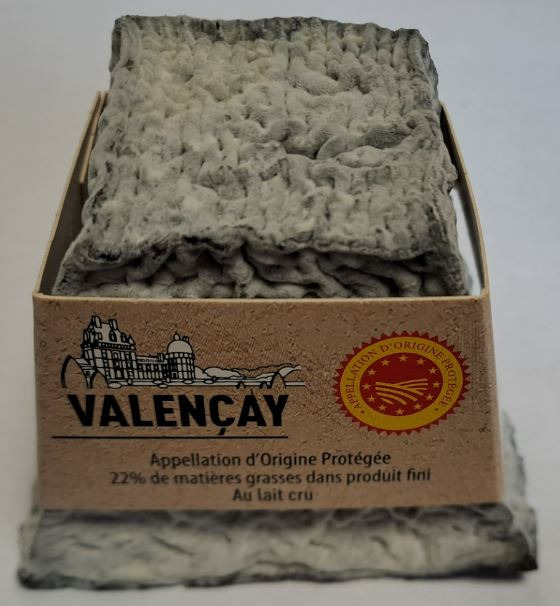
France – Valençay Pyramid AOP – STEC E.coli O145

Gov France

Product Category
Food
Product subcategory
Milk and dairy products
Product brand name
Producers and Traders
Model names or references
Valençay pyramid AOP
Product identification
GTIN Batch Date
3250390398028 V229 Expiry date 10/16/2024
Packaging
cut
Start/End of marketing date
From 08/30/2024 to 10/08/2024
Storage temperature
Product to be kept in the refrigerator
Health mark
FR 36.004.001 CE
Additional information
Product sold by the cut in the traditional department between 08/30/24 and 10/09/24 with a barcode starting with 2 663 701
Geographic area of ​​sale
Whole France
Distributors
Intermarche

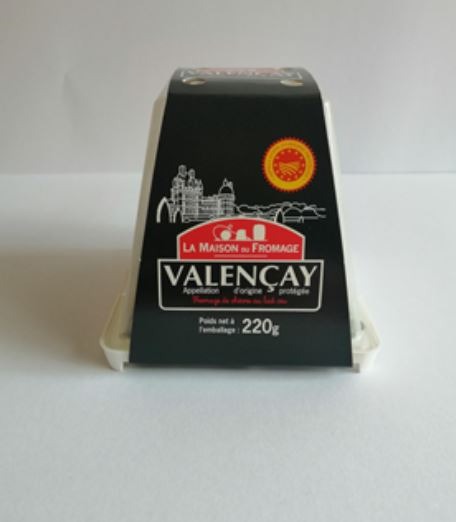
France – Valençay AOP 220g CHEESE HOUSE – STEC E.coli O145

Gov France

Product Category
Food
Product subcategory
Milk and dairy products
Product brand name
HOUSE OF CHEESE
Model names or references
Valençay AOP 220g CHEESE HOUSE
Product identification
GTIN Batch Date
3439495901832 V229 Minimum durability date 10/16/2024
Packaging
220g
Start/End of marketing date
From 02/09/2024 to 08/10/2024
Storage temperature
Product to be kept in the refrigerator
Health mark
FR 36 004 001 CE
Geographic area of ​​sale
Whole France
Distributors
METRO FRANCE

France – MUSSELS FROM SPAIN – Salmonella

Gov France

Product Category
Food
Product subcategory
Fishery and aquaculture products
Product brand name
AUCHAN FISHMONGER STAND
Model names or references
MUSSELS FROM SPANISH
Product identification
Batch
All lots sold between 09/26/2024 and 10/10/2024.
List of products
poster_reminder_mussels_Spain_super_Eaubonne.pdfAttachment
Packaging
Sold in the traditional department from 09/26/2024 to 10/10/2024.
Start/End of marketing date
From 09/26/2024 to 10/10/2024
Storage temperature
Product to be kept in the refrigerator
Geographic area of ​​sale
Auchan EAUBONNE
Distributors
Auchan EAUBONNE

Singapore – Suspension of Stamford Catering Services Pte Ltd food business operations

SFA

The Ministry of Health (MOH) and Singapore Food Agency (SFA) are investigating three incidents of gastroenteritis affecting 51 individuals after consuming food on 12 October 2024 supplied by Stamford Catering Services Pte Ltd. Those affected either sought outpatient treatment or self-medicated. None were hospitalised.

Netherlands -Jumbo is immediately recalling Jumbo’s Linguine with Prawns with expiration date 22-10-2024. The prawns may not be heated enough. This could pose a risk to food safety

Jumbo

Jumbos Linguine with prawns

Jumbo asks you not to consume Jumbo’s Linguine with Prawns with an expiration date of 22-10-2024 and to return it to one of its stores.

This concerns the following product: 

Product: Jumbo’s Linguine with Prawns
EAN code: 8718452857906
Best before: 22-10-2024

Customers who bought the product in one of our stores or via Jumbo.com can return the product to a Jumbo store. They will then receive the purchase price back. A receipt is not required. For more information, customers can contact customer service via 0800 – 0220 161 orJumbo.com

We apologize for the inconvenience. 

New Zealand – Eight fast facts about toxic shellfish poisoning

MPI

With warmer weather on the way, Kiwis all over the motu will be heading to the beach to enjoy the sea’s bounty. But before you go gathering shellfish, New Zealand Food Safety deputy director-general Vincent Arbuckle has some fast facts to share about toxic shellfish poisoning and how to keep yourself, your whanau and friends safe.

1. New Zealand hasn’t had a toxic shellfish poisoning outbreak for a decade

Toxic shellfish poisoning can cause serious illness and can even be fatal. Fortunately, we haven’t had an outbreak of toxic shellfish poisoning since 2014, when 13 people fell ill.

New Zealand Food Safety works hard to keep it that way by monitoring key recreational shellfish harvesting areas around the country for biotoxins.

2. New Zealand Food Safety regularly tests water and shellfish for biotoxins to keep the public safe

New Zealand Food Safety has more than 40 monitoring sites, with water tested weekly for toxic algae and shellfish tested fortnightly for biotoxins. The commercial shellfish industry also provides their own biotoxin monitoring data from more than 30 sites, giving us even greater coverage.

If shellfish are found to contain biotoxins at unsafe levels, we issue public health warnings and post signs at affected beaches. In 2023 we issued 17 biotoxin alerts.

3. Cooking does not destroy biotoxins

It’s important to know that cooking will not make toxic shellfish safe to eat, because cooking doesn’t destroy biotoxins.

If anyone becomes ill after eating shellfish from an area where a public health warning has been issued, phone healthline for advice on 0800 61 11 16, or seek medical attention immediately. We advise that you also contact your nearest public health unit and keep any leftover shellfish for testing.

4. Shellfish become poisonous by feeding on toxic algae

Shellfish with 2 shells (bivalve shellfish) can each filter more than 200 litres of water a day. They do this to filter out microscopic algae (called phytoplankton) and other particles as a food source. If these algae are toxic, the biotoxins can build up in the shellfish, making them poisonous. Generally, the more toxic algae there are in the water, the more toxic the shellfish get.

5. Bivalve shellfish are the most affected by biotoxins

Shellfish affected by biotoxins usually include bivalves like mussels, oysters, tuatua, pipi, toheroa, cockles and scallops. But pūpū (cat’s eyes) and Cook’s turban and can also have elevated levels of some biotoxins.

Generally, you can still eat pāua, crab and crayfish, but only if you remove the gut before cooking, as biotoxins accumulate in the gut. Finfish are not affected by biotoxins from algal blooms, but we advise discarding the liver before cooking. 

6. Not all species of phytoplankton are toxic

Phytoplankton are photosynthetic microscopic algae, meaning that, just like plants, they use the sunshine to grow. And, like plants, they also need nutrients (which they get from the water) to grow.

If conditions are right, phytoplankton can multiply to high numbers and form algal blooms. Most species of phytoplankton are harmless, but some can naturally produce highly toxic chemicals we call marine biotoxins.

7. Algal blooms occur naturally under particular conditions

Algal blooms usually occur naturally when wind and water currents are favourable for their growth. Causes can include slow water circulation or unusually high water temperatures. Some blooms have happened after extreme weather events like cyclones, floods, or drought.

New Zealand Food Safety does extra monitoring during a toxic algal bloom to track its spread and see how it is affecting different kinds of shellfish.

8. There are 4 main types of toxic shellfish poisoning in New Zealand

Paralytic shellfish poisoning (PSP) is potentially the most serious of the 4 main types of toxic shellfish poisoning found in NZ.

PSP symptoms usually appear within 10 minutes to 3 hours of eating and may include:

  • numbness and tingling around the mouth, face, hands, and feet
  • difficulty swallowing or breathing
  • dizziness and headache
  • nausea and vomiting
  • diarrhoea
  • paralysis and respiratory failure
  • and, in severe cases, death.

If you suspect someone has PSP poisoning after eating shellfish from an area where we have issued a public health warning, seek medical attention immediately.

Information – Listeria, a deadly foodborne pathogen

Food Poison Journal

kswfoodworld

The deadliest foodborne pathogen in terms of fatality rates is often considered to be *Listeria monocytogenes*. While infections from Listeria are less common compared to other pathogens like Salmonella or E. coli, the consequences can be much more severe, especially for certain high-risk populations. Read more at  the link above.

Belgium – Different cheeses from Fromagerie Sainte Godeleine in France – Listeria monocytogenes

AFSCA

Sainte Godeleine Cheese Factory

10/14/2024 (Update of the recall of 10/10/2024)

Following a notification via the RASFF system (European Rapid Alert System for Food and Feed), the AFSCA is withdrawing from sale various cheeses from “Fromagerie Sainte Godeleine en France” and recalling them from consumers due to the possible presence of Listeria Monocytogenes.

The AFSCA asks that you do not consume these products and return them to the point of sale where they were purchased.

Product Description:

Picture
FRUITE DU CAP GRIS NOSE 230G
  • Product name: FRUITE DU CAP GRIS NEZ 230G
  • Expiry dates (DDM): between 07/10/2024 and 02/11/2024
  • Manufacturer identification number: FR-62-889-001-CE

Picture
WISSANT SAND 400G
  • Product name: SABLE DE WISSANT 400G
  • Expiry date (BDD): between 07/10/2024 and 02/11/2024
  • Manufacturer identification number: FR-62-889-001-CE

Picture
THE HOT BOX 230G
  • Product Name: HOT BOX 230G
  • Expiration date (DDM): 10/22/2024
  • Manufacturer identification number: FR-62-889-001-CE

Picture
AUDRESSELLES FLOWER 400G
  • Product name: FLEUR D’AUDRESSELLES 400G
  • Expiry dates (DDM): between 07/10/2024 and 02/11/2024
  • Manufacturer identification number: FR-62-889-001-CE

Picture
FORT D'AMBLETEUSE 400G
  • Product name: FORT D’AMBLETEUSE 400G
  • Expiry date (BDD): between 07/10/2024 and 02/11/2024
  • Manufacturer identification number: FR-62-889-001-CE

Picture
The Blerliot 230g
  • Product name: Le Blerliot 230g
  • Expiry dates (BDD): 12/10/2024 & 02/11/2024

Picture
Petit Touquet 200g
  • Product name: Petit Touquet 200g
  • Expiration date (DDM): 10/17/2024

Picture
SMALL CALAIS PAVE 200 GR
  • Product name: SMALL PAVE DE CALAIS 200 GR
  • Expiry date (BDD): between 07/10/2024 and 02/11/2024
  • Manufacturer identification number: FR-62-889-001-CE

The products were sold through various outlets.

For any further information , you can contact the AFSCA contact point for consumers: 0800/13.550 or  pointdecontact@afsca.be.

Information – Norovirus is the most common foodborne pathogen

Food Poison Journal

Norovirus is one of the most common causes of foodborne illness worldwide, and several factors contribute to its prevalence:

Only a small number of virus particles (as few as 18) are needed to cause infection, making it extremely easy to contract.

Norovirus spreads quickly through contaminated food, water, surfaces, and direct person-to-person contact. It can remain viable on surfaces for extended periods, allowing it to infect others.

Consuming foods or beverages contaminated with Norovirus is a common way of transmission, especially if food handlers are infected and practice poor hygiene.

Close contact, especially in crowded environments such as schools, cruise ships, hospitals, and nursing homes, facilitates transmission.

Read More at the link above.