Monthly Archives: January 2020

Australia – Australian Salmonella outbreak grows; bush fires threaten food safety

Food Safety News

kswfoodworld Salmonella

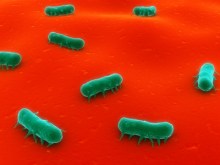
Image CDC

Nearly 90 people are part of a Salmonella outbreak across Australia after eating a particular brand of frozen microwave meals.

A total of 84 people in New South Wales (NSW), Queensland, South Australia, Western Australia and the Australian Capital Territory (ACT) reported eating Core Powerfoods products before becoming sick.

The number of people ill in the Salmonella Weltevreden outbreak previously stood at 46.

Core Ingredients issued a recall in October. Products were available for sale at IGAs and Coles stores nationally, independent retailers in NSW, ACT, Queensland, Victoria, South Australia, Western Australia and the Northern Territory and some Woolworths metro stores in Victoria.

USA – Lipari Foods Issues Recall of Various Wedge Deli Sandwiches Due to Potential Contamination of Listeria Monocytogenes

FDA

Lipari Foods has issued a voluntary recall of various Premo and Fresh Grab wedge sandwiches due to potential contamination of Listeria monocytogenes.

The product was distributed exclusively by Lipari Foods in Warren, Michigan to food service and retail stores throughout Florida, Illinois, Indiana, Kentucky, Maryland, Michigan, Ohio, Pennsylvania, Tennessee, West Virginia, and Wisconsin.

The affected product can be identified by:

Brand Product Lipari # Size Best By Date Lot # UPC
Premo Wedge Ham & Cheese On Wheat 915509 5 oz. 1/23/2020 31201912 612510002001
Premo Wedge Egg Salad On Wheat 915523 5 oz. 1/23/2020 31201912 612510002025
Premo Wedge Chicken Salad On Wheat 915530 5 oz. 1/20/2020 31201912 612510002032
Premo Wedge Tuna Salad On Wheat 915579 5 oz. 1/23/2020 31201912 612510002049
Fresh Grab Wedge Ham/American On Wheat 252646 5 oz. 1/23/2020 31201912 612510002001
Fresh Grab Wedge Egg Salad On Wheat 252901 5 oz. 1/20/2020, 1/23/2020 31201912 612510002025
Fresh Grab Wedge Chicken Salad On Wheat 253377 5 oz. 1/23/2020 31201912 612510002032
Fresh Grab Wedge Tuna Salad On Wheat 282022 5 oz. 1/23/2020 31201912 612510002049
Fresh Grab Wedge Turkey No Cheese On Wheat 253445 5 oz. 1/23/2020 31201912 612510002100
Fresh Grab Wedge Ham/American On White 253479 5 oz. 1/23/2020 31201912 612510093962

This was brought to our attention by JLM Manufacturing after environmental sampling returned a positive test result for Listeria monocytogenes. No illnesses have been reported to date in relation to these products or recall.

Lipari Foods began shipping this product on December 31, 2019.

Consumers who have purchased these recalled products should not consume them. Consumers should discard the products or return them to the point of purchase. Consumers with questions should call Customer Service at 800- 729-3354, 8:15 am – 4:30 pm, EST, Monday through Friday.

Label, Premo Fresh Ham & Cheese Wedge

Research -Enumeration and Survival of Salmonella enterica in Live Oyster Shellstock Harvested from Canadian Waters

Journal of Food Protection

ABSTRACT

Since 2015, 11 recalls of live oyster shellstock have been issued in Canada due to the presence of Salmonella enterica. Six of those recalls took place in 2018. To understand this increase, fundamental information is needed on the relationship between S. enterica and oysters. The aims of this study were to address important data gaps concerning the levels of Salmonella in naturally contaminated oysters and the ability of this pathogen to survive in live oyster shellstock. Enumeration data were evaluated for five oyster and clam samples collected from the east coast of Canada from 2015 to 2018. The reported levels were <0.0015 to 0.064 most probable number per g of oyster tissue. The S. enterica isolates recovered from these animals belonged to serovars Typhimurium, Infantis, Enteritidis, and I 4,5:i:−. Filter feeding by the oysters was exploited to assess the Salmonella accumulation that would occur following a natural contamination event. Detectable levels of the pathogen were observed after 30 min of exposure and began to plateau at 60 min. A survival study in live oyster shellstock indicated that after 4 days of storage at ambient temperatures, the Salmonella level declined slightly from 4.3 to 3.7 log CFU/g. These data indicate that the levels of Salmonella found in naturally contaminated oysters are low and are not expected to increase between the point of harvest and the point of consumption. The changing ecology of shellfish environments requires continued monitoring and testing to safeguard public health. The data presented here will be useful for the evaluation and design of sampling plans and risk management approaches for the control of Salmonella in live oyster shellstock.

HIGHLIGHTS
  • Salmonella levels in naturally contaminated clams and oysters were <0.1 to 6.4 MPN/100 g.

  • Salmonella was detected in oysters after 30 min of exposure.

  • Salmonella did not grow in live oyster shellstock.

  • Salmonella was able to survive for at least 7 days in live oyster shellstock.

USA – Colorado county reports first foodborne botulism death in more than decade

Food Safety News

Foodborne botulism is rare but potentially deadly.

The death of an El Paso County, CO, woman who died this past Sept.20 has since been officially blamed on foodborne botulism, the first death of its kind in a decade.

Cardiovascular disease and diabetes contributed to death, according to the autopsy report. Were it not for botulism, however, the 80-year-old woman could still be alive.

The source of the botulism was previously frozen potatoes stored at room temperature for two weeks. After eating the pre-prepared potatoes, the woman developed trouble breathing; her eyes bulged, her speech slowed, and her muscles became weakened.

The woman’s botulism death was the first in El Paso County since 2008.

Indonesia – Food poisoning scare as eight fall ill after dining at Vietnamese restaurant in West Jakarta

The Jakarta Post

Vietnamese restaurant chain Saigon Delight has found itself at the center of a food poisoning scare after eight customers claimed to have fallen ill after eating at the restaurant’s outlet at Lippo Mall Puri in West Jakarta.

The case came light on Saturday after Instagram user @zenifuera, who identified herself as Jennifer, posted Instagram stories telling of how she, her husband and their 2.5 year-old daughter had suffered nausea, vomiting, shivers, headaches and stomachaches after dining at the restaurant on Dec. 28, 2019. Jennifer’s husband and daughter suffered severe food poisoning and were treated at a hospital for at least a week.

Austria – Austrian Listeria infections linked to German meat producer

Food Safety News

Austrian officials have linked six Listeria infections to a German meat producer.

Products from Wilke Waldecker Fleisch- und Wurstwaren are suspected to be behind a Listeria outbreak in Germany involving 37 people and three deaths. One infection was recorded in 2014, three in 2016, four in 2017, 21 in 2018 and at least eight in 2019.

Between May 24 and Aug. 8, 2019, six people in Austria contracted an identical Listeria strain identified as Listeria monocytogenes IIa.

Following illnesses in the federal states of Carinthia, Styria, and Vienna the Federal Ministry of Labor, Social Affairs, Health and Consumer Protection (BMASGK) asked the Austrian Agency for Health and Food Safety (AGES) to investigate the outbreak.

Authorities in the Waldeck-Frankenberg district of Germany stopped production at a Wilke facility in Twistetal, Berndorf in October.

Research – Edible films containing carvacrol and cinnamaldehyde inactivate Escherichia coli O157:H7 on organic leafy greens in sealed plastic bags

Wiley Online Eurofins Food Testing UK

The antimicrobial effects of apple‐, carrot‐, and hibiscus‐based edible films containing carvacrol and cinnamaldehyde against Escherichia coli O157:H7 on organic leafy greens in sealed plastic bags were investigated. Fresh‐cut Romaine and Iceberg lettuce, and mature and baby spinach leaves were inoculated with E. coli O157:H7 and placed into Ziploc® bags. Edible films were then added to the bags, which were stored at 4°C. The evaluation of samples taken at days 0, 3, and 7 showed that on all leafy greens, 3% carvacrol‐containing films had the greatest effect against E. coli O157:H7, reducing the bacterial population by about 5 log CFU/g on day 0. All three types of 3% carvacrol‐containing films reduced E. coli O157:H7 by about 5 log CFU/g at day 0. The 1.5% carvacrol‐containing films reduced E. coli O157:H7 by 1–4 logs CFU/g at day 7. Films with 3% cinnamaldehyde showed reduction of 0.6–3 logs CFU/g on different leafy greens.

Research – Control of Listeria monocytogenes in boned dry‐cured ham by E‐beam treatment

Wiley Online listeria

Boning of dry‐cured hams involves additional handling which increases the risk of contamination with Listeria monocytogenes. This work studies the ability of E‐beam to eliminate this pathogen from boned dry‐cured ham (BDH). The destruction kinetics of four L. monocytogenes strains (S2, S4‐2, S12‐1, and S7‐2) and L. innocua NCTC 11288 as a surrogate were determined at doses up to 3 kGy. L. innocua and L. monocytogenes S4‐2 were the most radioresistant (D‐value = 0.55 kGy). E‐beam penetration was studied in blocks extracted from BDH and irradiated with 2–6 kGy. The bilateral treatment of 2 kGy allows the required dose (1.32 kGy) to be absorbed in the innermost part of the block to achieve the food safety objective of “zero tolerance” for this microorganism. This listericidal treatment was also confirmed in whole BDH intentionally contaminated with L. innocua. The sensory analysis of irradiated BDH showed off‐odors that were imperceptible after 15 days of storage at 4°C.

Denmark – Several ill in Danish Salmonella outbreak ate undercooked sausage

Food Safety News

kswfoodworld salmonella

Image CDC


Several people part of a Salmonella outbreak in Denmark tasted or ate raw or undercooked sausage, according to a recently published study.

In November 2018, an outbreak of monophasic Salmonella Typhimurium was detected. It sickened at least 49 people across the country.

A traditional form of raw Danish pork sausage called medister sausage was believed to be the source of illnesses. Product samples were negative for Salmonella and investigations at the production site did not reveal the source of contamination. Medister sausage is often served in the late autumn months and Christmas season. It is a long, thick sausage made from ground pork, seasoned and stuffed into casings.

Due to a control program, Salmonella Enteritidis is all but eliminated in Danish broiler poultry and egg production but Salmonella Typhimurium still exists in pigs and pork.

New Zealand -Campylobacter and E. coli infections climb in New Zealand; raw milk cited

Food Safety News

Campylobacter, Yersinia, E. coli and Listeria infections all went up while Salmonella declined, according to the 2018 report on foodborne disease in New Zealand.

Campylobacter remained the top foodborne pathogen. The country has a performance target to reduce cases of foodborne campylobacteriosis by 10 percent from 88.4 to 79.6 per 100,000 per head of population by the end of 2020. The estimated incidence in 2018 was 78.3 per 100,000.

New Zealand Food Safety (NZFS) is part of the Ministry for Primary Industries (MPI) and leads the country’s food safety system. EpiSurv is the country’s notifiable disease surveillance system

Full Report Link