Tag Archives: science

Research – Cranberry Antimicrobial – Multiple PCR for Pathogens

Science Direct

The antimicrobial properties of the American cranberry were studied against Escherichia coli O157:H7, Listeria monocytogenes, and Lactobacillus rhamnosus to determine the effects on growth inhibition, membrane permeability, and injury. Cranberry powder was separated using a C-18 Sep-Pak cartridge into sugars plus organic acids (F1), monomeric phenolics (F2), and anthocyanins plus proanthocyanidins (F3). Fraction 3 was further separated into anthocyanins (F4) and proanthocyanidins (F5) using an LH-20 Sephadex column. Each fraction was diluted in the brain heart infusion (BHI) broth to determine the minimum inhibitory/bactericidal concentrations (MIC/MBC). L. monocytogenes was the most susceptible to cranberry fraction treatment with the lowest MIC/MBC for each treatment, followed by E. coli O157:H7 and L. rhamnosus. Membrane permeability and potential was studied using LIVE/DEAD viability assay and using Bis (1, 3-dibutylbarbituric acid) trimethine oxonol (DiBAC4), respectively. L. rhamnosus demonstrated the highest permeability followed by E. coli O157:H7, and L. monocytogenes. L. rhamnosus demonstrated the highest recovery followed by E. coli O157:H7, and L. monocytogenes. Each cranberry fraction demonstrated membrane hyperpolarization at their native pH, while F2, F3, and F5 demonstrated membrane depolarization at neutral pH. With this knowledge cranberry compounds may be used to prevent maladies and potentially substitute for synthetic preservatives and antibiotics.

Science Direct

We developed a rapid and reliable technique for simultaneous detection of Salmonella Typhimurium, Escherichia coli O157:H7 and Listeria monocytogenes that can be used in food products. Magnetic nano-beads (MNBs) based immunomagnetic separation (IMS) was used to separate the target bacterial cells while multiplex PCR (mPCR) was used to amplify the target genes. To detect only the viable bacteria, propidium monoazide (PMA) was applied to selectively suppress the DNA detection from dead cells. The results showed the detection limit of IMS-PMA-mPCR assay was about 102 CFU/ml (1.2 × 10² CFU/ml for S. Typhimurium, 4.0 × 10² CFU/ml for E. coli O157:H7 and 5.4 × 10² CFU/ml for L. monocytogenes) in pure culture and 103 CFU/g (5.1 × 10³ CFU/g for S. Typhimurium, 7.5 × 10³ CFU/g for E. coli O157:H7 and 8.4 × 10³ CFU/g for L. monocytogenes) in spiking food products samples (lettuce, tomato and ground beef). This report has demonstrated for the first time, the effective use of rapid and reliable IMS combined with PMA treatment and mPCR assay for simultaneous detection of viable S. Typhimurium, E. coli O157:H7 and L. monocytogenes in spiked food samples. It is anticipated that the present approach will be applicable to simultaneous detection of the three target microorganisms for practical use.

 

USA Research – Microbiology of RTE Foods In University Canteens – Control of Pathogens on Fresh Cut Fruit

Science Direct –

During a 10-year inspection survey (2001–2010), a microbiological study of ready-to-eat (RTE) foods and ready-to-bake frozen pastries from 15 canteens of the university campus was undertaken to determine their microbiological quality. The cumulative study revealed that the aerobic colony counts for the RTE product groups were as follows: from 106 to 108 CFU/g for 50% of sandwiches; under the detection limit (<10 CFU/g) for 88.6% of oven baked pastries; <105 CFU/g for 86.5% of desserts oven baked; from 103 to 109 CFU/g for desserts with dairy cream. The highest mean Enterobacteriaceae counts were recorded for desserts with dairy cream. The highest percentages of foodborne pathogens were: 20% Listeria monocytogenes and 12.5% Staphylococcus aureus in desserts with dairy cream; 17.5% Salmonella spp. and 8.5% presumptive Escherichia coli O157 in sandwiches; 14.6% Bacillus cereus in oven baked pastries. Aerobic colony counts were in the range 107–108 CFU/g for 48.8% of frozen pastries; whereas Enterobacteriaceae counts between 103 and 104 CFU/g were detected in 35.3%. Foodborne pathogens prevalences for frozen pastries were as follows: B. cereus, 31.8%; Salmonella spp., 28.6%; presumptive E. coli O157, 25%; S. aureus, 8.7%; L. monocytogenes, 8.7%. Improved sanitary conditions in the processing plants and precautionary measures are necessary for consumer protection.

Science Direct

The consumption of fresh-cut fruit has substantially risen over the last few years, leading to an increase in the number of outbreaks associated with fruit. Moreover, consumers are currently demanding wholesome, fresh-like, safe foods without added chemicals. As a response, the aim of this study was to determine if the naturally occurring microorganisms on fruit are “competitive with” or “antagonistic to” potentially encountered pathogens. Of the 97 and 107 isolates tested by co-inoculation with Escherichia coli O157:H7, Salmonella and Listeria innocua on fresh-cut apple and peach, respectively, and stored at 20 °C, seven showed a strong antagonistic capacity (more than 1-log unit reduction). One of the isolates, CPA-7, achieved the best reduction values (from 2.8 to 5.9-log units) and was the only isolate able to inhibit E. coli O157:H7 at refrigeration temperatures on both fruits. Therefore, CPA-7 was selected for further assays. Dose-response assays showed that CPA-7 should be present in at least the same amount as the pathogen to adequately reduce the numbers of the pathogen. From the results obtained in in vitro assays, competition seemed to be CPA-7’s mode of action against E. coli O157:H7. The CPA-7 strain was identified as Pseudomonas graminis. Thus, the results support the potential use of CPA-7 as a bioprotective agent against foodborne pathogens in minimally processed fruit.

India – 200 Ill at Temple Festival

The Hindu

About 2,000 people take meal during temple festivities in Pamarru mandal

Around two hundred people from five villages in Pamarru mandal were taken ill after they consumed contaminated food during a religious ceremony on Sunday afternoon. Most of the victims were children and had symptoms of diarrhoea vomiting sensation.

While there were no casualties, three major medical camps were organised on Monday around Pamarru to screen people from all the villages.

On being informed about the rising number of cases by midnight, the Medical and Health Department staff set up three camps late on Sunday. District Epidemic Rapid Response Team also began identifying new cases among others who had consumed the food. An estimated 2,000 people had taken the meal during Lord Venkateswara ‘kalyanam’ festivities at Parishepalli village temple in Pamarru mandal. The apparent cause for food poisoning was mixing of contaminated water in the curd .

Research – Pathogen Tracking Data Base – Clostridium perfringens spores

Science Direct

Investigation of foodborne diseases requires the capture and analysis of time-sensitive information on microbial pathogens that is derived from multiple analytical methods and sources. The web-based Pathogen-annotated Tracking Resource Network (PATRN) system (www.patrn.net) was developed to address the data aggregation, analysis, and communication needs important to the global food safety community for the investigation of foodborne disease. PATRN incorporates a standard vocabulary for describing isolate metadata and provides a representational schema for a prototypic data exchange standard using a novel data loading wizard for aggregation of assay and attribution information. PATRN currently houses expert-curated, high-quality “foundational datasets” consisting of published experimental results from conventional assays and next generation analysis platforms for isolates of Escherichia coli, Listeria monocytogenes, and Salmonella, Shigella, Vibrio and Cronobacter species. A suite of computational tools for data mining, clustering, and graphical representation is available. Within PATRN, the public curated data repository is complemented by a secure private workspace for user-driven analyses, and for sharing data among collaborators. To demonstrate the data curation, loading wizard features, and analytical capabilities of PATRN, three use-case scenarios are presented. Use-case scenario one is a comparison of the distribution and prevalence of plasmid-encoded virulence factor genes among 249 Cronobacter strains with similar attributes to that of nine Cronobacter isolates from recent cases obtained between March and October, 2010–2011. To highlight PATRN’s data management and trend finding tools, analysis of datasets, stored in PATRN as part of an ongoing surveillance project to identify the predominant molecular serogroups among Cronobacter sakazakii isolates observed in the USA is shown. Use-case scenario two demonstrates the secure workspace available for private users to upload and analyze sensitive data, and for collating cross-platform datasets to identify and validate congruent datapoints. SNP datasets from WGS assemblies and pan-genome microarrays are analyzed in a combinatorial fashion to determine relatedness of 33 Salmonella enterica strains to six strains collected as part of an outbreak investigation. Use-case scenario three utilizes published surveillance results that describe the incidence and sources of O157:H7 E. coli isolates associated with a produce pre-harvest surveillance study that occurred during 2002–2006. In summary, PATRN is a web-based integrated platform containing tools for the management, analysis and visualization of data about foodborne pathogens.

Science Direct

The contamination of enterotoxigenic Clostridium perfringens spores on food contact surfaces posses a serious concern to food industry due to their high resistance to various preservation methods typically applied to control foodborne pathogens. In this study, we aimed to develop an strategy to inactivate C. perfringens spores on stainless steel (SS) surfaces by inducing spore germination and killing of germinated spores with commonly used disinfectants. The mixture of l-Asparagine and KCl (AK) induced maximum spore germination for all tested C. perfringens food poisoning (FP) and non-foodborne (NFB) isolates. Incubation temperature had a major impact on C. perfringens spore germination, with 40 °C induced higher germination than room temperature (RT) (20 ± 2 °C). In spore suspension, the implementation of AK-induced germination step prior to treatment with disinfectants significantly (p < 0.05) enhanced the inactivation of spores of FP strain SM101. However, under similar conditions, no significant spore inactivation was observed with NFB strain NB16. Interestingly, while the spores of FP isolates were able to germinate with AK upon their adhesion to SS chips, no significant germination was observed with spores of NFB isolates. Consequently, the incorporation of AK-induced germination step prior to decontamination of SS chips with disinfectants significantly (p < 0.05) inactivated the spores of FP isolates. Collectively, our current results showed that triggering spore germination considerably increased sporicidal activity of the commonly used disinfectants against C. perfringens FP spores attached to SS chips. These findings should help in developing an effective strategy to inactivate C. perfringens spores adhered to food contact surfaces.


RASFF Alerts – Salmonella – Histamine

RASFF –  Salmonella spp. (presence /25g) in salami from Spain in Finland

RASFF – Salmonella Agona (presence /25g) in sunflower meal from the Netherlands in Belgium

RASFF – Histamine (342; 260; 360; 322; 230; 477; 495; 370; 265 mg/kg – ppm) in chilled sardines (Sardinella aurita) from Tunisia in Italy

Canada – Food Alerts – Salmon – Listeria – Clam Stew – Boutulinum – Nut Butters – Salmonella

CFIA – The public warning issued on March 15, 2013 has been expanded to include additional products because the products may be contaminated with Clostridium botulinum

The Canadian Food Inspection Agency (CFIA) is warning the public not to consume the Bar Clams and Bar Clam Stew described below because they may be contaminated with Clostridium botulinum.  Toxins produced by these bacteria may cause botulism, a life-threatening illness.

CFIA – The Canadian Food Inspection Agency (CFIA) is warning the public not to consume and retailers, restaurants and institutions not to sell or use the nut butters, peanuts, sugar or tahini described below because the products may be contaminated with Salmonella or other harmful bacteria.

These products have been distributed in Ontario and Quebec and may have been distributed in other provinces as well.

Consumers who cannot determine the original product identity are  advised to check with their retailer to determine if they have one of  the affected products.

There have been no reported illnesses associated with the consumption of these products.

CFIA – The Canadian Food Inspection Agency (CFIA) and Central-Epicure Food Products Ltd. are warning the public not to consume Central-Epicure brand Smoked Atlantic Salmon because it may be contaminated with Listeria monocytogenes.

There have been no reported illnesses associated with the consumption of this product.

The manufacturer, Central-Epicure Food Products Ltd., Toronto, Ontario, is voluntarily recalling the affected product from the marketplace.  The CFIA is monitoring the effectiveness of the recall.


UK – Research – Guidance – Pseudomonas aeruginosa in Water Systems

Health Protection Scotland

Guidance on management of Pseudomonas aeruginosa in water systems

On 12 March, the UK Department of Health published an addendum to the Health Technical Memorandum 04-01 Water sources and potential Pseudomonas aeruginosa contamination of taps and water systems – Advice for augmented care units.

The document is concerned with controlling and minimising the risk of morbidity and mortality due to P. aeruginosa associated with water outlets and provides guidance on:

  • forming a Water Safety Group and developing water safety plans
  • assessing the risk to patients when water systems become contaminated with P. aeruginosa or other opportunistic pathogens
  • remedial actions to take when a water system becomes contaminated with P. aeruginosa
  • protocols for sampling, testing and monitoring water for P. aeruginosa.

The guidance is directed towards healthcare organisations providing patient care in augmented care settings, and is specifically aimed at estates and facilities departments, and infection prevention and control teams. [Source: DH News Release, 12 March 2013. http://www.dh.gov.uk/health/2013/03/pseudomonas-addendum]

In Scotland, the same issues have been addressed in Health Protection Scotland’s Guidance for neonatal units (NNUs) (levels 1, 2 & 3) adult and paediatric intensive care units (ICUs) in Scotland to minimise the risk of Pseudomonas aeruginosa infection from water. This is due for imminent publication with an accompanying CEL letter. SHTM 04-01 Parts A&B have also been amended to reflect this latest guidance and will be published on the Health Facilities Scotland website along with the new Part G (following a consultation period) at the end of March.

USA – FDA Tips to Feed Pets Without Contracting Salmonella

FDAFDA

The Food and Drug Administration is giving consumers, especially reptile owners, tips on how to prevent Salmonella infection from handling feeder rodents and reptiles. Feeder rodents are mice and rats—both frozen and live—used to feed some reptiles, such as certain snakes and lizards, as well as some amphibians. Feeder rodents, reptiles, and amphibians can be sources of Salmonella infection for people.

Salmonellosis is an infection with bacteria called Salmonella. People get salmonellosis by ingesting Salmonella germs. Persons infected with Salmonella develop diarrhea, fever, and abdominal cramps 12-72 hours after infection. The illness usually lasts 4-7 days, and most persons recover without treatment. However, the illness can be serious, even fatal, in some people. Children under 5 years of age, the elderly, and people with weakened immune systems are at higher risk for salmonellosis and may develop more severe illness.

Rodents and reptiles can naturally carry Salmonella in their intestines but show no signs of illness. The animals shed the bacteria in their feces and droppings. These, in turn, contaminate the environment with Salmonella, including the outside of the animals’ bodies and their habitats. Freezing does not kill Salmonella, so both frozen and live feeder rodents can be contaminated with these germs. Over 500 human cases of salmonellosis in three countries, including the U.S., were linked to frozen rodent exposure between 2008 and 2010.

People may become infected with Salmonella after handling feeder rodents, reptiles, or amphibians, surfaces that have been in contact with these animals, or the environment in which the animal lives.

Contaminated surfaces may include countertops, microwave ovens, refrigerators and freezers, kitchen utensils, and glasses and bowls used to store, thaw, and prepare frozen feeder rodents. Reptile and rodent habitats, including their cages or enclosures, bedding, basking rocks, food and water dishes, and other objects in their cages or enclosures may also be contaminated with Salmonella. Germs picked up from touching the animal or habitat can be spread to other people or surfaces. Therefore, people should wash their hands thoroughly with soap and water right after touching these animals, their food, or anything in the area where they live and roam. Running water and soap are best, but hand sanitizers may be used if running water and soap are not available.

UK – FSA – HPA – Cryptosporidum 2012 Outbreak

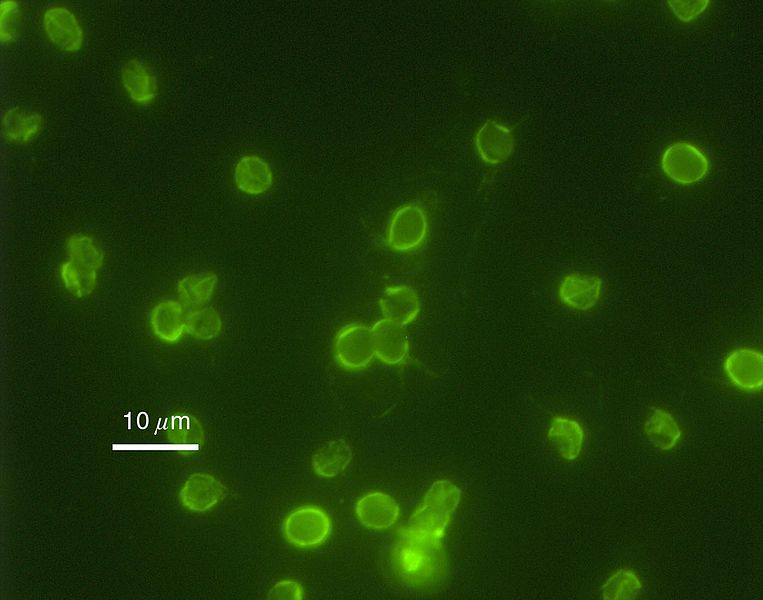
FSA763px-Cryptosporidium_parvum_01

The Health Protection Agency (HPA) today published findings of an investigation into an outbreak of Cryptosporidium infection that affected around 300 people in England and Scotland in May 2012.

The Food Standards Agency was part of the outbreak control team, led by the HPA, and gathered information on the production and distribution of salad vegetables to help identify the likely source of the outbreak.

The full HPA statement can be read via this HPA link

Research – Norovirus Shedding

Cambridge Journals OnlineNorovirus

Norovirus is a common cause of gastroenteritis in all ages. Typical infections cause viral shedding periods of days to weeks, but some individuals can shed for months or years. Most norovirus risk models do not include these long-shedding individuals, and may therefore underestimate risk. We reviewed the literature for norovirus-shedding duration data and stratified these data into two distributions: regular shedding (mean 14–16 days) and long shedding (mean 105–136 days). These distributions were used to inform a norovirus transmission model that predicts the impact of long shedders. Our transmission model predicts that this subpopulation increases the outbreak potential (measured by the reproductive number) by 50–80%, the probability of an outbreak by 33%, the severity of transmission (measured by the attack rate) by 20%, and transmission duration by 100%. Characterizing and understanding shedding duration heterogeneity can provide insights into community transmission that can be useful in mitigating norovirus risk.