Tag Archives: food

RASFF Alerts – Aflatoxins in Pistachio Nuts

RASFF – Aflatoxins (B1 = 24; Tot. = 27 µg/kg – ppb) in roasted pistachio nuts from Turkey in France

RASFF Alerts – E.coli – Enterobacteria – Aflatoxins – Mussels – Beef – Duck Meal – Maize

RASFF – High count of Escherichia coli (330 MPN/100g) in chilled mussels (Mytilus galloprovincialis from Spain in italy

RASFF – Shigatoxin-producing Escherichia coli in chilled boneless beef (Bos taurus) from Argentina in Germany

RASFF – Too high count of Enterobacteriaceae (<10; <10; <10; 5000;<10 CFU/g) in duck meal from France in Belgium

RASFF – Aflatoxins (B1 = 32.1 µg/kg – ppb) in maize from Ukraine in the Netherlands

RASFF Alerts – Salmonella – Frozen Turkey – Duck Legs

RASFF – Salmonella Hadar (presence /25g) in frozen turkey breast with white pepper from Brazil in Sweden

RASFF – Salmonella Newport (present /25g) and Salmonella Saint Paul (present /25g) in frozen turkey meat preparation from Poland in Estonia

RASFF – Salmonella spp. in frozen duck legs from France in Finland

RASFF Alerts – Salmonella – Sunflower Seed – Chicken

RASFF – Salmonella Montevideo (present /25g) in sunflower seed expeller from Ukraine in Germany

RASFF – Salmonella (present /25g) in sunflower seed cake from Ukraine in Poland

RASFF – Salmonella Heidelberg in frozen chicken cuts and offal (Gallus gallus) from Brazil in Spain


European Research – Afaltoxins – Cereals and Cereal Derived Products

EFSA efsa

An ad-hoc request was received from the European Commission to provide data on levels of aflatoxins

(sum of aflatoxins B1, B2, G1, G2) in food samples of cereals and cereal-derived products from the

EFSA chemical occurrence database.

A total of 2183 food samples collected between 2007 and 2012, and with analytical data on the four

aflatoxins of interest, were available in the database. Among the samples, 1341 corresponded to

cereals and their milling products and 842 to processed cereal products. Rice (636 samples) and

breakfast cereals (346 samples) were the categories with the highest number of samples reported.

Some 1964 samples (90%) did not report quantified values for any of the four aflatoxins.

For cereals and their milling products, the maximum mean value at Lower Bound (LB) was found in

samples of unspecified grain milling products (2.21 μg/kg) while the maximum mean value at Upper

Bound (UB) was found in oat milling products (2.60 μg/kg). For processed cereal products the

maximum mean value at the LB was found in fine bakery wares (0.45 μg/kg), while the maximum

mean value at the UB was found in raw pasta (1.87 μg/kg).

Research – Cranberry Antimicrobial – Multiple PCR for Pathogens

Science Direct

The antimicrobial properties of the American cranberry were studied against Escherichia coli O157:H7, Listeria monocytogenes, and Lactobacillus rhamnosus to determine the effects on growth inhibition, membrane permeability, and injury. Cranberry powder was separated using a C-18 Sep-Pak cartridge into sugars plus organic acids (F1), monomeric phenolics (F2), and anthocyanins plus proanthocyanidins (F3). Fraction 3 was further separated into anthocyanins (F4) and proanthocyanidins (F5) using an LH-20 Sephadex column. Each fraction was diluted in the brain heart infusion (BHI) broth to determine the minimum inhibitory/bactericidal concentrations (MIC/MBC). L. monocytogenes was the most susceptible to cranberry fraction treatment with the lowest MIC/MBC for each treatment, followed by E. coli O157:H7 and L. rhamnosus. Membrane permeability and potential was studied using LIVE/DEAD viability assay and using Bis (1, 3-dibutylbarbituric acid) trimethine oxonol (DiBAC4), respectively. L. rhamnosus demonstrated the highest permeability followed by E. coli O157:H7, and L. monocytogenes. L. rhamnosus demonstrated the highest recovery followed by E. coli O157:H7, and L. monocytogenes. Each cranberry fraction demonstrated membrane hyperpolarization at their native pH, while F2, F3, and F5 demonstrated membrane depolarization at neutral pH. With this knowledge cranberry compounds may be used to prevent maladies and potentially substitute for synthetic preservatives and antibiotics.

Science Direct

We developed a rapid and reliable technique for simultaneous detection of Salmonella Typhimurium, Escherichia coli O157:H7 and Listeria monocytogenes that can be used in food products. Magnetic nano-beads (MNBs) based immunomagnetic separation (IMS) was used to separate the target bacterial cells while multiplex PCR (mPCR) was used to amplify the target genes. To detect only the viable bacteria, propidium monoazide (PMA) was applied to selectively suppress the DNA detection from dead cells. The results showed the detection limit of IMS-PMA-mPCR assay was about 102 CFU/ml (1.2 × 10² CFU/ml for S. Typhimurium, 4.0 × 10² CFU/ml for E. coli O157:H7 and 5.4 × 10² CFU/ml for L. monocytogenes) in pure culture and 103 CFU/g (5.1 × 10³ CFU/g for S. Typhimurium, 7.5 × 10³ CFU/g for E. coli O157:H7 and 8.4 × 10³ CFU/g for L. monocytogenes) in spiking food products samples (lettuce, tomato and ground beef). This report has demonstrated for the first time, the effective use of rapid and reliable IMS combined with PMA treatment and mPCR assay for simultaneous detection of viable S. Typhimurium, E. coli O157:H7 and L. monocytogenes in spiked food samples. It is anticipated that the present approach will be applicable to simultaneous detection of the three target microorganisms for practical use.


USA Research – Microbiology of RTE Foods In University Canteens – Control of Pathogens on Fresh Cut Fruit

Science Direct –

During a 10-year inspection survey (2001–2010), a microbiological study of ready-to-eat (RTE) foods and ready-to-bake frozen pastries from 15 canteens of the university campus was undertaken to determine their microbiological quality. The cumulative study revealed that the aerobic colony counts for the RTE product groups were as follows: from 106 to 108 CFU/g for 50% of sandwiches; under the detection limit (<10 CFU/g) for 88.6% of oven baked pastries; <105 CFU/g for 86.5% of desserts oven baked; from 103 to 109 CFU/g for desserts with dairy cream. The highest mean Enterobacteriaceae counts were recorded for desserts with dairy cream. The highest percentages of foodborne pathogens were: 20% Listeria monocytogenes and 12.5% Staphylococcus aureus in desserts with dairy cream; 17.5% Salmonella spp. and 8.5% presumptive Escherichia coli O157 in sandwiches; 14.6% Bacillus cereus in oven baked pastries. Aerobic colony counts were in the range 107–108 CFU/g for 48.8% of frozen pastries; whereas Enterobacteriaceae counts between 103 and 104 CFU/g were detected in 35.3%. Foodborne pathogens prevalences for frozen pastries were as follows: B. cereus, 31.8%; Salmonella spp., 28.6%; presumptive E. coli O157, 25%; S. aureus, 8.7%; L. monocytogenes, 8.7%. Improved sanitary conditions in the processing plants and precautionary measures are necessary for consumer protection.

Science Direct

The consumption of fresh-cut fruit has substantially risen over the last few years, leading to an increase in the number of outbreaks associated with fruit. Moreover, consumers are currently demanding wholesome, fresh-like, safe foods without added chemicals. As a response, the aim of this study was to determine if the naturally occurring microorganisms on fruit are “competitive with” or “antagonistic to” potentially encountered pathogens. Of the 97 and 107 isolates tested by co-inoculation with Escherichia coli O157:H7, Salmonella and Listeria innocua on fresh-cut apple and peach, respectively, and stored at 20 °C, seven showed a strong antagonistic capacity (more than 1-log unit reduction). One of the isolates, CPA-7, achieved the best reduction values (from 2.8 to 5.9-log units) and was the only isolate able to inhibit E. coli O157:H7 at refrigeration temperatures on both fruits. Therefore, CPA-7 was selected for further assays. Dose-response assays showed that CPA-7 should be present in at least the same amount as the pathogen to adequately reduce the numbers of the pathogen. From the results obtained in in vitro assays, competition seemed to be CPA-7’s mode of action against E. coli O157:H7. The CPA-7 strain was identified as Pseudomonas graminis. Thus, the results support the potential use of CPA-7 as a bioprotective agent against foodborne pathogens in minimally processed fruit.

Research – Ready to Eat Salads

HACCPSalmonella

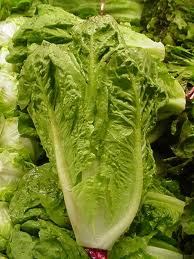
Ready to eat salad is considered one of the products most likely to cause food-related illness, said Professor Hugh Pennington, an emeritus professor of bacteriology at the University of Aberdeen in Scotland — who worked for the British, Scottish and Welsh governments as an expert on microbiology and food safety.

His claim follows a Health Protection Agency investigation into an outbreak of salad-linked Cryptosporidium infections that affected around 300 people in England and Scotland in May.

In the analysis of the exposure to different salad vegetables a significant statistical association was found between infection and the consumption of pre-cut spinach. The strongest association with infection was found to be with consumption of ready to eat pre-cut mixed salad leaves from a major supermarket chain. These findings suggest that one or more types of salad vegetables could have been contaminated.

That is largely because greens are grown directly in the soil, and some pathogens can only be killed by heat or strong detergents, not just water. Certain types of bacteria found in the ready to eat salad bags can be almost impossible to kill, unless the leaves are irradiated – a process the public would oppose.

“You could irradiate it – but that would be a `no, no` with the public. You just can`t be absolutely sure that the bagged salad you are buying – which has been put through a chemical wash to kill the bugs, is actually free of them.”

Food pathogens are very good at clinging on to salad and the risk from cryptosporidium, salmonella and listeria is very real.

“I would advise people to thoroughly wash salad even when it says it has been washed and is ready to eat,” Pennington said.

Vegetables are fine and safe if they are cooked in the traditional way of boiling them to death. The only danger comes when you eat them raw.

The responsibility falls on the people who produce food. But much of our vegetables are now grown in countries that do not necessarily have the same hygiene standards. The consumer has no way of knowing how the food has been produced.

Canada – Food Alerts – Salmon – Listeria – Clam Stew – Boutulinum – Nut Butters – Salmonella

CFIA – The public warning issued on March 15, 2013 has been expanded to include additional products because the products may be contaminated with Clostridium botulinum

The Canadian Food Inspection Agency (CFIA) is warning the public not to consume the Bar Clams and Bar Clam Stew described below because they may be contaminated with Clostridium botulinum.  Toxins produced by these bacteria may cause botulism, a life-threatening illness.

CFIA – The Canadian Food Inspection Agency (CFIA) is warning the public not to consume and retailers, restaurants and institutions not to sell or use the nut butters, peanuts, sugar or tahini described below because the products may be contaminated with Salmonella or other harmful bacteria.

These products have been distributed in Ontario and Quebec and may have been distributed in other provinces as well.

Consumers who cannot determine the original product identity are  advised to check with their retailer to determine if they have one of  the affected products.

There have been no reported illnesses associated with the consumption of these products.

CFIA – The Canadian Food Inspection Agency (CFIA) and Central-Epicure Food Products Ltd. are warning the public not to consume Central-Epicure brand Smoked Atlantic Salmon because it may be contaminated with Listeria monocytogenes.

There have been no reported illnesses associated with the consumption of this product.

The manufacturer, Central-Epicure Food Products Ltd., Toronto, Ontario, is voluntarily recalling the affected product from the marketplace.  The CFIA is monitoring the effectiveness of the recall.


Canada – Recall – Italian Wraps – Listeria monocytogenes

Food Poisoning Bulletin

Costco Wholesale Canada Ltd. is recalling Formaggio brand Artisan Wraps Italian Style Meats around Fresh Mozzarella because it may be contaminated with Listeria monocytogenes. There have been no illnesses reported to date in connection with the consumption of this product.

The Wraps are sold in 675 gram packages at Costco stores between February 13, 2013 and March 11, 2013. All “best before” codes are affected by this recall. The UPC number is 7 08531 29431 7 and it was sold in Ontario, Quebec, New Brunswick, Nova Scotia, Newfoundland, and Labrador.