France – BRIE DES VOSGES – Listeria monocytogenes

Gov france

Identification information of the recalled product

  • Product category Feed
  • Product subcategory Milk and dairy products
  • Product brand name BRIE DES VOSGES
  • Model names or references BRIE DES VOSGES
  • Identification of products
    Batch Date
    3441309 Use-by date 30/11/2022
  • Packaging tray
  • Marketing start/end date From 11/10/2022 to 20/10/2022
  • Storage temperature Product to be stored in the refrigerator
  • Health markFR13085001CE
  • Geographic area of ​​sale Whole France
  • Distributors food trade
  • List of points of salelist_of_points_of_sale_for_site_RAPPEL_CONSO_Brie_des_Vosges_en_barquette.pdf

Practical information regarding the recall

  • Reason for recall Detection of listeria monocytogenes
  • Risks incurred by the consumer Listeria monocytogenes (causative agent of listeriosis)

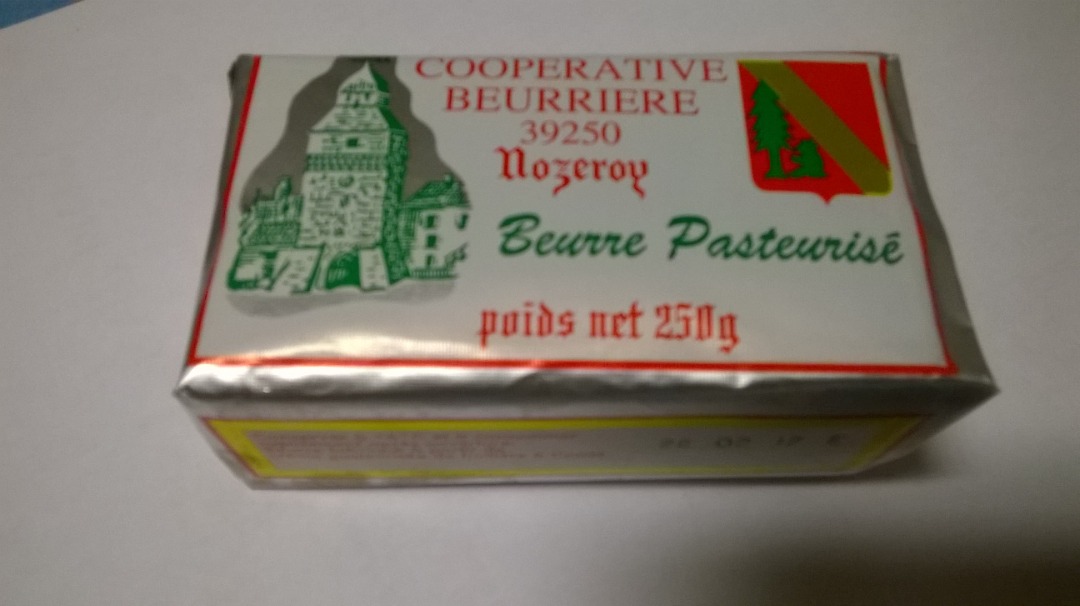
France – Butter Wafer 250g – Listeria monocytogenes

Gov france

Identification information of the recalled product

  • Product category Feed
  • Product subcategory Milk and dairy products
  • Product brand name COOPERATIVE BEURRIERE
  • Model names or references3 350 530 001037 Table Butter 250g Pasteurized
  • Identification of products
    GTIN Lot Date
    3350530001037 292 Use-by date 21/12/2022
  • Packaging 250g wafer
  • Marketing start/end date From 20/10/2022 to 24/10/2022
  • Storage temperature Product to be stored in the refrigerator
  • Geographic area of ​​sale Regions: Burgundy-Franche-Comté
  • Distributors HYPER U Doubs Fromagerie MAURON

Practical information regarding the recall

  • Reason for recall LISTERIA MONO <10 UFC/g
  • Risks incurred by the consumer Listeria monocytogenes (causative agent of listeriosis)

Denmark -Fish meatballs cause disease outbreaks with Listeria

SSI

Since mid-August, the Statens Serum Institut has registered seven patients who have become ill from the same type of Listeria monocytogenes . The Statens Serum Institut, the Danish Food Agency and the DTU Food Institute have jointly investigated the disease outbreak and have identified fish cakes as the cause. The fish meatballs have been recalled from the stores.

Last edited on November 9, 2022
Since mid-August, Statens Serum Institut has registered seven patients with the same type of the food-borne bacterium Listeria monocytogenes . Among the sick are one child and six people over the age of 70, of whom one person has subsequently died. The patients are distributed across the country and are four women and three men.

“By comparing bacteria from patients and samples from Jeka Fish, we have found that the bacteria are exactly the same. Combined with the fact that the patients have stated that they have eaten fish meatballs, this shows that the infection came from here”
Luise Müller, who is an epidemiologist at the Statens Serum Institut

The fish meatballs have been called back

On Tuesday 8 November, Jeka Fish recalled all fish cakes produced between 1 August and 31 October 2022 from the market. The recall was made because the Danish Food and Drug Administration had found listeria in production and in products at the company.

“Jeka Fish has recalled a number of different fish patties, which have now been taken off the shelves, but if you have the product at home, it is important to throw it away”
Annette Perge, section manager at the Danish Food and Drug Administration

The DTU Food Institute, SSI and the Danish Veterinary and Food Administration have analyzed and compared the listeria bacteria that were found in the patients and in samples from the company, using DNA typing.

See which types of fishcakes have been recalled

What should you do if you have eaten fish cakes from the recalled batch?

Even if you have eaten the fishmeals that have now been recalled, there is very little risk that you will get sick. You are at risk of becoming seriously ill with listeria if you are older, have a weakened immune system due to another serious illness or are pregnant.

You should contact a doctor if you have symptoms of illness. The symptoms include high fever, chills, muscle soreness and affected general condition; neck/back stiffness or altered level of consciousness.

The work continues

In addition to patients with the listeria bacteria in question, significantly more patients infected with listeria than usual have been registered since October 2022. So the work to find the causes of the other cases of illness continues.

“To avoid listeria infection, it is extremely important to stick to a refrigerator temperature of no more than 5 degrees and to eat foods such as cold cuts, cold-smoked fish and gravad salmon as fresh as possible. If we change habits, for example due to the energy and economic crisis, we risk that the bacteria will have good growth opportunities and that more people will get sick”
Senior researcher and research group leader Marianne Sandberg, DTU Food Institute 

Research – Scientists map the neural pathways for vomiting after eating infected food

Science Daily

The urge to vomit after eating contaminated food is the body’s natural defensive response to get rid of bacterial toxins. However, the process of how our brain initiates this biological reaction upon detecting the germs remains elusive. For the first time, researchers mapped out the detailed neural pathway of the defensive responses from the gut to the brain in mice. The study, presented November 1 in the journal Cell, could help scientists develop better anti-nausea medications for cancer patients who undergo chemotherapy.

Many foodborne bacteria produce toxins in the host after being ingested. The brain, after sensing their presence, will initiate a series of biological responses, including vomit and nausea, to get rid of the substances and develop an aversion toward foods that taste or look the same.

“But details on how the signals are transmitted from the gut to the brain were unclear, because scientists couldn’t study the process on mice,” says Peng Cao, the paper’s corresponding author at the National Institute of Biological Sciences in Beijing. Rodents cannot vomit, likely because of their long esophagus and weaker muscle strength compared to their body size. As a result, scientists have been studying vomit in other animals like dogs and cats, but these animals are not comprehensively studied and thus failed to reveal the mechanism of nausea and vomiting.

Cao and his team noticed that while mice don’t vomit, they retch — meaning they also experience the urge to vomit without throwing up. The team found that after receiving Staphylococcal enterotoxin A (SEA), which is a common bacterial toxin produced by Staphylococcus aureus that also leads to foodborne illnesses in humans, mice developed episodes of unusual mouth opening. Mice that received SEA opened their mouths at angles wider than those observed in the control group, where mice received saline water. Moreover, during these episodes, the diaphragm and abdominal muscles of the SEA-treated mice contract simultaneously, a pattern seen in dogs when they are vomiting. During normal breathing, animals’ diaphragm and abdominal muscles contract alternatively.

“The neural mechanism of retching is similar to that of vomiting. In this experiment, we successfully build a paradigm for studying toxin-induced retching in mice, with which we can look into the defensive responses from the brain to toxins at the molecular and cellular levels,” Cao says.

Research team work on a rapid test for foodborne pathogens in poultry

Poultry World

A research team at Michigan State University will use a grant from the USDA to develop a rapid biosensor test for foodborne pathogens. The rapid test will be used onsite at poultry farms and processing facilities to inspect large samples for Salmonella and Campylobacter.

The US$769,000 grant was received from the US Department of Agriculture’s (USDA) National Institute of Food and Agriculture (NIFA), and Professor Evangelyn Alocilja, who is in the MSU Department of Biosystems and Agricultural Engineering, is leading the project. She is an expert in her field and in rapid biosensing diagnostics for infectious and antimicrobial-resistant diseases, having developed such tests for tuberculosis, dengue and Covid-19.

Poultry products are one of the most common sources of infection

Alocilja says that studies have shown poultry products are one of the most common sources of infection due to bacterial contamination from farm production practices and processing equipment. In the US, the economic burden of Salmonella and Campylobacter from all sources exceeded US$6 billion in 2018, according to the USDA Economic Research Service.

Denmark – Listeria in fish patties

DVFA

eka Fish A/S is recalling several types of Havet’s and Løgismose fish patties due to the discovery of Listeria.

Recalled Foods , Published: November 8, 2022

​Which foods:
The following fish patties with a production date from 01.08.2022 to 31.10.2022 and a use-by date from 06.09.2022 to 06.12.2022:

  • Havet’s Gourmet Fish
    Meatballs EAN number: 5730444930551
  • Havet’s
    Middags Fiskekadeller EAN number: 5730444919600
  • Havet’s Classic Fish
    Meatballs EAN number: 5730444915862
  • Havet’s Fish meatballs w/ salmon
    EAN number: 5730444916272
  • Havet’s small classic
    fish meatballs EAN number: 5730444919648
  • Havet’s small fish meatballs with salmon
    EAN number: 5730444930513
  • Havet’s Small organic Salmon meatballs
    EAN number: 5730444930537
  • Onion mash Fish meatballs from line-caught cod, with smoked cod
    EAN number: 5713507042613
  • Onion mash Fish patties of line-caught cod, with hot-smoked salmon
    EAN number: 5713507043375

Sold in:
SuperBrugsen, Kvickly, Dagli’Brugsen, Irma, Coop365, Fakta and Netto throughout the country.

Company that is recalling:
Jeka Fish A/S, Havnen 70, 7620 Lemvig

Reason:
The bacterium Listeria monocytogenes has been detected in some of the products.

Risk:
Infection with Listeria bacteria, where the symptoms can include flu-like symptoms, fever and headache and, in rare cases, gastrointestinal problems. Read more about Listeria in food here.

Advice to consumers:
The Danish Food and Food Administration advises consumers to return the products to the store where they were bought, or to discard them.

Food Safety Aspects of Edible Insects

Food Safety.Com

A recent review of available scientific literature suggests that, when cooked or processed in certain ways, edible insects can be a safe food product. Food safety considerations for the commodity were explored in the review, including microbiological contaminants, anti-nutritive factors, pesticide residues, toxic heavy metals, mycotoxins, and allergens.

The article outlined various food safety aspects of edible insects, stating that the commodity’s microbiological and anti-nutritive characteristics are of greatest concern. In general, research has demonstrated high counts of microorganisms to be present in fresh insects; however, with the appropriate thermal treatment, microbial loads can be eliminated. As with other foods, the efficacy of heat treatment on edible insects depends on factors such as the type, intensity, and duration of treatment, as well as the treated food composition. Solar and oven drying were underlined by the review as potential heat treatment methods.

Italy – Mortadella supergigante in slices with pistachio distributed by Rialto – Listeria monocytogenes

Salute

Brand : Veroni

Name : Mortadella supergigante in slices with pistachio distributed by Rialto

Reason for reporting : Recall due to microbiological risk

Publication date : 8 November 2022

Documentation

Documentation

Italy – Mortadella supergigante a tranci lotto PO 2221001 – Listeria monocytogenes

Salute

Marchio: Veroni

Denominazione: Mortadella supergigante a tranci lotto PO 2221001

Motivo della segnalazione: Richiamo per rischio microbiologico

Data pubblicazione: 8 novembre 2022

Documentazione

Documentazione

France – MERGUEZ X12 – Listeria monocytogenes

Gov france

Identification information of the recalled product

  • Product category Feed
  • Product subcategory Meats
  • Product brand name GRILLO PARTY
  • Model names or references MERGUEZ X12
  • Identification of products
    GTIN Batch Date
    3700502704495 22297-5353 Use-by date 01/11/2022
  • Products ListMERGUEZ_X12.pdfAttachment
  • Marketing start/end date From 24/10/2022 to 01/11/2022
  • Storage temperature Product to be stored in the refrigerator
  • Health mark EN 13.097.003 EC
  • Geographic area of ​​sale Whole France
  • Distributors CARNIVOR C FRESH GRAS COURNEUVE DISTRINUTION DU LUNCH DAY OF MARKET SUP MEAT XL FRESH
  • List of points of saleLIST_MERGUEZ_X12.pdf

Practical information regarding the recall

  • Reason for recall Presence of Listeria
  • Risks incurred by the consumer Listeria monocytogenes (causative agent of listeriosis)