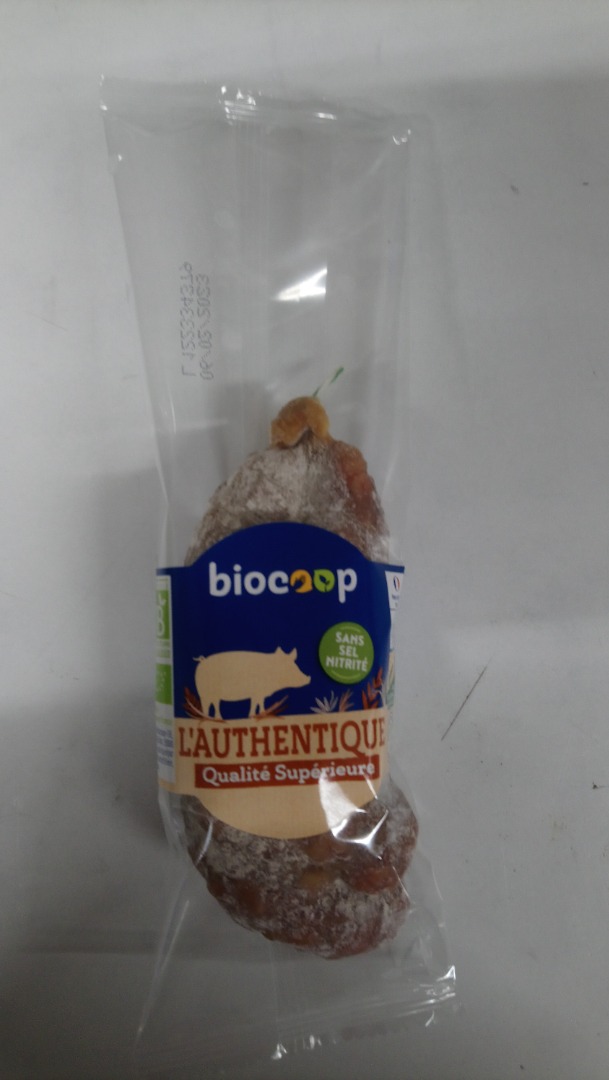
France – Light dry sausage 200g – Listeria monocytogenes

Gov france

Identification information of the recalled product

  • Product category Feed
  • Product subcategory Meats
  • Product brand name BIOCOOP
  • Model names or references Light dry sausage 200g
  • Identification of products
    Batch Date
    123073366 Date of minimum durability 05/16/2023
  • Packaging Plastic bag
  • Marketing start/end date From 03/17/2023 to 05/16/2023
  • Storage temperature Product to be stored in the refrigerator
  • Health mark FR.42.334.001
  • Geographic area of ​​sale Whole France
  • Distributors BIOCOOP

Practical information regarding the recall

  • Reason for recall Detection of Listeria monocytogenes
  • Risks incurred by the consumer Listeria monocytogenes (causative agent of listeriosis)

France – ROCHEBLIN GREEN PEPPER ORGANIC DRY SAUSAGE 200G -Listeria monocytogenes

Gov france

Identification information of the recalled product

  • Product category Feed
  • Product subcategory Others
  • Product brand name ROCHEBLIN
  • Model names or references ROCHEBLIN GREEN PEPPER ORGANIC DRY SAUSAGE 200G
  • Identification of products
    GTIN Batch Date
    3173660052355 123072458 Date of minimum durability 05/13/2023
    3173660052355 123072462 Date of minimum durability 05/13/2023
  • Packaging Naked product, 200g
  • Marketing start/end date Since 03/14/2023
  • Storage temperature Product to be stored at room temperature
  • Health mark ROCHEBLIN
  • Geographic area of ​​sale Whole France
  • Distributors Central Marcel
  • List of points of salePoints_of_sale_SON_POIVRE_VERT_BIO_RB.pdf

Practical information regarding the recall

  • Reason for recall Suspicion of Listeria monocytogenes > 1500 cfu/g

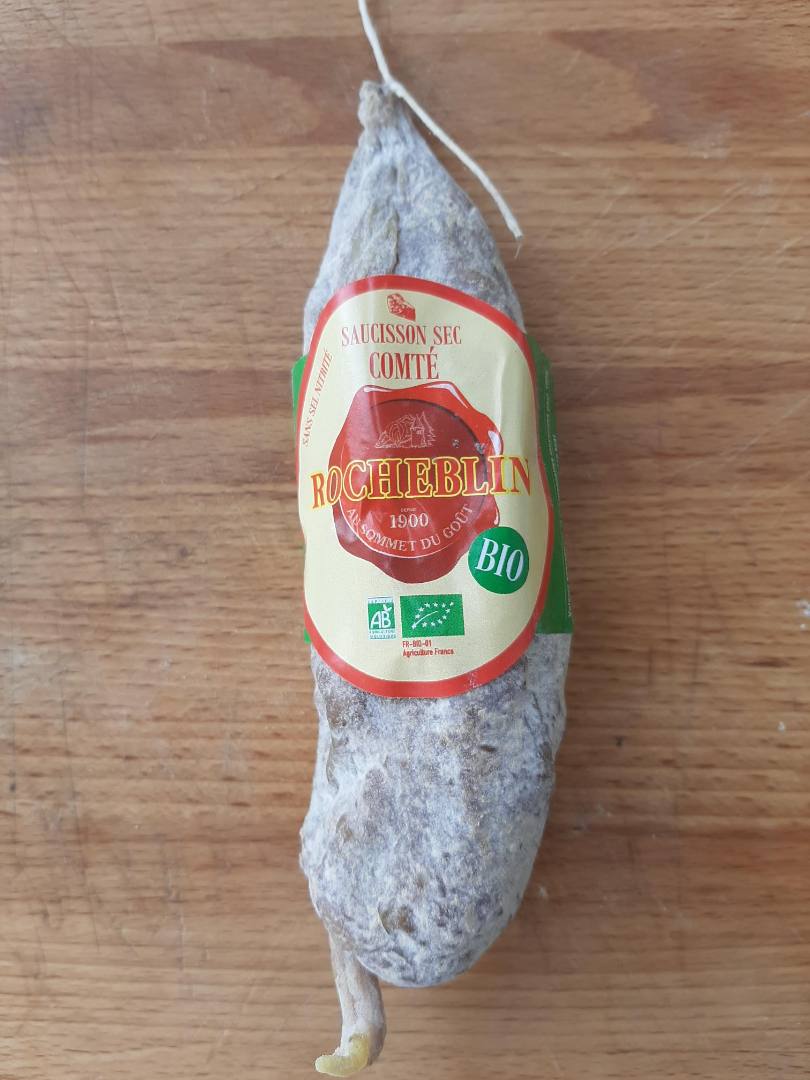
France – ORGANIC DRY SAUSAGE WITH COMTE ROCHEBLIN 200G – Listeria monocytogenes

Gov france

Identification information of the recalled product

  • Product category Feed
  • Product subcategory Others
  • Product brand name ROCHEBLIN
  • Model names or references ORGANIC DRY SAUSAGE WITH COMTE ROCHEBLIN 200G
  • Identification of products
    GTIN Batch Date
    3173660055349 123054234 Date of minimum durability 04/29/2023
    3173660055349 123051139 Date of minimum durability 04/22/2023
    3173660055349 123061194 Date of minimum durability 01/05/2023
  • Packaging Naked product, 200g
  • Marketing start/end date Since 02/21/2023
  • Storage temperature Product to be stored at room temperature
  • Health mark ROCHEBLIN
  • Geographic area of ​​sale Whole France
  • Distributors Central Marcel, Green & Good
  • List of points of salePoints_of_sale_SON_COMTE_BIO_CL_RB.pdf

Practical information regarding the recall

  • Reason for recall Suspicion of Listeria monocytogenes > 1500 cfu/g

France – NATURAL ORGANIC DRY SAUSAGE WITHOUT PRESERVATIVES BIOCOOP 200G BEF – Listeria monocytogenes

Gov france

Identification information of the recalled product

  • Product category Feed
  • Product subcategory Others
  • Product brand name BIOCOOP
  • Model names or references NATURAL ORGANIC DRY SAUSAGE WITHOUT PRESERVATIVES BIOCOOP 200G BEF
  • Identification of products
    GTIN Batch Date
    3760121218247 123073377 Date of minimum durability 05/16/2023
    3760121218247 123073373 Date of minimum durability 05/16/2023
  • Packaging In perforated film – 200g
  • Marketing start/end date Since 03/17/2023
  • Storage temperature Product to be stored at room temperature
  • Health mark BIOCOOP
  • Geographic area of ​​sale Whole France
  • Distributors Biocoop warehouses and stores
  • List of points of salePoints_of_sale_SON_NATURE_SC__BIO.pdf

Practical information regarding the recall

  • Reason for recall Suspicion of Listeria monocytogenes > 1500 cfu/g

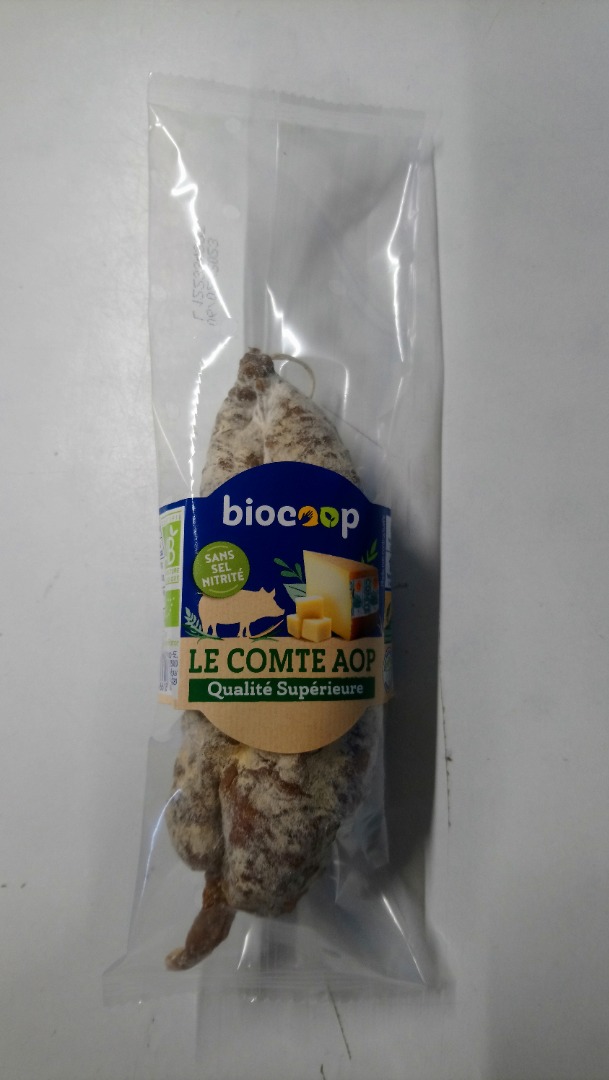
France – ORGANIC DRY SAUSAGE COMTE BIOCOOP 200G CLEAN LABEL BEF – Listeria monocytogenes

Gov france

Identification information of the recalled product

  • Product category Feed
  • Product subcategory Others
  • Product brand name BIOCOOP
  • Model names or references ORGANIC DRY SAUSAGE COMTE BIOCOOP 200G CLEAN LABEL BEF
  • Identification of products
    GTIN Batch Date
    3173660047412 123067072 Date of minimum durability 08/05/2023
    3173660047412 123060063 Date of minimum durability 01/05/2023
  • Packaging In perforated film – 200g
  • Marketing start/end date Since 02/03/2023
  • Storage temperature Product to be stored at room temperature
  • Health mark BIOCOOP
  • Geographic area of ​​sale Whole France
  • Distributors Biocoop warehouses and stores
  • List of points of salePoints_of_sale_SON_COMTE_BIO_CL.pdf

Practical information regarding the recall

  • Reason for recall Suspicion of Listeria monocytogenes > 1500 cfu/g

France – STRONG ORGANIC CHORIZO BIOCOOP CLEAN LABEL – Listeria monocytogenes

Gov france

Identification information of the recalled product

  • Product category Feed
  • Product subcategory Others
  • Product brand name BIOCOOP
  • Model names or references STRONG ORGANIC CHORIZO BIOCOOP CLEAN LABEL
  • Identification of products
    GTIN Batch Date
    3173660050627 123060258 Date of minimum durability 05/16/2023
  • Packaging Naked product, 1.05kg approx
  • Marketing start/end date Since 03/10/2023
  • Storage temperature Product to be stored at room temperature
  • Health mark BIOCOOP
  • Geographic area of ​​sale Whole France
  • Distributors Biocoop warehouses and stores
  • List of points of salePoints_of_sale_CHORIZO_FORT__BIO_CL.pdf

Practical information regarding the recall

  • Reason for recall Suspicion of Listeria monocytogenes > 1500 cfu/g

France – BIOCOOP CLEAN LABEL SWEET ORGANIC CHORIZO – Listeria monocytogenes

Gov france

Identification information of the recalled product

  • Product category Feed
  • Product subcategory Others
  • Product brand name BIOCOOP
  • Model names or references BIOCOOP CLEAN LABEL SWEET ORGANIC CHORIZO
  • Identification of products
    GTIN Batch Date
    3173660050610 123060111 Date of minimum durability 05/16/2023
  • Packaging Naked product, 1.05kg approx
  • Marketing start/end date Since 02/03/2023
  • Storage temperature Product to be stored at room temperature
  • Health mark BIOCOOP
  • Geographic area of ​​sale Whole France
  • Distributors Biocoop warehouses and stores
  • List of points of salePoints_of_sale_CHORIZO_DOUX__BIO_CL.pdf

Practical information regarding the recall

  • Reason for recall Suspicion of Listeria monocytogenes > 1500 cfu/g

France – ORGANIC DRY SAUSAGE WITH HAZELNUTS BIOCOOP CLEAN LABEL 200G BEF – Listeria monocytogenes

Gov france

Identification information of the recalled product

  • Product category Feed
  • Product subcategory Others
  • Product brand name BIOCOOP
  • Model names or references ORGANIC DRY SAUSAGE WITH HAZELNUTS BIOCOOP CLEAN LABEL 200G BEF
  • Identification of products
    GTIN Batch Date
    3173660005573 123073243 Date of minimum durability 05/16/2023
    3173660005573 123052381 Date of minimum durability 04/24/2023
  • Packaging In perforated film – 200g
  • Marketing start/end date Since 03/17/2023
  • Storage temperature Product to be stored at room temperature
  • Health mark BIOCOOP
  • Geographic area of ​​sale Whole France
  • Distributors Biocoop warehouses and stores
  • List of points of salePoints_of_sale_SON_NOISETTE_BIO_CL.pdf

Practical information regarding the recall

  • Reason for recall Suspicion of Listeria monocytogenes > 1500 cfu/g

Research – The efficacy of preharvest application of electrolyzed water and chemical sanitizers against foodborne pathogen surrogates on leafy green vegetables


Wiley Online

Abstract

Preharvest control strategies, to reduce or eliminate pathogenic bacteria in leafy vegetables that may be consumed raw, may provide additional food safety protection and shelf life quality extension beyond what is possible to achieve with postharvest sanitation alone. The aim of this study was to characterize the efficacy and effect of contact time of electrolyzed water (e-water), 1-bromo-3-chloro-5-dimethylhydantoin (BCDMH), and peracetic acid (PAA) at 80 and 150 ppm against pathogen surrogates Escherichia coli M23 (E. coli M23)and Listeria innocua ATCC 33090 (L. innocua), and a representative spoilage microorganism Pseudomonas fluorescens (P. fluorescens) on leafy green vegetables (LGV) mizuna, rocket (arugula), and red chard. Each of the leafy vegetables has a distinctly different leaf architectures that could alter the effectiveness of preharvest sanitation treatments. e-Water, BCDMH and PAA were equally effective in inactivating plant total viable count, E. coli M23, L. innocua and P. fluorescens (reduction compared to water control—0.5–4.0 log CFU/g). On average an additional 0.8 (0.4–1.1) log CFU/g inactivation was obtained by increasing sanitizer contact time from 30 min to 2 h, whereas increasing sanitizer concentrations produced, at maximum, an extra 0.5 log CFU/g inactivation. These findings suggest that e-water, BCDMH, and PAA are all useful for in-field preharvest application on a wide range of plants and increasing contact time rather than concentration improves sanitation efficacy.

Research – Report of the Scientific Committee of the Spanish Agency for Food Safety and Nutrition (AESAN) on the prospection of biological ha-zards of interest in food safety in Spain (2)

AESAN

This report addresses the prospection of biological hazards for some types of food that may pose a risk to the population and that are not currently included in the official control programs in Spain.

It completes and updates the 2018 report by the Scientific Committee of the Spanish Agency for Food Safety and Nutrition (AESAN, 2018). A number of bacteria that are significant contributors to nosocomial infections due to the increase in the number of multi-resistant strains of Acinetobacter spp. ,Klebsiella pneumoniae and Pseudomonas aeruginosa are listed first.

It is also addressed the study of the prevalence and possible control of Bacillus cereus and Cronobacter spp. presence in cereal flours and others, the revision of Campylobacter jejuni and/or Campylobacter coli in meats other than poultry, as well as the study of Shigatoxin-producing Escherichia coli. These latter two biological agents are much better known from the food control perspective, although there are control measures for Campylobacter spp. in poultry meat and not in other types of meat such as beef or pork and in the case of E. coli, producers of Shiga toxins, the control of this particular type of pathogenic strains in food has not been specifically addressed either.

Finally, tick-borne viral encephalitis, which can be transmitted to humans through the consumption of raw milk or raw dairy products, has been indicated as a viral hazard. The prospective study shows the need to determine the prevalence of multi-resistant bacteria of Acinetobacter baumannii, K. pneumoniae and P. aeruginosa in foods in Spain, especially in ready-to-eat foods such as salads and fresh plant-based foods. This is especially important due to the lack of data on the prevalence of these bacteria in foods in Spain. However, food research is carried out in neighbouring countries.

It is also necessary to include C. jejuni and/or C. coli in the investigations of beef and pork, since the incidence of these foodborne pathogens in humans is not explained solely by the presence of these agents in poultry meat, being their presence in other animals for slaughter also evident. Similarly, outbreaks of Shiga toxin-producing E. coli have been reported in Spain over the last 25 years, which makes it advisable to control them in beef, raw milk and leafy vegetables.

With regard to Cronobacter spp. and B. cereus, the importance of these agents can be demonstrated given their survival in powdery materials such as flours of different origins, including cereals, although the reported outbreaks do not seem to indicate a high prevalence. As regards the only viral hazard mentioned, it should be noted that the wide dispersion of the ticks that can transmit this virus, together with the potential consumption of raw milk, makes it advisable to investigate it in raw milk products.

However, the study of the actual infective capacity of this virus is not easy to establish with simple analytical methods. With this last exception, research for controlling all these biological hazards in food is possible, with classical or advanced methodologies that are robust enough, available for each case.