Catalonia – Alert for the presence of Listeria monocytogenes in smoked salmon from Spain

ACSA

Smoked salmon

The Spanish Agency for Food Safety and Nutrition has learned, through the Coordinated System for Rapid Information Exchange (SCIRI) , of an alert notification sent by the health authorities of the Community of Madrid regarding the presence of Listeria monocytogene in salmon smoked.

The information included here is the result of the self-monitoring of the company itself, which has communicated the incident to the competent authorities, in compliance with the legislation and in order not to make unsafe food available to the population.

The data of the product involved are:

  • Product name: SMOKED SALMON HOST C/PE
  • Brand Name: JOALPESCA
  • Appearance of the product: packed in plates of 1-1.5 kilos  
  • Batch number: E675C1528 3
  • Barcode: 2249134 011409 
  • Expiration date: 08/14/2023
  • Unit Weight: 1 – 1.5kg
  • Temperature: refrigerated

USA – Listeria Outbreak Linked to Ice Cream

CDC

Fast Facts
  • Illnesses: 2
  • Hospitalizations: 2
  • Deaths: 0
  • States: 2
  • Recall: Yes
  • Investigation status: Active

Various types of ice cream in small cups.

Recalled Food

“Soft Serve On The Go” Ice Cream Cups

  • Flavors include:
    • Vanilla chocolate
    • Caramel
    • Parve vanilla chocolate
    • Peanut butter lite
    • Razzle
    • Sorbet strawberry mango
  • Sold nationwide at many types of stores, including:
    • Grocery stores
    • Convenience stores
    • Canteens
  • Distributed by Real Kosher Ice Cream to businesses and institutions, including:
    • Long-term care facilities
    • Nursing homes
    • Schools
    • Camps
  • Distributed internationally to:
    • Belgium
    • Brazil
    • Canada
    • Mexico
    • United Kingdom

On August 9, Real Kosher Ice Cream recalled all flavors of their “Soft Serve On The Go” ice cream cups.

Listeria was found in a “Soft Serve On The Go” ice cream cup collected from a sick person’s freezer, and laboratory scientists are working to determine if it is the outbreak strain of Listeria.

What You Should Do
  • Do not eat “Soft Serve On The Go” ice cream cups.
    • Check your freezers. Listeria can survive at freezing temperatures.
    • Throw them away or return them to where you bought them for a refund.
    • If you have any questions, contact the company at 845-668-4346 or info@softserveonthego.com (Monday to Friday, 9am to 5 pm EST).
  • Call a healthcare provider right away if you have these symptoms after eating the ice cream:
    • Pregnant people usually have fever, muscle aches, and tiredness.
    • People who are not pregnant usually have fever, muscle aches, and tiredness. They may also get a headache, stiff neck, confusion, loss of balance, or seizures.
What Businesses and Institutions Should Do
  • Businesses and institutions, including long-term care facilities, hospitals, school, and camps, should not sell or serve “Soft Serve On The Go” ice cream cups.
    • Many of your patients or clients could be at higher risk for Listeria illness (65 years or older, have a weakened immune system, or are pregnant).

Canada – Soft Serve on the Go brand frozen dessert cups recalled due to Listeria monocytogenes

CFIA

Summary

Product
Frozen dessert cups
Issue
Food – Microbial Contamination – Listeria
What to do

Do not consume, use, sell, serve, or distribute recalled products

Distribution
Ontario
Quebec

Issue

The affected products are being recalled from the marketplace due to possible Listeria monocytogenes contamination.

What you should do

  • If you think you became sick from consuming a recalled product, contact your healthcare provider
  • Check to see if you have recalled products
  • Do not consume, serve, use, sell, or distribute recalled products
  • Recalled products should be thrown out or returned to the location where they were purchased

Food contaminated with Listeria monocytogenes may not look or smell spoiled but can still make you sick. Symptoms can include vomiting, nausea, persistent fever, muscle aches, severe headache and neck stiffness. Pregnant women, the elderly and people with weakened immune systems are particularly at risk. Although infected pregnant women may experience only mild, flu-like symptoms, the infection can lead to premature delivery, infection of the newborn or even stillbirth. In severe cases of illness, people may die.

UK – St Pierre is recalling 6 Pains Au Chocolat because of the possible presence of mould

Gov UK

St Pierre is recalling 6 Pains Au Chocolat because of the possible presence of mould.

Product details

St Pierre 6 Pains Au Chocolat
Pack size 6 pack
Best before 17 September 2023, 25 September 2023 and 01 October 2023

Risk statement

The possible presence of mould may make the product unsafe to eat.

Action taken by the company

St Pierre is recalling the above product and has issued point-of-sale notices to their customers. These notices explain to customers why the product is being recalled and tell them what to do if they have bought the product. Please see the attached notice.

Our advice to consumers

If you have bought any of the above product do not eat it. Instead, return it to your nearest store for a full refund. You do not need your receipt. If you would like any further information please contact: enquiries@stpierregroupe.com

UK – Iceland Foods recalls Cathedral City Cheese & Ham Gratin because of contamination with Listeria monocytogenes

Gov UK

Iceland is recalling Cathedral City Cheese & Ham Gratin because Listeria monocytogenes has been found in the product.

Product details

Cathedral City Cheese & Ham Gratin
Pack size 400g
Best before 02 May 2024

Risk statement

The product listed above is contaminated with Listeria monocytogenes which can cause illness if consumed.

Symptoms caused by this organism can be similar to flu and include high temperature, muscle ache or pain, chills, feeling or being sick and diarrhoea. Some people are more vulnerable to listeria infections, including those over 65 years of age, pregnant women and their unborn babies, babies less than one month old and people with weakened immune systems.

Action taken by the company

Iceland Foods is recalling the above product and has issued point-of-sale notices to their customers. These notices explain to customers why the product is being recalled and tell them what to do if they have bought the product. Please see the attached notices.

Our advice to consumers

If you have bought the above product do not eat it. Instead, return it to the store from where it was bought for a full refund (with or without a receipt). For more information contact Iceland customer care on 0800 328 0800.

Solar Water Heating & Legionella – What You Need to Know

Legionella Control

In this article the water safety specialists at Legionella Control International take a detailed look at solar water heating systems and the implications for the control of legionella.

The article examines the social and economic drivers for such eco-friendly heating systems, how they may increase the risks from legionella, and how these risks can be controlled to keep people safe from harm.

A version of this story dealing with the potential risks from legionella when using solar heating systems first appeared in Legionella Control International’s newsletter. To get it in your inbox, sign up for free at the link above.

Research – First Report of Aeromonas veronii as an Emerging Bacterial Pathogen of Farmed Nile Tilapia (Oreochromis niloticus) in Brazil

MDPI

Abstract

Brazil is one of the world’s leading producers of Nile tilapia, Oreochromis niloticus. However, the industry faces a major challenge in terms of infectious diseases, as at least five new pathogens have been formally described in the last five years. Aeromonas species are Gram-negative anaerobic bacteria that are often described as fish pathogens causing Motile Aeromonas Septicemia (MAS). In late December 2022, an epidemic outbreak was reported in farmed Nile tilapia in the state of São Paulo, Brazil, characterized by clinical signs and gross pathology suggestive of MAS. The objective of this study was to isolate, identify, and characterize in vitro and in vivo the causative agent of this epidemic outbreak. The bacterial isolates were identified as Aeromonas veronii based on the homology of 16S rRNA (99.9%), gyrB (98.9%), and the rpoB gene (99.1%). A. veronii showed susceptibility only to florfenicol, while it was resistant to the other three antimicrobials tested, oxytetracycline, enrofloxacin, and amoxicillin. The lowest florfenicol concentration capable of inhibiting bacterial growth was ≤0.5 µg/mL. The phenotypic resistance of the A. veronii isolate observed for quinolones and tetracycline was genetically confirmed by the presence of the qnrS2 (colE plasmid) and tetA antibiotic-resistant genes, respectively. A. veronii isolate was highly pathogenic in juvenile Nile tilapia tested in vivo, showing a mortality rate ranging from 3 to 100% in the lowest (1.2 × 10⁴) and highest (1.2 × 10⁸) bacterial dose groups, respectively. To our knowledge, this study would constitute the first report of highly pathogenic and multidrug-resistant A. veronii associated with outbreaks and high mortality rates in tilapia farmed in commercial net cages in Brazil.

Research – Dynamics of biofilm formation by Listeria monocytogenes on stainless steel under mono-species and mixed-culture simulated fish processing conditions and chemical disinfection challenges

Academia Edu

The progressive ability of a six-strains L. monocytogenes cocktail to form biofilm on stainless steel (SS), under fish-processing simulated conditions, was investigated, together with the biocide tolerance of the developed sessile communities. To do this, the pathogenic bacteria were left to form biofilms on SS coupons incubated at 15 °C, for up to 240 h, in periodically renewable model fish juice substrate, prepared by aquatic extraction of sea bream flesh, under both mono-species and mixed-culture conditions. In the latter case, L. monocytogenes cells were left to produce biofilms together with either a five-strains cocktail of four Pseudomonas species (fragi, savastanoi, putida and fluorescens), or whole fish indigenous microflora. The biofilm populations of L. monocytogenes, Pseudomonas spp., Enterobacteriaceae, H 2 S producing and aerobic plate count (APC) bacteria, both before and after disinfection, were enumerated by selective agar plating, following their removal from surfaces through bead vortexing. Scanning electron microscopy was also applied to monitor biofilm formation dynamics and anti-biofilm biocidal actions. Results revealed the clear dominance of Pseudomonas spp. bacteria in all the mixed-culture sessile communities throughout the whole incubation period, with the in parallel sole presence of L. monocytogenes cells to further increase (ca. 10-fold) their sessile growth. With respect to L. monocytogenes and under mono-species conditions, its maximum biofilm population (ca. 6 log CFU/cm 2) was reached at 192 h of incubation, whereas when solely Pseudomonas spp. cells were also present, its biofilm formation was either slightly hindered or favored, depending on the incubation day. However, when all the fish indigenous microflora was present, biofilm formation by the pathogen was greatly hampered and never exceeded 3 log CFU/cm 2 , while under the same conditions, APC biofilm counts had already surpassed 7 log CFU/cm 2 by the end of the first 96 h of incubation. All here tested disinfection treatments, composed of two common food industry biocides gradually applied for 15 to 30 min, were insufficient against L. monocytogenes mono-species biofilm communities, with the resistance of the latter to significantly increase from the 3rd to 7th day of incubation.

However, all these treatments resulted in no detectable L. monocytogenes cells upon their application against the mixed-culture sessile communities also containing the fish indigenous microflora, something probably associated with the low attached population level of these pathogenic cells before disinfection (< 102 CFU/cm2) under such mixed-culture conditions. Taken together, all these results expand our knowledge on both the population dynamics and resistance of L. monocytogenes biofilm cells under conditions resembling those encountered within the seafood industry and should be considered upon designing and applying effective anti-biofilm strategies.

Research – 2020 NARMS Update: Integrated Report Summary

FDA

The National Antimicrobial Resistance Monitoring System (NARMS) is a U.S. public health monitoring system that tracks antimicrobial resistance (AMR) in foodborne and other intestinal bacteria using a One Health approach. As outlined in the NARMS Strategic Plan: 2021-2025, the overall purpose of NARMS is to:

  • Monitor trends in antimicrobial resistance among enteric bacteria from humans, retail meats, and animals at the time of slaughter;
  • Disseminate timely information on antimicrobial resistance in pathogenic and commensal microorganisms to stakeholders in the U.S. and abroad to promote interventions that reduce resistance among foodborne bacteria;
  • Conduct research to better understand the emergence, persistence, and spread of antimicrobial resistance;
  • Provide timely antimicrobial resistance data for outbreak investigations; and
  • Provide data that assist the FDA in making decisions related to the approval of safe and effective antimicrobial drugs for animals.

NARMS gathers surveillance data from human clinical samples, animal slaughter samples and retail meat samples. This approach to integrated surveillance provides information needed to assess the nature and magnitude of resistance in bacteria moving through the food supply and causing illnesses in humans. The NARMS interactive data dashboards found below allow the user to explore data in different ways.

To learn how to access NARMS data via NARMS Now: Integrated Data, please view this tutorial.

Note: Users who create their own estimates using these data should cite the National Antimicrobial Resistance Monitoring System (NARMS) as the source of the original data. The data in these tables and displays are not confidential. Additional information on sampling and testing methodologies can be found on the NARMS Resources webpage.

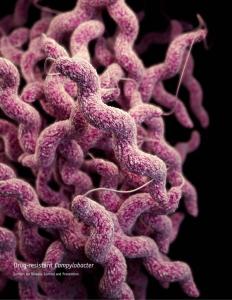
Research – Campylobacter Trends Show Decreasing Incidence, Rising Resistance Since 2012

Infectious Disease Advisor

Researchers conducted a study to estimate trends in the incidence of Campylobacter infection in the United States over time. Data on laboratory-confirmed Campylobacter diagnoses at 10 sites were collected from the Foodborne Diseases Active Surveillance Network between 1996 and 2019. Data on antimicrobial susceptibility were collected from the National Antimicrobial Resistance Monitoring System from 2005 to 2018. Campylobacter jejuni and C coli isolates were tested for antimicrobial susceptibility via broth microdilution. The incidence of Campylobacter infection was estimated after adjustments for sex, age, and the use of culture-independent diagnostic testing.

The researchers used a pooled chi-squared statistic to compare changes (2005-2016 vs 2017-2018) in the percentage of ciprofloxacin-, erythromycin-, and extensively drug-resistant isolates. They also used multivariable logistic regression to assess the association between AMR and clinical outcomes.