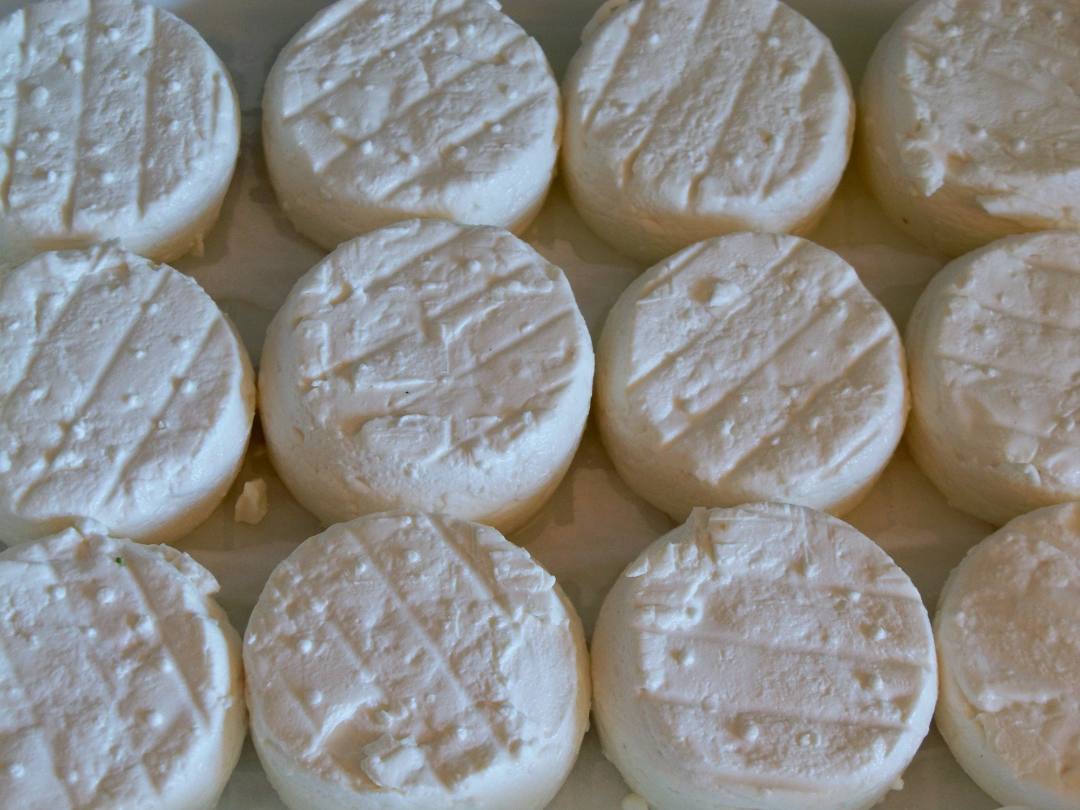
France – Corsican sheep’s tome – Listeria monocytogenes

Gov France

Product category
Food
Product subcategory
Milk and dairy products
Product brand name
SCHOEPFER
Model names or references
Corsican sheep’s tome
Product identification
GTIN Batch Date
3252540952692 24024050 Use-by date between 06/23/2024 and 06/29/2024
Products List
Stat_Traçabilité_des_lots_SALES_on_lot_24024050_DLC_from_23_to_29062024.pdfAttachment
Packaging
Clear plastic film
Start/end date of marketing
From 06/05/2024 to 06/10/2024
Storage temperature
Product to keep in the refrigerator
Health mark
FR 84 007 011 CE
Further information
Portion of cheese in transparent film of approximately 200g (variable weight) – Schoepfer sales reference 95269
Geographical sales area
Whole France
Distributors
The vegetable market, Spar, U express, Le Petit Casino, Intermarché, Lecasud, Leclerc
List of points of sale
Stat_Traçabilité_des_lots_SALES_on_lot_24024050_DLC_from_23_to_29062024.pdf

UKSHA – E. coli advice issued amid rise in cases.

Gov UK

As of 11 June, there have been a further 98 cases associated with this outbreak of STEC O145 in the UK, bringing the total number of confirmed cases to 211. All cases had sample dates before 31 May, but we expect this figure to rise as whole genome sequencing is ongoing to find any further cases which may be linked to the outbreak.

  • 147 in England
  • 27 in Wales
  • 35 in Scotland
  • 2 in Northern Ireland (for these cases, evidence suggests that they acquired their infection while visiting England)

Based on information from 160 cases to date, 42% were admitted to hospital.

UKHSA has worked closely with the Food Standards Agency (FSA), Food Standards Scotland and the devolved public health agencies to investigate the incident, carrying out epidemiological investigations and whole genome sequence analysis to help identify foods commonly consumed by the cases.

As a result of evidence gathered to date, product recall information notices have been published by FSA as a precaution.

Trish Mannes, Incident Director at UKHSA, said:

We would like to thank all the cases who have provided information that has enabled us, through epidemiological analysis of questionnaire data and food tracing investigations, to narrow down the likely food product linked to this outbreak.

Symptoms of infections with STEC include severe and sometimes bloody diarrhoea, stomach cramps, vomiting and fever. If you are unwell, have eaten salad leaves recently and are concerned about any symptoms, follow NHS.uk guidance on when to seek help and the steps you can take to avoid further spread to family and friends.

While diarrhoea and vomiting can have a range of causes, there are simple steps you can take to reduce your risk and risk of infecting others. Washing your hands with soap and warm water and using disinfectants to clean surfaces will help stop any further spread of infection. If you are unwell with diarrhoea and vomiting, you should not prepare food for others while unwell and avoid visiting people in hospitals or care homes to avoid passing on the infection in these settings. Do not return to work, school or nursery until 48 hours after your symptoms have stopped.

Darren Whitby, Head of Incidents at the FSA, said:

Sandwich manufacturers are taking a precautionary measure to recall various sandwiches, wraps, subs and rolls in response to findings from investigations by the Food Standards Agency (FSA), Food Standards Scotland (FSS) and UK Health Security Agency (UKHSA) who are working to identify the cause of an ongoing outbreak caused by shiga toxin-producing E.coli (STEC). The full list of products can be found in the product recall information notice (PRIN).

This is a complex investigation, and we have worked swiftly with the relevant businesses and the local authorities concerned to narrow down the wide range of foods consumed to a small number of salad leaf products that have been used in sandwiches, wraps, subs and rolls. Following thorough food chain analysis, these products are being recalled as a precaution.

Infections caused by STEC bacteria can cause severe bloody diarrhoea and, in some cases, more serious complications. We therefore advise any consumers who have any of these products not to eat them.

The FSA is here to ensure that food is safe. If there are products on the market that are not, we won’t hesitate to take action to remove them.

France – Scotto Mediterranean Origin Shells – E.coli

Gov France

Product category
Food
Product subcategory
Fishing and aquaculture products
Product brand name
AUCHAN
Model names or references
Scotto Mediterranean Origin Shells
Product identification
Batch
Sold in the ”traditional” fish department of our store between 06/10/2024 and 06/13/2024 inclusive.
Products List
MNErTa1htjF3WZafZEWM-Affichage_Le_Pontet.pdfAttachment
Packaging
Assisted sales
Start/end date of marketing
From 06/10/2024 to 06/13/2024
Storage temperature
Product to keep in the refrigerator
Further information
Sold in the ”traditional” fish department of our store between 06/10/2024 and 06/13/2024 inclusive.
Geographical sales area
AUCHAN LE PONTET
Distributors
AUCHAN LE PONTET

UK – THIS! recalls Chicken and Bacon wrap because of possible contamination with E. coli

FSA

THIS! is taking the precautionary step of recalling a Chicken and Bacon wrap because of possible contamination with E. coli.
E. coli has not been detected in the product listed below but it is being recalled as a precaution. This product is only sold at WH Smith.

Product details

THIS! Isn’t Chicken and Bacon Wrap
Use by All dates up to and including 18 June 2024

Risk statement

The possible presence of Shiga toxin-producing E. coli (STEC) in the product listed above.

Symptoms caused by STEC organisms include severe diarrhoea (including bloody diarrhoea), abdominal pain, and sometimes haemolytic uremic syndrome, (HUS), a serious condition that can lead to kidney failure and can be fatal.

Action taken by the company

THIS! have issued a recall notice to their customer. These notices explain to customers why the product is being recalled and tells them what to do if they have bought the product. Please see attached notice.

Our advice to consumers

If you have bought any of the above product do not eat it. Instead return it to the store from where they were bought for a full refund or contact technical@this.co

UK- Samworth Brothers Manton Wood recalls sandwiches and wraps because of possible contamination with E. coli

FSA

Samworth Brothers Manton Wood is taking the precautionary step of recalling various Tesco and One Stop sandwiches and wraps because of possible contamination with E. coli.

E. coli has not been detected in the products listed below but they are being recalled as a precaution.

Product details

Tesco Chicken Salad Sandwich
Use by All dates up to and including 16 June 2024
Tesco Chicken Salad Sub
Use by All dates up to and including 16 June 2024
The Gym Kitchen Peri Peri Chicken Chilled Wrap
Use by All dates up to and including 16 June 2024
OneStop Tuna Crunch Sub
Use by All dates up to and including 16 June 2024
OneStop Chicken Salad Sandwich
Use by All dates up to and including 17 June 2024
OneStop Hoisin Duck Wrap
Use by All dates up to and including 17 June 2024
OneStop Chicken Bacon & Lettuce Sandwich
Use by All dates up to and including 17 June 2024
Tesco BBQ Chicken Wrap
Use by All dates up to and including 16 June 2024
Tesco Hoi Sin Duck Wrap
Use by All dates up to and including 16 June 2024
Tesco The Chicken Club Sandwich
Use by All dates up to and including 16 June 2024
Tesco Tuna Crunch Sub
Use by All dates up to and including 16 June 2024
Tesco Spicy Bean Wrap
Use by All dates up to and including 16 June 2024
Tesco Chicken Bacon & Lettuce Sandwich
Use by All dates up to and including 16 June 2024
Tesco Fajita Chicken Wrap
Use by All dates up to and including 16 June 2024
Tesco Summer Edition Greek Style Chicken Gyros Wrap
Use by All dates up to and including 16 June 2024

Risk statement

The possible presence of Shiga toxin-producing E. coli (STEC) in the products listed above.

Symptoms caused by STEC organisms include severe diarrhoea (including bloody diarrhoea), abdominal pain, and sometimes haemolytic uremic syndrome, (HUS), a serious condition that can lead to kidney failure and can be fatal.

Action taken by the company

Samworth Brothers Manton Wood is recalling the above products. Tesco and One Stop have issued a recall notice to their customers. These notices explain to customers why the products are being recalled and tell them what to do if they have bought the products. Please see attached notices.

Our advice to consumers

If you have bought any of the above products do not eat them. Instead return them to the store from where they were bought for a full refund or contact the Tesco Customer Service on 0800 505 555 / One Stop Customer Service on 01543 363 133.

UK – Various Tesco sandwiches,subs and wraps – E.coli

Tesco

We’re recalling various Tesco
sandwiches, subs and wraps due to
the possible contamination of E. coli.
This is a precautionary measure, as no
E. coli has been found in any of these
products, at the time of this recall. No
other products are affected by this
recall.


USA – 2024 Update: BAM Chapter 5: Salmonella

FDA

May 2024: Added a Salmonella screening section (Section D) to include generic LAMP and
qPCR protocols; added a table (Appendix A) to list validated matrices by the two molecular
methods; revamped Introduction to include a flow chart; updated Sections C.7 and C.24 on
matrices and preenrichment broths including an alternative formula for modified buffered
peptone water (M192c); deleted discontinued test kits in Section F.9. Original Section D and
Section E from all previous versions were shifted to Section E and Section F, respectively
because of the addition of Salmonella screening Section D.

PDF

Catalonia – Listeria/Listeriosis

ACSA

Listeriosis is a serious infection caused by the bacterium Listeria monocytogenes . It is a disease transmitted by food , which is relatively rare but serious, with high fatality rates (between 10% and 30%). People can get listeriosis after eating contaminated food. 

Video and more information at the link above

Research- Chine -Pre-planned Studies: Pathogenic Surveillance of Foodborne Illness-Related Diarrhea — Beijing Municipality, China, 2013–2023

China CDC

  • Summary

    What is already known about this topic?Foodborne diseases present a significant public health concern, particularly in China, where they represent a significant food safety challenge. Currently, there is a need for a thorough and systematic analysis of the extended epidemiological patterns of foodborne diseases in Beijing Municipality.

    What is added by this report?Monitoring results show that Norovirus and diarrheagenic Escherichia coli (DEC) are the most commonly identified foodborne diarrheal pathogens. Individuals aged 19–30 are at a higher risk of foodborne diarrhea in Beijing, with Salmonella infection being associated with fever symptoms.

    What are the implications for public health practice?This study analyzes 11 years of consecutive monitoring data to enhance understanding of the epidemiological and clinical features of foodborne diarrhea in Beijing. It aims to identify high-risk populations, assist in clinical pathogen identification and treatment, and support the development of tailored preventive strategies.

Research – Virulence Potential and Antimicrobial Resistance of Listeria monocytogenes Isolates Obtained from Beef and Beef-Based Products Deciphered Using Whole-Genome Sequencing

MDPI

Abstract

Listeria monocytogenes is a ubiquitous bacterial pathogen that threatens the food chain and human health. In this study, whole-genome sequencing (WGS) was used for the genomic characterization of L. monocytogenes (n = 24) from beef and beef-based products. Multilocus Sequence Type (MLST) analysis revealed that ST204 of CC204 was the most common sequence type (ST). Other sequence types detected included ST1 and ST876 of CC1, ST5 of CC5, ST9 of CC9, ST88 of CC88, ST2 and ST1430 of CC2, and ST321 of CC321. Genes encoding for virulence factors included complete LIPI-1 (pfrAhlyplcAplcBmplactA) from 54% (13/24) of the isolates of ST204, ST321, ST1430, and ST9 and internalin genes inlABC that were present in all the STs. All the L. monocytogenes STs carried four intrinsic/natural resistance genes, fosXlinnorB, and mprF, conferring resistance to fosfomycin, lincosamide, quinolones, and cationic peptides, respectively. Plasmids pLGUG1 and J1776 were the most detected (54% each), followed by pLI100 (13%) and pLM5578 (7%). The prophage profile, vB_LmoS_188, was overrepresented amongst the isolates, followed by LP_101, LmoS_293_028989, LP_030_2_021539, A006, and LP_HM00113468. Listeria genomic island 2 (LGI-2) was found to be present in all the isolates, while Listeria genomic island 3 (LGI-3) was present in a subset of isolates (25%). The type VII secretion system was found in 42% of the isolates, and sortase A was present in all L. monocytogenes genomes. Mobile genetic elements and genomic islands did not harbor any virulence, resistance, or environmental adaptation genes that may benefit L. monocytogenes. All the STs did not carry genes that confer resistance to first-line antibiotics used for the treatment of listeriosis. The characterization of L. monocytogenes in our study highlighted the environmental resistance and virulence potential of L. monocytogenes and the risk posed to the public, as this bacterium is frequently found in food and food processing environments.