USA – Citterio brand premium Italian-Style salame sticks linked to Minnesota Salmonella cases

Food Safety News

Minnesota Department of Health (MDH) officials are warning Minnesota consumers not to eat Premium Italian-Style Salame Sticks produced by Citterio and purchased at Trader Joe’s or other retailers after linking Salmonella infections to the product.

Three Minnesotans have been identified as part of this outbreak. The patients became ill between Sept. 20 and Sept. 29. One was hospitalized for two days, and all have recovered. All three cases report consuming Citterio Premium Italian-Style Salame Sticks purchased at different Trader Joe’s locations. Health officials recommend not eating any Citterio Premium Italian-Style Salame Sticks they may have at home. Other brands of salami sticks and other Citterio products are not known to be affected at this time, but the investigation to determine the scope of the problem is ongoing.

USA- Maine Crabmeat linked to Salmonella illnesses

Food Poison Journal

According the the Maine CDC and press reports, two people were hospitalized after a salmonella outbreak linked to crabmeat from Hardie’s Crabmeat in Deer Isle, officials said. Maine CDC is investigating a total of five cases linked to the outbreak.

The cases include four Maine residents and one New Hampshire resident.

Maine CDC and the Maine Department of Agriculture, Conservation and Forestry discovered the crabmeat was likely contaminated during preparation and packaging. Health officials recommend packages of Hardie’s Crabmeat purchased between June 15 and Aug. 15 be thrown away.

Freezing doesn’t destroy the bacteria that causes salmonella.

Hardie’s Crabmeat addressed concerns from investigators about the contaminated food, and Maine CDC said there’s no evidence crabmeat currently being sold poses a risk if eaten.

Crabmeat from Hardie’s was sold at multiple places across Maine, but packages should be clearly labeled as from that company.

Common symptoms of salmonella include diarrhea, nausea, stomach pain, fever and headache, health officials said. And those symptoms typically start 6 to 72 hours after exposure. They can last up to a week, though some infected people don’t have any symptoms.

USA – Outbreak Investigation of Salmonella Oranienburg: Whole, Fresh Onions (October 2021)

FDA

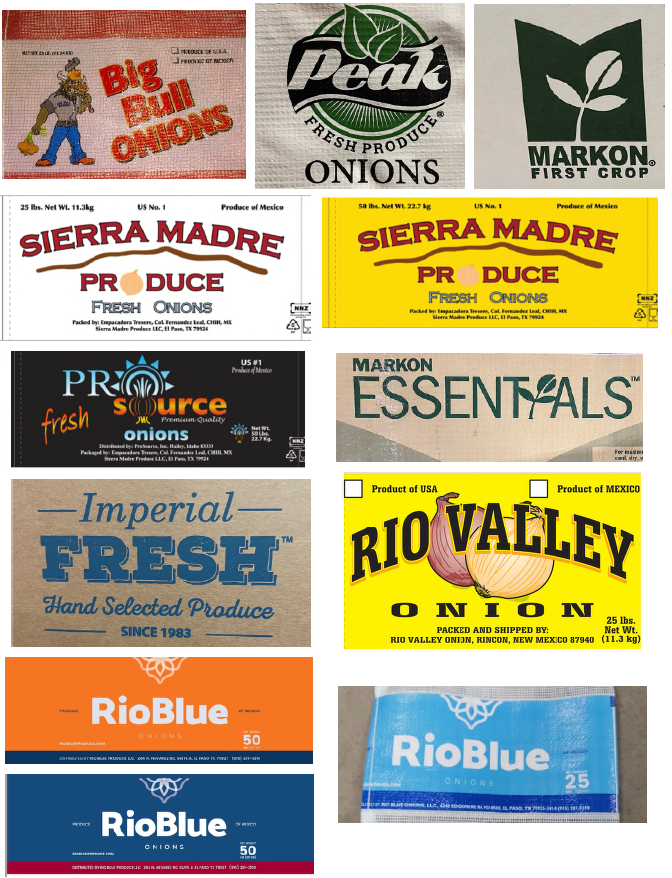
Outbreak Investigation of Salmonella Oranienburg in Whole, Fresh Onions - Sample Product Images (October 2021)

FDA and CDC are investigating illnesses linked to whole, fresh onions. Do not eat, sell, or serve certain onions from ProSource Produce and Keeler Family Farms

The FDA, along with CDC and state and local partners, is investigating a multistate outbreak of Salmonella Oranienburg infections linked to whole, fresh onions. FDA’s traceback investigation is ongoing but has identified ProSource Produce, LLC (also known as ProSource Inc.) of Hailey, Idaho, and Keeler Family Farms of Deming, New Mexico, as suppliers of potentially contaminated whole, fresh onions imported from the State of Chihuahua, Mexico.

On October 22, 2021, Keeler Family Farms issued a voluntary recall of red, yellow, and white whole, fresh onions imported from the State of Chihuahua, Mexico, from July 1, 2021, through August 25, 2021, when the last shipment of onions from the State of Chihuahua, Mexico was received by the firm. These onions contain a label that is marked as “MVP (product of MX)”. Additional details regarding the recalled product are available on the Keeler Family Farms’ recall announcement.

On October 20, 2021, ProSource Produce LLC issued a voluntary recall of red, yellow, and white whole, fresh onions imported from the State of Chihuahua, Mexico, with import dates from July 1, 2021, through August 31, 2021. A full list of recalled product information is available in ProSource Produce LLC’s recall announcement.

These onions supplied by ProSource Produce LLC and Keeler Family Farms were sold to restaurants, food service locations, wholesalers, and retail or grocery stores throughout the United States. The investigation is ongoing to determine the source of contamination and if additional products or firms are linked to illness. Additional information will be provided as it becomes available.

Recommendation

Advice for restaurants, retailers and consumers: Do not eat, sell or serve recalled onions, or products containing recalled onions. All recalled onions were supplied by ProSource Produce LLC and Keeler Family Farms and imported from the State of Chihuahua, Mexico between July 1, 2021 and August 31, 2021. If your onion has a label and it is not from one of the brands listed below originating from the State of Chihuahua, Mexico imported during this timeframe, it is not part of the recalls. If you cannot tell if your onions were recalled, do not eat, sell, or serve them and throw them out.

Recalled onions were distributed under the following brands:

  • Big Bull
  • Peak Fresh Produce
  • Sierra Madre
  • Markon First Crop
  • Markon Essentials
  • Rio Blue
  • ProSource
  • Rio Valley
  • Sysco Imperial
  • MVP

Additional descriptors used for these recalled onion types may include, but are not limited to, jumbo, colossal, medium, summer, and sweet onions.

Additional information about each recall can be found in the ProSource Produce LLC’s recall announcement and the Keeler Family Farms recall announcement.

Onions may last up to three months if stored in a cool, dry place. Restaurants, retailers, and consumers who suspect having purchased such onions may still have them in storage and should not eat, sell, or serve them, and should throw them out.

FDA recommends that anyone who received or suspects having received recalled onions use extra vigilance in cleaning and sanitizing any surfaces and containers that may have come in contact with these products to reduce the risk of cross-contamination. This includes cleaning and sanitizing cutting boards, slicers, countertops, refrigerators, and storage bins.

Consumers who have symptoms of Salmonella infection should contact their health care provider. Most people with salmonellosis develop diarrhea, fever, and abdominal cramps. More severe cases of salmonellosis may include a high fever, aches, headaches, lethargy, a rash, blood in the urine or stool, and in some cases may become fatal.

Suppliers and Distributors: Do not use, ship, or sell red, yellow, or white onions recalled by ProSource Produce LLC or supplied by Keeler Family Farms that were imported from the State of Chihuahua, Mexico, or food products containing such onions. Suppliers and distributors that re-package raw onions should use extra vigilance in cleaning any surfaces and storage areas that may have come into contact with these products. If there has been potential cross contamination or mixing of onions from other sources with these products, suppliers and distributors should discard all comingled and potentially cross-contaminated product.

Recall Information

ProSource Produce LLC has voluntarily recalled red, yellow, and white onions imported from the State of Chihuahua, Mexico, with import dates from July 1, 2021, through August 31, 2021. Additional descriptors used for these onion types may include, but are not limited to, jumbo, colossal, medium, summer and sweet onions. Additional recall information will be made public as soon as it is available from ProSource Inc.

The onions were distributed to wholesalers, broadline foodservice customers, and retail or grocery stores in:

  • 50 lb., 25 lb., 10 lb., 5 lb., 3 lb., and 2 lb. mesh sacks
  • 50 lb., 40 lb., 25 lb., 10 lb., and 5 lb. cartons

And by the following distributors and/or under the following brands:

  • Big Bull
  • Peak Fresh Produce
  • Sierra Madre
  • Markon First Crop.
  • Markon Essentials
  • Rio Blue
  • ProSource
  • Rio Valley
  • Sysco Imperial

Keeler Family Farms has recalled red, yellow, and white whole, fresh onions imported from the State of Chihuahua, Mexico, with import dates from July 1, 2021, through August 25, 2021. The onions were distributed in 25lb and 50lb mesh sacks. They contain a label that is marked as “MVP (product of MX)”.

Additional details regarding the recalled products are available on the Keeler Family Farms recall announcement.


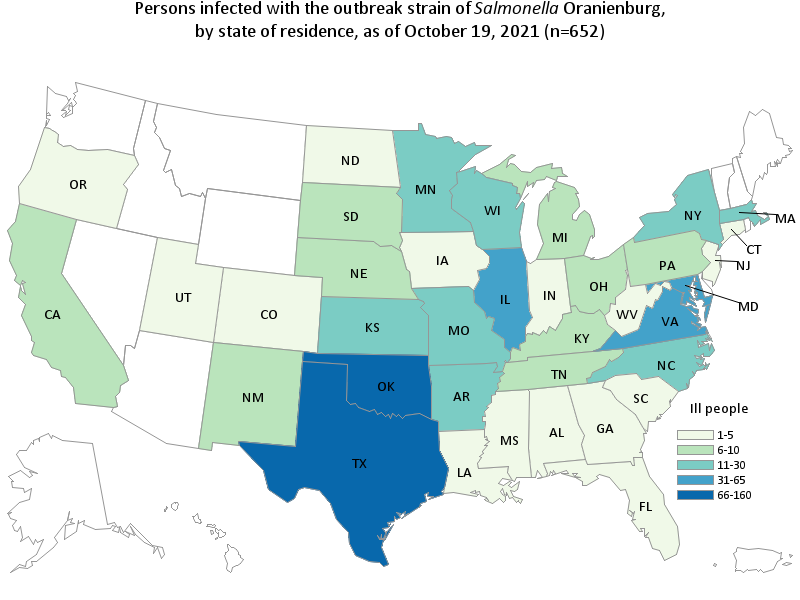
Case Count Map Provided by CDC

Outbreak Salmonella Onions Case Count Map Oct 20 2021

Case Counts

Total Illnesses: 652
Hospitalizations: 129
Deaths: 0
Last Illness Onset: September 30, 2021
States with Cases: AL, AR, CA, CO, CT, FL, GA, IA, IL, IN, KS, KY, LA, MA, MD, MI, MN, MO, MS, NC, ND, NE, NJ, NM, NY, OH, OK, OR, PA, SC, SD, TN, TX, UT, VA, WI, WV
Product Distribution: Nationwide

Canada – Updated Food Recall Warning – Gwillimdale Farms brand Onions, Product of Mexico recalled due to Salmonella

CFIA

Gwillimdale Farms - Onions - label, front

Recall details

Ottawa, October 22, 2021 – The food recall warning issued on October 21, 2021 has been updated to include additional product information. This additional information was identified during the Canadian Food Inspection Agency’s (CFIA) food safety investigation.

Gwillimdale Farms is recalling Gwillimdale Farms brand Onions, Product of Mexico from the marketplace due to possible Salmonella contamination. Consumers should not consume the recalled products described below or foods containing these raw onions. Retailers, distributors, manufacturers, and food service establishments such as hotels, restaurants, cafeterias, hospitals, and nursing homes should not serve, use, or sell the recalled products described below.

The following products have been sold in Ontario and Quebec and may have been distributed in other provinces and territories.

Recalled product

Brand Product Size UPC Codes Additional information
Gwillimdale Farms Onions 2 lbs (907 g) 6 28250 41454 7
  • 07/09/21
  • 07/13/21
  • 07/14/21
  • 07/15/21
  • 07/16/21
  • 07/19/21
  • 07/20/21
Product of Mexico
Gwillimdale Farms Onions 3 lbs (1.36 kg) 6 28250 41455 4
  • 07/16/21
  • 07/19/21
Product of Mexico
Gwillimdale Farms Onions 5 lbs (2.27 kg) 6 28250 41456 1
  • 07/13/21
  • 07/15/21
  • 07/16/21
  • 07/19/21
Product of Mexico

Background

This recall was triggered by a recall in another country by Prosource Produce LLC of Hailey, Idaho. The CFIA is conducting a food safety investigation, which may lead to the recall of other products. If other high-risk products are recalled, the CFIA will notify the public through updated Food Recall Warnings.

The CFIA is verifying that industry is removing the recalled products from the marketplace.

Illnesses

There have been no reported illnesses in Canada associated with the consumption of these products.

Product photos

Printer ready version of photos

  • Gwillimdale Farms - Onions - label, front
  • Gwillimdale Farms - Onions - 5 lbs (2.27 kg) - label, back
  • Gwillimdale Farms - Onions - 3 lbs (1.36 kg) - label, back
  • Gwillimdale Farms - Onions - 2 lbs (907 g) - label, back

Public enquiries and media

Public enquiries
Toll-free: 1-800-442-2342 (Canada and U.S.)
Telephone: 1-613-773-2342 (local or international)
Email: information@inspection.gc.ca
Media relations
Telephone: 613-773-6600
Email: cfia.media.acia@inspection.gc.ca

Research – Biofilms bring safety challenges to food companies

Food Safety News

In the first installment of this series with Sterilex, Food Safety News explores what biofilms are and their unique resistance to attempts to kill the pathogens they protect.

Food processors and manufacturers know the environments in which they operate are friendly to organisms that can taint their products, potentially leading to foodborne illness outbreaks.

Food safety plans and specific good manufacturing processes outlined in those documents are designed to combat common pathogens — including strains of Listeria, Salmonella and E. coli — that could lead to recalls or outbreaks.

Whether or not food safety plans specifically mention “biofilms,” in many cases they are the root cause of contamination in food facilities. Approximately 60 percent of foodborne illness outbreaks are caused by biofilms, according to food safety research.

Research – An assessment of the microbiological quality and safety of unpasteurised milk cheese for sale in England during 2019 – 2020

Journal of Food Protection

Cheese made with unpasteurised milk has been associated with outbreaks of illness. However, there are limited data on the prevalence of shiga-toxin producing E. coli (STEC) in these products, and a lack of clarity over the significance of E. coli as general indicators of hygiene in raw milk cheeses. The aim of this study was to provide further data to address both of these issues as well as assessing the overall microbiological quality of raw milk cheeses available to consumers in England. A total of 629 samples of cheese were collected from retailers, catering premises and manufacturers throughout England. The majority (80%) were made using cow’s milk with 14% made from sheep’s milk and 5% from goat’s milk. Samples were from 18 different countries of origin, with the majority originating from either the UK (40%) or France (35%). When interpreted against EU microbiological criteria and UK guidance, 82% were considered to be of satisfactory microbiological quality, 5% were borderline and 12% were unsatisfactory. Four samples (0.6%) were potentially injurious to health due to the isolation of STEC from one, >10 4 cfu/g of coagulase positive staphylococci in two and >100 cfu/g of Listeria monocytogenes in the fourth sample. Indicator E. coli and Listeria species were detected more frequently in soft compared to hard cheese. Higher levels of indicator E. coli were significantly associated with a greater likelihood of detecting shiga toxin genes ( stx 1 and/or stx 2).

Research- Estimation of the Impact of Foodborne Salmonellosis on Consumer Well-Being in Hungary

MDPI

In Hungary, salmonellosis is one of the most frequent foodborne illnesses. According to our estimation, based on a representative consumer survey with 1001 respondents, the annual number of salmonellosis cases exceeded 90,000, which was 18 times higher than the officially reported data. Salmonellosis infections impose significant direct and indirect costs to the health care system, to companies (as employers) and to households. This study focused on the cost to households by analysing well-being losses due to Salmonella infections, for which the WTP (willingness-to-pay) method was used. WTP measures the cost that an individual would pay to avoid an undesirable harm or health outcome. For estimating WTP, 456 respondents gave quantifiable answers. The average WTP to avoid salmonellosis was 86.3 EUR. Based on this data, the total consumer well-being loss could be estimated to be about 7.87 million EUR per year in Hungary. These results indicate that consumers’ well-being losses alone would necessitate further interventions for Salmonella reduction.

Research – Survival of Salmonella enterica in Military Low Moisture Food Products during Long Term Storage at 4°C, 25°C and 40°C

Journal of Food Protection

Salmonella enterica  has been increasingly implicated in foodborne outbreaks involving low moisture foods (LMF) during the recent decade. This study aimed to investigate the potential for persistence of  Salmonella enterica  in a range of low moisture foods (LMF) during storage at 3 temperatures. LMF products, boil-in-bag eggs (freeze dried product), chocolate protein drink, cran-raspberry first strike bars, mocha dessert bar, and peanut butter, were inoculated with a five strain cocktail of S. enterica and stored at 4°C, 25°C, or 40°C for 36 mos. Salmonella populations remained above 7 log CFU/g in all products stored at 4°C and above 6 log CFU/g in products stored at 25°C excluding the cran-raspberry bars. Storage at 40°C resulted in Salmonella populations above 5.5 log CFU/g in boil-in-bag eggs after 36 mos and demonstrated survivability for 12 mos or less in the other five products.  Additionally, a mocha bar production temperature profile study identified rapid cooling of bars in which the temperatures reached would have no measurable impact on  Salmonella  populations. The results indicate the ability of  Salmonella  to survive in a variety of LMF category foods even under adverse storage conditions and identifies how the food matrix may affect  Salmonella  survivability. The data indicate the importance of establishing food processing procedures that adequately mitigate the presence of Salmonella throughout food processing systems while also increasing comprehensive understanding of Salmonella survivability mechanisms.

Research -Surveillance of Fresh Artisanal Cheeses Revealed High Levels of Listeria monocytogenes Contamination in the Department of Quindío, Colombia

MDPI

Listeriosis is a foodborne disease caused by Listeria monocytogenes. Because outbreaks of listeriosis are associated with the ingestion of contaminated dairy products, surveillance of artisanal cheeses to detect the presence of this microorganism is necessary. We collected three types of artisanal non-acid fresh cheese (Campesino, Costeño, and Cuajada) from 12 municipalities of the Department of Quindío, Colombia. L. monocytogenes was identified using VIDAS® and confirmed with API® Listeria Rapid Kit. L. monocytogenes was detected in 104 (53.6%) of the 194 artisanal fresh-cheese samples analyzed. The highest percentages of contamination were detected in Salento (90.9%), Calracá (65.5%), Armenia (64.9%), and Filandia (50%). A significant association between municipality and contamination with L. monocytogenes was identified. However, no association could be established between the type of cheese and the occurrence of the bacterium. This is the first study on the presence of L. monocytogenes in artisanal fresh cheeses sold in the municipalities of the Department of Quindío, and the findings revealed very high percentages of contaminated samples. The presence of L. monocytogenes in artisanal cheeses remains a public health threat in developing countries, especially Colombia, where existing legislation does not require the surveillance of L. monocytogenes in food. View Full-Text

Italy -Smoked swordfish – Listeria monocytogenes

Salute

Brand : Gastronomia Valdarnese

Denomination : Smoked swordfish

Reason for reporting : Recall due to microbiological risk

Publication date : 22 October 2021

Click to access C_17_PubblicazioneRichiami_1532_azione_itemAzione0_files_itemFiles0_fileAzione.pdf