Category Archives: yersinia enterocolitica

Norway – Yersinia enterocolitica outbreak reported in Norway

Outbreak News Today

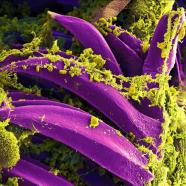
Yersinia p

The Norwegian Institute of Public Health has discovered an increased incidence of the gastrointestinal bacterium Yersinia enterocolitica O3. So far, infection has been detected in 10 people who live in several counties. Outbreak investigation has been initiated in collaboration with relevant municipal chief physicians, the Veterinary Institute and the Norwegian Food Safety Authority.

The National Institute of Public Health collaborates with the municipal health service, the Norwegian Food Safety Authority and the Norwegian Veterinary Institute to map whether patients can have a common source of infection. The patients are interviewed and the local Norwegian Food Safety Authority takes samples from food products in the homes of those who are infected, if residues are available, in order to identify the source of the outbreak if possible.
Norway – Yersinia enterocolitica outbreak linked to pre-washed spinach product

Outbreak News Today 

In a follow-up on the Yersinia enterocolitica O3 outbreak that started in mid-May in Norway, health officials are now saying based on an analysis of patient interviews and purchase information show that 22 of 23 cases (96%) state that they have eaten a pre-washed spinach product the week prior to illness. In one case, it has not been possible to conduct an interview.

Finland – Decline in foodborne outbreaks likely due to COVID-19 measures

Food Safety News

More than four times fewer suspected food and waterborne epidemics have been reported in Finland in the past few months.

Between March and May, four suspected foodborne outbreaks were reported, compared with an average of 18 in previous years, according to the Finnish Institute for Health and Welfare (THL).

The agency believes this is because of the coronavirus pandemic and associated limitations and recommendations. When hands are washed diligently and food is prepared for smaller groups, there are fewer epidemics, the THL reported.

Suspected pathogens in the four outbreaks are Campylobacter, Yersinia, and norovirus.


Norway – Norway investigates source of Yersinia increase

Food Safety News

kswfoodworld.com

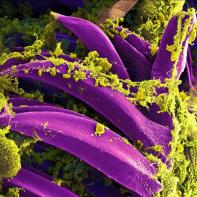
Image CDC

Officials in Norway are investigating an increase in Yersinia infections in the past month.

The Norwegian Institute of Public Health (Folkehelseinstituttet) reported a Yersinia enterocolitica O3 infection has been detected in 13 people living in several counties.

Outbreak investigations to find the source of infection have been started with local authorities, the Veterinary Institute and Norwegian Food Safety Authority (Mattilsynet).

Patients are between 2 and 57 years old and most are women. They live in Agder, Oslo, Rogaland and Trøndelag.

Bacteria with similar DNA profiles have been found in all 13 people and samples were taken during the last two weeks of May and first week of June.

Scotland – HPS publishes annual surveillance reports for Hepatitis A, Hepatitis E, Listeria, Norovirus, Shigella and Yersinia in Scotland for 2019

HPS

12 May 2020

Article: 54/1901

On 12 May 2020, Health Protection Scotland (HPS) published the following annual surveillance reports:

Europe – Yersiniosis – Annual Epidemiological Report for 2017

ECDC

kswfoodworld.com

Image CDC

For 2017, 28 countries reported 6 890 confirmed yersiniosis cases in the EU/EEA. The overall notification rate was 1.8 per 100 000 population and remained stable from 2013–2017. The highest rate was detected in 0–4 year-old children (7.7 per 100 000 population). The highest rates were reported by Finland, Lithuania and the Czech Republic.

Download

Europe – Yersiniosis – Annual Epidemiological Report for 2018

ECDC European Centre for Disease Prevention and Control

For 2018, 29 countries reported 7 204 confirmed yersiniosis cases in the EU/EEA.  The overall notification rate was 1.7 per 100 000 population and remained stable from 2014 to 2018. The highest rates were reported by Finland, Belgium and the Czech Republic. The highest rate was detected in 0-4 year-old children; 7.9 per 100 000 population for males and 6.8 per 100 000 population for females.

Download

USA – Yersinia: Creamworks Creamery may be the source of illnesses in Pennsylvania

Outbreak News Today

kswfoodworld.com

Image CDC

In a public health alert issued recently, the Pennsylvania Department of Health advises residents of Pennsylvania to avoid drinking milk from Creamworks Creamery in Waymart, Wayne County because it may be tainted with dangerous Yersinia enterocolitica bacteria. As of today, department is currently investigating 17 laboratory-confirmed illnesses as well as numerous additional reports of digestive illnesses. According to health agents, the illnesses seem to be connected to only milk sold at the dairy.

Sweden – New outbreak of Yersinia infection is being investigated

Outbreak News

In Sweden, the National Institute of Public Health, or Folkhälsomyndigheten is reporting a new outbreak of infections caused by Yersinia enterocolitica type O3. The source of infection is still unknown.

So far, 26 cases of disease have been confirmed to belong to the outbreak by means of whole-genome sequencing. Another handful of cases are investigated. Since the current outbreak strain of Yersinia enterocolitica type O3 has been found in different parts of the country, it is likely that a food borne infection. The current outbreak strain differs from the one that caused a Yersinia outbreak earlier in the spring.During the middle of May, an number of reported cases of Yersinia infection has been seen in Sweden. Seven regions from different parts of the country have reported cases, but the majority of cases come from the northernmost regions of the country.

RASFF Alert – Yersinia enterocolitica – Teen Spinach

RASFF-Logo

RASFF – Yersinia enterocolitica in teen spinach from Italy in Denmark