Category Archives: Water

Canada – Critter Barn in Zeeland voluntarily closing for week after parasite outbreak

Holland Sentinel

ZEELAND — Critter Barn in Zeeland is voluntarily closing for the week in response to an outbreak of a parasite, the nonprofit announced Tuesday, May 2.

More: Parasite infects three Critter Barn volunteers

Critter Barn at 2950 80th Ave. will clean, scrub and disinfect its farm as an extra measure of precaution, it wrote, expecting to reopen Tuesday, May 9.

The Ottawa County Department of Public Health told WOOD TV-8 on Friday, April 28, there have been eight confirmed cases and three probable cases of Cryptosporidium, a parasite commonly found in water and near farm animals, traced back to Critter Barn. No one has been hospitalized, according to the health department.

Kenya – Mukumu girls deaths linked to E.coli, Salmonella from contaminated water

KBC

Three students and a teacher at Sacred Heart Mukumu Girls in Kakamega died as a result of contaminated water.

The Ministry of Health Friday said preliminary findings had revealed E. coli and Salmonella typhi, a bacterium that is responsible for typhoid fever as the causes of the illness initially suspected to be cholera.

“The Ministry wishes to inform the general public that this disease is likely to be a mixture of E. coli and Salmonella typhi which usually occurs if water sources are contaminated with these micro-organisms” Ag. Director General for Health Dr. Patrick Amoth said.

A comprehensive investigation is however underway even as the top health official ruled out aflatoxin.

Several learning institutions including, Mukumu Girls and Butere Boys in Kamamega and the latest being Mukuuni Boys High School in Chuka, Tharaka Nithi County have been closed after students were taken ill.

“The Ministry of Health has taken several water, food, and human tissue samples, from which preliminary laboratory investigations undertaken have revealed Enterotoxigenic E. coli and Salmonella typhi as the causes of the illness,” he said

“Further laboratory investigations carried out on the grains and pulses for aflatoxin have turned negative for aflatoxicosis- a dangerous fungal infection from poorly stored cereal grains” he added.

Nigeria – 79 died from 1,336 cases of cholera: NCDC

GAZETTENGR

The Nigeria Centre for Disease and Prevention Control (NCDC) has registered 79 deaths and a total of 1,336 suspected cases of cholera in the country so far in 2023.

The NCDC, via its official website, said this in its latest cholera situation epidemiological report.

Cholera is an acute diarrheal illness caused by infection of the intestine with Vibrio cholera bacteria.

People can get sick when they swallow food or water contaminated with cholera bacteria. The infection is often mild or without symptoms but can sometimes be severe and life-threatening.

The agency said 12 states across 43 local government areas reported the suspected cases, with a case fatality ratio of 5.9 per cent.

Research – Montana Raw Water Campylobacter Outbreak Linked to Bird’s Nest

Food Poisoning Bulletin

A Montana raw water Campylobacter outbreak in 2022 has been linked to a bird’s nest in a concrete cache from Kennedy Creek, according to ARS Technica. Nineteen people were sickened in that outbreak, and one person was hospitalized.

New Zealand – Dannevirke water supply on boil water notice due to E.coli

Stuff

Tararua District Council has issued a boil water notice for residents on the Dannevirke water supply due to a detection of E.coli.

A council spokesperson said the boil water notice would continue for three days while further testing is under way.

The council is testing in partnership with Taumata Arowai to ensure testing is accurate and done as quickly as possible.

An update would be provided on April 27, the spokesperson said.

Traveling to Mexico? Here’s how to avoid food poisoning on vacation.

Food Poisoning News

The inexpensive food and delicious smells often tempt travelers to purchase food from the numerous street vendors. Before indulging, however, it is recommended to be vigilant of how ingredients are stored and how the raw meats are handled. Food that is cooked in front of the customer, rather than appearing to be pre-cooked, is a much safer option. When food, even if cooked, is left at room temperature too long, the dangers of cross-contamination and bacterial growth are much higher.

An easy rule to follow is also simply trusting your instincts and avoiding vendors whose food carts are untidy or produce rotten odors. Look for hand-sinks, access to water, or refrigeration units.

Ceviche is also a very common dish in Mexico. Raw fish is exponentially more likely to be contaminated than cooked fish, especially if it is not stored correctly. Travelers should be especially wary of eating ceviche in an area that is farther away from the coast where the fish have to be stored for longer periods of time.  In addition, all ceviche stands should have refrigeration units or copious amounts of ice.

Mexico also has a long history of unsafe drinking water – often the source of “traveler’s diarrhea.” It is generally recommended to not drink water straight from the tap or to use ice cubes made from tap water. Even if the water is purified at the source, the pipes that the water passes through may not be sanitary. Caution should also be exercised when purchasing fruit juices or horchata made with ap water.  Recommendation? Stay hydrated by drinking bottled drinks.

Travelers to Mexico will have a more enjoyable trip if they make wise and informed choices regarding the food they consume. But don’t leave home without anti-diarrheal medicine!

Research – Heterotrophic Plate Count Can Predict the Presence of Legionella spp. in Cooling Towers

MDPI

Abstract

Legionella pneumophila (Lp) colonizes aquatic environments and is a potential pathogen to humans, causing outbreaks of Legionnaire’s disease. It is mainly associated with contaminated cooling towers (CTs). Several regulations, including Spanish legislation (Sl), have introduced the analysis of heterotrophic plate count (HPC) bacteria and Legionella spp. (Lsp) in management plans to prevent and control Legionella outbreaks from CTs. The 2003 Sl for CTs (RD 865/2003) considered that concentrations of HPC bacteria ≤10,000 cfu/mL and of Lsp ≤100 cfu/L are safe; therefore, no action is required, whereas management actions should be implemented above these standards. We have investigated to what extent the proposed standard for HPC bacteria is useful to predict the presence of Lsp in cooling waters. For this, we analyzed Lsp and HPC concentrations, water temperature, and the levels of chlorine in 1376 water samples from 17 CTs. The results showed that in the 1138 water samples negative for Legionella spp. (LN), the HPC geometric mean was significantly lower (83 cfu/mL, p < 0.05) than in the positive Lsp. samples (135 cfu/mL). Of the 238 (17.3%) LP samples, 88.4% (210/238) were associated with values of HPC ≤10,000 cfu/mL and most of them showed HPC concentrations ≤100 (53.7%). In addition, a relatively low percentage of LP (28/238, 11.6%) samples were associated with HPC bacteria concentrations >10,000 cfu/mL, indicating that this standard does not predict the colonization risk for Legionella in the CTs studied. The present study has demonstrated that a threshold concentration ≤100 cfu/mL of HPC bacteria could better predict the higher concentration of Legionella in CTs, which will aid in preventing possible outbreaks.

Research – Surveillance of Vibrio parahaemolyticus pathogens recovered from ready-to-eat foods

Nature.com

This study examined the occurrence of V. parahaemolyticus from ready-to-eat (RTE) food in Delta State, Nigeria. It also characterized antibiotic resistance and virulence gene profile patterns to determine the associated health risk hazard. Food samples total of 380 were collected randomly and assessed for V. parahaemolyticusV. parahaemolyticus isolates were characterized for their virulence and antibiogram potentials using a phenotypic and polymerase chain reaction (PCR) approach. A total of 42 (11.1%) samples were contaminated with V. parahaemolyticus. In 17/42 (40.5%) of the V. parahaemolyticus-positive samples, the densities were < 10 MPN/g. However, 19/42 (45.2%) and 6/42 (14.3%) of the samples had densities of 10 – 102 and > 102 MPN/g, respectively. A total of 67 V. parahaemolyticus isolates were identified using PCR; 54(80.6%) isolates were multidrug resistant. A total of 22 (32.8%), 39 (58.2%), and 67 (100%) of the V. parahaemolyticus harbored the tdhtrh, and tlh toxin genes, respectively. The T3SS1 gene (vcrD1) was detected in 67 (100%) of the isolates. The T3SS2α genes which were vcrD2vopB2, and vopT were detected in 21 (31.3%), 11 (16.4%) and 30 (44.8%) of the isolates respectively. Some of the V. parahaemolytics strains harbored the orf8 gene 20 (29.9%), and a combination of orf8 + tdh genes 12 (17.9%), categorized as pandemic strains. The antibiotic resistance genes detected in this study include blaTEM 33 (49.3), tetM 19 (28.4), cmlA 32(47.8) and sul1 14 (20.9). The concentration levels and prevalence of V. parahaemolyticus in RTE foods indicate contamination of ready-to-eat foods, particularly street foods consumed in the Delta State of Nigeria, threatening public health and consumer safety.

Research – Solar water disinfection effective for E. coli at high, low altitudes

Waterworld

Solar water disinfection (SODIS) may be just as effective at decontamination E. coli-infected water at high altitudes as it is at low altitutdes, according to a press release by Elsevier.

The results of a new study appearing in the Wilderness Medical Society’s official journal Wilderness & Environmental Medicine, published by Elsevier, shows promise this method of disinfection..

Water can be successfully disinfected through several methods: heat, filtration, chemical treatment, and ultraviolet (UV) light. The use of natural sunlight for solar disinfection of contaminated water effectively inactivates many microorganisms, including bacteria, viruses, protozoa, and fungi.

A team of researchers at the University of Colorado Anschutz Medical Campus conducted an experimental study to determine the effect of SODIS on water purification at high altitude (above 2,500 meters) compared to low altitude (below 2,500 meters) among different types of water containers.

“No other published research examining the effectiveness of SODIS at high altitude is available to our knowledge,” said William Mundo, lead investigator of the study. “Adequate access to water, sanitation, and hygiene is a crucial component of human health during emergency situations such as natural disasters and extreme weather events, which are becoming prevalent with climate change.”

A study design previously described in the literature was modified, most notably to evaluate the concentration of E. coli colony-forming units (CFUs) at multiple time points throughout the required six hours of direct sunlight, as recommended by the World Health Organization.

Compared to control containers with no sunlight exposure, the researchers found that all bacteria were inactivated by six hours. At two hours, bacterial inactivation at high altitude was 1.7-fold greater than at lower altitude, however, at the end of six hours, there were no significant differences between high and low altitude samples.

Research – Exploring the Link Between Legionnaires’ Disease and Pneumonia

CDC legionella

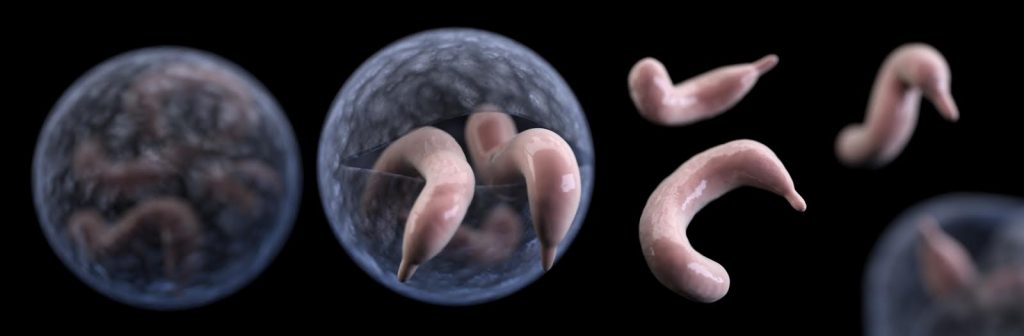
Most of us have heard of Legionnaires’ disease and we are all likely to be aware of pneumonia too, but did you know there is a link between the two?

There are many illnesses and conditions that can affect the lungs. Legionnaires’ disease presents as a serious type of pneumonia. This is an inflammation of the lungs. Below, we’ll go into more detail about the link between Legionnaires’ disease and pneumonia. Both can be fatal, particularly among those who are more susceptible to this type of infection than others.

A version of this story exploring the link between Legionnaires’ disease and pneumonia appeared in Legionella Control International’s newsletter. To get it in your inbox, sign up for free at the link above