Category Archives: Vibrio

Research – Surveillance of Vibrio cholerae serogroups (O1 and O139) from surface and ground water sources in the Vhembe district, Limpopo Province, South Africa

Frontiers In.org

Vibrio cholera is increasingly emerging as a significant public health concern in developing countries. Choleragenic V. cholerae O1 and O139 has reported to cause devastating disease and economic burdens in developing countries. In rural areas of the Vhembe district, most rivers and several communal boreholes are polluted as a result of sanitation issues around these water sources. The aim of this study was to determine the presence of choleragenic V. cholerae O1 and O139 in rivers and communal boreholes. The analysis of physicochemical parameters and molecular techniques was used to establish the adaptation and detect the serogroups of V. cholerae in the water samples. The results reported that electrical conductivities (EC) ranged between 18.78 and 154 μS/cm, with rivers such as Madandze and Mvudi recording >80 μS/cm, and those of the communal boreholes were ranged between 23.4 and 295 μS/cm, which were above the acceptable South African water quality guidelines of 0-70 μS/cm for rivers and communal boreholes. The results further revealed that most of the rivers detected positive for Vibrio cholerae, except for the Mukhase river; the downstream points of Livuvhu and Nwedi rivers and the upstream point of the Nzhelele river; and several of the communal boreholes (Mak B1, B2, Kwe B3, 4, and 6) also tested positive for the presence of Vibrio cholerae. The toxigenic Vibrios was also reported in Mutshundudi, Tshinane rivers, the upstream of Dzindi, Madanzhe, Nwedi, and the downstream of Sambandou rivers, as well as Mak B1, B2, and Kwe3 of communal boreholes. The serogroup O1 was detected on the Mutshundudi and Tshinane rivers, while serogroup O139 was detected upstream of the Dzindi, Madanzhe, Mutshundudi, and Tshinane rivers. There was also detection of the O1 serogroup in the communal boreholes (Mak B1 and Kwe B3), while O139 was only detected in one communal borehole (Mak B2). The development of robust policies, including an integrated water and sanitation safety surveillance web tool for monitoring water resources and public health protection, is required to make sure that drinking water in rural communities is safe for consumption.

France – Frozen raw whole shrimp Ecuador 300G – Vibrio vulnificus

Gov France

Reason for recall
Detection of the presence of Vibrio vulnificus
Risks incurred by the consumer
Vibrio vulnificus
Conduct to be adopted by the consumer
Stop consuming
Return the product to the point of sale
Contact the point of sale
Contact consumer service
Destroy the product
Health recommendation
Foodborne illness caused by Vibrio vulnificus can occasionally result in mild gastrointestinal disorders in healthy individuals, but also in severe non-intestinal disorders (generalized infection/septicaemia) in susceptible individuals or those with pre-existing chronic conditions. In addition, skin infections may occur from pre-existing wounds when handling products.
Contact number
0800084000
Compensation terms
Refund
End date of the recall procedure
Saturday January 25, 2025

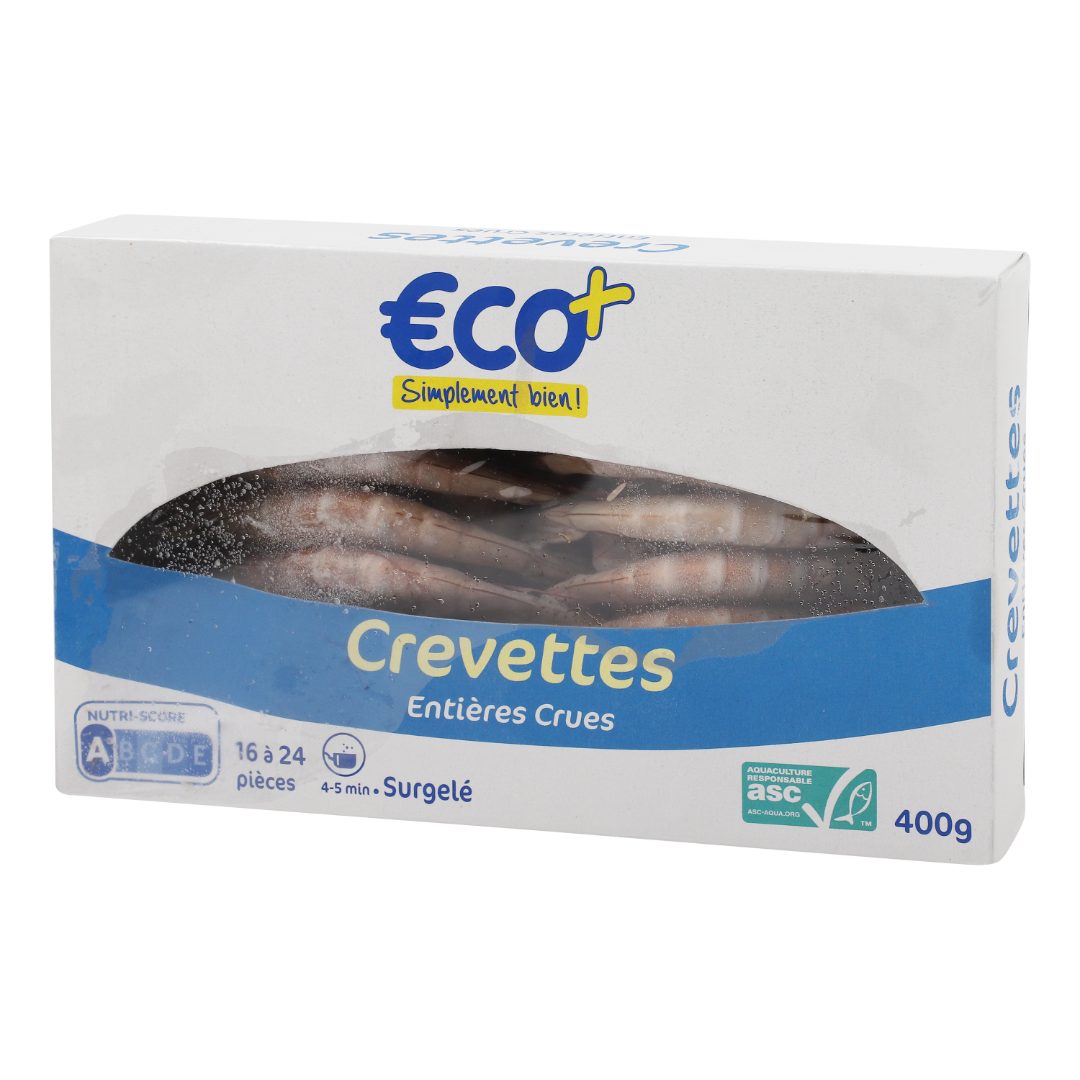
France -WHOLE RAW FROZEN SHRIMPS – 400G Vibrio vulnificus

Gov France

Product Category
Food
Product subcategory
Fishery and aquaculture products
Product brand name
ECO+
Model names or references
WHOLE RAW FROZEN SHRIMPS – 400G
Product identification
GTIN Batch Date
3450970092036 3L15 Minimum durability date 11/30/2025
Packaging
BOX OF 400 G
Start/End of marketing date
From 07/24/2024 to 11/07/2024
Storage temperature
Product to be stored in the freezer
Health mark
870
Geographic area of ​​sale
Whole France
Distributors
E.LECLERC

Research – Antibacterial Activity of Phloretin Against Vibrio parahaemolyticus and Its Application in Seafood

MDPI

Abstract

Although phloretin is widely utilized in the food industry as an additive, its effects on foodborne pathogens remain insufficiently investigated. This study aimed to evaluate the antimicrobial properties of phloretin (PHL) against Vibrio parahaemolyticus (V. parahaemolyticus) and to elucidate the potential mechanisms of action. After PHL treatment, alterations in the cell morphology, cell microstructure, and intracellular contents of V. parahaemolyticus were assessed. Scanning electron microscopy revealed substantial damage to cell integrity, subsequent to PHL treatment. A notable reduction in intracellular components, including proteins, ATP, and DNA, was observed in samples treated with PHL. PHL was shown to inhibit the activities of ATPase, β-galactosidase, and respiratory chain dehydrogenase in V. parahaemolyticus. Furthermore, it was demonstrated to elevate the intracellular levels of reactive oxygen species and promote cell death. After being applied to sea bass, shrimp, and oysters, PHL effectively inactivated V. parahaemolyticus in these seafoods. These findings demonstrate that PHL has potential for application in seafood to control V. parahaemolyticus.

Research – Vibrio parahaemolyticus Foodborne Illness Associated with Oysters, Australia, 2021–2022

CDC

Abstract

The bacterium Vibrio parahaemolyticus is ubiquitous in tropical and temperate waters throughout the world and causes infections in humans resulting from water exposure and from ingestion of contaminated raw or undercooked seafood, such as oysters. We describe a nationwide outbreak of enteric infections caused by Vibrio parahaemolyticus in Australia during September 2021–January 2022. A total of 268 persons were linked with the outbreak, 97% of whom reported consuming Australia-grown oysters. Cases were reported from all states and territories of Australia. The outbreak comprised 2 distinct strains of V. parahaemolyticus, sequence types 417 and 50. We traced oysters with V. parahaemolyticus proliferation back to a common growing region within the state of South Australia. The outbreak prompted a national recall of oysters and subsequent improvements in postharvest processing of the shellfish.

Research – Vibrio parahaemolyticus Foodborne Illness Associated with Oysters, Australia, 2021–2022

CDC

Abstract

The bacterium Vibrio parahaemolyticus is ubiquitous in tropical and temperate waters throughout the world and causes infections in humans resulting from water exposure and from ingestion of contaminated raw or undercooked seafood, such as oysters. We describe a nationwide outbreak of enteric infections caused by Vibrio parahaemolyticus in Australia during September 2021–January 2022. A total of 268 persons were linked with the outbreak, 97% of whom reported consuming Australia-grown oysters. Cases were reported from all states and territories of Australia. The outbreak comprised 2 distinct strains of V. parahaemolyticus, sequence types 417 and 50. We traced oysters with V. parahaemolyticus proliferation back to a common growing region within the state of South Australia. The outbreak prompted a national recall of oysters and subsequent improvements in postharvest processing of the shellfish.

Research – Climate Change Is Making Europe’s Shellfish Dangerous

Medscape

Climate change is putting Europeans at an increased risk of contracting Vibrio-related infections, according to an assessment recently released by the European Food Safety Authority (EFSA).

Warming sea temperatures are expecting to increase the prevalence of the bacteria in seafood, especially in low-salinity or brackish waters, with a rise in antimicrobial resistance among the species creating additional cause for concern.

Vibrio bacteria, traditionally a problem in tropical and subtropical regions, can cause a range of illnesses, from mild gastroenteritis and ear infections to life-threatening conditions like sepsis.

Experts in Europe are calling for proper surveillance, funded research, and public awareness campaigns.

Taiwan reports 147,000 gastroenteritis cases after Mid-Autumn Festival

Taiwan News

TAIPEI (Taiwan News) — Gastroenteritis cases have continued after the Mid-Autumn Festival, and the Centers for Disease Control (CDC) estimated the outbreak will peak in early October.

The CDC announced Tuesday (Sept. 24) that from Sept.15-21, there were approximately 147,000 medical visits for diarrhea, a 5.7% increase from the previous week, per CNA. A total of 123 cluster cases of diarrhea were reported, marking a five-year high for both medical visits and cluster reports.

CDC Epidemic Intelligence Center Director Guo Hung-wei (郭宏偉) said pathogen tests showed 47 positive cases, with norovirus detected in 28 cases, accounting for 60%, followed by Vibrio parahaemolyticus in 12 cases, making up 25.5%.

The gastroenteritis outbreak typically peaks around the Mid-Autumn Festival each year. CDC Deputy Director Lo Yi-chun (羅一鈞) said that the peak of this diarrhea outbreak is expected to occur around early October.

RASFF Alerts – Vibrio – Prawns

RASFF

Vibrio vulnificus in gambas from Ecuador

RASFF

Vibrio cholerae and parahaemolyticus in shrimps from Ecuador in Romania

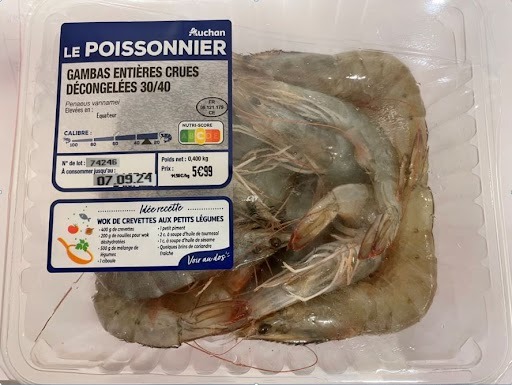
France – WHOLE RAW DEFROSTED PRAWNS CAL 30/40 400G – Vibrio vulnificus

Gov France

  • Product Category Food
  • Product subcategory Fishery and aquaculture products
  • Product brand name AUCHAN
  • Model names or references WHOLE RAW DEFROSTED PRAWNS CAL 30/40 SOLD FRESH PACKED FISH MONGER PACKAGING 400G
  • Product identification
    GTIN Batch Date
    3254562419603 LOT 74246 Expiry date 07/09/2024
    3254562419603 LOT 74205 Expiry date 07/09/2024
    3254562419603 LOT 74452 Expiry date 09/10/2024
    3254562419603 LOT 74526 Expiry date 09/11/2024
  • List of products Poster_reminder_Raw_prawns.pdf Attachment
  • Packaging CALIBER 30/40 – 400G
  • Start/End of marketing date From 08/27/2024 to 09/05/2024
  • Storage temperature Product to be kept in the refrigerator
  • Health markFR62160121CE
  • Additional information The products have been sold in the self-service section of the traditional fishmonger since August 27, 2024
  • Geographic area of ​​sale Whole France
  • Distributors AUCHAN stores and all other brands selling Auchan brand products