Category Archives: Uncategorized

USA- Pinnacle Foods Inc. Recalls Beef Products Due to Possible Processing Deviation – Staphylococcal Toxin – Clostridial Toxin

FSIS USDA 

WASHINGTON, April 28, 2018 – Pinnacle Foods Inc., a Fort Madison, Iowa establishment, is recalling approximately 32,479 pounds of heat-treated, shelf stable beef products due to a possible processing deviation that may have led to staphylococcal enterotoxin and clostridial toxin contamination, the U.S. Department of Agriculture’s Food Safety and Inspection Service (FSIS) announced today.

The ready-to-eat dried, sliced beef items were produced on Jan. 2, 2018 and April 9, 2018. The products have a shelf life of three years. The following products are subject to recall: [View Label (PDF only)]

  • 2.25 oz. glass jars containing “ARMOUR GROUND & FORMED SLICED Dried Beef” with best by dates of JAN-07-21, JAN-08-21, JAN-09-21, JAN-10-21, JAN-11-21, APR-15-21, APR-16-21, APR-17-21, APR-18-21 and APR-19-21 and lot codes 0707011Y11, 0708011Y11, 0709011Y11, 0710011Y11, 0711011Y11, 0715041Y11, 0716041Y11, 0717041Y11, 0718041Y11 and 0719041Y11 .
  • 4.5 oz. glass jars containing “ARMOUR GROUND & FORMED SLICED Dried Beef” with best by dates of JAN-23-21, JAN-24-21, JAN-25-21 and APR-22-21 and lot codes 0723011Y11, 0724011Y11, 0725011Y11 and 0722041YW1.

The products subject to recall bear establishment number “EST. 2AD” inside the USDA mark of inspection. These items were shipped to retail locations nationwide.

The problem was discovered on April 27, 2018 by an Enforcement Investigator and Analysis Officer (EIAO) while conducting a food safety assessment at the establishment.

There have been no confirmed reports of adverse reactions due to consumption of these products. Anyone concerned about an injury or illness should contact a healthcare provider.

USA – Outbreak of E. coli O157:H7 HUS Infections Linked to Romaine Lettuce Grows to 98 Sick

Food Poisoning Bulletin

Lawsuits have been filed, as the multistate outbreak of E. coli O157:H7 HUS infection linked to romaine lettuce from the Yuma, Arizona growing region has grown to include 98 sick. Three more states have reported ill persons: Mississippi, Tennessee, and Wisconsin.

E coli O 157-H7 HUS Romaine Lettuce Outbreak 42718

USA- Dairy Cows May Have Been Source of Unannounced Salmonella Newport Outbreak Linked to Ground Beef in 2016 – 2017

Food Poisoning Bulletin E.coli O157:H7

According to the Morbidity and Mortality Report of the week of April 20, 2018, the long outbreak of Salmonella Newport infections that were linked to ground beef in 2016 and 2017 may have come from dairy cows. In that outbreak, 106 people in 21 states were sickened; 42 people were hospitalized, and one death occurred. This outbreak was not announced to the public at the time.

Canada- Montana Brand Frozen Strawberries Recalled in Canada for Hepatitis A

Food Poisoning Bulletin Hepatitis A kswfoodworld

Groupe Adonis Inc. Montana brand frozen strawberries are being recalled in Canada for possible hepatitis A contamination. The strawberries were sold exclusively from Adonis Markets in Quebec and Ontario. There have been illnesses reported to government officials that are associated with the consumption of this product.

The recalled product is Montana brand frozen strawberries in 1 kg packages. All codes that have been purchased on or before April 14, 2018 are recalled, with UPC number 6222000401487.

This recall was updated on April 20, 2018 with more product information. It was expanded to include the same product, with the same package size and UPC number, but with the addition of all codes purchased on or before April 20, 2018 now included.

Food that is contaminated with hepatitis A will not look, smell, or taste spoiled. Hepatitis A can be a serious illness for people with chronic health conditions, especially liver diseases.

If you bought these strawberries, don’t eat them. Throw them away in a sealed container, or take them back to the store where you purchased them for a refund. Wash your hands well with soap and water after handling this product.

Canada – Updated Food Recall Warning – Certain pork products recalled due to E. coli O157:H7

CFIA

Recall details

Ottawa, April 27, 2018 – The food recall warning issued on April 26, 2018 has been updated to include additional product information. This additional information was identified during the Canadian Food Inspection Agency’s (CFIA) food safety investigation.

Industry is recalling certain pork products from the marketplace due to possible E. coli O157:H7 contamination. Consumers should not consume and distributors, retailers and food service establishments, such as hotels, restaurants and cafeterias, should not sell or use the recalled products described below.

Recalled products

Brand Name Common Name Size Code(s) on Product UPC
Rimbey Foods Ltd. Sliced Pork Belly Variable Sold from February 19 up to and including April 27, 2018 Starts with 0 200118
Fuge Fine Meat Salchicha de Huacho Sausage 630 g All Best Before dates from May 3, 2018 up to and including May 26, 2018 None
Fuge Fine Meat Maple Sage Bratwurst Sausage 630 g All Best Before dates from May 3, 2018 up to and including May 26, 2018 None
Fuge Fine Meat DD Bratwurst Sausage 630 g All Best Before dates from May 3, 2018 up to and including May 26, 2018 None

RASFF Alerts – Aflatoxin – Pistachios – Groundnuts – Almonds – Hazlenuts – Peanuts

kswfoodworld food safety poisoning

RASFF-aflatoxins (B1 = 25.5; Tot. = 26.9 µg/kg – ppb) in pistachios in shell from Iran in Germany

RASFF-aflatoxins (B1 = 7.4; Tot. = 8.2 µg/kg – ppb) in groundnuts, unshelled from Egypt in Germany

RASFF-aflatoxins (B1 = 83.3; Tot. = 102.7 µg/kg – ppb) in almonds from Turkey, with raw material from Uzbekistan in Italy

RASFF-aflatoxins (B1 = 76; Tot. = 85 µg/kg – ppb) in roasted salted pistachios from Iran, via Italy in Slovenia

RASFF-aflatoxins (B1 = 43; Tot. = 51 µg/kg – ppb) in pistachios in shell from Iran, via Turkey in Greece

RASFF-aflatoxins (B1 = 14.6; Tot. = 15.5 µg/kg – ppb) in crushed chilly from India in Greece

RASFF-aflatoxins (B1 = 3.62 µg/kg – ppb) in groundnuts kernels from China in Spain

RASFF-aflatoxins (B1 = 50.0; Tot. = 53.7 µg/kg – ppb) in pistachios in shell from Iran in Germany

RASFF-aflatoxins (B1 = 72.06; Tot. = 80.29 µg/kg – ppb) in hazelnut kernels from Turkey in Germany

RASFF-aflatoxins (B1 = 7.2; Tot. = 8.3 µg/kg – ppb) in prepared peanuts from Turkey in Italy

Research – Plant-Microbe and Abiotic Factors Influencing Salmonella Survival and Growth on Alfalfa Sprouts and Swiss Chard Microgreens

AEM kswfoodworld Salmonella

Microgreens, like sprouts, are relatively fast-growing products and are generally consumed raw. Moreover, as observed for sprouts, microbial contamination from preharvest sources may also be present in the production of microgreens. In this study, two Salmonella enterica serovars (Hartford and Cubana), applied at multiple inoculation levels, were evaluated for survival and growth on alfalfa sprouts and Swiss chard microgreens by using the most-probable-number (MPN) method. Various abiotic factors were also examined for their effects on Salmonella survival and growth on sprouts and microgreens. Community-level physiological profiles (CLPPs) of sprout/microgreen rhizospheres with different levels of S. enterica inoculation at different growth stages were characterized by use of Biolog EcoPlates. In the seed contamination group, the ability of S. enterica to grow on sprouting alfalfa seeds was affected by both seed storage time and inoculation level but not by serovar. However, the growth of S. enterica on Swiss chard microgreens was affected by serovar and inoculation level. Seed storage time had little effect on the average level of Salmonella populations in microgreens. In the irrigation water contamination group, the growth of Salmonella on both alfalfa sprouts and microgreens was largely affected by inoculation level. Surprisingly, the growth medium was found to play an important role in Salmonella survival and growth on microgreens. CLPP analysis showed significant changes in the microbial community metabolic diversity during sprouting for alfalfa sprouts, but few temporal changes were seen with microgreens. The data suggest that the change in rhizosphere bacterial functional diversity was dependent on the host but independent of Salmonella contamination.

Research – Hostile intruder: Toxoplasma holds host organelles captive

PLOS Pathogens Toxoplas

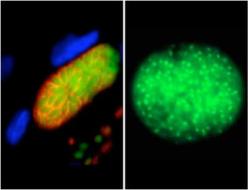
Toxoplasma gondii, a human pathogen of the Apicomplexa phylum, is an obligate intracellular parasite, i.e., a microbe that must reside within a foreign cell to survive and propagate. To achieve intracellular replication, Toxoplasma has mastered three strategies: seclusion, secretion, and scavenging. Upon invasion, the parasite secludes itself from the host cytoplasm by forming the parasitophorous vacuole (PV), a self-made niche that protects it from host cell assaults. Within its PV, Toxoplasma secretes many proteins that transform the PV into a replication-competent milieu, and it subverts many host cell pathways by exporting proteins into the host territory. The parasite relentlessly scavenges nutrients from the host mammalian cytosol and organelles until egress. Hereafter, we focus on the unique properties of the T. gondii PV in relation to the scavenging of host cell–derived nutrients by the parasite.

Research- Protracted Outbreak of Salmonella Newport Infections Linked to Ground Beef: Possible Role of Dairy Cows — 21 States, 2016–2017

CDC 

In January 2017, CDC identified a cluster of Salmonella enterica serotype Newport infections with isolates sharing an indistinguishable pulsed-field gel electrophoresis (PFGE) pattern, JJPX01.0010 (pattern 10), through PulseNet, the national molecular subtyping network for foodborne disease surveillance. This report summarizes the investigation by CDC, state and local health and agriculture departments, and the U.S. Department of Agriculture’s Food Safety and Inspection Service (USDA-FSIS) and discusses the possible role of dairy cows as a reservoir for strains of Salmonella that persistently cause human illness. This investigation combined epidemiologic and whole genome sequencing (WGS) data to link the outbreak to contaminated ground beef; dairy cows were hypothesized to be the ultimate source of Salmonella contamination.

Research – Listeriosis Outbreaks Associated with Soft Cheeses, United States, 1998–2014

CDC

Abstract

Since 2006, the number of reported US listeriosis outbreaks associated with cheese made under unsanitary conditions has increased. Two-thirds were linked to Latin-style soft cheese, often affecting pregnant Hispanic women and their newborns. Adherence to pasteurization protocols and sanitation measures to avoid contamination after pasteurization can reduce future outbreaks.

Listeria monocytogenes is a widely distributed environmental bacterium that can grow at refrigeration temperatures. Infection can cause severe illness and death. Persons at higher risk for infection include older adults, persons with weakened immune systems, and pregnant women and their newborns.

Listeriosis outbreaks have been associated with refrigerated ready-to-eat foods, including hot dogs, delicatessen meats, soft cheeses, milk, and other dairy products. For soft-ripened cheeses, the risk for listeriosis per serving is estimated to be 50- to 160-fold greater for cheese made from unpasteurized milk than pasteurized milk (1). Pasteurization kills L. monocytogenes; however, milk labeled as pasteurized and dairy products made from pasteurized milk can become contaminated due to inadequate hygiene practices after pasteurization. The earliest reported listeriosis outbreak in the United States in 1985, associated with Latin-style cheese (in particular, queso fresco and cotija), resulted in 142 illnesses, 28 deaths, and 20 fetal losses (2). Although the cheese was labeled as made from pasteurized milk, raw milk was inadvertently introduced into the pasteurized milk.

A US retail survey of several soft cheeses (Latin-style, blue-veined, mold-ripened) from 2000–2001 detected L. monocytogenes in 1.3% of cheeses made from unlabeled or unpasteurized milk and 0.5% of cheeses from pasteurized milk (3). However, pasteurized-milk cheese is much more commonly consumed than cheese made from unpasteurized milk. In a survey of food exposures conducted in 10 US states during 2006–2007, respondents reported eating types of soft cheeses (15.3% for blue-veined cheese, 6%–11% for other soft cheeses; pasteurization status unknown) more frequently than they reported eating cheeses made from unpasteurized milk in the previous 7 days (1.6%) (4). We describe outbreaks linked to soft cheese (both soft-ripened and acid-coagulated–ripened cheeses), demographic characteristics of the persons affected, and possible contributing factors to help inform prevention messaging for persons at higher risk.