Category Archives: Uncategorized

USA – Tests confirm E. coli in well water at Sevier County zip line attraction – 500 + Ill

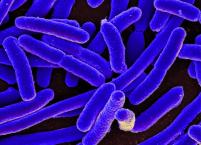
CDC E.coli

Image CDC

WATE.COM


GATLINBURG, Tenn. (WATE) – The Tennessee Department of Health says local testing has confirmed E.coli in well water at a zip line attraction in Sevier County following an outbreak of gastrointestinal illness among visitors.

The health department says testing showed E. coli and total coliforms in well water at CLIMB Works Zipline Canopy Tour. More testing is underway in Nashville.

Total coliforms include bacteria that are found in the soil, in water that has been influenced by surface water, and in human or animal waste. Fecal coliforms are the group of the total coliforms that are considered to be present specifically in the gut and feces of warm-blooded animals.

The state department of health says nearly 3,000 surveys were sent out to people who had booked zip line tours online with CLIMB Works since mid-June. As of Tuesday morning, 808 people had responded with 548 people from multiple states reporting illness, including diarrhea and vomiting.

USA – Pseudomonas Aeruginosa Bacteria Found In Saje Splish Splash Gentle Baby Wash

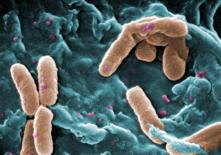
FDA pseud

Saje Natural Wellness is warning customers not to use Splish Splash Gentle Baby Wash, 8.5 fl. oz. and 1.7 fl. oz. (found in the Wee and Well Gentle Baby Care Kit) as it may contain the bacteria Pseudomonas aeruginosa. Pseudomonas aeruginosais an opportunistic pathogen that causes infection and results in bacteria in the blood, particularly in individuals with compromised immune systems.

The product being recalled is:

Brand Name & Product Name Product SKU Package Size Lot Number Expiry Date
Saje Natural Wellness Splish Splash Gentle Baby Wash 700552
(USA/Int’l)
8.5 fl. oz. 814020 All expiry dates
Saje Natural Wellness Splish Splash Gentle Baby Wash (found in Wee and Well Gentle Baby Care Kit) 700561
(USA/Int’l)
1.7 fl. oz. 814020 All expiry dates

The product is distributed in the United States through Saje retail locations in California, New Jersey, and New York. The product is also distributed through online sales across the United States and internationally.

Based on routine sample testing, one lot (814020) of Splish Splash Gentle Baby Wash 8.5 fl. oz. was found to contain the bacteria Pseudomonas aeruginosa.

There have not been any reported adverse reactions for this product in the United States to date.

USA – Pet Food – Recalled: Rad Cat Raw Diet Cat Food – E.coli

Petful

Maker: Radagast Pet Food, Inc.
Cause: Potential for listeria or E. coli contamination
Announcement: Company news release dated July 6, 2018
What was recalled: The following Rad Cat Raw Diet recipes, lot codes and dates:

  • Free-Range Chicken Recipe, 8 oz., 16 oz. and 24 oz. packages, Lot #63057, Best by Oct. 9, 2019
  • Free-Range Chicken Recipe, 8 oz., 16 oz. and 24 oz. packages, Lot #63069, Best by Oct. 23, 2019
  • Free-Range Chicken Recipe, 8 oz., 16 oz. and 24 oz. packages, Lot #63076, Best by Oct. 31, 2019
  • Pasture-Raised Venison Recipe, 8 oz., 16 oz. and 24 oz. packages plus 1 oz. samples, Lot #63063, Best by Oct. 15, 2019

Radagast Pet Food issued a recall over 3 months ago because of potential listeria contamination. Now, they’re issuing this new recall because follow-up tests have indicated that this cat food could be contaminated with listeria or E. coli bacteria.

As with the previous recall, Radagast Pet Food says no pet or human illnesses have been reported so far. The current recall is limited to the 4 specific lots of Rad Cat Raw Diet listed above.

Raw Milk and Petting Farms – The Risks

Raw Milk Facts

group of scientists gathered together and compiled the best available information about raw milk to provide consumers with a better understanding of key health and safety issues associated with the consumption of unpasteurized dairy products.

Real Raw Milk Facts provides information about key topics such as how the food safety track record of raw milk compares with that of pasteurized milk and whether raw milk from grass-fed cows and goats on pasture is safer than milk from animals raised on grain. It also answers questions like, “Is raw milk a probiotic food?” and “Are raw milk cheeses safe?”

The answers to these and more questions can be found in the Hot Topics section of this site.

Petting Farms

Petting zoos and Agricultural Fairs give urbanites a chance to connect with their rural roots.  Kids and adults alike can’t resist furry or feathered farm animals.

While everyone knows that farm animals can sometimes cause injury by biting or kicking, not everyone is aware that these same animals can carry dangerous germs that cause serious illness, especially in young children.

Research – Comparison of three cryptosporidiosis outbreaks in Western Australia: 2003, 2007 and 2011

Cambridge Press 


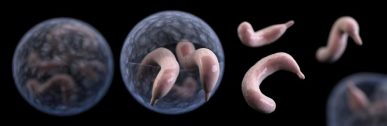
Cryptosporidium is a protozoan parasite that causes the diarrhoeal disease, cryptosporidiosis. Although many species have been identified, the majority of human disease worldwide is caused by two species; Cryptosporidium parvum and Cryptosporidium hominis. In Australia, data from the National Notifiable Diseases Surveillance System (NNDSS) show that cryptosporidiosis outbreaks occur every few years. To better understand the transmission, trends and nature of cryptosporidiosis outbreaks in Western Australia, epidemiological and genomic data from three cryptosporidiosis outbreaks in 2003, 2007 and 2011 were reviewed. The 2007 outbreak was the largest (n = 607) compared with the outbreaks in 2003 (n = 404) and 2011 (n = 355). All three outbreaks appeared to have occurred predominantly in the urban metropolitan area (Perth), which reported the highest number of case notifications; increases in case notifications were also observed in rural and remote areas. Children aged 0–4 years and non-Aboriginal people comprised the majority of notifications in all outbreaks. However, in the 2003 and 2007 outbreaks, a higher proportion of cases from Aboriginal people was observed in the remote areas. Molecular data were only available for the 2007 (n = 126) and 2011 (n = 42) outbreaks, with C. hominis the main species identified in both outbreaks. Subtyping at the glycoprotein 60 (gp60) locus identified subtype IbA10G2 in 46.3% and 89.5% of C. hominis isolates typed, respectively, in the 2007 and 2011 outbreaks, with the IdA15G1 subtype was identified in 33.3% of C. hominis isolates typed in the 2007 outbreak. The clustering of cases with the IdA15G1 subtype in the remote areas suggests the occurrence of a concurrent outbreak in remote areas during the 2007 outbreak, which primarily affected Aboriginal people. Both the C. hominis IbA10G2 and IdA15G1 subtypes have been implicated in cryptosporidiosis outbreaks worldwide; its occurrence indicates that the mode of transmission in both the 2007 and 2011 outbreaks was anthroponotic. To better understand the epidemiology, sources and transmission of cryptosporidiosis in Australia, genotyping data should routinely be incorporated into national surveillance programmes.

USA – Marylanders sickened by Vibrio infection from Venezuelan crab meat

Delaware Online

ANNAPOLIS, Md. (AP) — The health department is warning Marylanders to avoid fresh Venezuelan crab meat after several reports of illness.

News outlets report the Maryland Department of Health has confirmed at least nine cases of Vibrio infections linked to consumption of fresh, unpasteurized crab meat from Venezuela.

No one has died, but two of the nine confirmed cases have resulted in hospitalization.
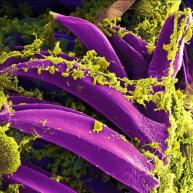
Vibrio bacteria can cause diarrhea, abdominal cramping, vomiting, fever and chills.

The imported crab meat is sold in plastic tubs under different brand names.

Norway – Yersinia enterocolitica outbreak sickens 18 in Norway

Outbreak News Today 


The Norway Institute of Public Health reports investigating an outbreak of gastrointestinal bacteria, Yersinia enterocolitica O:9. To date, 18 people from several counties have been diagnosed with the infection.

Health and Food Safety officials are are trying to determine if there is a common source of infection. Interviews are conducted with the patients, and samples from the homes are taken to find the source of infection, if possible.

“Investigations can be complicated and take time, and in many cases you will not be able to find the source of infection or to clarify if there is a common source”, says Solveig Jore Senior Adviser.

USA – E. coli Illnesses close I Love Sushi and Sodexo’s Café Mario at Nintendo

Food Poison Journal

The Sky Valley Chronicle reports that the King County Health Department announced Friday afternoon it had closed two Redmond restaurants – I Love Sushi and Sodexo’s Café Mario both located at Nintendo of America at 4600 150th Ave NE, Redmond, WA.

The eateries were “Closed by a Public Health food inspector on July 5, 2018 at 5:30 pm due to the imminent health hazard of an ongoing suspected foodborne illness investigation,” said a news release from the health dept.

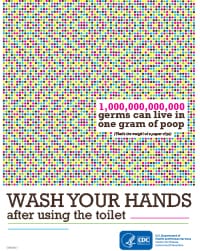
CDC – Handwashing Posters

CDC Handwashing Posters

Some examples and there are links to many others.

superhero poster featuring a boy and girl with african-american features        One trillion germs - english    Poster featuring a princess with african american features


Keep Calm and Wash Your Hands (english version)   Keep Calm and Wash Your Hands (spanish version)         Keep Calm and Wash Your Hands (chinese version)

A nine-panel photo storyboard poster that depicts the step-by-step progression of a foodborne illness outbreak. A food employee is experiencing vomiting at work.  


USA – Two E. coli Outbreaks in Tennessee Sicken 15

Food Poison Journal

The Knox County Health Department (KCHD) is concluding its investigation into a cluster of Escherichia coli (E. coli) O157 infections. Fifteen confirmed cases of E. coli O157 were reported to KCHD recently. All cases were among children, nine were hospitalized and seven developed a complication of the infection called Hemolytic Uremic Syndrome (HUS). Of the children who were hospitalized, one remains in fair condition at East Tennessee Children’s Hospital. Lab results from the Tennessee Department of Health have confirmed two different strains of E. coli O157 caused the children to become ill.