Category Archives: Uncategorized

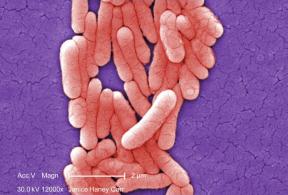
Research – Meningococcal infection: Bacterial aggregates form thick honey-like liquid that flows through blood vessels

Science Daily

Medical researchers and physicists have unraveled a key stage in infection by Neisseria meningitidis, a human pathogen responsible for meningitis in infants and young adults. Bacterial aggregates in blood vessels appear to facilitate the progression of the disease. Even if treatment is administered rapidly, the mortality rate due to meningococcal infections remains very high.

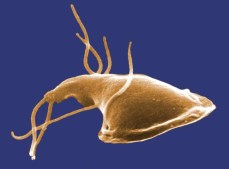
Research – Giardia: The most common intestinal parasite found in humans in the US

Outbreak News Today 


Giardiasis is a diarrheal illness caused by the parasite Giardia intestinalis (also known as Giardia lamblia or Giardia duodenalis). It is the most common intestinal parasite found in humans in the United States.

Globally, it infects nearly 2% of adults and 6% to 8% of children in developed countries and nearly 33% of people in developing countries have had giardiasis.

New Zealand – Various frozen vegetable products 10 July 2018 (Pinguin product added 11 July 2018): Greenyard Group is recalling all batches of Bell Farms brand Steam Veggies carrot, corn, and broccoli and Pinguin brand 4 mixed vegetables due to the possible presence of Listeria monocytogenes.

MPI

Product identification

Product type Frozen vegetables
Name of product
  • Bell Farms brand Steam Veggies carrot, corn, and broccoli (450g)
  • Pinguin brand 4 mixed vegetables (1kg, appears as 1,000g)
Batch marking All batches
Date marking All dates
Package size and description Bell Farms brand Steam Veggies carrot, corn, and broccoli are sold frozen in a 450g plastic bag.

Pinguin brand 4 mixed vegetables are sold frozen in a 1kg plastic bag (appears as 1,000g)

Distribution The product is imported from Belgium and the UK

Bell Farms brand Steam Veggies carrot, corn, and broccoli is sold in Countdown, SuperValue and FreshChoice supermarkets throughout New Zealand.

Information – Lactalis restarts production but restriction on sales remains after Salmonella outbreak

Just Food

Dairy company Lactalis has had the all-clear from French authorities to restart full production of infant formula at its site in Craon, which was at the centre of a salmonella outbreak in December.

However, while production restarted at the plant located in the north-west of the country at the beginning of June, the firm’s products cannot yet be sold at this stage, a Lactalis spokesperson told just-food today (9 July), adding the company hopes to get full clearance from the authorities by the end of this month.

Once that is achieved, then the firm will issue a statement to the market, the spokesperson said.

Kuwait – Salmonella, other bacteria found in Hawally restaurant food samples

Kuwait Times 


KUWAIT: Test results on samples taken from a Hawally restaurant where nearly 300 customers were recently hospitalized with food poisoning came positive for contamination with salmonella and other types of bacteria, said sources familiar with the results.

The Public Authority for Food and Nutrition (PAFN) had received samples of the food served by the popular falafel joint, and tests revealed traces of salmonella and other bacteria which makes the food completely inedible, the sources noted.

Other sources said meanwhile that the owner, who is currently detained with his staff members pending investigations, accused his former partner, a Syrian man, of conspiring with one of the restaurant’s staff members, and had him contaminate the falafel, which resulted in poisoning a large number of customers. The sources added that the former partner would be summoned for interrogation as well.

On a related concern, PAFN urged Kuwait Municipality to hand over authority of the main food lab to it, said the capital food and nutrition department’s manager Abdul Rahman Al-Fares. He noted that food inspectors are incapable of detecting food contamination by virtual inspection, adding that samples have to be collected and examined in labs, which would enable routine inspection rounds to examine food and prevent any further poisoning cases.

Sweden – Thirteen infected with Hepatitis A virus from frozen strawberries

Food Safety News

Thirteen people in Sweden have been infected by Hepatitis A virus linked to frozen strawberries from Poland.

Eleven confirmed and two suspected cases come are reported from four Swedish counties, Skåne, Blekinge, Kalmar and Gävleborg. 

Nine women and four men aged 11 to 92 are affected. The most recent person to fall ill had symptoms begin on June 18.

The Public Health Agency of Sweden (Folkhälsomyndigheten), the National Food Agency (Livsmedelsverket) and local authorities are involved in the investigation. They traced the source of Hepatitis A virus (HAV) infection to frozen strawberries from Poland and informed Polish authorities of their findings.

All of the cases had smoothies or a dessert containing frozen imported strawberries that were not heated prior to consumption. The strawberries were not sold directly to consumers.

Australia – Frozen vegetables pulled from shelves in Woolworths, ALDI, IGA amid Listeria monocytogenes fears

9News

Fears over the deadly listeria strain of bacteria have sparked a recall of popular frozen vegetable products from supermarket shelves across Australia.

Belgium-based company Greenyard Frozen Belgium NV has recalled the frozen vegetables – which include frozen corn, carrot, broccoli and mixed vegetable bags – from Woolworths, IGA and ALDI stores.

The recall comes after a number of listeria deaths in Europe in the past three years.

The European Food Safety Authority said there had been nine deaths among 47 cases of listeria since an outbreak in 2015, the ABC reported.

USA – Restaurant closed after 39 cases of suspected Salmonella

ABC News 


A Massachusetts restaurant has been shut down until further notice after nearly 40 people reported getting sick during a suspected salmonella outbreak.

The North Reading Board of Health says the state Public Health Department received complaints from 39 people who said they got sick at Kitty’s last month. The state confirmed nine cases of salmonella and 30 suspected cases.

The source of the outbreak was traced to the antipasto salad and possibly the house salad dressing.

The restaurant was closed July 5 and allowed to reopen Friday after sanitization.

Hong Kong – *(Updated on 10 July 2018) Not to consume prepackaged frozen vegetable products suspected to be contaminated with Listeria monocytogenes

CFS

Source of Information The United Kingdom Food Standards Agency

*Updated on 10 July 2018

  • The United Kingdom Food Standards Agency (FSA) and the Food Safety Authority of Ireland (FSAI)
  • Rapid Alert System for Food and Feed (RASFF) of the European Commission
Food Product Several kinds of prepackaged frozen vegetable products produced by the Greenyard Frozen UK Ltd

*Updated on 10 July 2018

  • Four kinds of prepackaged frozen vegetable products recalled by the U.K. FSA and the FSAI
  • Frozen vegetable products produced by Greenyard Frozen

UK- Scotland – Listeriosis outbreak – EU member states (update)

HPS Scotland

On 3 July 2018, the European Food Safety Authority (EFSA) issued an update on the multi-country Listeria monocytogenes outbreak. Frozen corn and possibly other frozen vegetables are the likely source of the outbreak, which has affected Austria, Denmark, Finland, Sweden and the United Kingdom since 2015 (see current note 52/1202 at http://www.hps.scot.nhs.uk/ewr/article.aspx?id=77600).

The same strains of L. monocytogenes have been detected in frozen vegetables produced by the same Hungarian company in 2016, 2017 and 2018. This suggests that the strains have persisted in the processing plant despite the cleaning and disinfection procedures that have been carried out. Further investigations are needed to identify the exact points of environmental contamination at the Hungarian plant.

On 29 June 2018, the Hungarian National Food Chain Safety Office (NFCSO) banned the marketing of all frozen vegetable and frozen mixed vegetable products produced by the affected plant between August 2016 and June 2018, and ordered their immediate withdrawal and recall. All freezing activity at the plant has stopped.

As of 8 June 2018, 47 cases including nine deaths had been reported in total. Public Health England (PHE) is working with the Food Standards Agency (FSA), Food Standards Scotland (FSS) and Health Protection Scotland (HPS) to identify the cause of 11 cases in the UK.

To reduce the risk of infection, consumers should thoroughly cook non ready-to-eat frozen vegetables, even though these products are commonly consumed without cooking. This advice is especially important to those with the highest risk of contracting listeriosis – such as the elderly, pregnant women, infants and adults with weakened immune systems. Advice issued by PHE, FSS, FSA and HPS on the proper cooking of frozen vegetables is available at: https://www.food.gov.uk/news-alerts/news/precautionary-advice-on-cooking-fr….

The current list of recalled frozen vegetable products is available on the FSA website at: https://www.food.gov.uk/news-alerts/alert/fsa-prin-35-2018. Updates to this list are being made as and when they become available in the news and alerts section of the FSA website.

[Source: EFSA, 3 July 2018. http://www.efsa.europa.eu/en/press/news/180703]