Category Archives: Uncategorized

Australia – Recall: Woombye Cheeses (various) – E.coli

Food Authority NSW  

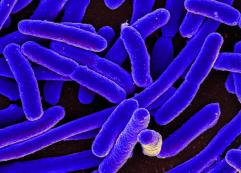
CDC E.coli

Image CDC Enter a caption

The NSW Food Authority advises:

Blackall Country Cheese Pty Ltd trading as Woombye Cheese Company has recalled assorted cheese products from fresh food markets, grocers, independents and selected IGA stores in NSW and QLD due to microbial (high E.coli count) contamination.

Product details:

  • Camembert 200g, Best Before 06.09.18
  • Truffle Triple Cream Brie food service size only, various weights, approx. 1.4kg each, Best Before 17.09.18
  • Triple Cream Brie 200g, Best Before 17.09.18
  • Blackall Gold Washed Rind 200g, (QLD only) wrapped in clear lined cheese wrap, Best Before 10.09.18

Food products contaminated with E.coli may cause illness if consumed. Consumers should not consume this product and should return it to the place of purchase for a full refund.

If you are concerned about your health you should seek medical advice.

For more information on this recall, contact Blackall Country Cheese Pty Ltd on 0413 808 489 or via www.woombyecheese.com.

Rsearch – Food residuals on the food‐contacting surfaces of stainless steel and polypropylene influence the efficacy of ultraviolet light in killing foodborne pathogens

Wiley Online

Abstract

This study was conducted to examine effects of food residues on the survivals of pathogens on stainless steel (SSS) and polypropylene (PPP) after ultraviolet‐radiation (UVR) surface decontamination. Cultures of Escherichia coli O157:H7, Salmonella enterica serovar Typhimurium, Staphylococcus aureus, and Listeria monocytogenes were inoculated on coupons containing deionized water, tryptic soy broth, pork, chicken, cabbage, and milk, respectively. The surface coupons were incubated at 100% relative humidity (RH) and 25°C for 24 hr to produce their own biofilms. UVR (=254 nm) surface decontamination for 120 min resulted in bacterial reductions in the levels of ≥2.5 log10 cfu/coupon. Populations of S. Typhimurium and L. monocytogenes within biofilms declined on SSS harboring chicken juice after UVR for 120 min, showing by <1.5 log10‐reductions. The presence of food residues on the food‐contacting surfaces would facilitate the strong adhesion of these organisms, indicating that bacteria enclosed in biofilms were more resistant to UVR sanitization.

Practical applications

In this study, it seemed to indicate that the incidence of varying food residues such as deionized water, tryptic soy broth, pork, chicken, cabbage, and milk could affect bacterial adhesion–attachment to the food‐contacting surfaces significantly. At least, some food residues such as pork, chicken, and milk would be supposed to provide a favorable environment where major foodborne pathogens are able to grow and produce their biofilms strongly. Especially, it was determined that the gram‐negative bacteria such as Escherichia coli O157:H7 and Salmonella typhimurium showed the higher sensitivity on coupons against ultraviolet‐radiation surface decontamination.

Information -Fish histamine poisoning

Food Authority NSW

Histamine fish poisoning (or Scombroid poisoning) is a type of food poisoning caused by elevated levels of histamine being present in the fish.

Naturally occurring bacteria in fish produce an enzyme which converts histidine in the fish to histamine.

Histamine fish poisoning usually occurs in certain species of fish, such as tuna, sardines, mackerel, swordfish and marlin.

Information at the Link above.

USA -Beef, Pork and Poultry salad and wrap recalled over Cyclospora

Food Poison Journal

The U.S. Department of Agriculture’s Food Safety and Inspection Service (FSIS) is issuing a public health alert out of an abundance of caution due to concerns about contamination with Cyclospora. The beef, pork and poultry salad and wrap products were distributed by Caito Foods LLC, an Indianapolis, Ind. establishment.

The beef, pork and poultry salad and wrap items were produced between July 15 to 18, 2018, with the either “Best By,” “Enjoy by,” Best if Sold By” or “Sell By” dates ranging from July 18 through July 23, 2018. [View Label (PDF only)]

The complete list of products, product labels, the UPC code numbers and other identifying information can be found here.

The products bear establishment number “EST. 39985 or P-39985” inside or next to the USDA mark of inspection. These items were shipped to distribution centers nationwide.

The problem was discovered when Caito Foods LLC received notification from their lettuce supplier, Fresh Express, that the chopped romaine that is used to manufacture some of their salads and wraps was being recalled.

France -French firm allowed to restart cheese sales from site linked to E. coli outbreak

Food Safety News

French officials have allowed a dairy company to resume operations at a site linked to a deadly E. coli outbreak earlier this year.

The dairy, Chabert, was permitted to restart the marketing of raw milk reblochon cheese from its site in Cruseilles, a town in the Haute-Savoie department of the country, last week.

Fifteen children aged 1 to 5 years old from across France were infected with E. coli O26 between February and May. Laboratory tests confirmed 12 were affected by one strain of E. coli O26. Eleven of the infected children developed a type of kidney failure called hemolytic uremic syndrome (HUS). One child died.

HUS is not common in France with between 100 and 160 cases being reported each year. Young children, the elderly, pregnant women and others with weakened immune systems are particularly vulnerable to HUS, a life-threatening disease characterized by acute renal failure and low blood platelets.

Of the other three children, two were infected with an E. coli O26 strain different from that of the other 12 and for one child no strain could be isolated.

Bermuda – Updates on Ciguatera Food Poisoning

Bernews

Officials provided an update on the most recent outbreak of Ciguatera Fish Poisoning [CFP], saying that between 29th June and 17th July, they received 13 reports of CFP, and the “fishes implicated in this outbreak were large Amberjacks and Barracuda.”

The statement said, “The Ministry of Health and the Department of Environment and Natural Resources [DENR] provided an update on the most recent outbreak of Ciguatera Fish Poisoning [CFP] and the types of fish involved, and remind members of the public about the key facts of CFP.

“Between 29th June and 17th July, the Epidemiology and Surveillance Unit of the Ministry of Health [ESU] received 13 reports of CFP. The fishes implicated in this outbreak were large Amberjacks and Barracuda. However, it should be noted that large Yellow jacks and Cubera snappers have been implicated in past cases of CFP in Bermuda.

“Yellow jack and Amberjack may both be mistaken for the Almaco jack, which is locally called ‘Bonita’. Almaco jack / Bonita has not been implicated in any CFP cases in Bermuda.

“Ciguatera fish poisoning [CFP] is caused by toxins [or poisonous substances] from microscopic marine plants, which can enter the food chain and build-up in large predatory fish.

France -French frisbee meet off after food poisoning scare

Channel News Asia

LYON: French authorities on Monday (Jul 30) cancelled an ultimate frisbee youth tournament after dozens of foreign participants were struck down with suspected food poisoning and 11 required hospitalisation.

Twenty Israelis, 10 Belgians and four Colombians began suffering from nausea and vomiting after eating lunch on Sunday at the tournament in Feurs, outside the southeast city of Lyon, police said.

UK -Brit mum-of-two, 37, dies on Greek holiday after eating just ONE mouthful of raw chicken from hotel restaurant

The Sun

A SUPER-FIT mum-of-two died after eating just one mouthful of under-cooked chicken at a Corfu hotel’s restaurant.

Natalie Rawnsley, 37, was on holiday with her husband and two boys when she was struck down with food poisoning.

Her condition rapidly worsened in just 36 hours.

She was rushed to hospital where her husband, Stewart Rawnsley, said she was bleeding heavily.

She eventually died after blood clots formed all over her body, blocking the blood vessels.

The coroner recorded a verdict of death by the accidental consumption of E-Coli infected chicken.

Australia -Recall: Black & Gold Mixed Vegetables 1kg – Listeria monocytogenes

Food Authority NSW 

The NSW Food Authority advises:

Metcash has recalled Black & Gold Mixed Vegetables 1kg from IGA, Campbells and Independent Grocers in NSW, VIC and TAS due to possible microbial (Listeria monocytogenes) contamination.

Product details:

  • Black & Gold Mixed Vegetables 1kg, plastic bag
  • Best Before – All stock

Listeria may cause illness in pregnant women and their unborn babies, the elderly and people with low immune systems. Consumers should not consume this product and should return it to the place of purchase for a full refund.

If you are concerned about your health you should seek medical advice.

For more information on this recall, contact Metcash Consumer Support on 1300 135 690.

Ireland -FSAI Warns Food Businesses on Dangers of Serving Undercooked Minced Beef Burgers

FSAI

The Food Safety Authority of Ireland (FSAI) today reminded caterers and restaurants of the dangers of not cooking minced beef burgers thoroughly to remove harmful bacteria. In Ireland, 3% of raw minced beef is known to be contaminated with a particular harmful type of E. coli (called Shiga toxin-producing E. coli) that can cause kidney failure. Children under five years of age and the elderly are particularly vulnerable to this type of E. coli. The FSAI published an update to its factsheet: Advice for Caterers on Serving Burgers that are Safe to Eat to aid compliance by caterers which aims to ensure that consumers do not fall ill as a result of undercooked minced beef burger products. It advises that minced beef burgers should be temperature tested prior to serving.

The FSAI states that the safety of minced beef burgers is dependent on sufficient cooking to ensure the destruction of harmful pathogens. It recommends that minced beef burgers are cooked to a minimum core (the thickest part of the burger) temperature of 75°C before serving. For those food businesses wishing to offer minced beef burgers prepared at lower temperatures, longer cooking times are required. The temperature and time combinations equivalent to 75°C have been recommended by the FSAI’s Scientific Committee.

According to Dr Pamela Byrne, CEO, FSAI during the summer months, minced beef burgers are a highly popular go-to food for many people however, food safety should never be compromised for speed or to cater for trends in consumer taste.

“There should be no compromise on food safety. We have had people become ill due to a serious food poisoning outbreak associated with undercooked beef burgers in a catering establishment. Chefs and caterers must ensure that minced beef burgers are cooked thoroughly before serving and waiting staff should not ask customers how they want their minced beef burgers cooked. Food service businesses must have a food safety management system in place which identifies the hazards and outlines the critical control points to ensure food safety. Cooking food to the correct temperature is the critical control point for serving safe minced beef burgers. Regular checks should be carried out on the core temperature of minced beef burgers using a probe thermometer, as colour alone is not a reliable indicator. Consumers also need to ensure that when they are cooking minced beef burgers at home, that they are cooked until they are piping hot all the way through. Given the serious health risks associated with consuming undercooked minced beef burgers, this advice should not be taken lightly,” said Dr Byrne.

The FSAI states that:

  • Minced beef burgers must be fully cooked to ensure they are safe to eat
  • Minced beef burgers should be cooked to a temperature of 75°C tested at the thickest part of the burger by a food thermometer or to one of the equivalent temperature time combinations outlined in its factsheet
  • Caterers should not serve, offer or advertise undercooked or ‘pink’ minced beef burgers
  • Failure to serve minced beef burgers that are safe to eat can make people seriously ill and place a food business open to legal action

The factsheet was updated following the publication of the FSAI’s Scientific Committee report, which outlines a trend to serve undercooked minced beef burgers and a corresponding risk of food poisoning. It highlights the risk of deviation from validated thorough cooking time and temperature combinations. It explains that if a food business was to consider an alternative approach, then it would have to first scientifically validate the new approach. Scientific validation is complex and requires specialised microbiological expertise in order to ensure a robust study is designed. People are at risk of getting sick if alternative cooking methods have not been validated. Failure to produce scientific validation to an environmental health officer could leave a food business open to legal action.

The FSAI understands that customers may request undercooked or rare minced meat burgers, but this does not exempt a food business’s duty to sell safe food or protect it from potential prosecution.

“Disclaimers on the menu advising on the dangers of eating undercooked minced beef burgers do not exempt caterers from their obligations under food law to serve only safe food,” Dr Byrne concludes.