Category Archives: Uncategorized

Canada – Bottled Bar Clams Recalled For Possible Clostridium Botulinum

Food Poisoning Bulletin

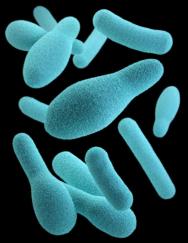
cdc clost spore

Image CDC

Out of the Blue Fish & Seafood Market, located at 1A The Square in Bayfield, Ontario, Canada, is recalling bottled bar clams because they may permit the growth of Clostridium botulinum bacteria. No illnesses or adverse reactions have been reported to date in connection with this recall.

The recalled products are Out of the Blue Fish & Seafood Market bottled bar clams. All units sold from October 1, 2o18 up to and including February 28, 2019 are recalled. In addition, unbranded bottled bar clams are recalled. All units sold from October 1, 2018 up to and including February 28, 2019 are recalled. Neither product has a UPC number.

Foods that are contaminated with this bacteria can become contaminated with the botulism toxin, which can cause severe illness and death. Symptoms of botulism food poisoning include facial paralysis, drooping eyelids, blurred or double vision, difficulty speaking, slurred speech, and unreactive or fixed pupils. Other symptoms can include difficulty swallowing and generalized weakness. As the toxin progresses through the body, downward in a parallel way, breathing will become difficult. An antitoxin is available, but it is only administered in hospitals.

Foods that are contaminated with this toxin do not look, smell, or taste different, and the texture of the food is not affected. Do not even try to taste foods that may contain this toxin.

If you purchased their products, do not eat them. Wrap them well in foil or plastic wrap, then put them into a secure garbage can so other people and animals can’t access them. Or you can return them to the place of purchase for a refund.

Canada – Food Recall Warning – Janes brand Pub Style Chicken Nuggets recalled due to Salmonella

CFIA


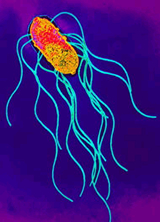
Salmonella kswfoodworld

Image CDC

Recall details

Ottawa, March 21, 2019 – Sofina Foods Inc. is recalling Janes brand Pub Style Chicken Nuggets from the marketplace due to possible Salmonella contamination. Consumers should not consume the recalled product described below.

Recalled products

Brand Name Common Name Size Code(s) on Product UPC
Janes Pub Style – Chicken Nuggets – Breaded Chicken Cutlettes – Uncooked 800 g Best Before: 2019 DE 15 0 69299 12490 3

RASFF Alerts – Aflatoxin – Groundnuts – Peanuts

RASFF-Logo

RASFF – aflatoxins (B1 = 99 µg/kg – ppb) in groundnut kernels for birdfeed from Argentina in Belgium

RASFF – aflatoxins (B1 = 46.8 µg/kg – ppb) in peanuts from Argentina in the UK

RASFF Alerts – Salmonella – Organic Soybean Cake -Organic Rapeseed Cake

RASFF-Logo

RASFF – Salmonella (presence /250g) in organic soybean cake from China, via the Netherlands in Germany

RASFF – Salmonella enterica ser. Jerusalem (presence /25g), Salmonella enterica ser. Livingstone (presence /25g) and Salmonella enterica ser. Poona (presence /25g) in organic soybean cake from Italy in Austria

RASFF – Salmonella enterica ser. Typhimurium (presence /25g) in organic rapeseed cake from Romania, via the Netherlands in Denmark

RASFF – Salmonella enterica ser. Liverpool (presence /25g) in organic sunflower seed press cake for feed from Turkey, via Germany in Germany

RASFF Alert – Animal Feed – Enterobacteriaceae – Dog Chews

RASFF-Logo

RASFF – too high count of Enterobacteriaceae (14900 CFU/g) in dog chews from China in Sweden

Ireland – Recall of Wafle Suche Due to Possible Contamination with Salmonella

FSAI

Summary
Category 2: For Information
Alert Notification: 2019.12
Product: Wafle suche; pack size: 170g
Batch Code: All batches with ‘best-before’ dates from 7/09/2019 to 22/09/19
Country Of Origin: Poland

Message:

As a precautionary measure, Zakład Handlowo-Usługowy “Tadex” Tadeusz Koniak is recalling all batches of the above date range of Wafle suche, due to possible post-production contamination with Salmonella Anatum. Stores in Ireland that sold the implicated batches are displaying in-store recall notices.  Customers should not consume the implicated batches, but can return them to the place of purchase.

Wafle suche

Information – Egg Safety

Food Authority NSW Salmonella Eggs Food Poisoning Food Safety

Enjoy eggs safely

Australia -Recall: Bridgewater Poultry Eggs

Food Authority NSW

The NSW Food Authority advises:

Bridgewater Poultry is conducting a recall of various cartons of 12 eggs. The products have been available for sale at Woolworths and independent stores in NSW, VIC, TAS, ACT and Coles in VIC and SA.

Product details:

  • Woolworths 12 Cage Free Eggs 700g barcode 9300633636982
  • Victorian Fresh Barn Laid Eggs 600g
  • Victorian Fresh Barn Laid Eggs 700g
  • Victorian Fresh Barn Laid Eggs 800g
  • Loddon Valley Barn Laid 600g (VIC and SA only)
  • Best Before BB 20 MAR 19, 23 MAR 19, 27 MAR 19, 30 MAR 19, 3 APR 19, 6 APR 19, 10 APR 19, 14 APR 19, 17 APR 19, 20 APR 19, 24 APR 19, 27 APR 19, 29 APR 19

Problem: The recall is due to potential microbial (Salmonella Enteritidis) contamination.

Food safety hazard: Food products contaminated with Salmonella may cause illness if consumed.

Country of origin: Australia

What to do: Any consumers concerned about their health should seek medical advice and should return the products to the place of purchase for a full refund.

For further information please contact Bridgewater Poultry on (03) 5437 3100 or visit www.loddonvalleyeggs.com.au

Canada – Food Recall Warning – Organic Matters brand Teas recalled due to Salmonella

CFIA CIFA

Recall details

Ottawa, March 21, 2019 – OM Foods Inc is recalling Organic Matters brand teas from the marketplace due to possible Salmonella contamination. Consumers should not consume the recalled products described below.

Recalled products

Brand Name Common Name Size Code(s) on Product UPC
Organic Matters Organic Tulsi Tea Blend (Holy Basil) 1 kg (2.2 lb)
454 g (1 lb)
113 g (1/4 lb)
28318, 30318, 32518, 35318, 02119, 03919, 06519 none
Organic Matters Organic OM Tea Blend 454 g (1 lb)
113 g (1/4 lb)
25118, 31818, 35318, 02119, 07319 none

Research – Vibrio spp. from Yesso scallop (Patinopecten yessoensis) demonstrating virulence properties and antimicrobial resistance

Wiley Online Library

Abstract

We report the prevalence and characterization of Vibrio spp. isolated from marketed Yesso scallop (Patinopecten yessoensis) in Korea. A total of 30 isolates including, V. parahaemolyticus (n = 2), V. alginolyticus (n = 9), V. fluvialis (n = 7), V. diabolicus (n = 7), V. anguillarum (n = 4) and V. aestuarianus (n = 1) were isolated and identified. The phenotypic pathogenicity tests demonstrated that, 18 (60%), 21 (70%), 18 (60%), 7 (23%), 22 (73%), 21 (70%), 9 (30%), and 11 (33%) of the isolates were positive for DNase, protease, gelatinase, lipase, phospho‐lipase, amylase, slime production, and haemolysis, respectively. PCR assays revealed the prevalence of toxR, tlh, VAC, vfh, hupO, and VPI genes among the isolates with varying combinations. A close genetic affinity among V. alginolyticus and V. diabolicus strains was observed. Also the virulence genes specific to one Vibrio species were detected among other species as well. In addition, 29/30 (97%) isolates were multidrug resistant, while higher resistance rates were shown for ampicillin, colistin, vancomycin, and cephalothin. The results imply that the scallops in Korean markets harbor Vibrio spp., which are potentially virulent and multidrug resistant, thus their public health implications should not be underrated.

Practical applications

For many decades, vibrios are known for its importance in seafoodborne illnesses. Yesso scallop is the most popular and extensively cultured scallop variety in Korea. Therefore, we sought to assess the marketed fresh Yesso scallops for the prevalence and molecular characterization of Vibrio species. A total of 30 strains were isolated and identified by a series of biochemical tests, subsequent gyrB gene sequencing and phylogenetic analyses. Six Vibrio spp. were identified with V. alginolyticus as the most prevalent. Interestingly, V. alginolyticus was genetically similar to V. diabolicus. Besides, the virulence genes specific to V. alginolyticus and V. parahaemolyticus were observed in other species as well. It suggests that the detection of the species‐specific genes does not ensure the correct identification of pathogenic vibrios. Further, the occurrence of V. parahaemolyticus‐specific virulence genes in other Vibrio spp. potentially complicates the correct tracking of V. parahaemolyticus infections. In addition, 73% of these Vibrio spp. isolates showed multiple antibiotic resistance (MAR) indices higher than 0.2, which signifies their high risk of infection. Collectively, these results provide important evidence that not only the well‐known pathogenic vibrios like V. parahaemolyticus, but also other Vibrio spp. can act alike because of their similar characteristics.