Category Archives: Uncategorized

Canada -Food Recall Warning – Corned Beef products recalled due to Listeria monocytogenes

CFIA

Recall details

Ottawa, October 11, 2019 – Save on Foods is recalling certain corned beef products from the marketplace due to possible Listeria monocytogenes contamination. Consumers should not consume the recalled products described below.

Recalled products

Brand Name Common Name Size UPC Code(s) on Product
Save on Foods Corned Beef – clerk served at deli counter variable Starts with 298230 Packed on 2019.SE.25 to 2019.OC.10 inclusively
Save on Foods Corned Beef & Swiss Cheese Sandwich 1 unit Starts with 281300 Packed on 2019.SE.25 to 2019.OC.10 inclusively

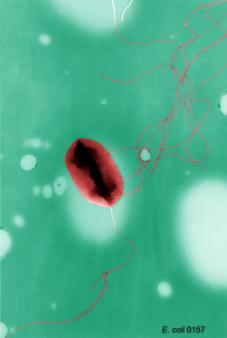
Canada -Updated Food Recall Warning – Various raw beef and raw veal products recalled due to E. coli O157:H7

CFIA

Recall details

Ottawa, October 11, 2019 – The food recall warning issued on October 10, 2019 has been updated to include additional product information. This additional information was identified during the Canadian Food Inspection Agency’s (CFIA) food safety investigation.

Industry is recalling various raw beef and raw veal products from the marketplace due to possible E. coli O157:H7 contamination. Consumers should not consume and distributors, retailers and food service establishments such as hotels, restaurants, cafeterias, hospitals and nursing homes should not sell or use the recalled products described in the link above.

The following products have been sold as indicated in the tables below.

Ongoing investigation

See complete list of recalled products associated with this ongoing investigation.

Research – The effect of sucrose-induced osmotic stress on the sensitivity of Escherichia coli to bacteriocins

NRC Research Press

ABSTRACT

Bacteriocins are antimicrobial peptides, produced by Gram-positive bacteria such as lactococci and staphylococci, that have limited bactericidal action against Gram-negative bacteria. The aim of this paper was to study the sensitivity of three strains of Escherichia coli to bacteriocins: nisin (as Nisaplin®) and two staphylococcal peptides (warnerin and hominin) during sucrose-induced osmotic stress. We found that all peptides in a 0.3 g·mL−1 sucrose solution significantly reduced the number of viable E. coli. The most pronounced antibacterial effect was achieved by nisin against E. coli K-12 (3 log reduction). Slightly less bactericidal effects were observed with warnerin (1 mg·mL−1) and hominin (1 mg·mL−1) in sucrose solution. The lytic activity of staphylococcal peptides was detected by decreased optical density and viable cell counts. Moreover, it was confirmed by the increased amount of DNA and protein in the medium and the morphological changes detected by atomic force microscopy after 20 h of treatment. Zymographic analysis revealed the release of lytic enzymes from E. coli cells after treatment with staphylococcal peptides and sucrose. These results indicated that the antimicrobial action of peptides can be extended to Gram-negative bacteria via combination with high concentrations of sucrose.

Research – Weak spot in pathogenic bacteria

Science Daily mrsa

Antibiotics are still the most important weapon for combatting bacterial infections. But medical science is running out of “ammunition” because of more and more frequently occurring resistances. Scientists from the Technical University of Munich and the Max Planck Institute of Molecular Physiology has now elucidated the structure of the proteolytic complex ClpX-ClpP. This is a key to development of innovative antibiotics which target the degradation process of defective proteins in bacteria.

Almost 700,000 people in Europe suffer from infections every year through antibiotic-resistant pathogens; approximately 33,000 of them die. Despite this enormous and globally increasing danger, very few new antibiotics have been developed and approved in the past few decades.

There is no improvement in sight. That is why it is urgently necessary to find new points of attack in pathogenic bacteria and to develop new antibiotics which exploit these weak spots.

New mechanism of action destroys bacteria

A particularly promising point of attack for antibacterial therapies is the proteolytic enzyme ClpP: on the one hand it plays an important role in bacterial metabolism, and on the other hand it ensures the controlled degradation of defective proteins.

But for this purpose it requires the ClpX protein as a starting aid. In the complex with ClpP, ClpX identifies proteins which should be degraded, unfurls them and guides them into its barrel-like degradation chamber.

Scientists in the groups led by Prof. Stephan Sieber, Technical University of Munich (TUM) and Prof. Stefan Raunser, Director at the Max Planck Institute of Molecular Physiology in Dortmund, have now elucidated the three-dimensional structure of the ClpX-ClpP proteolytic complex for the first time and thereby established an important basis for future pharmacological strategies.

A new class of potential antibiotics — the so-called acyldepsipeptide (ADEP) antibiotics — also brings about an uncontrolled degradation through ClpP without the support of ClpX. As a result also vital proteins are destroyed — with lethal consequences for the bacteria.

This unique mechanism of action has considerable innovation potential in the fight against pathogenic bacteria. Whereas common antibiotics act through the inhibition of vital processes, in this case the antibacterial effect is achieved through the activation of a process.

USA – UNFI Voluntarily Recalls Arla Apetina Marinated Feta & Olives in Oil, Pitted Because of Possible Health Risk

FDA “Label, Arla Apetina Marinated Feta & Olives in Oil, Pitted”

UNFI is voluntarily recalling cases of Arla Apetina Marinated Feta & Olives in Oil, Pitted distributed by UNFI. The product requires refrigeration to ensure food safety and we have learned that some product distributed to retail customers from 2 UNFI distribution centers may have been exposed to temperatures above refrigeration during storage and/or distribution by UNFI’S customers. Extended exposure to above-refrigerated temperatures may allow growth of bacteria such as Clostridium Botulinum to reach unsafe levels, which if consumed can cause life-threatening illness or death. Consumers are warned not to use the product even if it does not look or smell spoiled. No illnesses, including allergic reactions, involving this product have been reported to date in connection with this problem.

Botulism, a potentially fatal form of food poisoning, can cause the following symptoms: general weakness, dizziness, double-vision and trouble with speaking or swallowing. Difficulty in breathing, weakness of other muscles, abdominal distension and constipation may also be common symptoms. People experiencing these symptoms should seek immediate medical attention.

A total of 75 cases of this product were distributed to 69 retail customers serviced by UNFI distribution centers in Greenwood, IN. and Sarasota, Fla. between Jan. 1, 2019 and Aug. 30, 2019 to the following states IN, KY, IL, MI, FL, OH, MO. No other distribution centers or products in states that are not listed are impacted by this notice. Additionally, Arla Apetina Marinated Feta & Olives in Oil, not sold by UNFI Greenwood or Sarasota are not impacted by UNFI’s voluntary recall.

The product comes in a 3.1-pound plastic package marked with UPC code 9393605697.

Retailers who have purchased the Arla Apetina Marinated Feta & Olives in Oil, Pitted product from these two distribution centers should remove any remaining product from the supply chain and discard the product in a manner that would prevent its consumption or distribution and contact their UNFI account managers for a full refund. Consumers with questions may contact the company at 800-451-2525.


Canada – Updated Food Recall Warning – Various raw beef and raw veal products recalled due to E. coli O157:H7

CFIA

Ottawa, October 10, 2019 – The food recall warning issued on October 9, 2019 has been updated to include additional product information. This additional information was identified during the Canadian Food Inspection Agency’s (CFIA) food safety investigation.

Industry is recalling various raw beef and raw veal products from the marketplace due to possible E. coli O157:H7 contamination. Consumers should not consume and distributors, retailers and food service establishments such as hotels, restaurants, cafeterias, hospitals and nursing homes should not sell or use the recalled products described below.

The following products have been sold as indicated in the tables below.

Ongoing investigation

See complete list of recalled products associated with this ongoing investigation.

There have been no reported illnesses associated with the consumption of these products.


Canada – Updated Food Recall Warning – Various Gordon Choice brand frozen, diced chicken products recalled due to Listeria monocytogenes

CFIA

listeria

Image CDC

Ottawa, October 10, 2019 – The food recall warning issued on October 9, 2019 has been updated to include additional product and distribution information. This additional information was identified during the Canadian Food Inspection Agency’s (CFIA) food safety investigation.

Gordon Food Service is recalling various Gordon Choice brand frozen, diced chicken products from the marketplace due to possible Listeria monocytogenes contamination. Consumers should not consume and distributors, retailers and food service establishments such as hotels, restaurants, cafeterias, hospitals and nursing homes should not sell or use the recalled products described in the link above. If you have received the recalled products and have further transformed or repackaged them, you are advised to contact the Canadian Food Inspection Agency (CFIA).

Ongoing investigation

See complete list of recalled products associated with this ongoing investigation.

Imported diced chicken has been associated with an outbreak investigation, however, at this time, there have been no confirmed illnesses associated with the products identified in this Food Recall Warning.

USA – Secondary Listeria Recalls Issued For Tip Top Chicken Products

Food Poisoning Bulletin

A number of secondary recalls for possible Listeria monocytogenes contamination have been made for consumer products made with Tip Top frozen diced cooked ready-to-eat chicken. That company recalled its products that were made between January 21, 2019 and September 24, 2019. No illnesses have been reported to date in connection with any of these recalls. See the list at the link above.

USA – Mrs. Stratton’s Recalls Chicken and Tuna Salads For Possible Listeria monocytogenes

Food Poisoning Bulletin

Mrs. Stratton’s is recalling some chicken and tuna salad products in response to the Tip Top Poultry precooked chicken recall for possible Listeria monocytogenes contamination. No reports of illness have been received to date in connection with this issue.

RASFF Alerts – Aflatoxin – Ochratoxin A – Chilli Powder – Roasted Pistachios – Groundnut Kernels – Dried Figs

RASFF-Logo

RASFF – aflatoxins (B1 = 11.67; Tot. = 12.47 µg/kg – ppb) and ochratoxin A (63.1 µg/kg – ppb) in chili powder from Sri Lanka in Poland

RASFF – aflatoxins (B1 = 13.8; Tot. = 14.8 µg/kg – ppb) in roasted pistachios in shell from Turkey in Germany

RASFF – aflatoxins (B1 = 12.7; Tot. = 15.2 µg/kg – ppb) in groundnut kernels from the United States in the UK

RASFF – aflatoxins (B1 = 15.2; Tot. = 28.9 µg/kg – ppb) in dried figs from Turkey in Slovenia