Category Archives: Uncategorized

Canada – Magnesium Citrate Oral Solution; Microbial contamination

Gov Canada

Summary

Product
Magnesium Citrate Oral Solution
Issue
Health products – Product quality
What to do
  • Stop using the products listed. Consult your health care professional if you have used these products and have health concerns, and for advice on which health products are best for you and your family.
  • Report any health product adverse events or complaints to Health Canada.

Affected products

Issue

Presence of Gluconacetobacter liquefaciens in affected lots.

What you should do

  • Stop using the products listed. Consult your health care professional if you have used these products and have health concerns, and for advice on which health products are best for you and your family.
  • Report any health product adverse events or complaints to Health Canada.

RASFF Alerts – Moulds – Tortillas

RASFF

Tortillas infested with moulds from Poland in Belgium, France, Germany, Lithuania, UK and Netherlands

China – In China’s Wuhan, cholera-causing bacteria in turtles strikes nerve

Reuters

Detection in the Chinese city of Wuhan of a bacteria that caused cholera in a student and was separately found in samples from softshell turtles at a food market has struck a sensitive nerve with ordinary Chinese people, with some relating it to COVID-19.

The food market where samples from softshell turtles tested positive of the pathogen capable of causing cholera has been disinfected, local authorities said late on Thursday.

USA – Reoccurring, Emerging, and Persisting Enteric Bacterial Strains

CDC

Some enteric bacterial strains cause acute outbreaks linked to specific sources. Other strains, referred to as reoccurring, emerging, or persisting (REP) strains, can reoccur and periodically cause acute outbreaks. They can also emerge and increase in frequency or persist and cause illnesses over periods of months or years, despite investigation and prevention efforts.

Investigators use a laboratory method called whole genome sequencing (WGS) to identify the DNA fingerprints of bacteria from ill people and from foods, animals, and the environment. These DNA fingerprints represent strains of bacteria.

Investigators use these DNA fingerprints to find outbreaks of enteric (gastrointestinal) diseases. When scientists identify a group of people who got sick around the same time with a strain with the same DNA fingerprint, this represents a possible outbreak. Investigators then work to determine what caused the illnesses. These acute outbreaks tend to start off with a significant rise in illnesses followed by a significant decline over a short period of time.

WGS has also enabled investigators to find and investigate groups of illnesses that are caused by the same strain but that occur over time periods longer than an acute outbreak. These strains can reoccur and periodically cause acute outbreaks, emerge and increasingly cause illness, or persist and cause illnesses over periods of months or years. They may continue to cause illnesses despite investigation and prevention efforts.

Identifying a strain as a REP strain is based on many factors, including the number of illnesses, whether illnesses are increasing, the characteristics of the strain (e.g., multidrug resistance, high virulence, increased transmissibility), and whether the strain is the cause of large or frequent outbreaks.

REP Strain Characteristics

  • Reoccurring strains: Strains repeatedly causing acute outbreaks separated by periods during which the strain either does not make people sick or causes illnesses at very low levels.
  • Emerging strains: Previously novel or rare strains that increasingly cause illnesses or show the potential to cause increasing illness.
  • Persisting strains: Strains causing illnesses consistently over a long time.

CDC’s Role

Since 2019, CDC has used the PulseNet system to identify and monitor REP strains of several major pathogens, including SalmonellaE. coli O157:H7, Listeria, and Campylobacter. PulseNet uses a combination of different WGS tools for identifying and tracking these strains and will develop more as new strains are identified and investigated.

CDC uses information gained from investigations of REP strains to better understand their sources, track how they change over time, and collaborate on measures to reduce their spread.

CDC plans to share detailed information about some REP strains. Links will be available on this web page.

Czech Republic – Sliced ​​natural semi-hard cheese – Visible Mould

Potravinynapranyri

Place of inspection:
Ustek ( Mirove namesti 57, 411 45 Ustek )
Company ID: 69412936
Food group: Milk and milk products Cheese

Sliced ​​natural semi-hard cheese
Category: Dangerous food
Unsatisfactory parameter:

mold visible to the eye

Brown and white mold colonies were found on the surface of the food. Food is not considered safe if it shows signs of spoilage.

Expiration date: 11.05.2022
Packaging: PP plastic
Quantity of product in package: 100 g
Sampling date: 29. 4. 2022
Reference number: 22-000194-CAFIA-CZ
The sample was found by an official inspection of the State Agricultural and Food Inspection Authority.

USA -Fish and Fishery Products Hazards and Controls

FDA

This guidance represents the agency’s current thinking on the hazards associated with fish and fishery products and appropriate controls for those hazards. It does not create or confer any rights for or on any person and does not operate to bind FDA or the public. An alternative approach may be used if such approach satisfies the requirements of the applicable statute and regulations.

How to Report Seafood-Related Toxin and Scombrotoxin Fish Poisoning Illnesses

To help FDA effectively investigate, remove unsafe seafood products from the market, and develop new prevention strategies, the FDA relies on illness reporting from public health officials and healthcare providers.

U.S. Department of Health and Human Services
Food and Drug Administration
Center for Food Safety and Applied Nutrition
(240) 402-2300
SeafoodHACCP@fda.gov

This guidance is intended to assist processors of fish and fishery products in the development of their Hazard Analysis Critical Control Point (HACCP) plans. Processors of fish and fishery products will find information in this guidance that will help them identify hazards that are associated with their products, and help them formulate control strategies. The guidance will help consumers and the public generally to understand commercial seafood safety in terms of hazards and their controls. The guidance does not specifically address safe handling practices by consumers or by retail establishments, although many of the concepts contained in this guidance are applicable to both. This guidance is also intended to serve as a tool to be used by federal and state regulatory officials in the evaluation of HACCP plans for fish and fishery products.

Items Available


Introductory Video

Transcript of Video   |   Help with CaptionsExternal Link Disclaimer


Seafood HACCP Video Series

The FDA has developed a Seafood HACCP Video Series, designed to help the seafood industry and federal and state regulators better understand specific concepts described in FDA’s Fish and Fishery Products Hazards and Controls Guidance. The series consists of 6 videos covering the following topics: Time-Temperature Indicators, Time and Temperature Controls during Unrefrigerated Processing, Secondary Processor Receiving and Storage Controls, Heat Process Validation, Primary Processor Scombrotoxin Controls – Overview and Testing at Receiving, and Primary Processor Scombrotoxin Controls – Harvest Vessel Records.


Download the Guidance

June 2022

This guidance represents the agency’s current thinking on the hazards associated with fish and fishery products and appropriate controls for those hazards. It does not create or confer any rights for or on any person and does not operate to bind FDA or the public. An alternative approach may be used if such approach satisfies the requirements of the applicable statute and regulations.

Note: This document was corrected on August 3, 2011. The Agency corrected a typographical error appearing in the April 2011 version of this document. The Agency corrected “15%” to “1.5%” so that the sentence in “Chapter 11: Aquaculture Drugs” now reads “Sodium sulfite Used in a 1.5% solution for 5 to 8 minutes to treat eggs in order to improve their hatchability.”

Errata: Corrections and Omissions (PDF – 67KB)

RASFF Alert – Animal Feed – Salmonella – Chicken Meal – Poultry Meal – Dog Chews

RASFF

Salmonella in chicken meal from The Netherland in Italy.

RASFF

Salmonella in poultry meal from the UK in Belgium and the Netherlands

RASFF

Salmonella Newport in dog chews from Poland in Germany

Hong Kong- Food Safety Focus – Histamine in Fish and Fish Products

CFS

 Histamine in Fish and Fish Products

Reported by Mr. Kenneth Yung, Research Officer,
Risk Assessment Section, Centre for Food Safety

Fish is an important part of many types of cuisine that we savour.  However, the consumption of fish and fish products containing high level of histamine may cause scombrotoxin fish poisoning (SFP), also called histamine poisoning.  In Hong Kong, the Centre for Health Protection of the Department of Health recorded a total of 26 local SFP cases, affecting 45 persons from 2009 to 2018.  In this article, we discuss how histamine is formed and the ways to control level of histamine in fish and fish products..
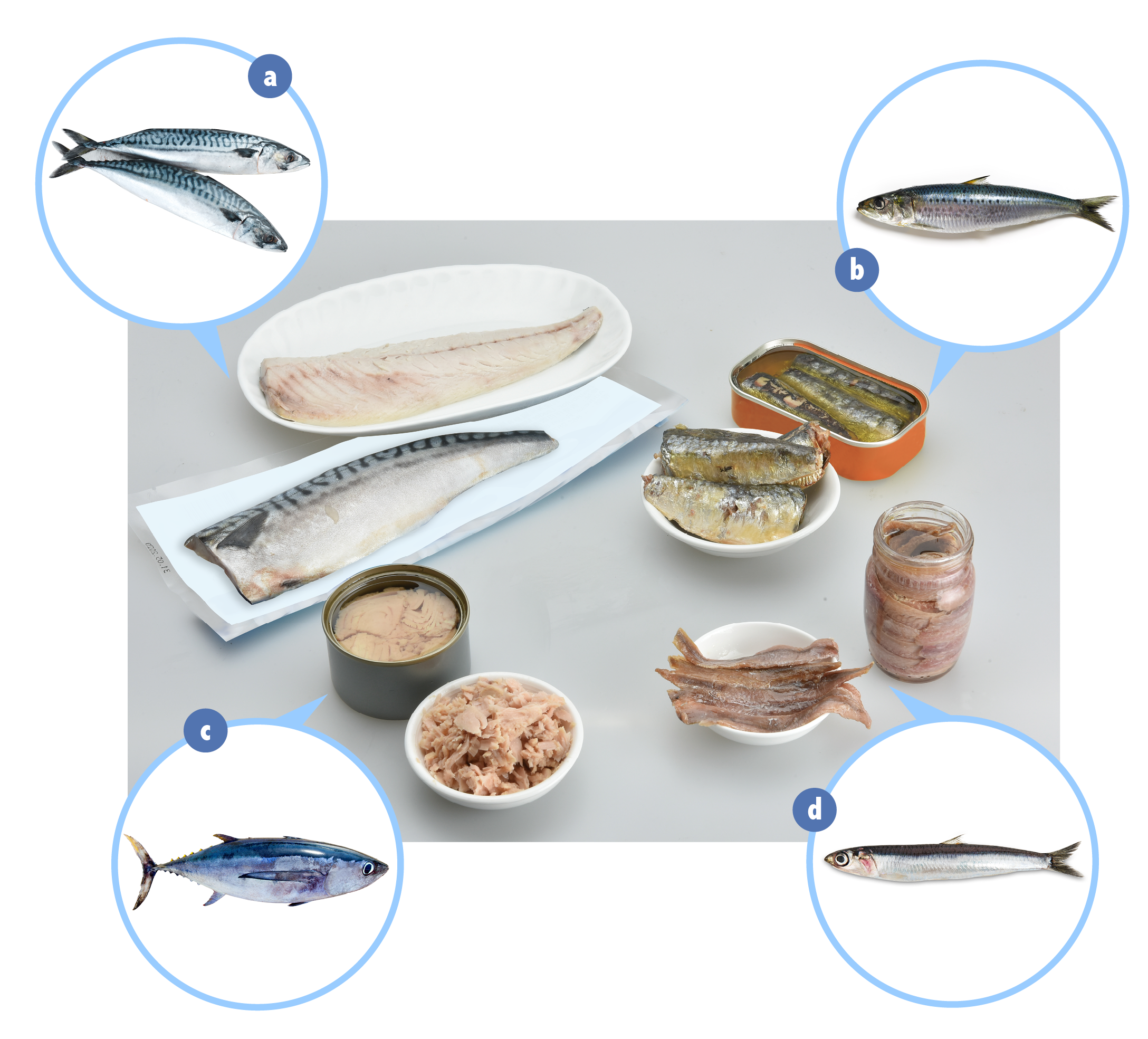
Examples of fish which contain elevated levels of naturally

Examples of fish which contain elevated levels of naturally occurring histidine: (a) mackerel, (b) sardine, (c) tuna and (d) anchovy.  Some of their respective products have also been found to contain high levels of histamine.

Formation of Histamine in Fish and Fish Products

Histamine is a toxic metabolite produced by histamine-producing bacteria during spoilage and fermentation of fish and fish products.  Many histamine-producing bacteria are part of the natural microflora of the skin, gills and gut of freshly caught fish.  Histidine decarboxylase (HDC) enzymes, synthesized by histamine-producing bacteria when they multiply, convert the amino acid histidine that are naturally present in fish into histamine.

The level of histamine in fish and fish products mainly depends on species of fish and time-temperature control. Certain fishes like mackerel, sardine, tuna and anchovy naturally contain high amount of histidine and have been associated with SFP cases in Hong Kong and/or other places.

Time and temperature control is the most effective method for ensuring food safety for fish species prone to histamine production.  In the absence of proper time-temperature control such as refrigeration and freezing, formation of histamine may occur at any point throughout the supply chain.  Previous study conducted jointly by the Food and Environmental Hygiene Department and the Consumer Council revealed that high levels of histamine (up to 2600 mg/kg) that can cause SFP were detected in opened canned fish samples that were left at room temperature for 24 hours.  However, histamine was not detected in samples that were kept at 2°C for up to 168 hours.

Health Effects of Histamine

SFP is caused by the ingestion of food containing high levels of histamine i.e. consuming a serving size of 250g fish or fish product with histamine level exceeding 200 mg/kg may cause symptoms in healthy individuals.  Symptoms of SFP include tingling and burning sensation around the mouth, facial flushing and sweating, nausea, vomiting, headache, palpitations, dizziness and rash.  Exacerbation of asthma and more serious cardiac manifestations were reported in more severe cases.  The onset of symptoms is within a few hours after consumption and these symptoms will normally disappear in 12 hours without long term effect.

Control of Histamine in Fish and Fish Products

High levels of histamine can build up in fish and fish products before any signs of spoilage (e.g. bad smell or taste) develop.  Therefore, measures for control of histamine should be taken along the food chain from harvest to consumption.

Care should be taken that the cold chain is maintained at or below 4°C along the supply chain, including points of transfer such as offloading of fish from the vessel and processing procedures.  Frozen fish and fish products should be kept at or below -18°C.  Transport vehicles or vessels should be adequately equipped to keep fish cold and pre-chilled before loading fish where applicable.  Adequate heat treatment (e.g. cooking, hot smoking) can kill histamine-producing bacteria and inactivate HDC enzymes, but cannot destroy pre-formed histamine.  Recommendations in the Code of Practice for Fish and Fishery Products (CAC/RCP 52-2003), issued by Codex Alimentarius Commission, should be observed to ensure food safety.
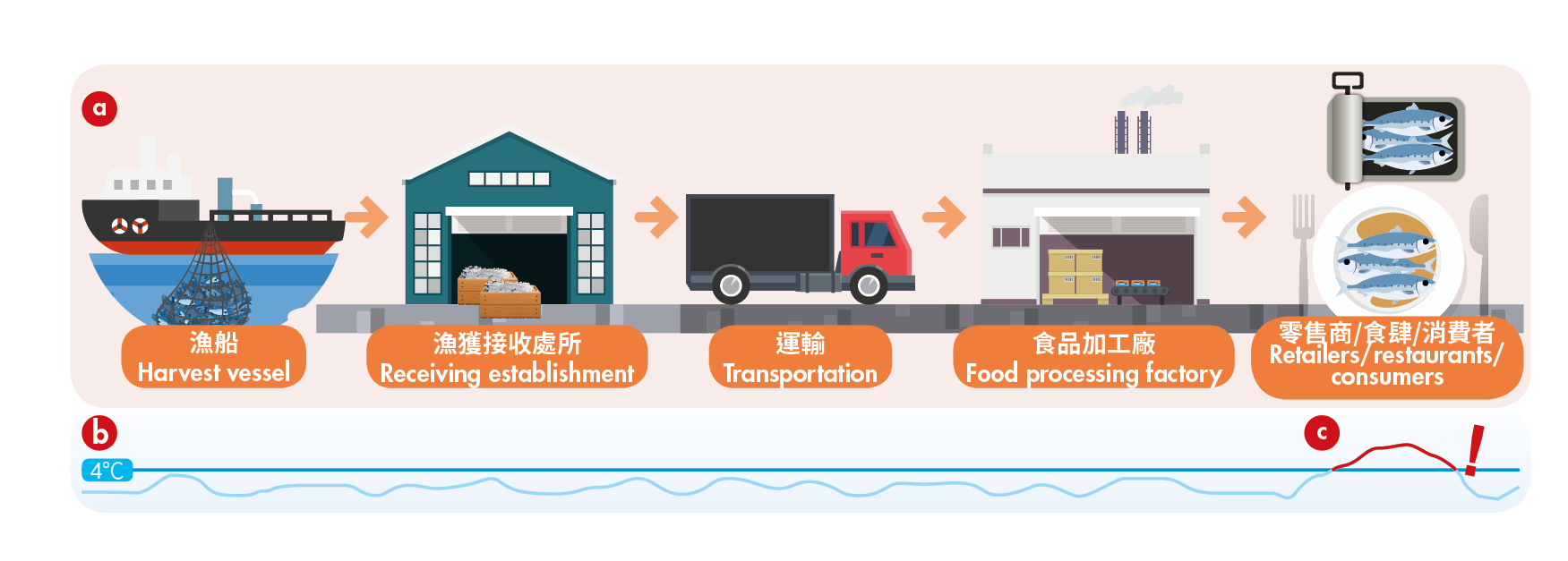
Food chain from harvest to consumption

(a) Cold chain should be maintained throughout the whole supply chain. (b) Refrigerated fish and fish products should be kept at or below 4°C. (c) The time which fish products are kept under ambient temperature should be minimised.

At the consumer level, fish should be chilled rapidly after purchase.  For prepackaged fish and fish products, store according to the instructions of the manufacturer (e.g. keep refrigerated). If cooked fish and ready-to-eat fish products (e.g. tuna fish sandwiches and opened canned fish) are placed at room temperature all day long, they can be re-contaminated and histamine can form.  Therefore, if these foods are not being eaten immediately, they should be kept under refrigeration and be finished as soon as possible.

USA – FDA – Frequently Asked Questions on FSMA

FDA

The following are questions and answers related to the Food Safety Modernization Act (FSMA).

You may also be interested in these resources:


Quebec – Notice not to consume gravlax sold by the company Nita Tout Garni

Quebec

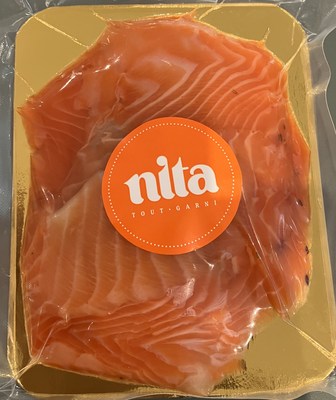
Gravlax (CNW Group/Ministry of Agriculture, Fisheries and Food)

QUEBEC CITY, May 26, 2022 /CNW Telbec/ – The Ministry of Agriculture, Fisheries and Food (MAPAQ), in collaboration with the Food Inspection Division of the City of Montreal and the company Nita Tout Garni , located at 5687 suite B, Avenue du Parc in Montreal, advises the public not to consume the product indicated in the table below, because it has not been packaged in such a way as to ensure its safety.

Product name

Format

Affected batch

Gravlax

Unitary

Units sold until
May 26, 2022

The product that is the subject of this warning was offered for sale until May 26, 2022, and only at the establishment mentioned above. The product was placed on a golden carton covered with transparent plastic wrap and offered refrigerated. Its label bears the mention “Nita Tout Garni”.

The operator is voluntarily recalling the product in question. It has agreed with MAPAQ and the Food Inspection Division of the City of Montreal to issue this warning as a precautionary measure. In addition, people who have this product in their possession are advised not to consume it. They must return it to the establishment where they bought it or throw it away. Even if the affected product shows no signs of tampering or suspicious odors, its consumption may represent a health risk. It should be noted that no case of illness associated with the consumption of this food has been reported to MAPAQ to date.