Category Archives: Technology

Research -An in situ-Synthesized Gene Chip for the Detection of Food-Borne Pathogens on Fresh-Cut Cantaloupe and Lettuce

Frontiers

Fresh foods are vulnerable to foodborne pathogens which cause foodborne illness and endanger people’s life and safety. The rapid detection of foodborne pathogens is crucial for food safety surveillance. An in situ-synthesized gene chip for the detection of foodborne pathogens on fresh-cut fruits and vegetables was developed. The target genes were identified and screened by comparing the specific sequences of Salmonella Typhimurium, Vibrio parahemolyticusStaphylococcus aureusListeria monocytogenes, and Escherichia coli O157:H7 from the National Center for Biotechnology Information database. Tiling array probes were designed to target selected genes in an optimized hybridization system. A total of 141 specific probes were selected from 3,227 hybridization probes, comprising 26 L. monocytogenes, 24 S. aureus, 25 E. coli O157:H7, 20 Salmonella Typhimurium, and 46 V. parahemolyticus probes that are unique to this study. The optimized assay had strong amplification signals and high accuracy. The detection limit for the five target pathogens on fresh-cut cantaloupe and lettuce was approximately 3 log cfu/g without culturing and with a detection time of 24 h. The detection technology established in this study can rapidly detect and monitor the foodborne pathogens on fresh-cut fruits and vegetables throughout the logistical distribution chain, i.e., processing, cleaning, fresh-cutting, packaging, storage, transport, and sale, and represents a valuable technology that support the safety of fresh agricultural products.

Research – A Successful Technique for the Surface Decontamination of Salmonella enterica Serovar Typhimurium Externally Contaminated Whole Shell Eggs Using Common Commercial Kitchen Equipment

Mary Ann Liebert hazegg.jpg

Eggs are a highly nutritious food source used in a wide range of food products. In Australia, eggs are a frequent source of foodborne salmonellosis outbreaks, associated with eggshell contamination with Salmonella enterica serovar Typhimurium (ST). Despite their potentially hazardous nature, raw eggs are often used and consumed in mayonnaise, mousse, ice cream and eggnog. The aim of this study was to develop a shell egg decontamination method that removed ST contamination from the outside of an egg without impacting its usability. The decontamination method was developed by the adaptation of a temperature-controlled water bath (commonly present in kitchens and associated with the sous-vide technique) for the surface decontamination of eggs. The outside of whole eggs was artificially inoculated with two ST strains. The eggs were decontaminated by placing in a sous-vide cooker with the water heated to 57°C. The remaining viable ST present on the whole shell egg, crushed shells, internal egg contents and sous-vide water were enumerated over time by culturing onto XLD agar. The quality of the uncontaminated heat-treated eggs was determined by measuring the Haugh unit, yolk index, albumen pH, thermocoagulation, and stability of foam. A blind control study was conducted to assess the acceptability and usability of the treated eggs by chefs and food handlers for the preparation of mayonnaise. Complete decontamination of ST was achieved by treating eggs for 9 min in the sous-vide cooker (57°C). No statistically significant difference was observed in the quality of treated eggs compared with nontreated eggs using the quality measurements and acceptability score from chefs. This method provides a simple approach that can be adopted by chefs and food handlers to obtain safe eggs before the preparation of raw egg products.

Research -The Complex Effect of Food Matrix Fat Content on Thermal Inactivation of Listeria monocytogenes: Case Study in Emulsion and Gelled Emulsion Model Systems

Frontiers in Microbiology

Previous studies on the influence of food matrix fat content on thermal inactivation kinetics of food pathogens have shown contradictory results due to the combined influence of fat content and other factors such as composition. Therefore, thermal inactivation of Listeria monocytogenes at 59, 64, and 69°C was systematically investigated in emulsion and gelled emulsion food model systems with various fat content (1, 5, 10, and 20%), such that the effect of fat content was isolated. Thermal conductivity and rheological properties of the model systems were quantified, as well as the effect of these properties on the thermal load of the model systems. Thermal conductivity was complexly related to fat content, the nature of the food matrix (i.e., viscous or gelled), and temperature. For the emulsions, the consistency index K increased with increasing fat content, while the flow behavior index n followed the opposite trend. For the gelled emulsions, the storage modulus G′ was always larger than the loss modulus G″ (i.e., measure of elastic and viscous properties, respectively). The phase angle δ [i.e., arctan (G″/G′)] was proportional with fat content, but this relation became more complex at higher temperatures. The thermal load of the model systems was not largely affected by food matrix fat content. Thermal inactivation of L. monocytogenes was investigated by means of the maximum specific inactivation rate kmax, log reductions, and sublethal injury (SI). Both for emulsions and gelled emulsions, kmax decreased with increasing fat content below approximately 60°C, while a more complex behavior was observed at higher temperatures. In the emulsions, log reductions were considerably lower (i.e., 2–3 log) at 1% fat than in systems with higher fat content. In the gelled emulsions, log reductions generally decreased with increasing fat content. SI decreased with increasing fat content, both in emulsions and gelled emulsions. In conclusion, the inactivation rate (i.e., kmax) of L. monocytogenes was affected by a complex relation between food matrix fat content, thermal conductivity, rheological properties, and inactivation temperature. Due to the small scale of the model systems, differences in kmax did not directly affect the final log reductions in a similar fashion.

Research – VA/starch/propolis/anthocyanins rosemary extract composite films as active and intelligent food packaging materials

Wiley Online

Active and intelligent food packaging films has taken more importance over conventional packaging. The aim of this study was to develop active and intelligent food packaging films based on bio‐degradable polymers like polyvinyl alcohol and starch, incorporated with natural additives, that is, propolis extract (PE) and Anthocyanin. Boric acid was used as a cross‐linker. The results proved the compatibility of films mixture. The mechanical strength was also measured and highest value was achieved 6.1 MPa for films containing 20% PE. Moreover, the maximum zone of inhabitation, that is, 21 and 15 mm, was also achieved at same composition against Escherichia coli and methicillin‐resistant Staphylococcus aureus, respectively. Furthermore, all films had shown great color response against different pH ranging from 2 to 14. Finally, food spoilage test was performed using pasteurized milk. Films responded visibly by changing color and protected milk from spoilage. Hence, formulated bio‐degradable active and intelligent films can be used as food packaging material.

Research -Impacts of broadband and selected infrared wavelength treatments on inactivation of microbes on rough rice.

Wiley Online

This study investigated the effects of broadband and selected infrared (IR) wavelength treatments of rough rice on microbial inactivation. Rough rice was treated at different IR wavelengths and product‐to‐emitter distances (110, 275, and 440 mm) followed by tempering at 60°C for 4 hr. The total mold and aerobic plate counts (APC) on non‐treated and treated samples were determined. Significant total mold reductions of 1.14 and 3.11 log CFU/g were obtained after IR heating using broadband and selected wavelengths, respectively (p < .05). The most significant reduction of APC using selected IR wavelength was 1.09 log CFU/g; the broadband IR wavelength had no effect on the mean APC. The IR treatments followed by tempering step resulted in greater reductions of total mold counts and APC (4.03 and 3.50 log CFU/g) in comparison to IR treatments without tempering (3.11 and 1.09 log CFU/g). Overall, bacteria showed more resistance to IR treatments than molds.

Research -Evaluation of JC9450 and Neutral Electrolyzed Water in Controlling Listeria monocytogenes on Fresh Apples and Preventing Cross-Contamination

Frontiers in Microbiology

Recent multistate outbreaks and recalls of fresh apples due to Listeria monocytogenes contamination have increased consumer concerns regarding fresh and processed apple safety. This study aimed to evaluate the antimicrobial efficacy of two sanitizers, mineral oxychloride (JC9450) and neutral electrolyzed water (NEW), for inactivation of L. monocytogenes on fresh apples. A 2-min treatment of 0.125% (v/v) JC9450 with 100 ppm free available chlorine (FAC) or NEW with 110 ppm FAC caused 0.9–1.2 log10 CFU/apple reduction of L. monocytogenes on both Granny Smith and Fuji apples 24 h post-inoculation. Increasing JC9450 concentration to 0.25 and 0.50% significantly improved its bactericidal effect and reduced L. monocytogenes on Granny Smith apples by ~2.0 and 3.8 log10 CFU/apple, respectively, after a contact time of 2 min. At a shorter contact time of 30 sec, the inactivation efficacy of chlorine and 0.25–0.50% JC9450 against L. monocytogenes on apples was significantly reduced compared with the respective 2-min wash. Furthermore, no L. monocytogenes was recovered in deionized water prepared antimicrobial wash solution or on non-inoculated apples post-NEW with 110 ppm FAC or 0.125–0.5% JC9450 washes, indicating their ability to prevent cross-contamination. In addition, a 2-min exposure to NEW with 110 ppm FAC and 0.50% JC9450 reduced apple native microbiota including total plate count by 0.14 and 0.65 log10 CFU/apple, respectively, and yeast and mold counts by 0.55 and 1.63 log10 CFU/apple, respectively. In summary, L. monocytogenes attached on apples was difficult to eliminate. JC9450 and NEW demonstrated a dose-dependent reduction in L. monocytogenes on apples and successfully prevented cross-contamination, indicating their application potential in post-harvest washes of apples.

Research -Extension of shelf life of pasteurized trim milk using ultraviolet treatment

Wiley Online

The demand for minimally processed foods has increased in the last few years and gains high acceptability among consumers as it has better nutritional value than highly processed foods. Pasteurized milk is minimally processed and consumed largely for its fresh taste and higher nutritional value compared to ultrahigh temperature (UHT) and powdered milk. However, one of the constraints is its limited shelf life under refrigeration, as it cannot retain quality and safety for more than 14 days. Nonthermal technologies can extend the shelf life of milk while using low energy. Ultraviolet (UV‐C) is well known to inactivate spores as well as vegetative cells. In this study, it was shown that 2.64 J/ml of UV‐C treatment applied on pasteurized trim milk can extend shelf life up to 53 days under refrigeration. This finding was also supported by the inactivation of 3.40 ± 0.14 log of thermoresistant Geobacillus stearothermophilus spores (ATCC 7953) in UHT (or sterilized) trim milk with similar UV‐C operating conditions. Therefore, microbial study together with physicochemical properties demonstrated that pasteurization followed by UV‐C can enhance the shelf life of trim milk considerably.

Research – Novel composite antimicrobial film could take a bite out of foodborne illnesses

Science Daily

A novel composite film — created by the bonding of an antimicrobial layer to conventional, clear polyethylene plastic typically used to vacuum-package foods such as meat and fish — could help to decrease foodborne illness outbreaks, according to researchers in Penn State’s College of Agricultural Sciences.

The antimicrobial lining of the film is comprised of a pullulan-based biopolymer produced from starch syrup during a fermentation process, which is already approved for use in foods. Pullulan, a water-soluble “polysaccharide,” is essentially a chain of sugar, glycerin and cellulose molecules linked together. To kill pathogens such as SalmonellaListeria and pathogenic E. coli, researchers infused the pullulan with Lauric arginate, made from naturally occurring substances and already approved for use in foods.

Development of the composite antimicrobial film is important because 76 million cases of foodborne illnesses occur each year in the U.S. alone, resulting in 300,000 hospitalizations and 5,000 deaths, according to the U.S. Centers for Disease Control and Prevention. In light of this problem and the commercial potential of this discovery, Penn State has applied for a provisional patent on the composite antimicrobial film.

Research – Can Hard Water & Limescale Increase Legionella Risks?

Legionella Control

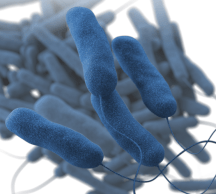
CDC legionella

Image CDC

This specialist guide has been written by the water safety experts at Legionella Control International and asks if the presence of hard water and limescale increases the risks from Legionella bacteria and Legionnaires’ disease. The guide looks at the formation of scale in water systems, fittings and appliances and how it can encourage the growth of biofilm and bacteria including legionella. It concludes by reviewing what practical measures can be taken to prevent, or at least reduce the risks that limescale brings with it.

Research -Evaluation of the Efficacy of Three Direct Fed Microbial Cocktails To Reduce Fecal Shedding of Escherichia coli O157:H7 in Naturally Colonized Cattle and Fecal Shedding and Peripheral Lymph Node Carriage of Salmonella in Experimentally Infected Cattle

Journal of Food Protection

ABSTRACT

Two experiments were conducted to evaluate the feeding of direct fed microbials (DFMs) on fecal shedding of Escherichia coli O157:H7 in naturally infected cattle (experiment I) and on Salmonella in the feces and peripheral lymph nodes (PLNs) of experimentally infected cattle (experiment II). Thirty cattle, 10 per treatment, were used in each experiment. Treatments in experiment I consisted of a control (lactose carrier only); DFM1, a 1:1 ratio of Enterococcus faecium and Lactobacillus animalis; and DFM2, a 1:1 ratio of Lactobacillus acidophilus and Pediococcus acidilactici. In Experiment II, DFM1 was replaced with DFM3, a 1:2 ratio of Lactobacillus reuteri and other Lactobacillus strains. Additives were mixed in water and applied as a top-dressing to each pen’s daily ration for 50 days. Approximately half-way through each experiment, the DFM concentration was doubled for the remainder of the study. Fecal samples were collected throughout experiment I and cultured for E. coli O157:H7. Cattle in experiment II were inoculated intradermally with Salmonella Montevideo on days 32, 37, and 42 and then necropsied on days 49 and 50 (five cattle per treatment on each day). Innate immune function was assessed on days 29, 49, and 50. In experiment I, fecal concentration and prevalence of E. coli O157:H7 were not different (P > 0.10) nor was there an effect (P = 0.95) on the percentage of super shedders (cattle shedding ≥3.0 log CFU/g of feces). In experiment II, no treatment differences (P > 0.05) were observed for Salmonella in the PLNs except for the inguinal nodes, which had a significantly lower Salmonella prevalence in DFM-supplemented cattle than in the controls. Immune function, as measured by monocyte nitric oxide production and neutrophil oxidative burst, was decreased (P < 0.05) in the DFM treatment groups. Although results of this research indicate little to no effect of these DFMs on E. coli O157:H7 or Salmonella in cattle, an increase in the duration of administration to that similar to what is used for commercial cattle might elicit treatment differences.

HIGHLIGHTS
  • Direct fed microbials were evaluated for pathogen mitigation in cattle.

  • No treatment effects on fecal shedding of E. coli O157:H7 were observed.

  • DFM treatment reduced Salmonella in only one the four lymph node types examined.

  • Under these experimental conditions, short-term feeding of DFMs failed to mitigate pathogens.