Category Archives: Spores

Research – From Germination to Stagnation: Sodium Diacetate’s Impact on Clostridium perfringens Spores

Wiley Online

ABSTRACT

Sodium diacetate is recognized for its high efficiency as a preservative, demonstrating strong antibacterial properties that help extend the shelf life of food products. However, it is still unclear how it influences spores. This research investigated the influence of sodium diacetate on the germination and outgrowth stage in the revival process of Clostridium perfringens (C. perfringens) spores. The germination and outgrowth rate of spores after sodium diacetate treatment were measured. The changes of spore inner membrane were monitored by laser confocal microscope, electron scanning microscope and macromolecular leakage. The interaction between sodium diacetate and DNA was investigated by EB fluorescence probe, and the finding was verified by the outgrowth of spores in ham sausage. An investigation into the effects of sodium diacetate treatment on the biological activity, inner membrane permeability, morphology, and DNA integrity of spores devoid of both the coat and cortex revealed that sodium diacetate significantly hindered the transition of germinated spores into vegetative cells. In the presence of sodium diacetate, C. perfringens spores underwent germination, characterized by the hydrolysis of the spore cortex and the disassembly of the spore coat. As the spores advanced into the outgrowth phase, sodium diacetate penetrated their structure, causing damage to the inner membrane and compromising DNA integrity. Moreover, sodium diacetate was demonstrated to effectively inhibit spore outgrowth in ham sausage. This study provided theoretical guidance and references for the application of sodium diacetate in food to control the germination and outgrowth of spore-forming bacteria.
Research – Microbial food spoilage: impact, causative agents and control strategies

Nature

Abstract

Microbial food spoilage is a major contributor to food waste and, hence, to the negative environmental sustainability impacts of food production and processing. Globally, it is estimated that 15–20% of food is wasted, with waste, by definition, occurring after primary production and harvesting (for example, in households and food service establishments). Although the causative agents of food spoilage are diverse, many microorganisms are major contributors across different types of foods. For example, the genus Pseudomonas causes spoilage in various raw and ready-to-eat foods. Aerobic sporeformers (for example, members of the genera BacillusPaenibacillus and Alicyclobacillus) cause spoilage across various foods and beverages, whereas anaerobic sporeformers (for example, Clostridiales) cause spoilage in a range of products that present low-oxygen environments. Fungi are also important spoilage microorganisms, including in products that are not susceptible to bacterial spoilage due to their low water activity or low pH. Strategies that can reduce spoilage include improved control of spoilage microorganisms in raw material and environmental sources as well as application of microbicidal or microbiostatic strategies (for example, to products and packaging). Emerging tools (for example, systems models and improved genomic tools) represent an opportunity for rational design of systems, processes and products that minimize microbial food spoilage.

Research – Inactivation of Bacillus cereus Spores and Vegetative Cells in Inert Matrix and Rice Grains Using Low-Pressure Cold Plasma

MDPI

Abstract

This study investigated the effects of low-pressure cold plasma on the inactivation of Bacillus cereus vegetative cells and spores in an inert matrix (borosilicate glass slide) and in rice grains, using oxygen as ionization gas. Greater reductions in B. cereus counts were observed in vegetative cells rather than spores. The experimental data obtained show that both the power of the plasma treatment and the matrix proved to be determining factors in the inactivation of both the spores and vegetative cells of B. cereus. To characterize the inactivation of B. cereus, experimental data were accurately fitted to the Weibull model. A significant decrease in parameter “a”, representing resistance to treatment, was confirmed with treatment intensification. Furthermore, significant differences in the “a” value were observed between spores in inert and food matrices, suggesting the additional protective role of the food matrix for B. cereus spores. These results demonstrate the importance of considering matrix effects in plasma treatment to ensure the effective inactivation of pathogenic microorganisms, particularly in foods with low water activity, such as rice. This approach contributes to mitigating the impact of foodborne illnesses caused by pathogenic microorganisms.

Research – Troubleshooting high laboratory pasteurization counts in organic raw milk requires characterization of dominant thermoduric bacteria, which includes non-spore formers as well as spore formers

Science Direct

ABSTRACT

Laboratory Pasteurization Count (LPC) enumerates thermoduric bacteria and is one parameter used to assess raw milk quality. While there is currently no regulatory limit for LPC, LPC data are used by some dairy processors and cooperatives to designate raw milk quality premiums paid to farmers and may also be used for troubleshooting bacterial contamination issues. Despite occasionally being used as a proxy for levels of bacterial spores in raw milk, there is limited knowledge of the types of organisms that are enumerated by LPC in contemporary raw milk supplies. While historical studies have reported that thermoduric bacteria quantified by LPC may predominantly represent Gram-positive cocci, updated knowledge on microbial populations enumerated by LPC in contemporary organic raw milk supplies is needed. To address this gap, organic raw milk samples from across the United States (n = 94) were assessed using LPC, and bacterial isolates were characterized. LPC ranged from below detection (<0.70 log cfu/mL) to 4.07 log cfu/mL, with a geometric mean of 1.48 log cfu/mL. Among 380 isolates characterized by 16S rDNA sequencing, 52.6%, 44.5%, and 2.4% were identified as Gram-positive sporeformers, Gram-positive non-sporeformers, and Gram-negatives, respectively, and 0.5% that could not be categorized into those groups because they could only be assigned a higher level of taxonomy. Isolates identified as Gram-positive sporeformers were predominantly Bacillus (168/200) and Gram-positive non-sporeformers were predominately Brachybacterium (56/169) and Kocuria (47/169). To elucidate if the LPC level can be an indicator of the type of thermoduric (e.g., sporeforming bacteria) present in raw milk, we evaluated the proportion of sporeformers in raw milk samples with LPC of ≤100 cfu/mL, 100 to 200 cfu/mL, and ≥200 cfu/mL (51%, 67%, and 35%), showing a trend for sporeformers to represent a smaller proportion of the total thermoduric population when LPC increases, although overall linear regression showed no significant association between the proportion of sporeformers and the LPC concentration. Hence, LPC level alone provides no insight into the makeup of the thermoduric population in raw milk and further characterization is needed to elucidate the bacterial drivers of elevated LPC in raw milk. We therefore further characterized the isolates from this study using matrix-assisted laser desorption/ionization time of flight mass spectrometry (MALDI-TOF MS), a rapid microbial identification tool that is more readily available to dairy producers than 16S rDNA PCR and sequencing. While our data indicated agreement between 16S and MALDI-TOF MS for 66.6% of isolates at the genus level, 24.2% and 9.2% could not be reliably identified or were mischaracterized using MALDI-TOF, respectively. This suggests that further optimization of this method is needed to allow for accurate characterization of thermoduric organisms commonly found in raw milk. Ultimately, our study provides a contemporary perspective on thermoduric bacteria selected by the LPC method and establishes that the LPC alone is not sufficient for identifying the bacterial drivers of LPC levels. Further development of rapid characterization methods that are accessible to producers, cooperatives, and processors will support milk quality troubleshooting efforts and ultimately improve outcomes for dairy industry community members.

RASFF Alert -Streptomyces soil-based spores and bacteriophage blend

RASFF

Unauthorised novel food ingredients Streptomyces soil-based spores and bacteriophage blend in a food supplement from the United States in Slovenia

RASFF Alert – Spore Forming Bacteria – Duck Confit

RASFF

Possible presence of spore-forming bacteria (possibly bacillus spp.) in Confit de Canad from Bulgaria in Denmark

Research – Post-Cooking Growth and Survival of Bacillus cereus Spores in Rice and Their Enzymatic Activities Leading to Food Spoilage Potential

MDPI

Abstract

Bacillus cereus strains vary in their heat resistance, post-processing survival and growth capacity in foods. Hence, this study was carried out to determine the effect of cooking on the survival and growth of eight B. cereus spores in rice at different temperatures in terms of their toxigenic profiles and extracellular enzyme activity. Samples of rice inoculated with different B. cereus spores were cooked and stored at 4 °C, 25 °C and 30 °C for up to 7 days, 48 h and 24 h, respectively. Out of eight B. cereus strains, four and three spore strains were able to grow at 30 °C and 25 °C post-cooking, respectively. Rapid growth was observed after a minimum of 6 h of incubation at 30 °C. All strains possessed proteolytic activity, whereas lipolytic and amylolytic activities were exhibited by 50% and 12.5% of the strains, respectively. The post-cooking survival and growth capacity of the B. cereus strains appeared to be independent of their toxigenic profiles, whereas extracellular enzymatic activities were required for their vegetative growth. Due to the B. cereus spores’ abilities to survive cooking and return to their active cellular form, great care should be taken when handling ready-to-eat foods.

RASFF Alert – Clostridium perfringens – Dried Natural Casings

RASFF

Detection of Salmonella and Clostridium perfringens in dried natural casings from Portugal in France

USA – Pepperoni recalled due to Bacillus cereus

FSIS USDA

WASHINGTON, Dec. 14, 2021 – Smithfield Packaged Meats Corp., doing business as Margherita Meats, Inc., an Omaha, Neb. establishment, is recalling approximately 10,990 pounds of ready-to-eat (RTE) pepperoni products that may be adulterated with Bacillus cereus (B. cereus), the U.S. Department of Agriculture’s Food Safety and Inspection Service (FSIS) announced today.

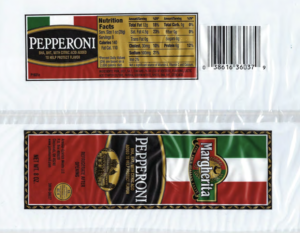
The RTE unsliced pepperoni product was produced and packaged on June 17, 2021.  The following products are subject to recall [view label]:

  • 8-oz. plastic shrink-wrapped packages containing unsliced pepperoni “Margherita PEPPERONI” with lot code P1931C and a “use by date” of 12-14-21 represented on the label.

The products subject to recall bear establishment number “EST. 19” inside the USDA mark of inspection. These items were shipped to retail locations nationwide.

The problem was discovered when the Department of Defense notified FSIS that they found B. cereus during routine product testing.

B. cereus is a toxin-producing microorganism that causes diarrhea and vomiting in people. Those with compromised immune systems are at risk for more severe illness. Vigorous rehydration and other supportive care including antibiotics are the usual treatment.

There have been no confirmed reports of adverse reactions due to consumption of these products. Anyone concerned about an injury or illness should contact a healthcare provider.

FSIS is concerned that some product may be in consumers’ pantries or refrigerators. Consumers who have purchased these products are urged not to consume them. These products should be thrown away or returned to the place of purchase.

FSIS routinely conducts recall effectiveness checks to verify recalling firms notify their customers of the recall and that steps are taken to make certain that the product is no longer available to consumers. When available, the retail distribution list(s) will be posted on the FSIS website at www.fsis.usda.gov/recalls.

Media with questions regarding the recall can contact Jim Monroe, Corporate Affairs, Margherita Meats Corp., at (703) 559-1875. Consumers should call the Margherita Consumer Affairs Hotline at (844) 342-2596.

Consumers with food safety questions can call the toll-free USDA Meat and Poultry Hotline at 1-888-MPHotline (1-888-674-6854) or live chat via Ask USDA from 10 a.m. to 6 p.m. (Eastern Time) Monday through Friday. Consumers can also browse food safety messages at Ask USDA or send a question via email to MPHotline@usda.gov. For consumers that need to report a problem with a meat, poultry, or egg product, the online Electronic Consumer Complaint Monitoring System can be accessed 24 hours a day at https://foodcomplaint.fsis.usda.gov/eCCF/.

Research – Phytic Acid against Clostridium perfringens Type A: A Food Matrix Study

MDPI

CDC Clost perf

This study evaluated the inhibitory effect of phytic acid (PA) on the spore germination and vegetative cells growth of Clostridium perfringens type A, as well as its effect in combination with maltodextrin (MD) in cooked sausages. The addition of 1% PA showed a satisfactory inhibition of spores’ germination and vegetative cells growth of C. perfringens in BHI media. The inhibitory effect of 1% PA on vegetative cells was similar to the additive sodium sorbate (SS) at 10%. Subsequently, a mixture of PA-MD (1:1; w/w) was evaluated for the inhibition of C. perfringens spores in cooked sausages. The PA-MD 1.5% and 2.5% had a similar performance to SS 10% and a similar or higher performance than 0.015% NO2 (p < 0.05). In an unprecedented way, the present study demonstrated that PA inhibited spore germination and vegetative cells growth of C. perfringens, highlighting its potential use as an alternative and natural preservative for the meat industry. View Full-Text