Category Archives: salmonellosis

RASFF Alerts – Salmonella -Polish Chicken Products – Black Pepper – Fresh Duck with Offal – Dried Dill – Mussels – Chicken Wings – Hummus – Organic Ashwagandha – Chicken Thighs – Chicken Breast – Bovine Carcases

RASFF

Salmonella Enteritidis in frozen chicken legs from Poland in Romania

RASFF

Salmonella enteritidis in frozen hen filet breast, oirgin Poland in Romania

RASFF

Salmonella EO in dried Dill from Egypt in Latvia and Poland

RASFF

Salmonella Enteritidis pulpe superioare pui din Polonia/// Salmonella Enteritidis in chicken legs from Poland in Romania and the Netherlands

RASFF

Salmonella enterica ser. Newport in chilled chicken legs from Poland in Romania

RASFF

S. typhimurium in young, fresh duck with offal from Hungary in Slovenia

RASFF

Riscontro di Salmonella spp. ed alta conta di E. coli in mitili //Salmonella spp and too high count of E. coli in mussels from Spain in Italy

RASFF

Salmonella Enteritidis in chilled chicken meat from Poland in Czech Republic, Greece, Hungary and Lithuania

RASFF

Salmonella in trio hummus from the Netherlands in Belgium

RASFF

Salmonella spp in chicken wings from Slovenia in Croatia

RASFF

Salmonella Typhimurium in chilled chicken breasts and thighs from France in Germany

RASFF

Salmonella Morehead and Salmonella Rubislaw in black pepper from Brazil in Germany

RASFF

Salmonella Enteritidis and Salmonella group C2-C3 in official samples of chicken neck skins from Poland in Poland and Germany

RASFF

Salmonella spp. in food supplement Organic ashwagandha in capsules from Slovenia in Italy, Hungary and Germany

RASFF

Salmonella enterica ser. Enteritidis in Bovine carcases from Germany in Norway

RASFF

Salmonella Newport in poultry carcasses, elements of poultry meat, poultry offal from Poland in Bulgaria, Czech Republic, Latvia and Romania

RASFF

Salmonella Morehead in black pepper from Brazil in Germany
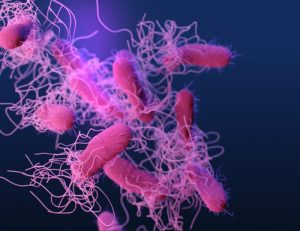
RASFF Alerts – Salmonella – Polish Chicken Products – Turkey Meat – Chicken Meat – Black Pepper – Pork Products – Chicken, Turkey and Pepper Skewers

RASFF

Salmonella enteritidis in frozen chicken thighs from Poland in France

RASFF

Salmonella Stanleyville in turkey meat from Poland in Italy

RASFF

Monophasic Salmonella Typhimurium in chicken meat from France in Luxembourg, Belgium and Germany

RASFF

S. Javiana and S. Oranienburg in black pepper from Brazil in Germany

RASFF

Presence of Salmonella in pork products from the United Kingdom in Malta and Czech Republic

RASFF

Salmonella enterica ser. Infantis (in 1 out of 5 samples /25g) in chicken neck skins from Poland in Italy, Latvia, Lithuania and Romania

RASFF

Salmonella spp in chilled turkey and pepper skewers from France in Belgium

France – Mainly children ill in French Salmonella outbreak – Fuet

Food Safety News

Almost 50 people are sick in France with Salmonella infections after eating a type of dry cured sausage from Spain.

In total, 45 people have been affected including 27 children. All sick people interviewed so far mentioned eating fuet before onset of symptoms.

Strains of monophasic Salmonella typhimurium sharing the same genetic characteristics were identified between June 24 and July 15 by the National Reference Center for Salmonella. This means they are likely to be from the same source.

The link with consumption of fuet produced by the Spanish company Embutidos Caula SL was made by the General Directorate of Food (DGAL), General Directorate of Health and Santé Publique France.

All batches and dates of fuet sold under different brand names that are marked ES 10.01865/GE CE have been withdrawn from sale or recalled.

Czech Republic – Chilled chicken breast fillet – Salmonella

Potravinynapranyri

Place of inspection:
Kromeriz ( Hulinska 1799/1, 76701 Kromeriz )
Company ID: 28219783
Food group: Meat and meat products Unpacked: meat, minced meat, meat preparations

Chilled chicken breast fillet
Category: Dangerous food
Unsatisfactory parameter:

Salmonella enterica serum. Infantis

The pathogenic bacterium Salmonella enterica serum was detected in chilled chicken meat Infantis. This bacterium can cause a condition called salmonellosis.

Lots: 34210517
Expiration date: 5/22/2021
Producer: Rozbioru Drobiu EMI POLSKA, ul. Bielska 40, 43-520 Chybie, PL 24034302 WE
Country of origin:  Poland
Date of sampling: 19. 5. 2021
Reference number: 21-000021-SVS-CZ
The sample was found by official inspection of the State Veterinary Administration

Norway – Norway links Salmonella outbreak to raw milk cheese

Food Safety News

Six people in Norway have fallen ill in recent months with the source of infection thought to be contaminated raw milk cheese from France.

The foodborne outbreak was suspected to be caused by Salmonella Dublin in chilled cheese made with unpasteurized milk.

The Norwegian Institute of Public Health (Folkehelseinstituttet) investigated the outbreak with the Norwegian Food Safety Authority (Mattilsynet) and Norwegian Veterinary Institute.

USA – Factors Potentially Contributing to the Contamination of Peaches Implicated in the Summer 2020 Outbreak of Salmonella Enteritidis

Click to access Rep.pdf

Czech Republic – Class A chicken without offal from Poland- Salmonella

Potraviny na Pranyri

Place of inspection:
Vedryne ( Vedryne 131, 73994 Vedryne )
Company ID: 07329695
Food group: Meat and meat products Unpacked: meat, minced meat, meat preparations
Class A chicken without offal
Category: Dangerous food
Unsatisfactory parameter:
Salmonella enterica serum. Infantis

The pathogenic bacterium Salmonella enterica serum was detected in chicken meat Infantis , which can cause a condition called salmonellosis.

Lots: 109921138
Expiration date: 4/15/2021
Producer: SuperDrob SA, PL 06630501 WE, Zimna 2, Lublin, 20-952 Poland
Country of origin:  Poland
Date of sampling: 9. 4. 2021
Reference number: 21-000016-SVS-CZ
 
The sample was found by official inspection of the State Veterinary Administration.
 

Research -Salmonella use intestinal epithelial cells to colonize the gut

Science Daily

kswfoodworld salmonella

The immune system’s attempt to eliminate Salmonella bacteria from the gastrointestinal (GI) tract instead facilitates colonization of the intestinal tract and fecal shedding, according to National Institutes of Health scientists. The study, published in Cell Host & Microbe, was conducted by National Institute of Allergy and Infectious Diseases (NIAID) scientists at Rocky Mountain Laboratories in Hamilton, Montana.

Salmonella Typhimurium bacteria (hereafter Salmonella) live in the gut and often cause gastroenteritis in people. The Centers for Disease Control and Prevention estimates Salmonella bacteria cause about 1.35 million infections, 26,500 hospitalizations and 420 deaths in the United States every year. Contaminated food is the source for most of these illnesses. Most people who get ill from Salmonella have diarrhea, fever and stomach cramps but recover without specific treatment. Antibiotics typically are used only to treat people who have severe illness or who are at risk for it.

Salmonella bacteria also can infect a wide variety of animals, including cattle, pigs and chickens. Although clinical disease usually resolves within a few days, the bacteria can persist in the GI tract for much longer. Fecal shedding of the bacteria facilitates transmission to new hosts, especially by so-called “super shedders” that release high numbers of bacteria in their feces.

NIAID scientists are studying how Salmonella bacteria establish and maintain a foothold in the GI tract of mammals. One of the first lines of defense in the GI tract is the physical barrier provided by a single layer of intestinal epithelial cells. These specialized cells absorb nutrients and are a critical barrier that prevent pathogens from spreading to deeper tissues. When bacteria invade these cells, the cells are ejected into the gut lumen — the hollow portion of the intestines. However, in previous studies, NIAID scientists had observed that some Salmonella replicate rapidly in the cytosol — the fluid portion — of intestinal epithelial cells. That prompted them to ask: does ejecting the infected cell amplify rather than eliminate the bacteria?

To address this question, the scientists genetically engineered Salmonella bacteria that self-destruct when exposed to the cytosol of epithelial cells but grow normally in other environments, including the lumen of the intestine. Then they infected laboratory mice with the self-destructing Salmonella bacteria and found that replication in the cytosol of mouse intestinal epithelial cells is important for colonization of the GI tract and fuels fecal shedding. The scientists hypothesize that, by hijacking the epithelial cell response, Salmonella amplify their ability to invade neighboring cells and seed the intestine for fecal shedding.

The researchers say this is an example of how the pressure exerted by the host immune response can drive the evolution of a pathogen, and vice versa. The new insights offer new avenues for developing novel interventions to reduce the burden of this important pathogen.

USA – Poultry Poop has sickened 163 in 43 states with Salmonella

Food Poison Journal

As of May 20, 2021, a total of 163 people infected with one of the outbreak strains have been reported from 43 states. Illnesses started on dates ranging from February 12, 2021, to April 25, 2021.

Sick people range in age from less than 1 to 87 years, with a median age of 24 years, and 58% are female. Of 109 people with information available, 34 (31%) have been hospitalized. No deaths have been reported.

The true number of sick people in an outbreak is likely much higher than the number reported, and the outbreak may not be limited to the states with known illnesses. This is because many people recover without medical care and are not tested for Salmonella. In addition, recent illnesses may not yet be reported as it usually takes 2 to 4 weeks to determine if a sick person is part of an outbreak.

RASFF Alerts – Salmonella -Sesame Seeds – Ground Onions – Chicken Neck Skin – Sausage – Chilled Beef Trimmings – MDM – Polish Chicken

RASFF

salmonella (presente in 25g) in semi di sesamo dalla Nigeria//salmonella in sesame seeds from Nigeria in Italy

RASFF

Salmonella spp. und überhöhter Gehalt an Blei in gemahlenen Zwiebeln aus Indien /// Salmonella spp. and increased lead content in ground onions from India in Germany

RASFF

Salmonella Enteritidis in chicken neck skin from Poland in the Czech Republic

RASFF

Salmonella Enteritidis in sausage from Poland in the UK

RASFF

Salmonella Dublin in chilled beef trimmings in Sweden, Finland and Denmark

RASFF

Salmonella Enteritidis in chicken neck skin from Poland in the Netherlands and Czech Republic

RASFF

Salmonella Infantis in chicken MDM from Poland in Bulgaria

RASFF

Salmonella Enteritidis in chicken elements from Poland in Germany and the UK