Category Archives: Salmonella

Information – FSA – Salmonella Fact Sheet

FSA


Salmonella infection (salmonellosis) is a common bacterial disease that affects the intestinal tract. Salmonella bacteria typically live in animal and human intestines and are shed through feces. Humans become infected most frequently through contaminated water or food.

Salmonellas are a group of common bacteria that cause food poisoning. They are usually spread by inadequate cooking and through cross-contamination. Salmonella bacteria are most often found in:

  • raw meat
  • undercooked poultry such as chicken or turkey
  • eggs
  • unpasteurised milk

Young children, the elderly and people whose immune systems are not working properly have a greater risk of becoming severely ill with food poisoning caused by salmonella. The NHS has more information about the symptoms of salmonella poisoning.

RASFF Alerts – Animal Feed – Salmonella – Rapeseed Meal – Organic Soy Cake – Brewers Yeast – Dog Chews – Organic Sunflower Cakes

Two week catch up due to Holidays 🙂

kswfoodworld food safety poisoning

RASFF-Salmonella enterica ser. Derby (presence) and Salmonella enterica ser. Lexington (presence) in rapeseed meal from Belarus in Latvia

RASFF-Salmonella (presence /25g) in organic soy cake from China, via the Netherlands in Germany

RASFF-Salmonella (present /25g) in brewer’s yeast from Poland in Germany

RASFF-Salmonella enterica ser. Derby (present /25g) in dog chew from Germany, with raw material from Poland in Austria

RASFF-Salmonella group D (presence /25g) in organic sunflower cake from the Netherlands in Germany

Hong Kong – Follow-up on the Salmonella Contamination of US Eggs Incident

CFS EGGS

The Centre for Food Safety (CFS), through its Food Incident Surveillance System, noted a plant in North Carolina, US was recalling eggs it produced due to Salmonella contamination. The CFS has immediately suspended the import into Hong Kong of the poultry eggs from the plant concerned. Further investigation found certain local importers had imported the affected eggs. The concerned importers conducted a recall according to the CFS’ advice and stopped using/selling the products immediately.

Salmonella infection may cause fever and gastrointestinal upset. The infection in vulnerable groups could be more severe. Consumers, particularly the elderly, infants, pregnant women and immuno-compromised people, should avoid eating raw or inadequately cooked eggs and egg products. Salmonella can be killed by thorough cooking. Eggs should be thoroughly cooked until the yolk and white are firm. Choose eggs or egg products treated by pasteurisation to prepare dishes not requiring further heat treatment.

The CFS has contacted the US authorities concerned over the incident. It will continue to follow up on the incident and take appropriate action.

Canada – 59 sick with Salmonella in Canada linked to raw frozen breaded chicken thingies

Barf Blog 


Monique Scotti of Global News is reporting that Health Canada is issuing a widespread recall of frozen No Name brand chicken burgers as part of a broader effort to reduce the number of salmonella-related illnesses across the country.

The specific product affected by the recall is No Name brand Chicken Burgers (1kg), with a best before date of Feb. 6, 2019. Any individual or restaurant with this product in their freezer is being told not to consume or serve the burgers.

The recall comes three months after the Canadian Food Inspection Agency (CFIA) issued a press release warning of a rise in Salmonella Enteritidis infections over the past several years.

USA/Canada – Salmonella outbreaks from raw frozen chicken not related

Food Safety News 

Salmonella Enteritidis outbreaks in Canada and the United States that have been traced to raw frozen chicken patties are likely not related, according to the U.S. Centers for Disease Control and Prevention.

“The strain in Canada is not related genetically to the strain in the U.S., so the outbreaks do not appear to be related,” a CDC spokesperson told Food Safety News.

Between the two outbreaks, 65 people have been confirmed with salmonellosis, an infection caused by Salmonella bacteria. Thorough cooking to an internal temperature of 165 degrees F kills the bacteria.

In the U.S. outbreak, Ruby’s Pantry network of food pantries in Wisconsin and Minnesota distributed the raw frozen breaded chicken patties without realizing they were raw. Labeling did not indicate the chicken was raw. 

Research – Modeling the growth of Salmonella in cut red round tomatoes as a function of temperature.

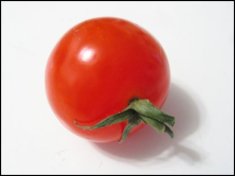
NCBI cherry-tomato-pristine-variety

Tomato-associated Salmonella outbreaks have recently become a significant food safety concern. Temperature abuse of cut tomatoes may have played a role in some of these outbreaks. The purpose of this study was to develop a mathematical model to describe the growth of Salmonella on cut tomatoes at various temperatures. Four Salmonella serotypes (Typhimurium, Newport, Javiana, and Braenderup) obtained from previous tomato-linked cases of salmonellosis were used in this study. These four serotypes were cultured separately, combined into a cocktail, and inoculated onto whole red round tomatoes and allowed to dry overnight. The tomatoes were then cut into pieces and incubated at a predetermined range of temperatures (10, 12.5, 15, 17.5, 20, 22.5, 25, 27.5, 30, and 35 degrees C). Salmonella concentration was measured at specified time intervals to determine the growth curve for Salmonella on cut tomatoes at each temperature. The growth rates were calculated using DMFit and used to build a mathematical model to illustrate the relationship between the growth rates of Salmonella on tomatoes and incubation temperatures from 10 to 35 degrees C. The resulting model compared favorably with a Salmonella growth model for raw poultry developed by our laboratory. The Pathogen Modeling Program underpredicted growth at low temperatures and overpredicted growth at high temperatures. ComBase predicted consistently slower growth rates than were observed in tomatoes but showed parallel increases in growth rate with increasing temperature.

Research – A Quantitative Risk Assessment of Human Salmonellosis from Consumption of Pistachios in the United States

Journal of Food Protection

We developed a quantitative risk assessment model to assess the risk of human nontyphoidal salmonellosis from consumption of pistachios in the United States and to evaluate the impact of Salmonella treatments (1- to 5-log reductions). The exposure model estimating prevalence and contamination levels of Salmonella at consumption included steps in pistachio processing such as transport from grower to huller, removal of the hull through wet abrasion, separation of pistachio floaters (immature, smaller nuts) and sinkers (mature, larger nuts) in a flotation tank, drying, storage, and partitioning. The risks of illness per serving and per year were evaluated by including a Salmonella dose-response model and U.S. consumption data. The spread of Salmonella through float tank water, delay in drying resulting in growth, increased Salmonella levels through pest infestation during storage (pre- and posttreatment), and a simulation of the 2016 U.S. salmonellosis outbreak linked to consumption of pistachios were the modeled atypical situations. The baseline model predicted one case of salmonellosis per 2 million servings (95% CI: one case per 5 million to 800,000 servings) for sinker pistachios and one case per 200,000 servings (95% CI: one case per 400,000 to 40,000 servings) for floater pistachios when no Salmonella treatment was applied and pistachios were consumed as a core product (>80% pistachio) uncooked at home. Assuming 90% of the pistachio supply is sinkers and 10% is floaters, the model estimated 419 salmonellosis cases per year (95% CI: 200 to 1,083 cases) when no Salmonella treatment was applied. A mean risk of illness of less than one case per year was estimated when a minimum 4-log reduction treatment was applied to the U.S. pistachio supply, similar to the results of the Salmonella risk assessment for almonds. This analysis revealed that the predicted risk of illness per serving is higher for all atypical situations modeled compared with the baseline, and delay in drying had the greatest impact on consumer risk.

Research – Behavior of 11 Foodborne Bacteria on Whole and Cut Mangoes var. Ataulfo and Kent and Antibacterial Activities of Hibiscus sabdariffa Extracts and Chemical Sanitizers Directly onto Mangoes Contaminated with Foodborne Bacteria

Journal of Food Protection

The behavior of foodborne bacteria on whole and cut mangoes and the antibacterial effect of Hibiscus sabdariffa calyx extracts and chemical sanitizers against foodborne bacteria on contaminated mangoes were investigated. Mangoes var. Ataulfo and Kent were used in the study. Mangoes were inoculated with Listeria monocytogenes, Shigella flexneri, Salmonella Typhimurium, Salmonella Typhi, Salmonella Montevideo, Escherichia coli strains (O157:H7, non-O157:H7 Shiga toxin–producing, enteropathogenic, enterotoxigenic, enteroinvasive, and enteroaggregative). The antibacterial effect of five roselle calyx extracts (water, ethanol, methanol, acetone, and ethyl acetate), sodium hypochlorite, colloidal silver, and acetic acid against foodborne bacteria were evaluated on contaminated mangoes. The dry extracts obtained with ethanol, methanol, acetone, and ethyl acetate were analyzed by nuclear magnetic resonance spectroscopy to determine solvent residues. Separately, contaminated whole mangoes were immersed in five hibiscus extracts and in sanitizers for 5 min. All foodborne bacteria attached to mangoes. After 20 days at 25 ± 2°C, all foodborne bacterial strains on whole Ataulfo mangoes had decreased by approximately 2.5 log, and on Kent mangoes by approximately 2 log; at 3 ± 2°C, they had decreased to approximately 1.9 and 1.5 log, respectively, on Ataulfo and Kent. All foodborne bacterial strains grew on cut mangoes at 25 ± 2°C; however, at 3 ± 2°C, bacterial growth was inhibited. Residual solvents were not detected in any of the dry extracts by nuclear magnetic resonance. Acetonic, ethanolic, and methanolic roselle calyx extracts caused a greater reduction in concentration (2 to 2.6 log CFU/g) of all foodborne bacteria on contaminated whole mangoes than the sodium hypochlorite, colloidal silver, and acetic acid. Dry roselle calyx extracts may be a potentially useful addition to disinfection procedures of mangoes.

Research – Notes from the Field: Investigation of an Outbreak of Salmonella Paratyphi B Variant L(+) tartrate + (Java) Associated with Ball Python Exposure — United States, 2017

CDC  


In July 2017, PulseNet, the national molecular subtyping network for foodborne disease surveillance, identified a cluster of five Salmonella Paratyphi B variant L(+) tartrate + (Java) clinical isolates that were indistinguishable by pulsed-field gel electrophoresis (PFGE). Initial questionnaires administered by state and local health department investigators indicated animal exposure as a possible source of infection, with all five patients reporting snake exposure. An outbreak investigation was initiated to identify the source of infection.

A case was defined as isolation of Salmonella Paratyphi B variant L(+) tartrate + (Java) from June 17, 2017, to July 23, 2017, with a PFGE enzyme pattern indistinguishable from the outbreak strain. A snake-specific questionnaire regarding snake type, snake purchase location, and reptile food, including feeder rodents, was developed and administered to patients by state and local health department investigators. In addition, animal and environmental sampling was conducted at patient residences. Traceback of patients’ snakes was conducted by contacting snake purchase locations to identify common suppliers. Finally, whole genome sequencing (WGS) was performed on clinical, environmental, animal, and pet food isolates to further characterize their genetic relatedness, measured in single nucleotide polymorphism (SNP) differences (1).

Five cases were identified in four states: one each in Arizona, Oklahoma, and Oregon, and two in Indiana from different households with no epidemiologic link. Median patient age was 10 years (range = <1–40 years), and four were female. No patient was hospitalized, and no deaths occurred. Five patients or their proxies completed the snake-specific questionnaire, four of whom reported exposure to a ball python in the residence. Ball python sampling occurred in the Arizona, Oregon, and one of the Indiana patient residences by sampling the python cloaca, environment, water, and bedding. Feeder rodent sampling occurred in the Arizona and Indiana patient residences. No common suppliers of either ball pythons or feeder rodents were identified by traceback.

Research – Microbiological survey of field‐grown and retail lettuce in Beijing

Wiley Online Eurofins Food Testing UK

Abstract

About 108 retail and 101 field‐grown lettuce samples from across Beijing were examined. These samples were analyzed for their aerobic plate counts, coliform counts, fecal flora counts, and presence of pathogenic bacteria. Samples included retail leaf (n = 56), retail head (n = 52), field‐grown leaf (n = 54), and field‐grown head lettuce (n = 47). The number of aerobic colonies of retail leaf lettuce was significantly higher than that of retail head lettuce throughout the year, with the exception of December. The means of retail leaf lettuce aerobic plate counts varied from 4.87 to 7.03 log10 cfu/g. For retail head lettuce, the mean count of aerobic microbiological populations varied from 4.33 to 6.33 log10 cfu/g. The aerobic microbiological populations of field‐grown lettuce were lower than those of retail lettuce in the same month. The mean count of field‐grown head lettuce was 5.53 log10 cfu/g. The mean count of retail head lettuce was 5.92 log10 cfu/g. The mean of the coliform counts ranged from <0.47 to 2.85 log10cfu/g. Leaf and retail lettuce had significantly higher coliform, fecal flora, and Escherichia coli counts than head and field‐grown lettuce. The detection rate of E. coli was directly proportional to that of fecal flora. No E. coli O157:H7 or Salmonella spp. were detected in these lettuce samples.

Practical applications

It is generally agreed that microbial contamination of lettuce will arise if there is improper operation in the process of its storage, transportation, and shelves sale. As lettuce is usually eaten raw, microbes can cause people to suffer from illnesses. Therefore, it is of critical importance to monitor the presence of microbes closely. In this study, the number of aerobic plate count in lettuce from different sources was examined. It was found that freshly picked lettuce had fewer microorganisms than retail lettuce had; lettuce harvested in low‐temperature seasons has fewer microorganisms than that in hot seasons. The suggestion is that cold chain transport is the best way for lettuce transportation, especially in summer and aseptic packaging is helpful to reduce contact pollution.