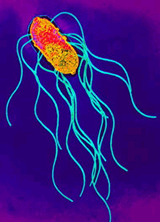
Category Archives: Salmonella

USA – FDA Investigating Multistate Outbreak of Salmonella Mbandaka Infections Likely Linked to Kellogg’s Honey Smacks Cereal

FDA

Fast Facts

  • The FDA, CDC, along with state and local officials are investigating a multi-state outbreak of Salmonella Mbandaka infections. Kellogg’s Honey Smacks sweetened puffed wheat cereal are a likely source of this outbreak.
  • The CDC reports that 73 people in 31 states have become ill. There have been 24 hospitalizations and no deaths.
  • Following discussion with FDA, CDC, and state partners, the Kellogg Company voluntarily recalled Kellogg’s Honey Smacks cereal. The recalled products were distributed across the United States including Guam and Saipan and internationally in Costa Rica, Guatemala, Mexico, the Caribbean and Tahiti. Consumers should not eat any of the recalled Honey Smacks cereal.
  • The FDA’s staff has initiated an inspection at the facility that manufactures Kellogg’s Honey Smacks and is working quickly with the company to collect additional information.
  • As this is an ongoing investigation, the FDA will update this page as more information becomes available, such as product information, epidemiological results, and recalls.
  • Consumers who have symptoms of Salmonella infection should contact their health care provider to report their symptoms and receive care. Most people infected with Salmonella develop diarrhea, fever, and abdominal cramps. Most infections usually lasts 4 to 7 days and most people recover without treatment, however some people develop diarrhea so severe that they need to be hospitalized.

USA – FDA Investigating Multistate Outbreak of Salmonella Adelaide Infections Linked to Pre-Cut Melons

The U.S. Food and Drug Administration, along with the Centers for Disease Control and Prevention (CDC) and state and local partners, are investigating a multistate outbreak of Salmonella Adelaide illnesses that may be linked to cut melons.

June 13, 2018 Update

The FDA is sharing additional distribution information that identifies retail locations that may have received potentially contaminated product subject to the recall. The FDA is advising consumers to discard any recalled products purchased at the listed locations.

The FDA is sharing a consolidated list of retail locations with consumers as the information becomes available. The retail information augments product information released on June 8th. Additional retail locations may be added as more information is received by the FDA. This list has been compiled from lists firms have reported to FDA that received recalled bulk product. Firms may be added or removed as more information becomes available. Consumers may wish to ask a retailer directly if the recalled product was available for sale.

As of June 12, and 13, 2018, locations in Iowa, Pennsylvania, West Virginia, and Wisconsin have been added that received potentially contaminated product.

USA – How do Melons get Contaminated with Salmonella?

Food Poisoning Bulletin catalopue

Foodborne illness from fresh fruit is caused by bacterial pathogens. They originate in the guts of animals and humans and are passed into the environment in fecal material. The pathogens, which are too small to see with the naked eye, land on the surface of fruit items in a variety of ways:

  • On the hands of pickers and handlers
  • In irrigation, run-off, and wash water
  • By direct contact with animals, insects and birds
  • Contact with soil harboring microorganisms
  • By cross contamination in harvesting, handling, processing, storage facilities and transport.

Canada- Salmonella outbreak shuts down Stoney Creek Mexican restaurant

Technostalls

Stoney Creek restaurant which boasts on social Websites that it is house to “Hamilton’s best tacos” was shut while health officials explore a salmonella outbreak that left many people ill.

Ole Gourmet on Regional Road 8 had been closed on May 17 following four individuals came back with salmonella from meals prepared there.

The Restaurant was started the next day following a re-inspection that revealed it had been compliant with all Ontario’s Food Premises regulation, according to a press release from town officials.

Some folks may become really seriously sick. Said Dr. Ninh Tran, Hamilton Public Health Services.

However, On May 22 the other individual became ill of Salmonella and analyzing of 10 food samples shown three which were positive for contamination.

The restaurant has been shut on May 25.

Poland – Salmonella on Green Caffe Nero. How many people have been poisoned with a cake in a cafe?

VAAJU 

As evidenced by recent reports, Green Caffe Nero clients in Warsaw, Krakow and Wrocław have asked about the “Green Mosque” cake. Some of them are in hospital. Among the victims of salmonella raging in the famous coffee bar are children.

According to Warsaw’s “Metro”, 52 cases were reported in total. As many as 21 people required hospitalization, including three children. In total there are 6 children among the victims. Sanepid not only inspected Warsaw’s premises Green Caffe Nero but also cafes in Wrocław and Kraków . There were also infected cakes. Krakow inspection confirmed that she had four people suffering from salmonella after eating the “green moss” dough. At least one of the sick people was poisoned in Wrocław.

USA – 71st Salmonella outbreak this century linked to backyard poultry

Food Safety News 104px-More_chicks

Backyard poultry flocks infected with six strains of Salmonella are responsible for 124 illnesses in 36 states, according to the federal Centers for Disease Control and Prevention in Atlanta. A third of the victims are children younger than 5.

It is the 71st Salmonella outbreak linked to backyard poultry since 2000.

Barf Blog

The U.S. Centers for Disease Control (CDC) and multiple states are investigating several multistate outbreaks of Salmonella infections linked to contact with live poultry in backyard flocks.

Several different types of Salmonella bacteria have made people sick: Salmonella Seftenberg, Salmonella Montevideo, Salmonella Infantis, Salmonella Enteritidis, Salmonella Indiana, and Salmonella Litchfield.

As of June 1, 2018, 124 people infected with the outbreak strains of Salmonella have been reported from 36 states.

Illnesses started on dates ranging from February 2, 2018 to May 14, 2018.

21 ill people have been hospitalized, and no deaths have been reported.

31% of ill people are children younger than 5 years.

Epidemiologic, traceback, and laboratory findings link these outbreaks to contact with live poultry, such as chicks and ducklings, which come from multiple hatcheries.

In interviews, 55 (74%) of 74 ill people with information available reported contact with chicks or ducklings in the week before their illness started.

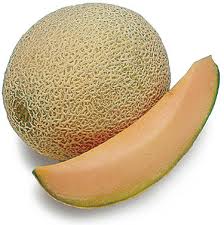
USA – FDA Investigating Multistate Outbreak of Salmonella Adelaide Infections Linked to Pre-Cut Melons

FDA 

Fast Facts

  • The FDA, CDC, along with state and local officials are investigating a multi-state outbreak of Salmonella Adelaide infections. CDC reports that fruit salad mixes that include pre-cut melons are a likely source of this outbreak.
  • FDA advises consumers not to eat recalled fresh cut watermelon, honeydew melon, cantaloupe, and fresh-cut fruit medley products containing any of these melons produced at the Caito Foods facility in Indianapolis, Indiana. Caito Foods, LLC distributed products produced at this facility in Georgia, Illinois, Indiana, Kentucky, Michigan, Missouri, North Carolina and Ohio. The products were packaged in clear, plastic clamshell containers and distributed to Costco, Jay C, Kroger, Payless, Owen’s, Sprouts, Trader Joe’s, Walgreens, Walmart, and Whole Foods/Amazon. Caito Foods, LLC has voluntarily recalled fruit salad mixes that contain pre-cut melons to prevent further distribution of potentially contaminated products.
  • The CDC reports that 60 people in five Midwestern states have become ill. Among 47 people with information available, thirty-one cases (66%) have been hospitalized.
  • The 60 illnesses occurred within the period of April 30, 2018 to May 28, 2018.
  • The FDA is working with CDC, along with state partners in Illinois, Indiana, Michigan, Missouri, and Ohio to trace back the pre-cut melons to identify the source to determine the full distribution of pre-cut melons, and to learn more about the potential route of contamination.
  • As this is an ongoing investigation, the FDA will update this page as more information becomes available, such as product information, epidemiological results, and recalls.
  • Consumers who have symptoms of Salmonella infection should contact their health care provider to report their symptoms and receive care. Most people infected with Salmonella develop diarrhea, fever, and abdominal cramps. Most infections usually lasts 4 to 7 days and most people recover without treatment, however some people develop diarrhea so severe that they need to be hospitalized.

Research – Salmonella and the Potential Role for Methods to Develop Microbial Process Indicators on Chicken Carcasses

Science Direct 


Foodborne salmonellosis originating from poultry products is a major problem, and post harvest control is important to prevent Salmonella contamination. However, assessing when and where Salmonella contamination occurs, and, more importantly, which routes of contamination have the greatest impact on introduction and dissemination in the final poultry meat product is an extremely complex question with a tremendous number of variables. Estimating Salmonella prevalence in poultry processing and the significance/role of Salmonella prevalence in finished products is a critical aspect of food safety control, with USDA regulations updating regularly to improve food safety. Numerous cultural methodologies exist for the detection of Salmonella. However, it is also critical to establish non-Salmonella bacteria and indicator organism profiles that allow for a more continuous monitoring or oversight of microbial shifts that potentially could occur during processing. Development of quantitative risk assessment models, for assessing where the greatest risks for contamination occur, may also allow for prioritizing optimal intervention strategies to achieve the most effective reductions in Salmonella contamination of poultry products.

Research – Lactalis of France ‘Salmonella was released from inside the buildings’

Barf Blog

The head of the French company at the centre of an international baby milk scandal denied Friday that it was responsible for the contamination that triggered a recall of formula in over 80 countries, calling it “an accident”.

Lactalis, one of the world’s biggest dairy groups, was forced to recall 12 million packages of powdered baby milk in 83 countries in December and January after being linked to an outbreak of salmonella poisoning in children.

French officials began investigating the company after at least 36 infants fell sick from drinking milk sold under the Picot or Milumel brands. Cases of suspected contamination were also reported among children in Spain and Greece.

RASFF Alerts – Salmonella – Sesame Seeds – Egg Yolk – Mixed Salad – Chillet Fillet Preparation – Poultry Kebab Meat – Chicken Half Breast Cooked – Cumin Seeds – Almonds – Tumeric Powder –

Two week catch up due to Holidays 🙂

kswfoodworld food safety poisoning

RASFF-Salmonella (present /25g) in sesame seeds from Nigeria in the Netherlands

RASFF-Salmonella (present) in chilled liquid egg yolk from Belgium in the Netherlands

RASFF-Salmonella enterica ser. Typhimurium (present /25g) in organic mixed salads containing red and green batavia and spinach leaves from Italy in Germany

RASFF-Salmonella (in 1 out of 5 samples) in chicken fillet preparations from Belgium in Belgium

RASFF-Salmonella group C1 (presence /25g) in frozen poultry kebab meat from Poland in Poland

RASFF-Salmonella (present /25g) in frozen marinated cooked chicken half breasts from Brazil in the Netherlands

RASFF-Salmonella (presence /25g) in organic whole cumin seeds from the United Kingdom in Spain

RASFF-Salmonella enterica ser. Plymouth (presence in 2 out of 5 samples /25g) in sesame seeds from Sudan in Greece

RASFF-Salmonella (presence /25g) in sesame seeds from Nigeria in the Netherlands

RASFF-Salmonella (present /125g) in whole almonds from the United States, via the United Kingdom in Germany

RASFF-Salmonella enterica ser. Senftenberg (presence /25g) in turmeric powder from India, via the United Kingdom in France

RASFF-Salmonella (present /25g) in sesame seed from Nigeria in the Netherlands

RASFF-Salmonella (in 1 out of 5 samples /25g) in frozen salted chicken half breasts from Brazil in the UK