Category Archives: Salmonella

Research – Viability of Listeria monocytogenes and Salmonella Typhimurium after isochoric freezing

Wiley Online

Isochoric freezing, different from isobaric (conventional) freezing, allows for storage below freezing temperatures without significant damage from ice formation. While several types of tissues have been successfully stored in sub‐zero isochoric conditions, it is unknown how isochoric freezing affects pathogenic microorganisms. Thus, the objective of this study was to investigate the survival of Salmonella Typhimurium and Listeria monocytogenes at below freezing storage (<0°C) in isochoric conditions. Tested conditions included storage at −4, −7, and −15°C for 24 hr and at −15°C for 1, 2, 3, 6, 12, and 24 hr. A comparison of bacterial survival during isobaric freezing was included with every trial. Additionally, bacterial cells were examined for morphological damage using transmission electron and field‐emission scanning electron microscopes. Isochoric freezing at −15°C for 24 hr reduced both species of bacteria down to unrecoverable levels and maximum efficacy achieved after the 6 hr timepoint for L. monocytogenes and the 12 hr timepoint for S. Typhimurium. When viewed using electron microscopy, S. Typhimurium cells were noticeably disfigured with regions of cytosol separated from the cell wall. The results of this study demonstrate that isochoric freezing is capable of substantial levels of pathogen reduction. Unlike conventional nonthermal interventions, isochoric freezing does not require additional devices such as elevated pressure machines or pulsed electric fields and can be achieved with simple, inexpensive, rigid closed volume containers such as household freezers or commercial cold storage facilities.
Research – Modeling the interactions among Salmonella enteritidis, Pseudomonas aeruginosa , and Lactobacillus plantarum

Wiley Online

This paper was to investigate the interactions among Salmonella enteritidis, Lactobacillus plantarum , and Pseudomonas aeruginosa at four combinations of initial concentration. Firstly, fitting the growth curves to obtain growth parameters—lag time (λ ), maximal growth rate ( μ max), initial concentration (0), and maximum population density (max) for each strain in monocultures or cocultures. Then interactions among S. enteritidis, P. aeruginosa , and L. plantarum in cocultures at four combinations of initial concentration were quantified by the Lotka–Volterra model with six interaction coefficients. Results indicated that there were no interactions between S. enteritidis and P. aeruginosa S. enteritidis and P. aeruginosa had an inhibitory effect on L. plantarum , but L. plantarum had no effects on another two. Besides, the higher the initial concentrations of S. enteritidis or P. aeruginosa , the lower the growth potential of L. plantarum . This study provided more accurate predictions for the growth of bacteria under actual food contamination conditions.

Research -Determination of Enterococcus faecium thermal reduction in normal and high oleic peanut products

Wiley Online

During processing, peanut butter can become contaminated with pathogenic bacteria (e.g., Salmonella ). The introduction of an additional heat treatment step after roasting can help inactivate these microorganisms. In this study, trials were conducted to determine Enterococcus faecium (Salmonella surrogate) reduction rates during the roasting of high oleic (HO) peanuts and heat‐treatment of normal oleic (NO) and HO peanut butters. HO peanuts were inoculated with E. faecium and roasted in a convection oven at 190°C. There was a 2 and 6 log CFU/g reduction at 300 and 480 s, respectively. ‐values for HO peanut butter at 110, 120, and 125°C were 438.9, 165.1, and 80.6 s, respectively. The ‐value was calculated to be 20.8°C. There was no significant difference in ‐values and ‐values between NO and HO peanut butter. In a pilot scale experiment, HO peanut butter was inoculated with E. faecium and agitated in a heated mixer for 21.5 min. E. faecium was reduced by 5.1 log CFU/g after 16.5 min with no apparent change in viscosity or texture. This study demonstrated that significant reductions in E. faecium can be achieved during roasting and through an additional heat‐treatment step.


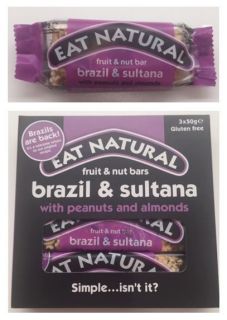
Luxembourg – RECALL: FRUIT & NUT BARS – BRAZIL & SULTANA (WITH PEANUTS AND ALMONDS) – PACKAGING: INDIVIDUAL OR MULTIPACK (3X) OF THE EAT NATURAL BRAND – POSSIBLE PRESENCE OF SALMONELLA

SAP

Last name FRUIT & NUT BARS – BRAZIL & SULTANA (with peanuts and almonds) – packaging: individual or multipack (3x)
Mark NATURAL EAT
Unit 50 g
Bar code Individual: 50 g – EAN 50676262

Multipack: 3 X 50 g – EAN 5013803666149

Date of Minimum Durability (DDM) August 2020 to June 2021

Danger  : Possible presence of Salmonella

Salmonella can cause symptoms such as nausea, vomiting, abdominal cramps, diarrhea, fever and headache within 6 to 72 hours after consumption. These symptoms may be aggravated in young children, immunocompromised individuals and the elderly. People who have consumed these products and who present these symptoms are advised to consult a doctor, notifying him of this consumption.

Source of information: Mandatory notification and RASFF (Rapid Alert System for Food and Feed)

Communicated by: Government Commission for Quality, Fraud and Food Safety .

Canada – Fresh imported peaches recalled by Prima Wawona may be unsafe due to Salmonella

CFIA

Ottawa, August 22, 2020 – The Canadian Food Inspection Agency (CFIA) is warning the public not to consume and retailers, distributors, manufacturers, and food service establishments such as hotels, restaurants, cafeterias, hospitals, and nursing homes not to serve, use, or sell the products described below.

Prima Wawona, located in Fresno, California, has recalled fresh peaches with various brand names due to possible Salmonella contamination. Various importers in Canada are conducting a recall of the affected products.

Peaches with the same PLU numbers and that are Product of Canada are not affected.

Recalled Products

Brand Product Size UPC Codes Additional information
Harvest Sweet
Sweet 2 Eat
Prima
Sweet Value
Wawona
Yellow Peaches Variable PLU 4037 All peaches sold from June 1, 2020 up to and including August 22, 2020. These peaches may have been sold loose or in bulk, with or without a brand name. These peaches may have been repackaged into a variety of formats.
Harvest Sweet
Sweet 2 Eat
Prima
Sweet Value
Wawona
Yellow Peaches Variable PLU 4038 All peaches sold from June 1, 2020 up to and including August 22, 2020. These peaches may have been sold loose or in bulk, with or without a brand name. These peaches may have been repackaged into a variety of formats.
Harvest Sweet
Sweet 2 Eat
Prima
Sweet Value
Wawona
Yellow Peaches Variable PLU 4044 All peaches sold from June 1, 2020 up to and including August 22, 2020. These peaches may have been sold loose or in bulk, with or without a brand name. These peaches may have been repackaged into a variety of formats.
Harvest Sweet
Sweet 2 Eat
Prima
Sweet Value
Wawona
White Peaches Variable PLU 4401 All peaches sold from June 1, 2020 up to and including August 22, 2020. These peaches may have been sold loose or in bulk, with or without a brand name. These peaches may have been repackaged into a variety of formats.
Sweet 2 Eat
Sweet O
Organic Yellow Peaches Variable PLU 94037 All peaches sold from June 1, 2020 up to and including August 22, 2020. These peaches may have been sold loose or in bulk, with or without a brand name. These peaches may have been repackaged into a variety of formats.
Sweet 2 Eat
Sweet O
Organic Yellow Peaches Variable PLU 94038 All peaches sold from June 1, 2020 up to and including August 22, 2020. These peaches may have been sold loose or in bulk, with or without a brand name. These peaches may have been repackaged into a variety of formats.
Sweet 2 Eat
Sweet O
Organic Yellow Peaches Variable PLU 94044 All peaches sold from June 1, 2020 up to and including August 22, 2020. These peaches may have been sold loose or in bulk, with or without a brand name. These peaches may have been repackaged into a variety of formats.
Sweet 2 Eat Organic White Peaches Variable PLU 94401 All peaches sold from June 1, 2020 up to and including August 22, 2020. These peaches may have been sold loose or in bulk, with or without a brand name. These peaches may have been repackaged into a variety of formats.
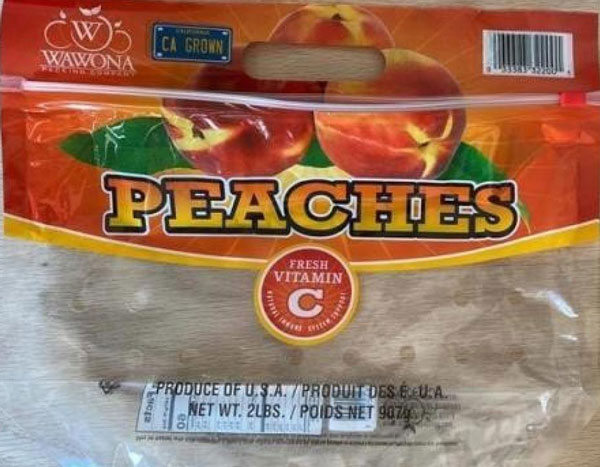
Wawona Peaches 907 g /
2 lbs
0 33383 32200 1 All packages sold from June 1, 2020 to August 22, 2020, inclusively. None
Wegmans Peaches 907 g /
2 lbs
0 77890 49048 8 All packages sold from June 1, 2020 to August 22, 2020, inclusively. None
Extrafresh Peaches 907 g /
2 lbs
0 33383 02071 6 CPO3148, CPO3164, CPO3163, CPO3186, CPO3207, CPO3213, CPO3228, CPO3265, CPO3281, CPO3302, CPO3328, CPO3354, MPO0500, MPO0503, MPO0524, MPO0671, MPO0678, MPO0689, MPO0693, MPO0703, MPO0716, MPO0725, MPO0730, MPO0767, MPO0795. None

What you should do

If you think you became sick from consuming a recalled product, call your doctor.

Check to see if you have the recalled products in your home or establishment. Recalled products should be thrown out or returned to the location where they were purchased. If you are unsure of the source of the peaches, check with your place of purchase.

Food contaminated with Salmonella may not look or smell spoiled but can still make you sick. Young children, pregnant women, the elderly and people with weakened immune systems may contract serious and sometimes deadly infections. Healthy people may experience short-term symptoms such as fever, headache, vomiting, nausea, abdominal cramps and diarrhea. Long-term complications may include severe arthritis.

Background

This advisory was triggered by a recall in the United States by Prima Wawona located in Fresno, California. The CFIA is conducting a food safety investigation, which may lead to the recall of other products. If products are recalled, the CFIA will notify the public through a Food Recall Warning.

Illnesses

The Public Health Agency of Canada is investigating an outbreak of human illness.

Product photos

Printer ready version of photos

  • Wawona - Peaches
  • Wawona - Peaches - upc
  • Wegmans - Peaches

Public enquiries and media

Public enquiries
Toll-free: 1-800-442-2342 (Canada and U.S.)
Telephone: 1-613-773-2342 (local or international)
Email: cfia.enquiries-demandederenseignements.acia@canada.ca

UK – Hand2Mouth Ltd recalls various products containing Brazil nuts because of the possible presence of salmonella

FSA

Hand2Mouth Ltd is recalling various products containing Brazil nuts because they may contain salmonella. This recall is linked to FSA-PRIN-37-2020 and FSA-PRIN-38-2020.

Product details

Eat Natural fruit & nut bar brazil & sultana with peanuts and almonds
Pack size 35g bar
Best before August 2020 to June 2021
Eat Natural fruit & nut bar brazil & sultana with peanuts and almonds
Pack size 50g bar
Best before August 2020 to June 2021
Eat Natural fruit & nut bars brazil & sultana with peanuts and almonds
Pack size 4x35g multipack
Best before August 2020 to June 2021
Eat Natural fruit & nut bars brazil & sultana with peanuts and almonds
Pack size 3x50g multipack
Best before August 2020 to June 2021
Eat Natural fruit & nut bars brazil & sultana with peanuts and almonds
Pack size 12x50g counter pack
Best before August 2020 to June 2021
Eat Natural 20 assorted fruit & nut bars brazil & sultana with peanuts and almonds
Pack size 20x50g assorted mix pack
Best before August 2020 to June 2021
HEMA Natural Bar Fruit & Nut
Pack size 50g bar
Best before 31 August 2020, 30 November 2020, 28 February 2021, 31 March 2021
HEMA Natural Bar Fruit & Nut
Pack size 16x50g bar
Best before 31 August 2020, 30 November 2020, 28 February 2021, 31 March 2021

Risk statement

The products listed above may be contaminated with salmonella. Symptoms caused by salmonella usually include fever, diarrhoea and abdominal cramps.

Action taken by the company

Hand2Mouth Ltd is recalling the above products. Point-of-sale notices will be displayed in all retail stores that are selling these products. These notices explain to customers why the products are being recalled and tell them what to do if they have bought the products. Please see the attached notices.

Our advice to consumers

If you have bought any of the above products do not eat them. Instead, return them to the store from where they were bought for a full refund.

Research – Variation of antibiotic resistance in Salmonella Enteritidis, Escherichia coli O157 :H7 , and Listeria monocytogenes after exposure to acid, salt, and cold stress

Wiley Online

Abstract

Bacteria with antibiotic‐resistant could seriously threaten to human health, increasing the treatment cost for infections and negatively affecting treatment outcomes. Stress adaptation is one possible mechanism for the acquisition or enhancement of antibiotic resistance in bacteria as a result of cross‐protection. In this study, the effects of acid, salt, and cold stress on the antibiotic resistance of Salmonella Enteritidis, Listeria monocytogenes , and Escherichia coli O157:H7 were investigated using the disc diffusion method. For S. Enteritidis, acidic growth conditions increased resistance to ciprofloxacin and erythromycin ( < .05), and addition of 4% NaCl to growth media decreased resistance to chloramphenicol ( < .05). Irrespective of pH and the NaCl concentration of the growth medium, refrigerated E. coli O157:H7 showed increased resistance to amoxycillin, ciprofloxacin, gentamicin, streptomycin, and erythromycin ( < .05). Acid‐adapted L. monocytogenes showed decreased the resistance to amoxycillin, ampicillin, chloramphenicol, ciprofloxacin, erythromycin, gentamicin, streptomycin, and tetracycline ( < .05). In conclusion, prolonged exposure of foodborne pathogens to acid, salt, and cold stress alters their antibiotic resistance. However, the effect of acid, salt, and cold stress on bacterial antibiotic resistance depend on both the bacterial species and the specific antibiotic. Therefore, multiple factors need to be considered for a foodborne antimicrobial resistant risk assessment.

Belgium – Jumbo Mix Garam Masala 60g – Salmonella

AFSCA

In agreement with the AFSCA, Jumbo is withdrawing the Jumbo brand “Garam Masala Mix” from sale and is recalling it to consumers because the product may contain Salmonella bacteria.

Jumbo asks its customers not to consume this product and to return it to the point of sale where it was purchased, where they will be reimbursed.

Product Description

  • Product name: Garam Masala Mix 60gr
  • Brand: Jumbo
  • Weight: 60g
  • Expiration date (DDM) and lots: 11/2022 (Lot: 123591) & 02/2023 (Lot: 126953)
  • Sales period: from 11/2019 to 25/03/2020
  • Type of packaging: metallic packaging

The product has been distributed to all Jumbo subsidiaries in Belgium.

For more information, customers can contact customer service on 0800 – 98998 or Jumbo.com . Our apologies for any inconvenience caused

Belgium – ISFI Garam Massala 150g – Salmonella

AFSCA

In agreement with the AFSCA, ISFI has decided to withdraw from sale and to recall to consumers the product ISFI Garam Massala 150g because of a possible presence of salmonella.

IIFS asks its customers not to consume this product and to return it to the point of sale where it was purchased, where it will be refunded.


Product Description

– Product name: ISFI Garam Massala 150g
– Brand: ISFI
– Date of minimum durability (DDM) (“Best before end”): 01/2024
– Batch number (s): P126189
– Period of sale: from 18-03-20 to 10-06-20
– Type of packaging: Plastic bottle
– Weight: 150g

The product was distributed by:

  • SLIGRO-ISPC BELGIUM, Route de Liers 125, 4042 Herstal (Liers) and Ottergemsesteenweg Zuid 720, 9000 Gent
  • VDS-FOOD, Avenue Léonard de Vinci 6, 1300 Wavre
  • MDH FOODSERVICE, Bergensesteenweg 2, 1600 Sint-Pieters-Leeuw
  • MAKRO, Brabantstraat 4, 2870 Breendonk

For any further information , contact ISFI at the following number: 02 / 389.47.70

USA – Prima® Wawona Recalls Bagged Peaches Due to Possible Salmonella Risk

FDA

Prima® Wawona of Fresno, California is voluntarily recalling its Wawona, Wawona Organic brand conventional and organic bagged peaches because the product could possibly be contaminated with Salmonella.

Salmonella is a microorganism that can cause serious and sometimes fatal infections in young children, frail or elderly people, and others with weakened immune systems. Healthy persons infected with Salmonella often experience fever, diarrhea (which may be bloody), nausea, vomiting and abdominal pain. In rare circumstances, infection with Salmonella can result in the organism getting into the bloodstream and producing more severe illnesses such as arterial infections (i.e., infected aneurysms), endocarditis and arthritis.

Peaches sold as loose fruit or in bulk are not associated with this recall. Only bagged peaches are included in this recall.

The peaches were distributed and sold from June 1st to August 19th in supermarkets with the following product codes:

Wawona Peaches – 033383322001
Wawona Organic Peaches – 849315000400
Prima® Peaches – 766342325903
Organic Marketside Peaches – 849315000400
Kroger Peaches – 011110181749
Wegmans Peaches – 077890490488

The product codes may be found at the bottom of each package.

The bagged peaches were distributed through retailers in the following states: Alaska, Alabama, Arizona, California, Colorado, Connecticut, Florida, Georgia, Hawaii, Iowa, Illinois, Indiana, Kentucky, Louisiana, Massachusetts, Maryland, Maine, Michigan, Minnesota, Minnesota, Missouri, Mississippi, North Carolina, New Hampshire, New Jersey, New York, Ohio, Pennsylvania, South Carolina, Tennessee, Texas, Utah, Virginia and Wisconsin.

Prima® Wawona is recalling the bagged peaches as a precaution in connection with a Salmonella outbreak under investigation by the U.S. Food and Drug Administration and the U.S. Centers for Disease Control and Prevention that is suspected to have caused the illness of more than 60 people in nine states.

“We’re conducting this voluntary recall in cooperation with the FDA out of consideration for the wellbeing and safety of our customers and consumers,” said George Nikolich, Vice President Technical Operations. “We continue to be committed to serving consumers with high quality fruit.”

Anyone who has the recalled product in their possession should dispose of it immediately or return it to the place of purchase for a refund. Consumers with questions may contact Prima Wawona’s toll-free number at 1-877-722-7554, from 8 a.m. to 5 p.m. ET, Monday through Friday, or visit its website at wawonapacking.comExternal Link Disclaimer.

Outbreak Investigation


Company Contact Information

Consumers:
Prima Wawona
 1-877-722-7554