Category Archives: Salmonella

Netherlands – Lidl Smoked Bacon Strips -Salmonella

NVWA

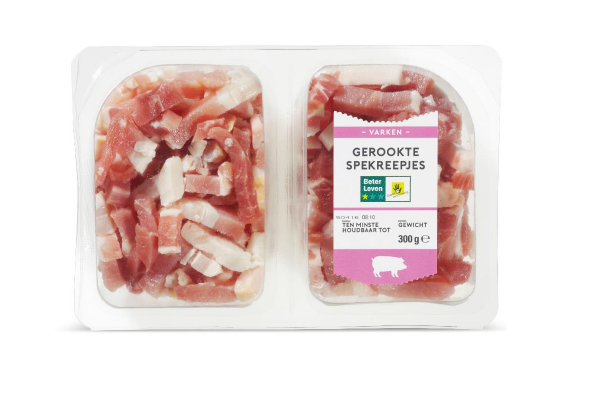
Important safety warning for smoked bacon strips Lidl

Lidl Netherlands is carrying out a recall for the product smoked bacon strips with an expiration date 03-03-2021 and 04-03-2021 and barcode 4056489052647.

Salmonella was found during a quality check at the producer. Consuming the smoked bacon strips can potentially pose a health hazard, especially to young children, the elderly, people with a weakened immune system and pregnant women. Consult your doctor or general practitioner if you have any questions about health problems.

Customers are requested not to eat the smoked bacon strips and to return them to a Lidl store, where they will be reimbursed for the purchase price upon return of the product.

See also Lidl website

Download ‘Important safety warning for smoked bacon strips Lidl’
PDF document | 1 page | 201 KB

Warning | 19-01-2021

smoked bacon strips

Italy – Knife-Tip Salami – Microbiological Risk – Salmonella

Salute

Brand : Lovison spa

Name : Knife-tip salami

Reason for reporting : Recall due to microbiological risk

Publication date : 18 January 2021

Documentation

Documentation

Finland – Three brands recall eggs over Salmonella risk

YLE

Eggs branded as Kieku, Kesko’s Pirkka brand and Kotimaista by S-Grouphave been pulled from shelves.

Packs of ten free range Kotimaista eggs are part of the recall, as are ten-egg and six-egg packs of free range Pirkka eggs.

Kieku has also added its Kieku-branded four-egg packs to the recall. All the eggs are from a farm where salmonella was found in samples, and were packed at a Kieku plant.

The risk of salmonella contamination only affects eggs with the production code 2FI15464. More details on the recall, and pictures of the recalled products, are available on the Kieku website.

Research – NIH scientists study salmonella swimming behavior as clues to infection

NIH

Salmonellaa

Salmonella enterica serovar Typhimurium bacteria (S. Typhimurium) commonly cause human gastroenteritis, inflammation of the lining of the intestines. The bacteria live inside the gut and can infect the epithelial cells that line its surface. Many studies have shown that Salmonella use a “run-and-tumble” method of short swimming periods (runs) punctuated by tumbles when they randomly change direction, but how they move within the gut is not well understood.

National Institutes of Health scientists and their colleagues believe they have identified a S. Typhimurium protein, McpC (Methyl-accepting chemotaxis protein C), that allows the bacteria to swim straight when they are ready to infect cells. This new study, published in Nature Communications, describes S. Typhimurium movement and shows that McpC is required for the bacteria to invade surface epithelial cells in the gut.

The study authors suggest that McpC is a potential target for developing new antibacterial treatments to hinder the ability of S. Typhimurium to infect intestinal epithelial cells and colonize the gut. National Institute of Allergy and Infectious Diseases scientists at Rocky Mountain Laboratories in Hamilton, Montana, led the study. Collaborators included groups from the University of Texas A&M campuses in College Station and Kingsville.

RASFF Alert – Foodborne Outbreak -Salmonella – Salami

European Food Alerts

RASFF

foodborne outbreak suspected to be caused by Salmonella (presence /25g) in salami from Italy in Italy

RASFF Alerts – Salmonella – Anything to do with Chicken from Poland – Black Pepper – Paprika Powder – Chilled beef Merguez Sausages

European Food Alerts

RASFF

Salmonella enterica ser. Münster (presence /25g) in paprika powder from China in Spain

RASFF

Salmonella (presence /25g) in pepper from Brazil in Spain

RASFF

Salmonella enterica ser. Newport (presence /25g) in frozen chicken elements from Poland in Poland

RASFF

Salmonella enterica ser. Enteritidis (presence /25g) in chilled chicken elements from Poland in Poland

RASFF

Salmonella enterica ser. Mbandaka (presence /150g) in egg yolk powder from Poland in Sweden

RASFF

Salmonella enterica ser. Enteritidis (presence /25g) in frozen chicken legs from Poland in France

RASFF

Salmonella (present /25g) in black pepper from Brazil in the Netherlands

RASFF

Salmonella (present /10g) in chilled beef merguez sausages from Belgium in Belgium

RASFF

Salmonella enterica ser. Infantis (presence /25g) in frozen chicken breast fillets from Poland in Estonia

RASFF

Salmonella group C (presence /25g) in chilled chicken broiler thighs and breast steaks from Poland in Lithuania

RASFF Alerts – Animal Feed – Salmonella – Dog Chews – Rapeseed Cake – Sunflower Husk Pelletes

European Food Alerts

RASFF

Salmonella enterica ser. Typhimurium (presence /25g) in dog chews from Germany in Austria

RASFF

Salmonella enterica ser. Agona (present /25g) in rapeseed cake from Belgium in Belgium

RASFF

Salmonella (present /25g) in sunflower husk pellets from Estonia in Germany

USA – FDA CORE Response Team Update

FDA

A new Salmonella Miami outbreak has been announced by the FDA in their CORE Table. The only information given is that 48 people are sick.   

USA – 5 Ways to Prevent Salmonella from Backyard Chickens

Wide Open Pets

104px-More_chicks

More and more people are getting Salmonella from backyard chickens. Are you at risk?

This year there were more cases of Salmonella linked to backyard chickens than ever before recorded by the Centers for Disease Control and Prevention (CDC). In fact, there were over ten Salmonella outbreaks, and 1,100 cases in 48 states just this year so far!

We’ll tell you what Salmonella is, help you figure out if you’re at risk, and let you know the best practices for how to stay healthy. Having backyard chickens is fun, but getting Salmonella definitely isn’t!
 

CDC Report

Research – Pulsed ultraviolet light technology to improve egg safety, help poultry industry

Science Daily

Salmonella Eggs Food Poisoning Food Safety

Pulsed ultraviolet light can be an effective alternative to some of the antimicrobial technologies now used by the poultry industry to kill pathogens on eggshells, according to Penn State researchers, who simulated production conditions to test the technology.

Researcher Paul Patterson, professor of poultry science, College of Agricultural Sciences, suggests the technology has merit for commercial application in the egg industry.

“This study is unique because it scaled-up and applied components of standard egg processing to a conveyor and sanitizing eggs in a commercial setting,” he said. “In the absence of water or other chemical sanitizers, this technology has the potential to achieve significant — equal or greater — microbial reductions than some currently available technologies.”

Every year in the United States, an average of 287 eggs are consumed per person, and more than 14.1 billion eggs are set in hatchery incubators to produce chicks destined for the egg and meat bird industries. By reducing the microbial load on eggs, foodborne illness outbreaks associated with eggs and poultry meat can be reduced while chick health is maintained.