Category Archives: Salmonella

USA – U.S. and Canada part of Salmonella outbreak linked to tahini and halva

Food Safety News

The United States and Canada are part of an outbreak affecting Europe because of Salmonella in tahini and halva from Syria.

The United States has reported six Salmonella Mbandaka cases, one in 2020 and the rest this year.

Interviews were conducted with two people: both report shopping at international markets that stock mostly Arabic and Middle Eastern foods and ingredients, and ate items containing tahini. Interviews are pending on the remaining ill people. Two have traveled to Syria and have not been reachable by public health officials.

Ill people range from less than one to 57 years old, with a median age of 19.5 years. Illness onset dates are from Nov. 19, 2020 to Sept. 5, 2021.

Canada has eight confirmed cases: five of Salmonella Mbandaka, two of Salmonella Havana and one of Salmonella Orion from 2019 to 2021.

Netherlands – Safety warning white point meatball, minced meat sandwich and wholemeal point meatball Bakker Goedhart – Salmonella

NVWA

Goedhart Convenience BV warns against white-tipped meatball, minced meat sandwich and whole-wheat-tipped meatball. The meat may contain salmonella. Eating a product with this bacterium is a danger to public health and can especially pose a risk for people with a low resistance, such as the sick, pregnant women, the elderly and young children.
Which products are involved?

  • TBO White tip meatball BLK1*, EAN 8714368008234, best before date between 04-10-2021 and 20-10-2021
  • TBO Sandwich minced meat BLK1*, EAN 8714368008166, best before date between 04-10-2021 and 26-10-2021
  • TBO Wholemeal point meatball BLK1 *, best before 04-10-2021 and 26-10-2021
  • The products were sold through Jumbo, Spar, Lekkerland, Conway, Foox, HAVI, Sligro, Vending@Work and Paresto

See the website of Bakker Goedhart

Netherlands – Safety warning DekaVers Smoked sausage Fine and DekaVers Smoked sausage Coarse – Salmonella

NVWA

DekaMarkt will immediately remove the DekaVers Smoked Sausage Fine and DekaVers Smoked Sausage Coarse from the shelves. Checks have shown that these products may contain salmonella.

Which product is it?

  • DekaVers Smoked sausage Coarse 1 star with EAN code 2336792
  • DekaVers Smoked sausage Coarse with EAN code 2336769
  • Action DekaVers Smoked sausage fine 1 star with EAN code 2336793
  • DekaVers Smoked sausage Fine with EAN code 2336766
  • THT 27-10-2021 and 28-10-2021

Netherlands – Best Smoked sausage fine and 1 the Best Smoked sausage coarse from Dirk – Salmonella

NVWA

Safety warning 1 the Best Smoked sausage fine and 1 the Best Smoked sausage coarse from Dirk

Dirk warns for 1 Best Smoked Sausage fine and 1 Best Smoked Sausage coarse. Checks have shown that these products may contain salmonella.

Which products are involved?

  • 1 The Best Smoked Sausage fine with EAN code: 2336768
  • 1 The Best Smoked Sausage coarse with EAN code: 2336771
  • With best before date 28-10-2021

See also the website

USA – Salmonella Outbreak Linked to Raw Frozen Breaded Stuffed Chicken Products is over.

CDC

CDC, public health and regulatory officials in several states, and the U.S. Department of Agriculture’s Food Safety and Inspection Service (USDA-FSIS) investigated a multistate outbreak of Salmonella Enteritidis infections.

Epidemiologic, laboratory, and traceback data showed that raw frozen breaded stuffed chicken products produced at the P-2375 Serenade Foods facility in Milford, Indiana, made people sick.

As of October 13, 2021, this outbreak is over.

Epidemiologic Data

A total of 36 people infected with the outbreak strain of Salmonella Enteritidis were reported from 11 states (see map). The true number of sick people in an outbreak is likely much higher than the number reported, and the outbreak may not be limited to the states with known illnesses. This is because many people recover without medical care and are not tested for Salmonella.

Illnesses started on dates ranging from February 21, 2021, to August 16, 2021 (see timeline). Sick people ranged in age from 1 to 83 years, with a median age of 38 years, and 57% were female. Of 32 people with information available, 12 were hospitalized. No deaths were reported.

State and local public health officials interviewed people about the foods they ate in the week before they got sick. Of the 27 people interviewed, 14 (52%) reported preparing and eating frozen breaded stuffed chicken products. They bought different brands of raw frozen breaded stuffed chicken products from multiple stores.

Germany – TAHIN HELVA HALVA, FISTIKLI / PISTACHIO, brand: KOSKA 1907 – Salmonella

LMW

Warning type: Food
Date of first publication: 10/15/2021
Product name:

TAHIN HELVA HALVA, FISTIKLI / PISTACHIO, brand: KOSKA 1907

Product pictures:

Produktbild.jpeg

Company KERVAN GMBH, FLOHRSTRAßE 26, 13507 BERLIN / DE / BE.

Manufacturer (distributor): Company KERVAN GMBH, FLOHRSTRAßE 26, 13507 BERLIN / DE / BE.
Reason for warning:

Salmonella

Packaging Unit: 200 g
Durability: 10/26/2022
Lot identification: Barcode number: 8 6907 10 009442, lot number: 212-300F / 20
Contact to the responsible authorities:
Berlin:poststelle@senjustva.berlin.de
Saxony:poststelle@sms.sachsen.de
Saxony-Anhalt:poststelle@ms.sachsen-anhalt.de

Germany – Alburj – Halva with pistachios 400 g & 800 g – Salmonella

LMW

Warning type: Food
Date of first publication: 10/15/2021
Product name:

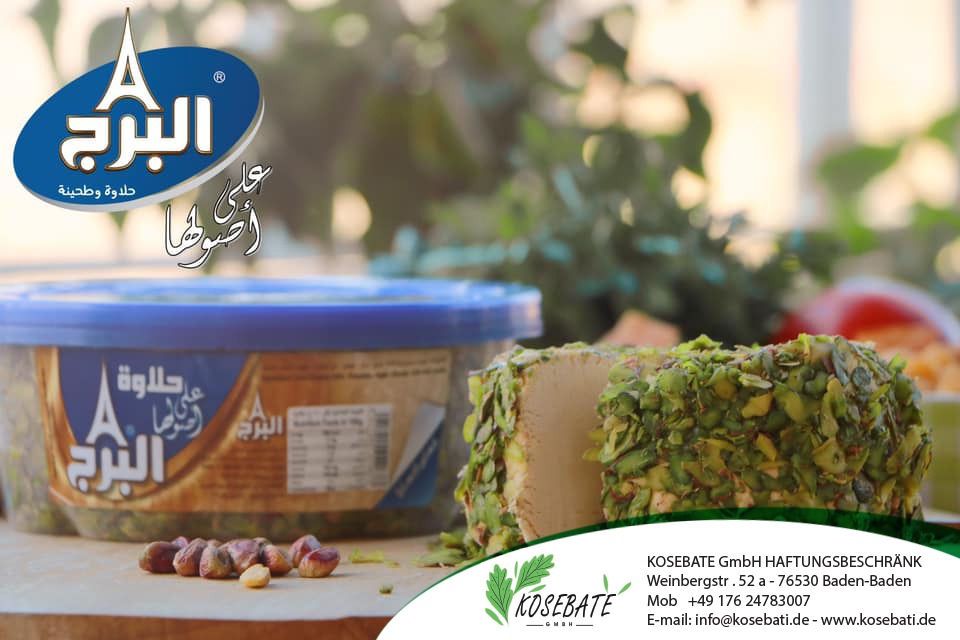
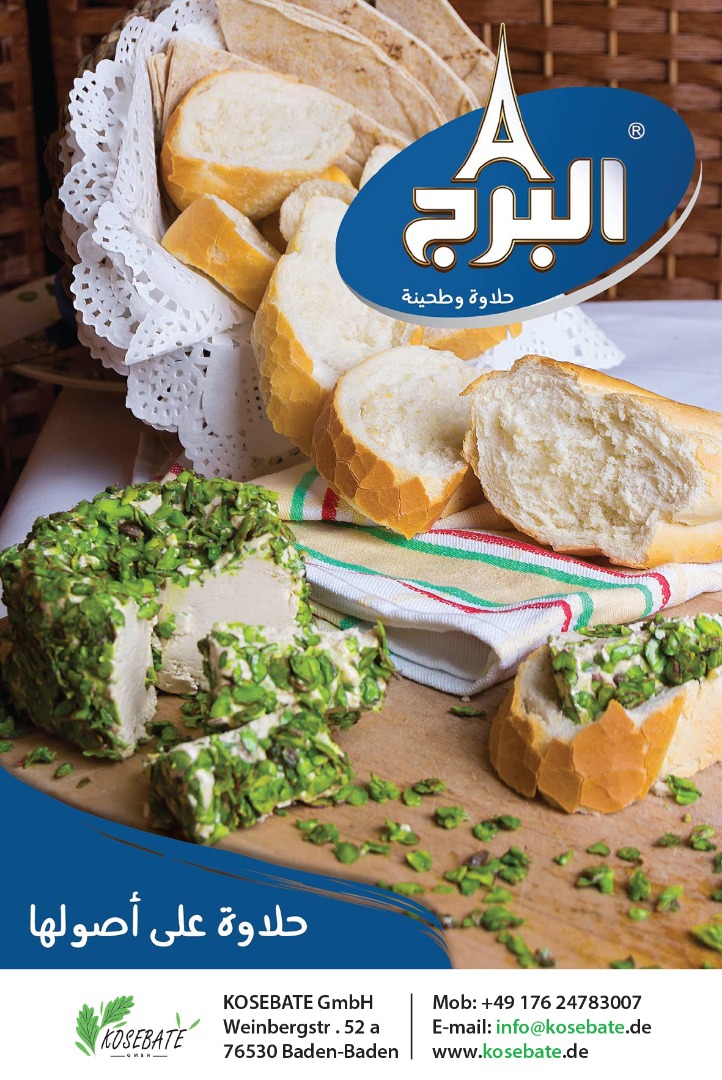
Alburj – Halva with pistachios 400 g & 800 g

Product pictures:

Halva with pistachio.jpg
Halva with pistachio2.jpg
Manufacturer (distributor): Distributor: Kosebate GmbH
Reason for warning:

Salmonella was detected in a sample from batch 07/2022.

Packaging Unit: 400 g and 800 g
Lot identification: Batch 07/2022
Additional Information: Reference is made to the company’s customer information sheet attached.
Contact to the responsible authorities: 
Baden-Württemberg:poststelle@mlr.bwl.de
Bavaria:poststelle@lgl.bayern.de
Hesse:Schnellwarnung@rpda.hessen.de
Lower Saxony:poststelle@ml.niedersachsen.de
North Rhine-Westphalia:poststelle@mulnv.nrw.de
Rhineland-Palatinate:Poststelle.Referat22@lua.rlp.de
Thuringia:LM-Ueberendung@tlv.thueringen.de

Research – Healthcare-associated foodborne outbreaks in high-income countries: a literature review and surveillance study, 16 OEDC countries, 2001 to 2019

Eurosurveillance

Yearly, 23 million foodborne disease illnesses and 5,000 deaths are estimated in the World Health Organization (WHO) European Region, and 41 foodborne Disability Adjusted Life Years (DALYs) per 100,000 population were estimated for the WHO Sub-Region EUR A in 2010 [1]. In Europe, a total of 5,146 foodborne and waterborne outbreaks, including 48,365 cases of illness and 40 deaths were reported to the European Food Safety Authority (EFSA) in 2018 [2]. Vulnerable populations, including elderly patients, immunocompromised patients, children younger than five years old and pregnant women are more susceptible to foodborne infections and are more prone to develop severe courses of disease compared with healthy people [3]. Therefore, healthcare is a setting where foodborne outbreaks (FBO) can cause considerable morbidity and mortality. In 2020, 20.6% of the European Union (EU) population was aged 65 years and older [4]. As the proportion of elderly people is projected to further increase, the share of the vulnerable population as patients in healthcare facilities (HCF) is likely to increase and thereby the risk associated with healthcare-associated foodborne outbreaks (HA-FBO). Personnel (medical and non-medical staff, food handlers etc) of HCF may also be at risk for HA-FBO and be a source of further spread in healthcare settings and elsewhere. This can cause major disruption of services [5].

So far, literature reviews have covered pathogens responsible for HA-FBO, including  [6],  [79] and norovirus [10,11] and focused on microbiological food safety issues in healthcare settings [5,12]. Between 2014 and 2019, a listeriosis outbreak in Germany affected 13 cases who had an inpatient stay in 12 different HCF during the incubation period [13]. In the United Kingdom (UK) in 2019, nine listeriosis cases of which seven died, had consumed sandwiches in seven HCF during the incubation period [14].

We conducted a literature review to describe the causative agents including bacteria, viruses, parasites and fungi, the incriminated food vehicles and other outbreak characteristics of HA-FBO in 37 countries that are members of the Organisation for Economic Cooperation and Development (OECD) [15]. Furthermore, we analysed German surveillance data and data from the EFSA on HA-FBO. The aim of this article is to describe the current status of HA-FBO in order to improve surveillance and provide public health recommendations for prevention.

USA – Investigation Details -Salmonella Oranienburg Outbreak

October 14, 2021

CDC and public health and regulatory officials in several states are collecting different types of data to investigate a multistate outbreak of Salmonella Oranienburg infections. The investigation has not yet identified a food linked to illness.

Epidemiologic Data

As of October 14, 2021, 592 people infected with the outbreak strain of Salmonella Oranienburg have been reported from 36 states (see map). Illnesses started on dates ranging from May 31, 2021, to September 29, 2021 (see timeline).

Sick people range in age from less than 1 year to 97 years, with a median age of 36, and 57% are female. Of 363 people with information available, 116 (32%) have been hospitalized and no deaths have been reported.

The true number of sick people in an outbreak is likely much higher than the number reported, and the outbreak may not be limited to the states with known illnesses. This is because many people recover without medical care and are not tested for Salmonella. In addition, recent illnesses may not yet be reported as it usually takes 3 to 4 weeks to determine if a sick person is part of an outbreak.

State and local public health officials continue to interview people about the foods they ate in the week before they got sick. CDC is analyzing the data and has not identified a specific food item as a potential source of this outbreak.

Laboratory Data

Whole genome sequencing of bacteria from 556 people’s samples did not predict any antibiotic resistance. Three people’s samples were predicted to be resistant to one or more of the following antibiotics: amoxicillin-clavulanic acid, ampicillin, cefoxitin, and ceftriaxone, gentamicin, streptomycin, sulfamethoxazole, and tetracycline. Standard antibiotic susceptibility testing by CDC’s National Antimicrobial Resistance Monitoring System (NARMS) laboratory is currently underway. Most people with Salmonella illness recover without antibiotics. However, if antibiotics are needed, this resistance is unlikely to affect the choice of antibiotic used to treat most people because it is rare.

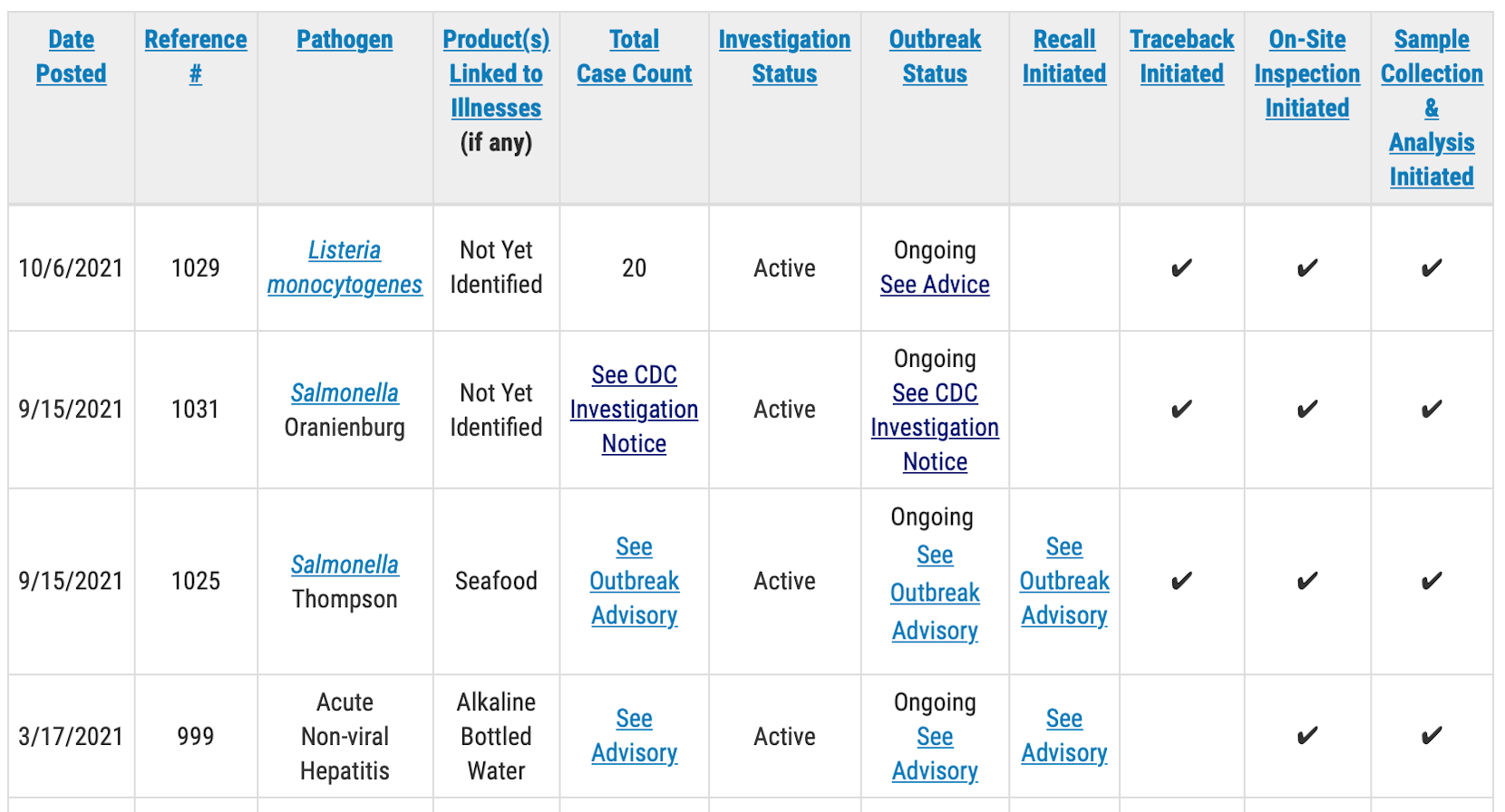
USA – Core Investigations Table Update

FDA

New Listeria Outbreak- no real information

Ongoing Salmonella Oranienburg and Salmonella Thompson investigations