Category Archives: Salmonella

USA- Amazon Go Asian Chicken Salad Sold in WA Recalled For Salmonella – Peanut Butter

Food Poisoning Bulletin

Amazon Go Asian Chicken Salad that was sold in one Amazon Go retail location in Washington is being recalled for possible Salmonella contamination. The salad was made with Jif peanut butter that is recalled. Some types of that peanut butter are linked to a Salmonella Senftenberg outbreak that has sickened at least 16 people in 12 states. No confirmed reports of illnesses have been linked to this specific product.

UK – Research – A survey of Salmonella, Escherichia coli (E. coli) and antimicrobial resistance in frozen, part-cooked, breaded or battered poultry products on retail sale in the United Kingdom

FSA

A survey of Salmonella, Escherichia coli (E. coli) and antimicrobial resistance in frozen, part-cooked, breaded or battered poultry products on retail sale in the United Kingdom

In this study we estimated how frequently Salmonella spp. were present in frozen, breaded or battered chicken products, intended to be cooked before consumption, on retail sale in the UK between April and July 2021.

Frozen, breaded, ready-to-cook chicken products have been implicated in outbreaks of salmonellosis. Some of these outbreaks can be large. For example, one outbreak of Salmonella Enteritidis involved 193 people in nine countries between 2018 and 2020, of which 122 cases were in the UK. These ready-to-cook products have a browned, cooked external appearance, which may be perceived as ready-to-eat, leading to mishandling or undercooking by consumers. Continuing concerns about these products led FSA to initiate a short-term (four month), cross-sectional surveillance study undertaken in 2021 to determine the prevalence of Salmonella spp., Escherichia coli and antimicrobial resistance (AMR) in frozen, breaded or battered chicken products on retail sale in the UK.

This study sought to obtain data on AMR levels in Salmonella and E. coli in these products, in line with a number of other FSA instigated studies of the incidence and nature of AMR in the UK food chain, for example, the systematic review (2016).

Between the beginning of April and the end of July 2021, 310 samples of frozen, breaded or battered chicken products containing either raw or partly cooked chicken, were collected using representative sampling of retailers in England, Wales, Scotland and Northern Ireland based on market share data. Samples included domestically produced and imported chicken products and were tested for E. coli (including extended-spectrum beta-lactamase (ESBL)-producing, colistin-resistant and carbapenem-resistant E. coli) and Salmonella spp. One isolate of each bacterial type from each contaminated sample was randomly selected for additional AMR testing to determine the minimum inhibitory concentration (MIC) for a range of antimicrobials. More detailed analysis based on Whole Genome Sequencing (WGS) data was used to further characterise Salmonella spp. isolates and allow the identification of potential links with human isolates.

Salmonella spp. were detected in 5 (1.6%) of the 310 samples and identified as Salmonella Infantis (in three samples) and S. Java (in two samples). One of the S. Infantis isolates fell into the same genetic cluster as S. Infantis isolates from three recent human cases of infection; the second fell into another cluster containing two recent cases of infection. Countries of origin recorded on the packaging of the five Salmonella contaminated samples were Hungary (n=1), Ireland (n=2) and the UK (n=2). One S. Infantis isolate was multi-drug resistant (i.e. resistant to three different classes of antimicrobials), while the other Salmonella isolates were each resistant to at least one of the classes of antimicrobials tested. E. coli was detected in 113 samples (36.4%), with counts ranging from ❤ to >1100 MPN (Most Probable Number)/g. Almost half of the E. coli isolates (44.5%) were susceptible to all antimicrobials tested. Multi-drug resistance was detected in 20.0% of E. coli isolates. E. coli isolates demonstrating the ESBL (but not AmpC) phenotype were detected in 15 of the 310 samples (4.8%) and the AmpC phenotype alone was detected in two of the 310 samples (0.6%) of chicken samples. Polymerase Chain Reaction (PCR) testing showed that five of the 15 (33.3%) ESBL-producing E. coli carried blaCTX-M genes (CTX-M-1, CTX-M-55 or CTX-M-15), which confer resistance to third generation cephalosporin antimicrobials. One E. coli isolate demonstrated resistance to colistin and was found to possess the mcr-1 gene.

The five Salmonella-positive samples recovered from this study, and 20 similar Salmonella-positive samples from a previous UKHSA (2020/2021) study (which had been stored frozen), were subjected to the cooking procedures described on the sample product packaging for fan assisted ovens. No Salmonella were detected in any of these 25 samples after cooking.

The current survey provides evidence of the presence of Salmonella in frozen, breaded and battered chicken products in the UK food chain, although at a considerably lower incidence than reported in an earlier (2020/2021) study carried out by PHE/UKHSA as part of an outbreak investigation where Salmonella prevalence was found to be 8.8%.

The current survey also provides data on the prevalence of specified AMR bacteria found in the tested chicken products on retail sale in the UK. It will contribute to monitoring trends in AMR prevalence over time within the UK, support comparisons with data from other countries, and provide a baseline against which to monitor the impact of future interventions. While AMR activity was observed in some of the E. coli and Salmonella spp. examined in this study, the risk of acquiring AMR bacteria from consumption of these processed chicken products is low if the products are cooked thoroughly and handled hygienically.

Research – How Does Peanut Butter Get Contaminated With Salmonella, Anyway?

Health

Manufacturing Issues May Lead to Salmonella in Peanut Butter

To understand the link between peanut butter and Salmonella, it’s important to go over how peanut butter is made. The process of making peanut butter starts with raw, shelled peanuts that are roasted and cooled, Vijaya Surampudi, MD, clinical nutrition specialist at UCLA Health, told Health. The peanuts are then ground, and heated again during the grinding, she added.

Heating the peanuts and keeping them dry is a hugely important step in keeping your peanut butter safe from contamination, Darin Detwiler, LPD, a professor of food policy and corporate social responsibility at Northeastern University and author of Food Safety: Past, Present, and Predictions, told Health.

“Peanut butter is made from shelled and ground peanuts that are typically left sitting in unprotected piles until ready for the next stage of food manufacturing or for delivery to another company,” said Detwiler. “Most cases of Salmonella in peanuts are caused by the presence of rain water bringing feces onto the product, or animals—birds, or more likely rodents—[coming] directly] into contact with the product.”

Roasting the contaminated peanuts can help kill the Salmonella “if the food is heated to a high enough temperature, held at that temperature for enough time, and cooked throughout,” said Detwiler. But then the peanut butter has to keep that sanitized status after heating and grinding. “Roasted peanut butter can become contaminated in the processing plant if proper sanitation protocols are not followed.”

However, in some cases roasting contaminated peanuts can actually cause a type of heat-tolerant bacteria. “That’s why cleaning and sanitizing of the equipment and the facility is so important in addition to ensuring that the facility is well maintained,” Ellen Shumaker, PhD, food safety extension associate at North Carolina State University, told Health.

Peanut Butter Is an Ideal Place for Salmonella to Survive

According to Detwiler, Salmonella may not be able to grow in peanut butter, but it can survive for “many months” if it gets into the product.

“Peanut butter is a low-moisture food, meaning there is not enough available water to support the growth of microbial pathogens like Salmonella,” Abby Snyder, PhD, assistant professor of food science at the Cornell College of Agriculture and Life Sciences, told Health. “However, while Salmonella can’t grow, it can survive for extended periods of time in low-moisture foods like peanut butter.”

The high fat content of peanut butter may even act like a layer of protection for the bacteria, according to Shumaker. She pointed to a 2000 study in the Journal of Applied Microbiology which found that the bacteria could survive for up to 24 weeks in peanut butter jars.

Another large issue: Peanut butter is considered a “ready to eat” food, meaning people typically eat it without cooking it—which then raises the risk of contracting Salmonella, if the jar is contaminated, said Snyder.

Romania – Sesame seeds – Salmonella

ANSVSA

 Lidl România recalls Belbake Semințe de susan / Sesame seeds (200g; Lot 304-2216111; Use by 18.03.2023) due to Salmonella contamination.

USA – Sweet Spot Chocolate Shop recalls peanut butter-containing chocolates over Salmonella concerns

Food Safety News

Sweet Spot Chocolate Shop is recalling certain Sweet Spot Chocolate Shop brand peanut butter-containing chocolates because of possible Salmonella contamination.

The recalled Sweet Spot Chocolate Shop has peanut butter-containing chocolate with potential Salmonella contamination.

According to the Canadian Food Inspection Agency this recall was triggered by a recall in another country. J.M. Smucker Co. recalled Jif peanut butter products because of a new outbreak of infections from Salmonella Senftenberg. The full Canadian recall can be viewed here. Recalls in the U.S. can be viewed here.

The recalled products have been sold in Nova Scotia and online.

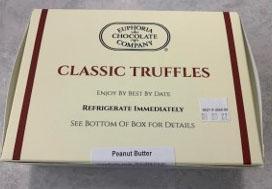
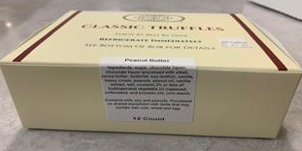
USA – Euphoria Chocolate Company Issues Voluntary Recall of Peanut Butter Classic Truffles, Dark Chocolate Peanut Butter Meltaways and Milk Chocolate Peanut Butter Meltaways Because of Possible Health Risk -Salmonella

FDA

Summary

Company Announcement Date:
FDA Publish Date:
Product Type:
Food & Beverages
Peanut Butter
Foodborne Illness
Reason for Announcement:
Salmonella
Company Name:
Euphoria Chocolate Company
Brand Name:
Euphoria Chocolate
Product Description:
Chocolate candy

Company Announcement

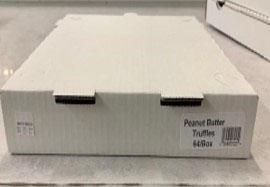
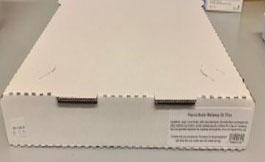
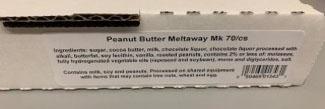
05/26/2022 – Euphoria Chocolate Company of Eugene,OR is initiating a voluntary recall of Peanut Butter Classic Truffles, Dark Chocolate Peanut Butter Meltaways, and Milk Chocolate Peanut Butter Meltaways due to a potential Salmonella contamination.

Salmonella is an organism which can cause serious and sometimes fatal infections in young children, frail or elderly people, and others with weakened immune systems. Healthy people infected with Salmonella often experience fever, diarrhea (which may be bloody), nausea, vomiting and abdominal pain. In rare circumstances, infection with Salmonella can result in the organism getting into the bloodstream and producing more severe illnesses such as arterial infections (i.e., infected aneurysms), endocarditis and arthritis.

The recalled products have one month shelf life for the Peanut Butter Classic Truffles and eight months shelf life for both the Dark Chocolate Peanut Butter Meltaways, and Milk Chocolate Peanut Butter Meltaways.  They were sold from Euphoria Chocolate store’s display case and distributed in Oregon to retailers and supermarkets from 02/17/2022 to 05/20/2022. A list of recalled products and affected Best By Dates range is listed in the table below.

Brand

Product

Pack
Size

UPC

Best By Dates Range

Distributed in State

Euphoria Chocolate Peanut Butter Classic Truffles 12pk 12 5046907226 03/15/2022 –
06/20/2022
OR
Euphoria Chocolate Peanut Butter Classic Truffles 64pk 64 5046907225 03/15/2022 –
06/20/2022
OR
Euphoria Chocolate Dark Chocolate
Peanut Butter
Meltaways
70 5046901342 10/16/2022 –
01/10/2023
OR
Euphoria Chocolate Milk Chocolate Peanut Butter Meltaways 70 5046901343 10/16/2022 –
01/10/2023
OR

Euphoria Chocolate Company initiated this recall because it contains the Jif 96 Ounce Crunchy Peanut Butter Twin Pack that is recalled by JM Smucker Co.

In addition, if you may have further distributed this product, please identify your customers and notify them at once of this product recall and inform them to not consume the products and destroy or discard it.

This recall is being made with the knowledge of the Oregon Department of Agriculture and the Food and Drug Administration.

Anyone who has the recalled Euphoria Chocolate products in their possession should not consume and should discard of the affected products.  Consumers with questions may contact the company at 541-344-4914, Monday-Friday, 8am – 4pm PST.


Company Contact Information

Consumers:
 541-344-4914

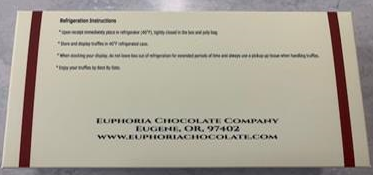
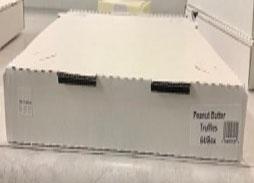
Product Photos

USA – A G Specialty Foods Inc. Issues Voluntary Recall of Food Products Containing Jif and Smuckers Peanut Butter Due to the Potential Salmonella Contamination

FDA

Summary

Company Announcement Date:
FDA Publish Date:
Product Type:
Food & Beverages
Peanut Butter
Foodborne Illness
Reason for Announcement:
Salmonella
Company Name:
A G Specialty Foods
Brand Name:
Multiple brand names
Product Description:
Snack Packs and Sandwiches

Company Announcement

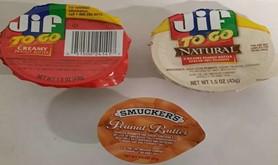
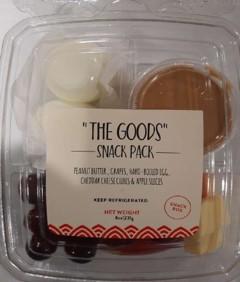
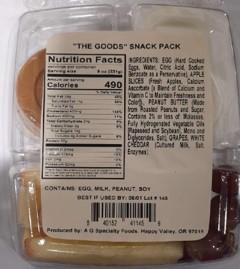
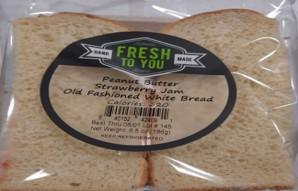
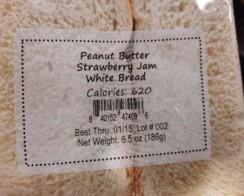
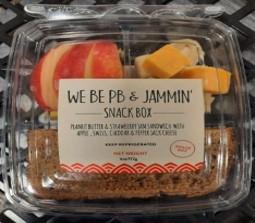
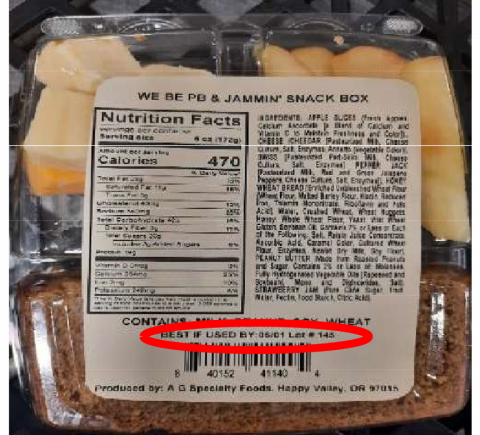
5/26/2022 –  A G Specialty Foods Inc of Happy Valley, Oregon is initiating a voluntary recall of perishable products “The Goods” Snack Pack, We Be PB & Jammin’ Snack Box, Peanut Butter Strawberry Jam Old Fashioned White Bread, and Peanut Butter Strawberry Jam White Bread containing the Jif Creamy Peanut Butter, Jif Creamy Peanut Butter To Go 1.5oz cups, Jif Natural Creamy Peanut Butter To Go 1.5oz cups, and Smuckers Peanut Butter 3/4oz cups due to a potential Salmonella contamination.

Salmonella is an organism which can cause serious and sometimes fatal infections in young children, frail or elderly people, and others with weakened immune systems. Healthy people infected with Salmonella often experience fever, diarrhea (which may be bloody), nausea, vomiting and abdominal pain. In rare circumstances, infection with Salmonella can result in the organism getting into the bloodstream and producing more severe illnesses such as arterial infections (i.e., infected aneurysms), endocarditis and arthritis.

The recalled products have 7-14 days shelf life and were distributed in Oregon and Washington to distributors, retailers and foodservice companies from 05/11/2022 through 05/23/2022 with Lot Codes from 129 to 141.

A list of recalled products and affected Use By Dates range is listed in the table below.

Produced By

Product

Pack
Size

UPC

Use By Dates Range

Included States

A G Specialty Foods ”The Goods” Snack Pack 8oz 8 40152 41145 9 05/16/2022
06/03/2022
OR, WA
A G Specialty Foods Peanut Butter Strawberry Jam Old Fashioned White Bread 6.5oz 8 40152 42409 1 05/06/2022 –
06/03/2022
OR, WA
A G Specialty Foods Peanut Butter Strawberry Jam White Bread 6.5oz 8 40152 47409 6 05/16/2022-
06/03/2022
OR, WA
A G Specialty Foods We BE PB & Jammin’ Snack Box 6oz 8 40152 41140 4 05/16/2022-
06/03/2022
OR, WA

No illnesses or deaths have been reported in consumption with A G Specialty Foods’ products to date.

In addition, if you may have further distributed this product, please identify your customers and notify them at once of this product recall and inform them to not consume the products and destroy or discard them.

A G Specialty Foods, Inc. initiated this recall because it contains the Jif Creamy Peanut Butter and Jif Creamy Peanut Butter To Go 1.5oz cups, Jif Natural To Go 1.5oz cups, and Smuckers Peanut Butter 3/4oz cups that are recalled by J.M. Smucker Co. because of an outbreak of infections from Salmonella.

This recall is being made with the knowledge of the Oregon Department of Agriculture, and the Food and Drug Administration.

Anyone who has the recalled products produced by A G Specialty Foods in their possession should not consume and should discard the affected products including the Jif Creamy Peanut Butter To Go 1.5oz cups, Jif Natural Creamy Peanut Butter To Go 1.5oz cups, and Smuckers Peanut Butter 3/4oz cups.

Consumers with questions may contact the company at 503-305-6100, Monday-Friday, 8:00 am – 4:30 pm PST.

Thank you for your understanding and cooperation in this regard. Please feel free to contact us should you require additional information or assistance.


Company Contact Information

Consumers:
 503-305-6100

Product Photos

USA – FSIS – Public Health Alert for Ready-to-Eat Salad Products Containing Peanut Butter that May be Contaminated with Salmonella

FSIS USDA

The U.S. Department of Agriculture’s Food Safety and Inspection Service (FSIS) is issuing a public health alert for ready-to-eat (RTE) salad products containing Food and Drug Administration (FDA) regulated peanut butter that has been recalled by J.M. Smucker Company due to potential Salmonella contamination. FSIS is issuing this public health alert to ensure that consumers are aware that this product should not be consumed.

The salad products were produced between 5/11/2022 and 5/23/2022. The following products subject to the public health alert are [view labels]:

  • 14.5-oz. plastic clamshell containers labeled “Super Asian Chicken Salad” with a “Best Thru” date of 05/16 through 06/03.

The product bears establishment number “P-214” inside the USDA mark of inspection. These items were distributed to an Amazon Go retail location in Washington.

The problem was discovered when FSIS was notified by the establishment that the salad dressing component of the RTE salad product was formulated with peanut butter that has been recalled.

There have been no confirmed reports of illness or adverse reactions due to consumption of these products. Anyone concerned about an illness should contact a health care provider.

Consumption of food contaminated with Salmonella can cause salmonellosis, one of the most common bacterial foodborne illnesses. The most common symptoms of salmonellosis are diarrhea, abdominal cramps, and fever within 6 hours to 6 days after eating the contaminated product. The illness usually lasts 4 to 7 days. Most people recover without treatment. In some persons, however, the diarrhea may be so severe that the patient needs to be hospitalized. Older adults, infants, and persons with weakened immune systems are more likely to develop a severe illness. Individuals concerned about an illness should contact their health care provider.

FSIS is concerned that some product may be in consumers’ refrigerators. Consumers who have purchased these products are urged not to consume them. These products should be thrown away or returned to the place of purchase.

Media and consumers with questions regarding the public health alert can contact Brian Schkeryantz, A G Specialty Foods, at 949-293-3963 or brian@agspecialtyfoodsinc.com.

Consumers with food safety questions can call the toll-free USDA Meat and Poultry Hotline at 888-MPHotline (888-674-6854) or live chat via Ask USDA from 10 a.m. to 6 p.m. (Eastern Time) Monday through Friday. Consumers can also browse food safety messages at Ask USDA or send a question via email to MPHotline@usda.gov. For consumers that need to report a problem with a meat, poultry, or egg product, the online Electronic Consumer Complaint Monitoring System can be accessed 24 hours a day at https://foodcomplaint.fsis.usda.gov/eCCF/.

he U.S. Department of Agriculture’s Food Safety and Inspection Service (FSIS) is issuing a public health alert for ready-to-eat (RTE) salad products containing Food and Drug Administration (FDA) regulated peanut butter that has been recalled by J.M. Smucker Company due to potential Salmonella contamination. FSIS is issuing this public health alert to ensure that consumers are aware that this product should not be consumed.

The salad products were produced between 5/11/2022 and 5/23/2022. The following products subject to the public health alert are [view labels]:

  • 14.5-oz. plastic clamshell containers labeled “Super Asian Chicken Salad” with a “Best Thru” date of 05/16 through 06/03.

The product bears establishment number “P-214” inside the USDA mark of inspection. These items were distributed to an Amazon Go retail location in Washington.

The problem was discovered when FSIS was notified by the establishment that the salad dressing component of the RTE salad product was formulated with peanut butter that has been recalled.

There have been no confirmed reports of illness or adverse reactions due to consumption of these products. Anyone concerned about an illness should contact a health care provider.

Consumption of food contaminated with Salmonella can cause salmonellosis, one of the most common bacterial foodborne illnesses. The most common symptoms of salmonellosis are diarrhea, abdominal cramps, and fever within 6 hours to 6 days after eating the contaminated product. The illness usually lasts 4 to 7 days. Most people recover without treatment. In some persons, however, the diarrhea may be so severe that the patient needs to be hospitalized. Older adults, infants, and persons with weakened immune systems are more likely to develop a severe illness. Individuals concerned about an illness should contact their health care provider.

FSIS is concerned that some product may be in consumers’ refrigerators. Consumers who have purchased these products are urged not to consume them. These products should be thrown away or returned to the place of purchase.

Media and consumers with questions regarding the public health alert can contact Brian Schkeryantz, A G Specialty Foods, at 949-293-3963 or brian@agspecialtyfoodsinc.com.

Consumers with food safety questions can call the toll-free USDA Meat and Poultry Hotline at 888-MPHotline (888-674-6854) or live chat via Ask USDA from 10 a.m. to 6 p.m. (Eastern Time) Monday through Friday. Consumers can also browse food safety messages at Ask USDA or send a question via email to MPHotline@usda.gov. For consumers that need to report a problem with a meat, poultry, or egg product, the online Electronic Consumer Complaint Monitoring System can be accessed 24 hours a day at https://foodcomplaint.fsis.usda.gov/eCCF/.
Nigeria – Public Alert No.030/2022 – Ferrero Voluntarily Recalls Kinder® Surprise 20g and 20gx3 chocolate products manufactured by Italian based company Ferrero – Salmonella

NAFDAC

The National Agency for Food and Drug Administration and Control is notifying the public that Italian based company Ferrero is recalling Kinder Surprise 20g and Kinder Surprise 20g x3 with best before dates between 11th July 2022 and 7th October 2022 due to the possible presence of Salmonella.  The products are being recalled because they were manufactured in a facility where Salmonella Typhimurium was detected.

Salmonella is an organism which can cause serious and sometimes fatal infections in young children, frail or elderly people, and others with weakened immune systems.

People infected with Salmonella typically develop symptoms between 12 and 36 hours after infection, but this can range between 6 and 72 hours. The most common symptom is diarrhoea, which can sometimes be bloody.  Other symptoms may include fever, headache, and abdominal cramps. Diarrhoea can occasionally be severe enough to require hospital admission. The elderly, infants, and those with impaired immune systems are more likely to have more severe ill.

Details.

PRODUCT PACK SIZE BEST BEFORE DATES
Kinder Mini Eggs 75g All best before dates between 20th April 2022 and 21st August 2022
Kinder Egg Hunt Kit 150g All best before dates between 20th April and 21st August 2022
Kinder Surprise 100g All best before dates between 20th April and 21st August 2022
Kinder Schokobons 200g All best before dates between 20th April and 21st August 2022
BATCHES PREVIOUSLY RECALLED IN FSAI FOOD ALERT 2022.23
Kinder Surprise 20g All best before dates between 11th July and 7th October 2022
Kinder Surprise 20g x 3 All best before dates between 11th July and 7th October 2022

Recommendation

Members of the public already in possession of the above stated product batch are implored not to consume the product and handover stock to the nearest NAFDAC office. If you think you became sick from consuming a recalled product, contact your doctor.

Consumers are encouraged to report consumer complaints, any Adverse/allergic  reaction related to the use of any regulated product to the nearest NAFDAC office, NAFDAC PRASCOR (20543 TOLL FREE from all networks), via pharmacovigilance@nafdac.gov.ng or via the NAFDAC ADR e-Reporting platform available at www.nafdac.gov.ng

References

www.fsai.ie/news_centre/food_alerts/kinder_surprise_recall.htm

Research – Evaluation of Potential for Butyl and Heptyl Para-Hydroxybenzoate Enhancement of Thermal Inactivation of Cronobacter sakazakii during Rehydration of Powdered Infant Powdered Infant Formula and Non-Fat Dry Milk.

Journal of Food Protection

Prior studies have demonstrated that parabens enhanced the thermal inactivation of foodborne pathogens including Cronobacter sakazakii , Salmonella enterica serotype Typhimurium, Escherichia coli O157:H7 and Listeria monocytogenes in model systems. However, there have been few studies looking at this phenomenon in actual food systems. The current study evaluated the potential enhancement of thermal inactivation of C. sakazakii by butyl para-hydroxybenzoate (BPB) in powdered infant formula (PIF) and non-fat dry milk (NFDM) before and after rehydration. When PIF was rehydrated with water at designated temperatures (65 – 80 ºC) in baby bottles, BPB did not enhance thermal inactivation. Rehydrated NFDM and lactose solutions with BPB were inoculated and heated at 58 ºC, BPB enhancement of thermal inactivation was negatively associated with NFDM levels in a dose-dependent manner, whereas presence of lactose retained thermal enhancement regardless of its concentration, suggesting an interaction between proteins and BPB. Fluorescence tests further indicated an interaction between BPB and the proteins in PIF and NFDM. Inoculated dry NFDM with and without BPB stored at 24 ºC and 55 ºC for 14 days did not substantially enhance inactivation in the dry state. This study suggests that BPB is not likely to enhance mild thermal inactivation treatments in foods that have appreciable amounts of protein.