Category Archives: Salmonella in Chocolate

Belgium – Additive in Barry Callebaut chocolate Salmonella case came from Hungary

Food Safety News

The contaminated raw materials that forced Barry Callebaut to halt chocolate production in Belgium came from Hungary.

One batch of lecithin was unloaded at the Wieze factory on June 25. Barry Callebaut confirmed Salmonella Tennessee has been identified in the lecithin system of the factory and in samples of the delivered material. This batch came from a lecithin manufacturer in Hungary and was transported by a third party. The lecithin involved is only used at this site.

On June 27, Barry Callebaut detected a Salmonella positive on a production lot manufactured in Wieze and lecithin was identified as the source of the contamination on June 29.

Lecithin is used in all chocolate production lines in Wieze, so the company decided to stop the lines and to block all chocolate products manufactured from June 25 to 29, except for cocoa production which is not linked to the lecithin circuit.

On July 1, Barry Callebaut confirmed that, based on its internal investigation, no affected products had entered the retail food chain. No implicated chocolate has been exported by the company outside Europe.

RASFF Alerts – Salmonella – Polish Chicken Products – Black Pepper – Milled Brown Flaxseed – Beef – Chicken Breast Strips – Dried Parsley – Tahini – Curry Powder – Meat Dumplings – Chocolate Products

RASFF

Salmonella Typhimurium Detected in Milled Brown Flaxseed from Kazakhstan via the  United Kingdom in Ireland

RASFF

Salmonella in Beef from Australia in Germany and the Netherlands

RASFF

Salmonella enteritidis in chilled chicken breast strips from the Netherlands in Ireland, N. Ireland and UK

RASFF

Salmonella spp. in dried parsley from Egypt in Poland

RASFF

Salmonella Enteritidis and group C1 in chicken neck skins from Poland in France

RASFF

Salmonella spp. in black pepper from Brazil in Germany

RASFF

Salmonella in wings of fresh broiler chickens from Poland in Lithuania

RASFF

Salmonella spp. in tahini from the Syrian Arab Republic in Germany and Switzerland

RASFF

Salmonella Bareilly in Curry powder in Aruba, Austria, Belgium, Croatia, Czech Republic, Denmark, Finland, France, Germany, Hungary, Ireland, Italy, Luxembourg, Netherlands, Poland, Romania, Slovakia, Slovenia, Spain, Sweden, Switzerland

RASFF

Salmonella enteritidis in poultry meat from Poland in the Netherlands and Poland

RASFF

Salmonella in frozen meat-dumplings “Sibirskije” from Latvia in Lithuania and Estonia

RASFF

Salmonella Infantis in fresh boneless, skinless broiler meat from Poland in Lithuania

RASFF

Salmonella in chocolate products from Belgium in Croatia, Denmark, France, Germany, Hungary, Italy, Netherlands, Poland, Romania, Serbia, Spain, Sweden, United Kingdom.

Belgium – Barry Callebaut Salmonella outbreak: no infected chocolate entered the retail food chain

Confectionary News

UPDATE 4 July 2022: Based on internal investigation, Barry Callebaut said it confirms that no chocolate products affected by the salmonella-positive production entered the retail food chain, after the strain was detected at its factory in Wieze, Belgium, on Monday 27 June.

Belgium – The FASFC has decided to issue a conditional authorization to Ferrero – Kinder – Salmonella

AFSCA

In late March – early April, consumers fell ill after consuming Kinder brand chocolate products. Following epidemiological investigations and the analysis of samples, a link was established with the Ferrero factory in Arlon.

The FASFC then immediately began an in-depth investigation at Ferrero in Arlon and decided on April 8 to withdraw the authorization for this factory and to recall all the products in the Kinder range from this production site.

In May, Ferrero applied to the AFSCA for authorization to be able to produce again.

The FASFC has decided to give Ferrero a conditional authorization for their production plant in Arlon.

This conditional authorization will be granted for a period of 3 months . During this period, the raw materials, as well as each batch of foodstuffs produced, will be analysed. It is only if these analyses give a compliant result that the products can be placed on the market.

This decision comes after several weeks of in-depth analyses during which the FASFC carried out several on-site checks both at the level of the internal procedures put in place by Ferrero and of the factory’s infrastructure.

The FASFC is of the opinion that, in the current state of affairs, Ferrero offers the necessary guarantees of compliance with food safety rules and requirements.

Nevertheless, the FASFC opted for a conditional authorization because the Agency considers that it is essential to be able to verify the concrete application of all the internal procedures once the factory has resumed its production activities.

In the event of favourable inspection results at the end of this 3-month period, a final authorization may be issued.

For his part, the Federal Minister of Agriculture, David Clarinval, in charge of the FASFC, is delighted with the favourable progress of the file: “ I salute the quality work carried out by the FASFC in this complicated file. The conditional authorization of the Ferrero factory in Arlon is the first step towards a final authorization. I will continue to follow developments in this case closely. »

Research – Investigators raid Ferrero as part of Salmonella outbreak probe

Food Safety News

Authorities have searched a number of Ferrero sites as investigations continue into a large Salmonella outbreak.

Six facilities in Belgium and Luxembourg were targeted this week including the factory in Arlon which is believed to be where contaminated occurred. The Belgian food safety agency stopped production at the plant in early April but it could reopen this month.

The monophasic Salmonella Typhimurium outbreak linked to Kinder chocolate has sickened almost 450 people including 122 in the United Kingdom, 118 in France as well as four in Canada and one in the United States.

Ferrero said it was cooperating with authorities as part of the investigation.

Documents and computer hardware were seized during the operation but no arrests were made, according to the Luxembourg Public Prosecutor’s Office.

The two outbreak strains of monophasic Salmonella Typhimurium were identified in 10 of 81 samples taken in Ferrero’s Arlon plant in Belgium between December 2021 and January 2022.

Research – France and UK most affected in Ferrero Salmonella outbreak; one case in U.S.

Food Safety News

France and the United Kingdom have the most patients in the Ferrero chocolate Salmonella outbreak that has sickened almost 450 people.

The UK has 122 monophasic Salmonella Typhimurium patients.

Santé publique France reported that as of June 2, there were 118 sick people in the country. This is up from the 81 cases reported on May 4.

French patients have a median age of 4 years old and includes 57 girls and 61 boys. Onset of symptoms occurred between Jan. 20 and April 4, 2022.

Twenty-two people were hospitalized because of salmonellosis but they have since been discharged and no deaths were reported.

Fifty-one cases have been interviewed by Santé publique France and all of them, except one, reported consumption of Kinder chocolates.

Nicolas Neykov, the head of Ferrero France, told the newspaper Le Parisien in May that more than 3,000 tons of Kinder products have been withdrawn and the incident will cost the company “tens of millions of Euros.”

Research – International outbreak of salmonellosis in young children linked to the consumption of Kinder brand products. Update in France as of June 2, 2022.

Sante Publique

Following the investigations carried out by the Belgian health authorities, together with their English, European and in particular French counterparts, the company Ferrero proceeded on April 5, 2022 to the recall of several Kinder range products manufactured in a factory in Belgium due to suspected contamination by Salmonella Typhimurium . On April 8, 2022, the recall finally affected all Kinder products from this factory, regardless of their expiry date. On April 14, 2022, an update of the recalled products, including the 2021 Christmas Advent Calendars, was released.

Case of salmonellosis in France: update on June 2, 2022

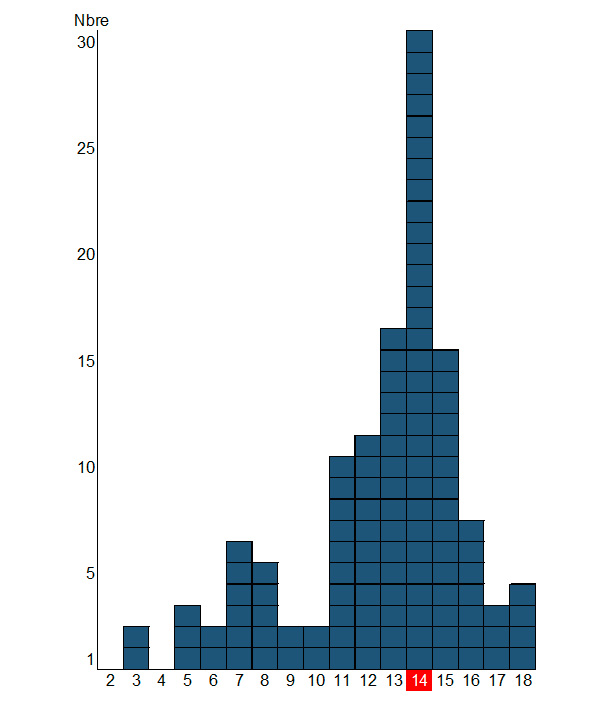
In total, as of 02/06/2022: 118 cases of salmonellosis with a strain belonging to the epidemic have been identified by the National Reference Center (CNR) for salmonella at the Institut Pasteur in France (figure 1) .

Figure 1 – Epidemic curve: number of confirmed cases of salmonellosis caused by Salmonella Typhimurium, monophasic variant (cluster 1 HC5_296366 and cluster 2 HC5_298160), by week of isolation (with in red the week corresponding to the recall of products from the production plant) ‘Arlon in Belgium) – Metropolitan France, weeks 2 to 18, 2022 (N=118)
Figure 1 - Epidemic curve: number of confirmed cases of salmonellosis caused by Salmonella Typhimurium, monophasic variant (cluster 1 HC5_296366 and cluster 2 HC5_298160), by week of isolation (with in red the week corresponding to the recall of products from the production plant) 'Arlon in Belgium) - Metropolitan France, weeks 2 to 18, 2022 (N=118)

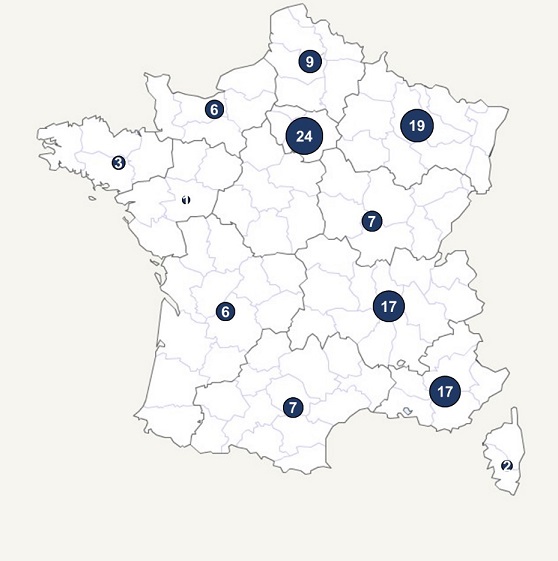
The 118 cases are spread over 12 metropolitan regions (Ile-de-France (24 cases), Grand-Est (19 cases), Auvergne-Rhône-Alpes (17 cases), Provence-Alpes-Côte d’Azur (17 cases) , Hauts-de-France (9 cases), Bourgogne-Franche-Comté (7 cases), Occitanie (7 cases), Normandy (6 cases), New Aquitaine (6 cases), Brittany (3 cases), Corsica (2 cases) and Pays de la Loire (1 case)) with a median age of 4 years, and concern 57 girls and 61 boys.

Figure 2 – Geographical distribution of confirmed cases of salmonellosis due to Salmonella Typhimurium, monophasic variant (cluster 1 HC5_296366 and cluster 2 HC5_298160), by region of residence – metropolitan France, weeks 2 to 18, 2022
Figure 2 - Geographical distribution of confirmed cases of salmonellosis due to Salmonella Typhimurium, monophasic variant (cluster 1 HC5_296366 and cluster 2 HC5_298160), by region of residence - metropolitan France, weeks 2 to 18, 2022

Fifty-one cases were questioned by Public Health France. All the cases, except 1, report, before the onset of their symptoms (which occurred between 20/01 and 04/04/2022), the consumption of chocolates of the brand cited here.

Twenty-two people were hospitalized for their salmonellosis, all since discharged. No deaths were reported.

The foods in question having been identified and the management measures taken, the weekly situation updates are drawn up. Public Health France continues to monitor the reporting of cases by the NR, which are expected due to the different delays inherent in monitoring ( see the infographic dedicated to food alerts ).

The successive withdrawals and recalls of the Kinder brand products concerned, produced by the Belgian factory with its closure by the Belgian authorities, should limit the occurrence in France of new cases of salmonellosis in connection with these chocolates.

The possible identification of new cases with dates of isolation at a distance from the recall withdrawal measures will be the subject of investigations if necessary.

To find out the list of products concerned by the withdrawal-recall: https://rappel.conso.gouv.fr/

People who have consumed the products mentioned above and who present symptoms (gastrointestinal disorders, fever within 72 hours of consumption), are invited to consult their doctor without delay, notifying him of this consumption.

In order to limit person-to-person transmission (especially in households with young children), it is recommended to wash your hands well with soap and water after using the toilet, after changing your child, and before to cook.

USA – Outbreak Investigation of Salmonella: Peanut Butter (May 2022) – Update

FDA

The FDA, along with CDC and state and local partners, are investigating a multistate outbreak of Salmonella Senftenberg infections linked to certain Jif peanut butter products produced at the J.M. Smucker Company facility in Lexington, Kentucky.

CDC’s review of epidemiological information indicates that five out of five people reported consuming peanut butter and four of the five people specifically reported consuming different varieties of Jif brand peanut butter prior to becoming ill. FDA conducted Whole Genome Sequencing (WGS) analysis on an environmental sample collected at the Lexington, KY, J.M. Smucker Company facility in 2010. The analysis shows that this 2010 environmental sample matches the strain causing illnesses in this current outbreak. Epidemiologic evidence indicates that Jif brand peanut butter produced in the J.M. Smucker Company facility located in Lexington, KY, is the likely cause of illnesses in this outbreak.

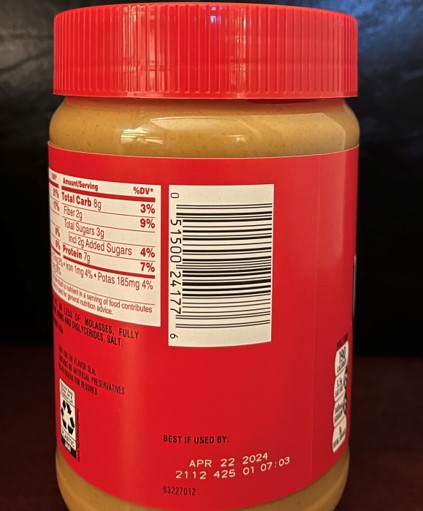
J.M. Smucker Company has voluntarily recalled certain Jif brand peanut butter products that have the lot code numbers between 1274425 – 2140425, only if the first seven digits end with 425 (manufactured in Lexington, KY). Photo examples are included below.

FDA’s investigation is ongoing and more information will be provided as it becomes available.

Recommendation

Consumers, restaurants, and retailers should not eat, sell, or serve any recalled Jif brand peanut butter.

For Consumers

Follow these steps:

  1. Check if you have Jif peanut butter in your home.
  2. Locate the lot code on the back of the jar, under the Best If Used By Date (the lot code may be next to the Best If Used By Date for cups or squeeze pouches).
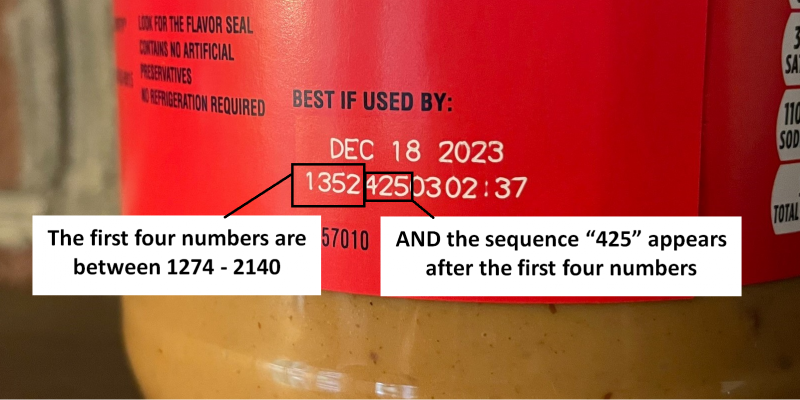
  3. In the lot code, if the first four digits are between 1274 and 2140, and if the next three numbers after that are ‘425’, this product has been recalled and you should not consume this product. An example is below.

If you are unsure what to do with your recalled product, you can call or email J.M. Smucker Company for more information:

The J.M. Smucker Co. Hotline: 800-828-9980
Website: jif.com/contact-usExternal Link Disclaimer

FDA recommends that if you have used the recalled Jif brand peanut butter that have lot code numbers 1274425 through 2140425 and the first seven digits end with 425, you should wash and sanitize surfaces and utensils that could have touched the peanut butter. If you or someone in your household ate this peanut butter and have symptoms of salmonellosis, please contact your healthcare provider.

For Retailers, Re-packers, and Manufacturers

In addition to the steps above, FDA recommends referring to the firm’s recall press for the UPC codes and other retailer information. Do not sell or serve recalled peanut butter or products containing recalled peanut butter.

Product Images

Outbreak Investigation of Salmonella in Peanut Butter (May 2022) - Sample Recalled Product Label
Outbreak Investigation of Salmonella in Peanut Butter (May 2022) - Sample Label

Case Count Map Provided by CDC

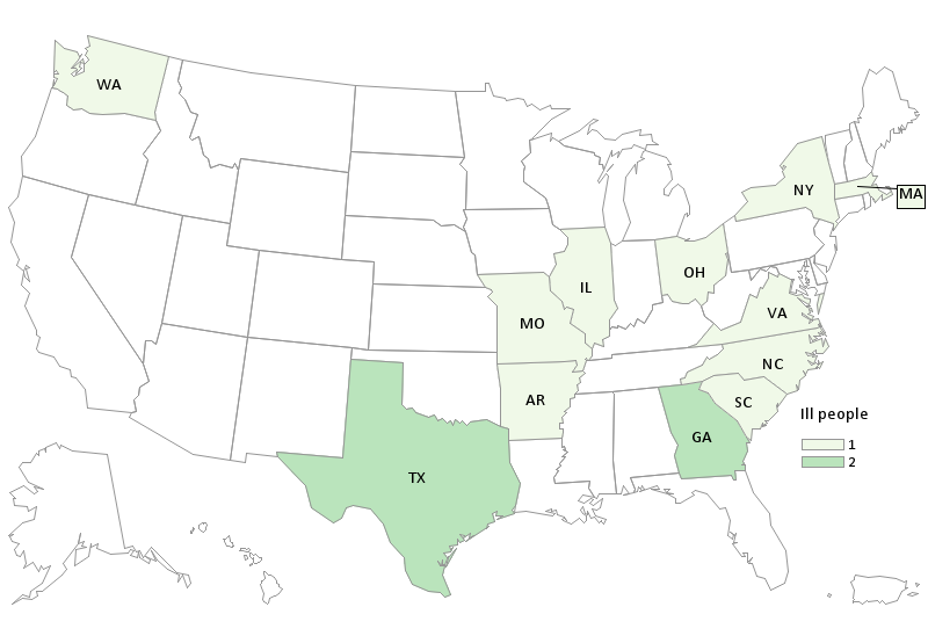
Outbreak Investigation of Salmonella in Peanut Butter (May 2022) - CDC Case Count Map as of May 20, 2022

Case Counts

Total Illnesses: 14
Hospitalizations: 2
Deaths: 0
Last Illness Onset: May 1, 2022
States with Cases: AR (1), GA (2), IL (1), MA (1), MO (1), OH (1), NC (1), NY (1), SC (1), TX (2), VA (1), WA (1)
Product Distribution*: Nationwide
*Distribution has been confirmed for states listed, but product could have been distributed further, reaching additional states

Who to Contact

Consumers who have symptoms should contact their health care provider to report their symptoms and receive care.

To report a complaint or adverse event (illness or serious allergic reaction), you can

Italy – Chocolate / coconut cake – Salmonella

Salute

Brand : ELITE

Name : Chocolate / coconut cake (article KLP 1284)

Reason for reporting : Recall due to microbiological risk

Publication date : 23 May 2022

Documentation

Documentation

Ireland – Sixteen Salmonella cases in Ireland linked to Kinder products

Irish Times

The number of people who became ill due to a salmonella outbreak linked to Kinder chocolate products has increased to 369 across Europe and North America, including 16 in Ireland.

One additional Irish case involving a second strain has been identified in addition to the initial 15, according to the European Centre for Disease Prevention and Control (ECDC). Five of the people affected required hospital treatment.

Across Europe and north America, 274 cases from first cluster or strain and 37 from a second have been confirmed in 16 countries, along with 58 suspected cases. Most cases involved children aged under 10.

The two strains are multi-drug resistant and some samples were also resistant to disinfection using ammonium or hydrogen peroxide. The outbreak has been linked to specific products made in Italian confectionery company Ferrero’s factory in Belgium.

Two salmonella strains were identified in buttermilk used at the Belgian plant, which had come from Italy.