Category Archives: Research

Research – Feedborne Salmonella enterica Serovar Jerusalem Outbreak in Different Organic Poultry Flocks in Switzerland and Italy Linked to Soya Expeller

MDPI

Poultry feed is a leading source of Salmonella infection in poultry. In Switzerland, heat-treated feed is used to reduce Salmonella incursions into flocks in conventional poultry production. By contrast, organic feed is only treated with organic acids. In 2019, the Swiss National Reference Center for Enteropathogenic Bacteria identified the rare serovar S. Jerusalem from samples of organic soya feed. Further, in July 2020, the European Union’s Rapid Alert System for Food and Feed published a notification of the detection of S. Jerusalem in soya expeller from Italy. During 2020, seven S. Jerusalem isolates from seven different poultry productions distributed over six cantons in Switzerland were reported, providing further evidence of a possible outbreak. Using whole-genome sequencing (WGS), S. Jerusalem isolates from feed and from animals in Switzerland were further characterized and compared to S. Jerusalem from organic poultry farm environments in Italy. WGS results showed that feed isolates and isolates from Swiss and Italian poultry flocks belonged to the sequence type (ST)1028, grouped in a very tight cluster, and were closely related. This outbreak highlights the risk of spreading Salmonella by feed and emphasizes the need for a heat-treatment process for feed, also in organic poultry production.

Research – Evaluation of Lactose Oxidase as an Enzyme-Based Antimicrobial for Control of L. monocytogenes in Fresh Cheese

MDPI

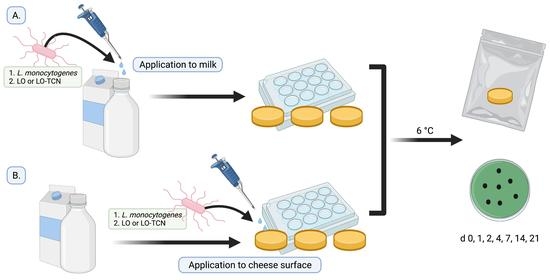
Listeria monocytogenes is a ubiquitous pathogen that can cause morbidity and mortality in the elderly, immune compromised, and the fetuses of pregnant women. The intrinsic properties of fresh cheese—high water activity (aW), low salt content, and near-neutral pH—make it susceptible to L. monocytogenes contamination and growth at various points in the production process. The aim of this study was to investigate the ability of lactose oxidase (LO), a naturally derived enzyme, to inhibit the growth of L. monocytogenes in fresh cheese during various points of the production process. Lab-scale queso fresco was produced and inoculated with L. monocytogenes at final concentrations of 1 log CFU/mL and 1 CFU/100 mL. LO and LO sodium thiocyanate (TCN) combinations were incorporated into the milk or topically applied to the finished cheese product in varying concentration levels. A positive control and negative control were included for all experiments. When L. monocytogenes was inoculated into the milk used for the cheese-making process, by day 28, the positive control grew to above 7 log CFU/g, while the 0.6 g/L treatment (LO and LO + TCN) fell below the limit of detection (LOD) of 1.3 log CFU/g. In the lower inoculum, the positive control grew to above 7 log CFU/g, and the treatment groups fell below the LOD by day 21 and continued through day 28 of storage. For surface application, outgrowth occurred with the treatments in the higher inoculum, but some inhibition was observed. In the lower inoculum, the higher LO and LO-TCN concentrations (0.6 g/L) reduced L. monocytogenes counts to below the LOD, while the control grew out to above 7 log CFU/g, which is a >5 log difference between the control and the treatment. These results suggest that LO could be leveraged as an effective control for L. monocytogenes in a fresh cheese. View Full-Text

USA – Timeline for Identifying and Reporting Illnesses in Foodborne Outbreaks

CDC

Ever wonder why the number of illnesses in a foodborne outbreak can increase for weeks, even after the contaminated food is off the market?

A series of events happen before public health officials can report that a case of illness is linked to an outbreak. Each event takes a certain amount of time. This time is known as the “reporting lag” or “lag window” of an outbreak. It is usually 3–4 weeks. For illnesses caused by some bacteria, such as Listeria, it may be longer. Public health officials work to speed up this process when possible.

The steps below outline what typically happens from the day someone eats a contaminated food to the day their illness is linked to a multistate foodborne outbreak investigated by CDC.*

Day 1: You eat a food containing harmful bacteria.
Day 3: You start to feel sick.
  • Symptoms of food poisoning (such as nausea and diarrhea) could start anywhere from a few hours to a few weeks later, depending on the bacteria you ingested. The following chart describes how long it typically takes for someone to have symptoms after being infected with some of the most common foodborne bacteria.
How long it typically takes for someone to have symptoms after being infected with some of the most common foodborne bacteria.
Bacteria Typical start of symptoms
Campylobacter 2–5 days
E. coli 3–4 days
Listeria 1–4 weeks
Salmonella 6 hours–6 days
Vibrio 1-2 days
Should I call the doctor?

Find out when some common food poisoning symptoms are severe enough to need medical attention. See the list

Day 5: You still feel sick with nausea or diarrhea, so you decide to see a healthcare provider.
  • To learn which germ is making you sick, the healthcare provider collects a sample of your stool (poop), urine (pee), or blood.
  • The provider sends your sample to a clinical laboratory for testing.
Day 6: The clinical laboratory tests your sample.
  • After receiving your sample, the laboratory takes 1–3 days to run tests, depending on their capacity.
Day 9: Clinical laboratory test results show what germ is causing your illness.
  • The clinical laboratory identifies the germ making you sick and reports the test results to your healthcare provider.
  • The clinical laboratory should also report test results to the state or local public health department, and they notify CDC.
Days 9–16: The clinical laboratory sends a sample of your bacteria to a public health laboratory.
  • The clinical laboratory ships the bacteria found in your sample to a public health laboratory for whole genome sequencing (WGS) analysis.
  • Shipping can take up to a week, depending on transportation arrangements in your state and the distance between the two laboratories.
Days 16–21: The public health laboratory performs WGS analysis and other tests on the bacteria.
  • The public health laboratory performs tests to determine the bacteria’s DNA fingerprint and other characteristics.
  • WGS testing and analysis of the results, including whether the bacteria is resistant to any antibiotics, can take 2–10 days depending on the bacteria.
What Is Whole Genome Sequencing?

CDC and public health laboratories use a technology called whole genome sequencing (WGS) to generate DNA fingerprints of bacteria causing illness. When bacteria have nearly identical DNA fingerprints, we consider them “genetically closely related.” Illnesses caused by bacteria that are genetically closely related are more likely to have a common source, such as a contaminated food. An outbreak is an event in which a group of people get similar illnesses from a common source. Disease detectives investigate outbreaks to find out what is making people sick.

Find out how CDC uses WGS to detect and solve foodborne outbreaks.

Day 22: The public health laboratory sends WGS results to CDC.
  • Within a day of analyzing the WGS results, state public health officials add the DNA fingerprint from the bacteria to PulseNet, a national laboratory network coordinated by CDC. PulseNet connects foodborne illnesses in order to identify outbreaks.
Day 23: CDC determines if your illness is related to other recent illnesses.
  • CDC scientists determine whether the bacteria causing your illness is closely related genetically to any other recent WGS results from other people in PulseNet.
  • If it is closely related to bacteria causing recent illnesses in other people, CDC may begin an outbreak investigation or add your illness to an ongoing investigation.

Total time: 34 weeks

*Most cases of illness, even those caused by common foodborne germs, are not linked to a foodborne outbreak. This can happen for many reasons. A major reason is that most illnesses are not part of an outbreak. Another reason is that germs that cause foodborne illness can also be spread in other ways, such as by water or directly from one person to another. Also, if an illness is diagnosed by a culture-independent diagnostic test, that case may not be linked to an outbreak because these tests do not provide the information needed to link it to an outbreak. In addition, many people do not seek medical care for foodborne illnesses, so their illnesses cannot be diagnosed or reported to public health officials.

UK – FSA working on reasons behind foodborne illness decline

Food Safety News

The Food Standards Agency’s chief scientific advisor has said potential trends in foodborne infections must be monitored after a decline during the COVID-19 pandemic.

Robin May said data from the past 12 months shows a substantial drop in foodborne disease rates for four major pathogens but this is likely because of fewer patients going to general practioners’ (GP) offices and reduced diagnostic testing during the coronavirus pandemic.

May said understanding the true level of foodborne disease in 2020 and early 2021 will require detailed analysis, work which the FSA has started.

“An accurate benchmark will be invaluable as we start to monitor post-COVID trends and establish, for instance, whether changes in domestic and commercial hygiene practices may ultimately lead to a lasting change in foodborne disease rates,” he said.

“In terms of foodborne disease reporting, the bottom line is we don’t know what the data really looked like for last year because so much of our data comes from things like GP reporting, which people were not doing.

Research – UV-C LED Irradiation Reduces Salmonella on Chicken and Food Contact Surfaces

MDPI

Ultraviolet (UV-C) light-emitting diode (LED) light at a wavelength of 250–280 nm was used to disinfect skinless chicken breast (CB), stainless steel (SS) and high-density polyethylene (HD) inoculated with Salmonella enterica. Irradiances of 2 mW/cm2 (50%) or 4 mW/cm2 (100%) were used to treat samples at different exposure times. Chicken samples had the lowest Salmonella reduction with 1.02 and 1.78 Log CFU/cm2 (p ≤ 0.05) after 60 and 900 s, respectively at 50% irradiance. Higher reductions on CB were obtained with 100% illumination after 900 s (>3.0 Log CFU/cm2). Salmonella on SS was reduced by 1.97 and 3.48 Log CFU/cm2 after 60 s of treatment with 50% and 100% irradiance, respectively. HD showed a lower decrease of Salmonella, but still statistically significant (p ≤ 0.05), with 1.25 and 1.77 Log CFU/cm2 destruction for 50 and 100% irradiance after 60 s, respectively. Longer exposure times of HD to UV-C yielded up to 99.999% (5.0 Log CFU/cm2) reduction of Salmonella with both irradiance levels. While UV-C LED treatment was found effective to control Salmonella on chicken and food contact surfaces, we propose three mechanisms contributing to reduced efficacy of disinfection: bacterial aggregation, harboring in food and work surface pores and light absorption by fluids associated with CB. View Full-Text

USA – FDA Core Investigation Table Update

FDA

Norway – Research – Risk ranking and source attribution of food- and waterborne pathogens for surveillance purposes – Toxoplasma the top risk!

VKM

Toxoplasma

Background
Providing risk managers with the information that they need for decision making is an important element in food-safety management. The present risk assessment was undertaken to establish a scientific basis that could be used to assist the Norwegian Food Safety Authority (NFSA) in implementing risk-based surveillance, monitoring, and control programmes for pathogens in food and water. The assessment approach used here consisted of two steps:(1) risk ranking of 20 selected pathogens based on the incidence and severity of their associated diseases following infection with the pathogens via food or water, and(2) a source attribution process aimed at identifying the main pathogen-food combinations that may pose a risk to human health for each of the ranked pathogens. We used an expert knowledge elicitation (EKE) procedure with a panel of nine experts, including all eight members of the Panel on Biological Hazards of the Norwegian Scientific Committee for Food and Environment (NSCFE) and one invited expert on food/water-borne viral infections.
Risk Ranking
The 20 pathogens selected for risk ranking were defined in the terms of reference (ToR) received from NFSA. We performed a multicriteria-based ranking of the pathogens in terms of their public health impact from food/water-borne transmission in Norway. The risk ranking utilized six criteria that estimated the incidence of food- and waterborne illness attributable to each pathogen, the severity of acute and chronic illness, the fraction of chronic illness, fatality rate, and the probability for future increased disease burden. For each pathogen, all criteria were scored by the expert panel members, and individual criterion scores were combined into an overall score for every pathogen. To achieve this, each criterion was weighted in terms of its relative importance, as judged by the expert panel. The overall scores so calculated were the basis for the ranking.
Source attribution
For each of the ranked pathogens, the subsequent source-attribution process aimed to identify the main food vehicles, reservoirs, and sources of infection for outbreak-related and sporadic cases of illness, the relative importance of food sources, and preventable risk factors in Norway. To achieve this, both microbiological and epidemiological data were scrutinized. These encompassed results from national surveillance and monitoring programmes, prevalence surveys, outbreak investigations, and research, including analytic epidemiological studies. When Norwegian data were sparse or absent, international reports and research were used.
Results
The six highest-ranked pathogens were, in descending order: Toxoplasma gondii, Campylobacter spp., Echinococcus multilocularis, enterohaemorrhagic E. coli (EHEC), Listeria monocytogenes, and non-typhoid Salmonella. It should be emphasized, however, that confidence intervals revealed considerable overlaps between the scores. The food vehicles associated with the pathogens varied widely. It is notable, however, that fresh produce was identified as being among the main food vehicles for 12 of the 20 pathogens, drinking water was associated with 8, and 5 were linked to raw milk or products thereof

UK – Almost half the adults (46%) who cook coated frozen chicken products do not always check cooking instructions on packaging before cooking

FSA

The Food Standards Agency (FSA), Food Standards Scotland (FSS) with Ipsos MORI have published a survey of consumer practices relating to coated frozen chicken products.

This survey identifies behaviours which could increase people’s risk to foodborne disease. It was commissioned as a result of a Salmonella incident linked to frozen chicken products such as nuggets, goujons, dippers, poppers and kievs. While these products may appear cooked on the outside, they often contain raw chicken and so they must be cooked thoroughly to help kill Salmonella bacteria.

Findings show that two thirds of adults aged 16-75 (67%) say they have recently cooked or eaten coated frozen chicken products at home. These products are particularly popular with younger adults, with 88% of those aged 16-24 having recently consumed them or cooked them at home. Participants were also more likely to have cooked or eaten these products if they have children aged 15 or under in their household (86%).

The survey also included questions on the storage and handling of these products pre and post-cooking:

  • Almost two thirds of those who cook these products (62%) say uncooked coated frozen chicken products at least sometimes come into contact with other surfaces such as worktops and plates
  • Over half of those who cook these products (58%) say they always wash their hands after handling coated frozen chicken products
  • Almost a quarter of consumers who personally cook products say they defrost them before cooking (23%), 62% say they do not. Among those who defrost products, half say they leave them at room temperature (53%)

Most participants who use an oven to cook coated frozen chicken products say they sometimes cook them together with other products, such as chips or vegetables (84%). Cooking these chicken products at a lower temperature or for a shorter time than advised may mean they are not thoroughly cooked before serving.

Narriman Looch, Head of Animal Feed and Foodborne Disease Control Branch said: ‘It’s important to understand that frozen chicken products often contain raw chicken, even though they may look pre-cooked on the outside. While additional measures have been put in place by food businesses to improve the safety of these products, consumers need to handle these products as they should other raw meat products. Cooking food at the right temperature and for the right amount of time will kill any Salmonella bacteria that may be in food. Therefore, we are urging consumers to follow cooking instructions for these products to protect themselves and their families.’

Food safety tips for frozen breaded chicken products:

  • Treat these products as raw chicken, ensuring they are steaming hot after cooking and surfaces they have touched are cleaned to avoid the spread of bacteria
  • Make sure the oven is up to temperature before cooking
  • Check the instructions on packaging and cook at the correct temperature and for the time stated
  • Wash your hands, utensils and clean surfaces after handling these products
  • If products require defrosting, follow the storage instructions on packaging and always defrost in the fridge

About this poll

The FSA and FSS commissioned an online survey via three waves of Ipsos MORI’s online omnibus of 5,599 adults (aged 16-75) living in the UK. Of these 3,740 had cooked or eaten coated frozen chicken products recently and went on to complete the full survey. The data was weighted to be representative of the UK adult population aged 16 – 75.

The full report is available in the research section of our website.

About the outbreak

FSA and FSS are continuing to work with Public Health England (PHE) and devolved public health authorities as well as our international food safety partners, via the United Nations’ World Health Organization, (WHO) and the Food and Agriculture Organization’s (FAO’s) International Food Safety Network (INFOSAN), to address the causes of the outbreak at source to prevent further cases of Salmonella Enteritidis.

Between January 2020 and May 2021 there have been 511 cases of Salmonellosis in the UK caused by two strains of Salmonella Enteritidis and linked to consumption of frozen, raw, breaded chicken products.

Authorities in Poland and UK retailers have taken action to reduce the risk from these products. Where non-compliant or unsafe food has been identified by the UK, action has been taken to protect consumers.

Research – Prevalence of Listeria species and Listeria monocytogenes on Raw Produce Arriving at Frozen Food Manufacturing Facilities

Journal of Food Protection

Ubiquity of Listeria monocytogenes in the environment impacts the food industry and presents concerns for frozen food facilities. This study determined the prevalence and numbers of Listeria species and L. monocytogenes on raw produce arriving at frozen food facilities. Raw produce was collected using multi-level blinding protocols to ensure anonymity of participants and avoid traceback. Five raw vegetables were selected: corn, carrots, green beans, peas, and spinach. Raw products were collected after arrival at the facilities but before any cleaning or other pre-processing steps that are typically performed inside the facility. The FDA BAM method for detection of Listeria spp. and L. monocytogenes was followed, with PCR screening followed by selective plating methods. Listeria numbers were estimated from positive samples using MPN methodology. A total of 290 samples were collected, with 96 and 17 samples positive for Listeria spp. (33.1%) and L. monocytogenes (5.9%), respectively. Enumeration data for the 96 Listeria spp. samples indicated 82 samples had greater than 100 MPN Listeria spp./g and 14 samples less than 100 MPN Listeria spp./g. The prevalence of Listeria spp. varied by commodity: spinach (66.7%), peas (50%), corn (32.2%), green beans (22.2%), and carrots (13%). L. monocytogenes prevalence was determined in corn (13.6%), peas (6.3%), and green beans (4.2%) arriving at processing facilities. Such data was previously unavailable to frozen vegetable processors and is valuable in implementing process control standards. The prevalence and pathogen concentration data from raw commodities found in this study can provide the industry information to conduct more accurate quantitative risk assessments and provide a baseline to model and target appropriate pathogen reduction steps during processing.

Research – Wet vs. dry inoculation methods have a significant effect of Listeria monocytogenes growth on many types of whole intact fresh produce

Journal of Food Protection

L. monocytogenes causes relatively few outbreaks linked to whole fresh produce but triggers recalls each year in the US. There are limited data on the influence of wet vs. dry methods on pathogen growth on whole produce. A cocktail of five L. monocytogenes strains that included clinical, food, or environmental isolates associated with foodborne outbreaks and recalls was used. Cultures were combined to target a final wet inoculum concentration of 4-5 log CFU/mL. The dry inoculum was prepared by mixing wet inoculum with 100 g of sterile sand and drying for 24 h. Produce investigated belonged to major commodity families: Ericaceae (blackberry, raspberry, and blueberry), Rutaceae (lemon and mandarin orange), Roseaceae (sweet cherry), Solanaceae (tomato), Brassaceae (cauliflower and broccoli) and Apiaceae (carrot). Intact, whole inoculated fruit and vegetable commodities were incubated at 2, 12, 22 and 35±2°C. Commodities were sampled for up to 28 days, and the experiment was replicated 6 times. The average maximum growth increase was obtained by measuring the maximum absolute increase for each replicate within a specific commodity, temperature, and inoculation method. Data for each commodity, replicate and temperature was used to create primary growth or survival models, describing the lag phase and growth or shoulder and decline as a function of time. Use of a liquid inoculum (vs. dry inoculum) resulted in markedly increased L. monocytogenes growth rate and growth magnitude on whole produce surfaces. This difference was highly influenced by temperature with a greater effect seen with more commodities at higher temperatures (22 and 35°C), versus lower temperatures (2 and 12 °C). These findings need to be explored for other commodities and pathogens. The degree to which wet or dry inoculation techniques more realistically mimic contamination conditions throughout the supply chain (e.g., production, harvest, post-harvest, transportation, or retail) should be investigated.