Category Archives: Raw Milk

New Zealand – MPI puts consumer health first – directs unregistered raw (unpasteurised) drinking milk producers to stop selling

MPI Raw Milk Food Safety KSW Foodworld

The Ministry for Primary Industries (MPI) has directed unregistered raw (unpasteurised) drinking milk suppliers across the country to stop selling their product until they comply with the legal requirements for sale.

MPI compliance staff yesterday executed search warrants at non-compliant raw drinking milk suppliers in Auckland, Hawkes Bay, Manawatu, Horowhenua, Nelson, and Southland following a year-long operation.

MPI’s manager of food compliance Melinda Sando says the purpose of the coordinated site visits was to gather evidence of the offending and to allow further investigation of non-compliant sales.

“We believe that the suppliers we visited today are operating outside of the regulatory framework. By not adhering to the rules for selling raw drinking milk, they are putting consumer health at risk.

“There have been multiple instances in the past of people getting sick after drinking raw milk from some of these suppliers. We can’t let this continue.

“Raw unpasteurised milk is a risky product as it hasn’t been heat-treated (pasteurised) to remove illness-causing bacteria including E. coli, listeria and Campylobacter.

“These types of bacteria most commonly cause severe diarrhoea and vomiting, but occasionally some have been linked with more serious complications that include miscarriage, paralysis, meningitis, and serious kidney problems in children. Raw milk may also be a source of tuberculosis (Tb).
Research -Characterization of bacterial pathogens associated with milk microbiota in Egypt

Academic Journals

Abstract

Milk is a substantial source of nutrients needed by all humans across lifespan development. Given its nutritional composition, milk is considered a vehicle for various microbes including beneficial and pathogenic bacteria. In this study, 270 milk samples comprising raw cow and buffalo milk and pasteurized milk with different shelf-life durations were tested along with pasteurized organic milk for the presence of Staphylococcus aureus and Escherichia coli. Collectively, 21 E. coli and 14 S. aureus isolates were cultivated and identified from total milk samples. All E. coli and S. aureus isolates exhibited resistance to erythromycin and penicillin, respectively. Serogroups O26, O128, and O111 were the most frequently identified amongst E. coli isolates, whereas staphylococcal enterotoxins (SEs) were inconsistently produced across S. aureus isolates. The molecular profile showed clustering of 6 isolates of E. coli by harboring stx1, stx2, eaeA genes, and 5 isolates of S. aureus by mecA gene. Findings revealed the bacteriological quality of popularly consumed milk in Egypt, including raw and pasteurized milk with preference to pasteurized organic milk and 7-day shelf life (7DSL) pasteurized milk. However, raw milk and 3MSL pasteurized milk were the major sources of E. coli and S. aureus, posing a serious public health issue.

Research – Raw Milk – Study upholds age-old belief that drinking raw milk is bad

IB Times

Some may disagree!

People these days are giving up the idea of pasteurization – the heating process used to kill harmful bacteria in milk – as it reduces several vitamins and “good” bacteria in the drink, and advocating for “raw” milk as unpasteurized milk can “heal the gut”, boost the immune system, prevent allergies, give an individual healthier skin and even contribute to bodybuilding.

Several reports in the media have created a growing demand for raw milk, but scientific evidence suggests that going for unpasteurized milk can even be more harmful as drinking raw milk comes with the risk of contracting serious and potentially lethal infections.

According to the Centre for Disease Control, at least 144 outbreaks of illness have been reportedly linked to raw milk consumption in the US between 2007 and 2016.

The UK’s Food Standards Agency (FSA) last year advised pregnant women, infants and small children, elderly people and people with compromised immune systems such as cancer patients not to consume raw milk.

RASFF Alerts – E.coli O157 – Raw Cow’s Milk Cheese Bethmale

RASFF-Logo

RASFF – shigatoxin-producing Escherichia coli and Listeria monocytogenes in raw cow’s milk cheese bethmale from France in Germany

RASFF – shigatoxin-producing Escherichia coli (O26:H1, stx+ eae+ /50g) in raw cow’s milk cheese bethmale from France in France

USA – Listeria linked to Raw Milk

Food Poison Journal

The state of New York is warning people to not consume unpasteurized raw milk from Churchtown Dairy due to possible contamination of Listeria Monocytogenes.

On Friday, the state Department of Agriculture & Markets notified the dairy farm that a presumptive positive detection for Listeria was made from a bottled milk sample pulled from the dairy’s cooler on July 22. Listeria Monocytogenes is a species of bacteria that can cause the infection Listeriosis.

No reported cases of the illness associated with the milk have been reported.

RASFF Alert -Foodborne Outbreak – Raw Milk Sheep Cheese – Salmonella

RASFF-Logo

RASFF – foodborne outbreak suspected to be caused by and Salmonella enterica ser. Enteritidis (presence /25g) in raw milk sheep’s cheese from France in France

USA – Yersinia: Creamworks Creamery may be the source of illnesses in Pennsylvania

Outbreak News Today

kswfoodworld.com

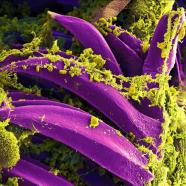
Image CDC

In a public health alert issued recently, the Pennsylvania Department of Health advises residents of Pennsylvania to avoid drinking milk from Creamworks Creamery in Waymart, Wayne County because it may be tainted with dangerous Yersinia enterocolitica bacteria. As of today, department is currently investigating 17 laboratory-confirmed illnesses as well as numerous additional reports of digestive illnesses. According to health agents, the illnesses seem to be connected to only milk sold at the dairy.

USA – Delaware Warns Consumers Against Raw Milk After Brucellosis Case

Food Poisoning Bulletin

The Delaware Division of Public Health is warning consumers to avoid consuming raw dairy products as a woman living in Sussex County has been diagnosed with a Brucella melitensis infection. This illness affects people who come into contact with sick animals or contaminated animal products.

Research -Does physical state of farm housing and milking practices affect total bacteria and somatic cell count of cow milk?

Wiley Online

Abstract

The study determined the effect of physical state of farm housing on total bacteria and somatic cell count (SCC) of cow milk. Milk records collected at Dairy Services Zimbabwe were used. Effects of physical state of ceilings, doors, ventilation, walls, drains, fly‐proofs, windows and roof type on total bacterial count (TBC) in milk, and SCC were determined using general linear models procedure. Poor physical state of ceilings, doors and floors in milking parlors, wash rooms and bulk tank rooms result in high TBC and SCC in milk (p < 0.05). Poor ventilation in the bulk tank room results in high TBC in milk (p < 0.05). Floors, doors, and ceilings of milking houses should be kept in sound condition and good repair in order minimize TBC and SCC in raw milk.

Practical applications

Understanding how physical state of farm houses and management practices affect total bacterial count and somatic cell count in fresh milk enables farmers and regulatory agencies to put in corrective action to reduce bacterial contamination of milk at farm level. This helps keep the population of disease causing bacteria in raw milk, which is widely consumed by human beings, as low as possible. It also helps reduce contamination by some resistant bacteria that might survive processing and cause further defects in milk products. The shelf‐life of the milk and its products is, thus, improved. Reducing bacterial and somatic cell count in raw milk also helps the milk producers to score high milk grades on the market and, thus, fetch high prices.


USA – Side Hill Acres Raw Goat Milk Recalled For Possible Listeria Monocytogenes

Food Poisoning Bulletin

he New York Department of Agriculture and Markets is warning consumers that Side Hill Acres raw goat milk may be contaminated with Listeria monocytogenes bacteria. Some of the milk tested positive for the pathogen.