
Category Archives: Norovirus

RASFF Alerts – Norovirus – Foodborne Outbreak – Live Oysters –

RASFF-Logo

RASFF – foodborne outbreak suspected to be caused by live oysters (Crassostrea gigas) from France

RASFF – foodborne outbreak suspected to be caused by live oysters (Crassostrea gigas) from France

RASFF – foodborne outbreak caused by live oysters from France, via the Netherlands in Sweden

RASFF – norovirus in live mussels from France in Switzerland

RASFF – norovirus in live bouchot mussels from France in the Netherlands

RASFF – norovirus in oysters from France in the Netherlands

RASFF – withdrawal of bivalve molluscs harvested in France because of possible contamination with norovirus in Luxembourg
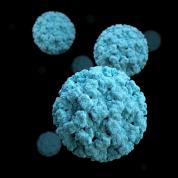
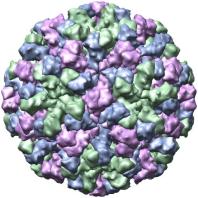
France – Hundreds ill in France after eating contaminated raw shellfish – Noroviurs?

Food Safety News

More than 650 people have fallen ill in France this past month after eating contaminated raw shellfish.

Since the start of December 2019, Santé publique France has received 123 reports of collective food poisoning suspected to be linked to consumption of raw shellfish, mainly oysters.

The majority, 87 of the 123 alerts, occurred from Dec. 23, 2019, and forward. A peak of illnesses hit from December 25 to 27.

A total of 668 people were sick and 17 needed hospital treatment. Most are more than 15 years old. Of the 415 patients with age information available, 15 were younger than 15.

Much higher than recent years
Symptoms, mainly diarrhea and vomiting, as well as incubation times, are consistent with norovirus or other enteric virus infections. Stool tests have confirmed the presence of these viruses. Symptoms of norovirus appear one to two days after being infected and typically last for two or three days.

USA – Death by Norovirus tied to Puritan Backroom in New Hampshire

Food Poison Journal

The New Hampshire Office of the Chief Medical Examiner (OCME) has determined that norovirus was a contributing cause of death in the person who passed away after attending an event at the Puritan Backroom in Manchester, New Hampshire, on November 24, 2019. The OCME completed its final report today after conducting an autopsy last month.

Research – Infectivity of Norovirus GI and GII from Bottled Mineral Water during a Waterborne Outbreak, Spain

CDC

Abstract

During a waterborne outbreak of norovirus in Spain, we estimated 50% illness doses for a group of exposed (secretor) persons to be 556 (95% CI 319–957) genome copies/day for norovirus GI and 2,934 (95% CI 1,683–5,044) genome copies/day for norovirus GII. Use of a propidium monoazide viability assay reduced these values.

Research – Evaluation of Inactivation of Murine Norovirus in Inoculated Shell Oysters by High Hydrostatic Pressure Treatment

Journal of Food Protection

ABSTRACT

One of the major foods causing norovirus gastroenteritis is bivalve shellfish, such as oysters. Depuration and relaying methods have been used to control norovirus. However, these methods may be inadequate to control norovirus gastroenteritis. The present study aimed to investigate the effectiveness of high hydrostatic pressure (HHP) treatment in controlling norovirus in shelled oysters, by evaluating the inactivating effect of HHP on murine norovirus strain 1 (MNV-1) inoculated into a buffer, oyster homogenate, and shelled oysters. First, MNV-1 was inoculated (infectivity of 4.5 log PFU/mL) into the buffer and oyster homogenate, with a pH of 6.3 and salinity (NaCl) of 1.5%, mimicking the habitats of the Pacific oyster (Crassostrea gigas). HHP treatment at 100, 200, 275, and 300 MPa for 2 and 5 min was conducted at an initial temperature of 0 or 5°C. The infectivity of MNV-1 in both the buffer and the oyster homogenate was lower when the initial temperature was 0°C. In the buffer, the infectivity of MNV-1 decreased to 1.8 log PFU/mL after HHP treatment (200 MPa for 5 min at 0°C), and the inactivating effect was higher in the buffer than in the oyster homogenate. MNV-1 was inoculated into shelled oysters (4.8 log PFU per oyster), and HHP treatment was done at 275, 300, and 350 MPa for 5 min at the initial temperature of 0°C. The infectivity of MNV-1 decreased to 2.8 log PFU per oyster after HHP treatment at 275 MPa for 5 min. The results indicate that the inactivating effect of HHP treatment varies, depending on the medium surrounding the viral particles. Inactivation was best in buffer, followed by oyster homogenate and shelled oysters. The data could inform the development of methods to control norovirus in oysters.

HIGHLIGHTS
  • HHP inactivation of MNV-1 was more pronounced at 0°C than at 5°C.

  • Inactivation differed, depending on the medium surrounding the virus.

  • HHP at 275 MPa for 5 min at 0°C inactivated MNV-1 inoculated in shucked oysters.

RASFF Alert – Norovirus – Chilled Pacific Oysters

RASFF-Logo

RASFF – norovirus (presence /2g) in chilled Pacific oysters (Crassostrea gigas) from France in Italy

USA -Dozens of norovirus-like cases linked to Brave Horse Tavern

Outbreak News Today

Food Borne Illness - Norovirus -CDC Photo

Image CDC

Public Health — Seattle & King County is reporting some 43 cases of a norovirus-like illness linked to a Seattle restaurant.

Officials say the outbreak is associated with Brave Horse Tavern on 310 Terry Ave N, in  Seattle. The patients experienced symptoms of vomiting, diarrhea, body aches, chills, and fever.

Health officials report:

Since November 27, 2019, 30 people from 5 meal parties reported becoming ill after consuming food and drinks from Brave Horse Tavern on November 23 and 24, 2019.

We identified at least 11 employees who experienced symptoms consistent with norovirus dating back to November 24, 2019. At least 2 employees had 2 total household members with symptoms dating back to November 20, 2019.

Research -Gut microbes alter characteristics of norovirus infection

Science Daily

The highly contagious norovirus causes diarrhea and vomiting and is notorious for spreading rapidly through densely populated spaces, such as cruise ships, nursing homes, schools and day care centers. There are no treatments for this intestinal virus. A new study has shown that gut microbes can tamp down or boost the severity of norovirus infection based on where along the intestine the virus takes hold.

USA – Norovirus – Air Force Academy

Gazette Norwalk_Caspid

A stomach flu has laid low 1 in every 10 cadets at the Air Force Academy since late October, and the school’s medics are working with public health authorities and reinforcements from other bases to treat the sick.

The norovirus, famed for striking those in tight living confines from cruise ships to barracks, has caused the academy to cancel some events that include large gatherings and put its janitorial staff on overtime.


UK -Norovirus outbreak latest: 60 schools in England hit by winter vomiting bug

Express norovirus-1080x655

NOROVIRUS outbreaks have been reported up and down the UK resulting in dozens of school and hospital closure. A new report reveals around 60 schools in the North of England have had pupils and staff off sick. Is the winter vomiting bug set to spread?