Category Archives: Norovirus

France bans Arcachon oysters after food poisoning outbreak

Connexion France

The sale of shellfish from the region has been banned following several cases of gastroenteritis linked to their consumption.

An increase in emergency room visits for gastroenteritis (a severe type of food poisoning) over December 25 and 26 has been linked to shellfish poisoning, prompting the prefect of the Gironde department to ban their sale.

No deaths have been reported and investigations into the exact cause are still ongoing.

People who have purchased shellfish from the area are advised not to eat them and to return them to the point of sale. Remaining stocks have been withdrawn from shelves.

 

Luxembourg – Fine oysters n°3 from Arcachon Bay – Norovirus

SAP

The following product is recalled in Luxembourg:

Name Fine oysters n°3
Brand Unbranded
Origin Arcachon bay
Unit 24 pieces
Barcode 3000046135305
DLC/DDM All DLC
Batch All lots

Danger: Possible presence of Norovirus

Foodborne illnesses caused by Noroviruses result in gastrointestinal disorders often accompanied by symptoms of acute gastroenteritis (sudden onset of vomiting, nausea and/or diarrhea sometimes associated with abdominal cramps, moderate fever, chills, body aches and headaches).

These symptoms appear after 10 to 50 hours after consumption.

Pregnant women should be particularly attentive to these symptoms, as well as immunocompromised people, young children and the elderly.

The product can be distributed by different points of sale in Luxembourg.

Information Source: Recall Notification

RASFF Alert- Mussels – Oysters

RASFF

Norovirus in mytilus galloprovincialis from Spain in Italy

Research – Food poisoning or stomach flu? How to tell the difference

WRAL News

Because food poisoning and the stomach flu can present with similar symptoms, it can be difficult to tell them apart.

“While the symptoms of food poisoning and stomach bugs overlap, there is a difference in how quickly the symptoms arise,” Dr. Jackson says. “With food poisoning, rapid diarrhea and vomiting will begin within three to six hours of eating a contaminated food source. With a stomach flu, it’s a slower course, and the symptoms of vomiting and diarrhea may not show up for 12 to 24 hours. A person will start feeling unwell and queasy first.”

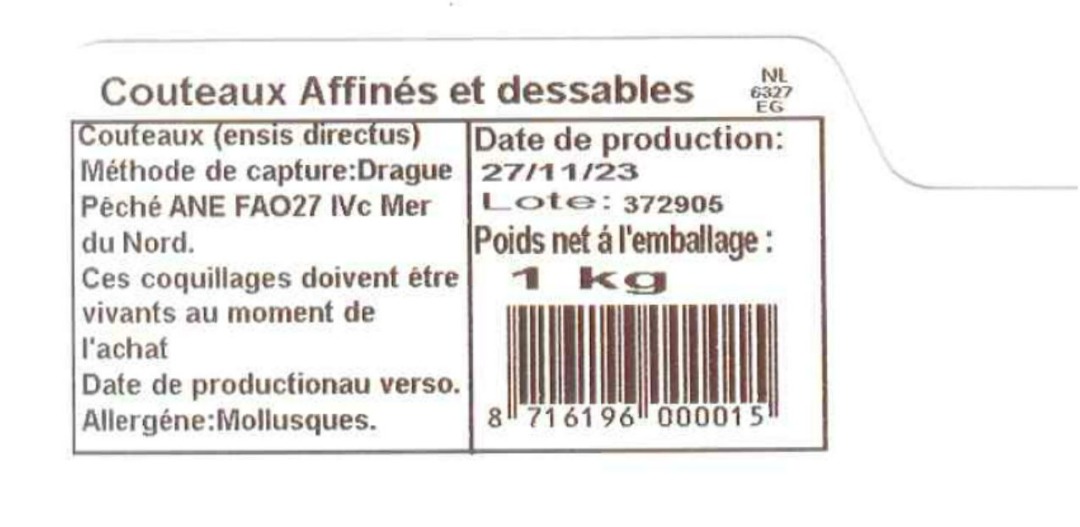
France – Knife foot (Fish Product) – Norovirus

Gov France

Product category
Food
Product subcategory
Fishing and aquaculture products
Product brand name
SEAFARM
Model names or references
Knife foot packaged in 1 kg net
Product identification
Batch
Lot n° 372905 Packed on 11/27/23
Products List
REMINDER.pdfAttachment
Packaging
1kg fillet
Start/end date of marketing
From 11/28/2023 to 12/02/2023
Storage temperature
Product to keep in the refrigerator
Health mark
EG 6327 NL
Geographical sales area
Whole France
Distributors
METRO France

USA – Sushi 9 may be linked to 240 Norovirus cases

Food Poison Journal

Norovirus Food Safety kswfoodworld

WRAL News reports that as of today there are now 241 complaints from people who ate at Sushi Nine since November28, the date the first customers became ill. Since WRAL News first reported the outbreak on Nov. 30, three stool samples collected from complainants have tested positive for norovirus, a contagious virus that causes vomiting, diarrhea, nausea and stomach pain, among other symptoms.

RASFF Alert- Norovirus – Shellfish – Oysters

RASFF

Norovirus in shellfish from the Netherlands in France

RASFF

Norovirus in oysters from France in Denmark

USA- 140 Illnesses Linked To Sushi Nine Restaurant In Raleigh

Food Poisoning News

On the seventh of December, 2023, WRAL News announced an outbreak of 140 illnesses connected to the sushi restaurant, Sushi Nine. The Raleigh, North Carolina-based restaurant received notifications from consumers with adverse reactions after having consumed sushi at its business.

While a virus is believed to be the cause, the blame is under investigation. According to local reports, patrons reported experiencing symptoms that correlate similarly with those of Norovirus, often referred to as the “winter vomiting disease.” One victim, Austin Freels, shared details of his illness following eating sushi at Sushi Nine, while with family and friends a few days prior to his wedding. Austin experienced “agonizing” stomach pain, and mentioned to WRAL that while at the Emergency Room, he was told by health professionals his food poisoning case was “…one of the most severe cases…they had seen…”

USA -More than two dozen report illnesses after eating at a North Carolina restaurant

Food Safety News

Eurofins

County officials in North Carolina are investigating an outbreak of foodborne illnesses linked to a sushi restaurant.

Patrons of Sushi Nine on Western Boulevard in Wake County reported illnesses with symptoms common to norovirus virus infection. The first case was reported on Nov. 30 and subsequent patients continue to be identified. As of Dec. 7 there are 31 people who have reported symptoms.

Local media are reporting that county investigators say it’s too early to tell what caused the virus. They are looking at food storage and preparation as well as norovirus.

Research – Use of Human Intestinal Enteroids for Recovery of Infectious Human Norovirus from Berries and Lettuce

MDPI

Abstract

Norovirus (NoV) is the leading cause of viral foodborne gastroenteritis globally. Currently, the gold standard for detecting NoV in clinical, food, and environmental samples is via molecular-based methods, primarily RT-PCR. Nevertheless, there is a great need for confirmatory assays that can determine the infectivity of viral particles recovered from contaminated matrices. The use of the human intestinal enteroids system (HIEs) has allowed for the expansion of norovirus replication, although it still suffers from limitations of strain preferences and the requirement of high titre stocks for infection. In this study, we wanted to explore the feasibility of using the HIEs to support the replication of NoV that had been recovered from representative food matrices that have been associated with foodborne illness. We first confirmed that HIEs can support the replication of several strains of NoV as measured by RT-qPCR. We subsequently chose two of those strains that reproducibly replicated, GII.4 and GII.6, to evaluate in a TCID50 assay and for future experiments. Infectious NoV could be recovered and quantified in the HIEs from lettuce, frozen raspberries, or frozen strawberries seeded with high titres of either of these strains. While many experimental challenges still remain to be overcome, the results of this study represent an important step toward the detection of infectious norovirus from representative produce items.