Category Archives: Mould/Mold

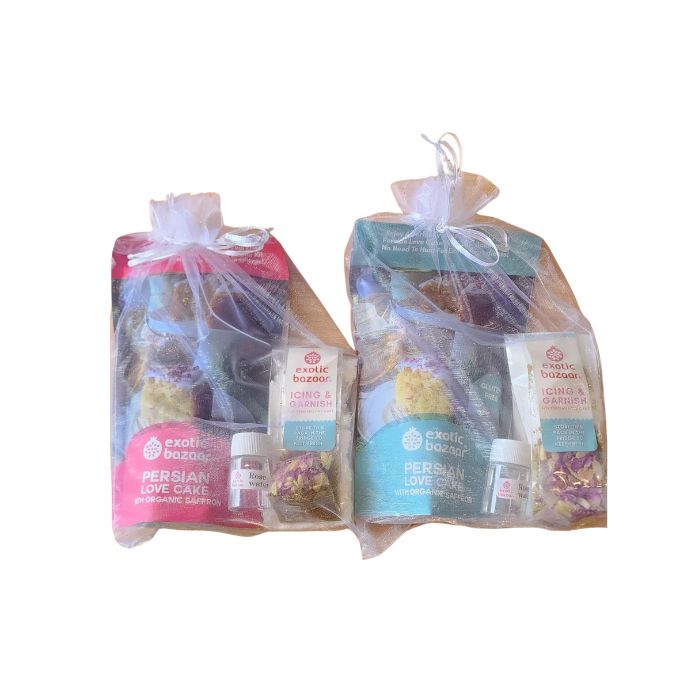
Australia – Exotic Bazaar- Persian Love Cake Baking Kit- Original and Gluten Free 420g – Mold/Mould

FSANZ

Persian Love Cake Image Food Recall

Exotic Bazaar is conducting a recall of the above products. The products have been available for sale at their online store nationally.

Date Marking: Best Before July 2024

Problem:

The recall is due to Mould growth found in the 15ml rosewater bottle.

Food safety hazard:

microbial contamination (mould)

What to do:

Consumers should not drink or open this product and should dispose of it safely. Please contact Exotic Bazaar for safe disposal instructions and reimbursement. Any consumers concerned about their health should seek medical advice.

For further information:

Exotic Bazaar

hello@exoticbazaar.com.au

ExoticBazaar.com.au

Related Links:

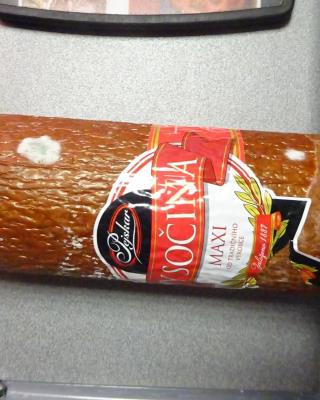
Czech Republic – Pejskar VYSOCINA XXL – Visible Mold/Mould

Potravinynapranyri

Illustrative photo #3

Place of inspection:
Frýdlant ( Cooperative registered office no. 1083/45, 464 01 Frýdlant )
ID: 64651592
Food group: Meat and meat products Durable meat products

Pejskar VYSOCINA XXL
Category: Dangerous foods
Invalid parameter:

fungi visible to the eye

There were colonies of mold on the surface of the food. Food is not considered safe if it shows signs of spoilage.

The sample was taken from the loaded package. The product did not have an expiration date. Unsuitable storage temperatures for this food were not detected during the inspection.

Batch: L72281
Expiration date: 20.01.24
Quantity of the product in the package: 1.6 kg
Manufacturer: PEJSKAR & spol. s ro, Kostelecká 894/61, 196 00 Prague 9 – Čakovice
Distributor: PEJSKAR & spol. s ro, Kostelecká 894/61, 196 00 Prague 9 – Čakovice
Country of origin:  Czechia
Date of sample collection: 4/12/2023
Reference number: 24-000022-SZPI-CZ
The sample was detected by the official control of the State Agricultural and Food Inspection.

Research – Food Safety Aspects of Breeding Maize to Multi-Resistance against the Major (Fusarium graminearum, F. verticillioides, Aspergillus flavus) and Minor Toxigenic Fungi (Fusarium spp.) as Well as to Toxin Accumulation, Trends, and Solutions—A Review

MDPI

Abstract

Maize is the crop which is most commonly exposed to toxigenic fungi that produce many toxins that are harmful to humans and animals alike. Preharvest grain yield loss, preharvest toxin contamination (at harvest), and storage loss are estimated to be between 220 and 265 million metric tons. In the past ten years, the preharvest mycotoxin damage was stable or increased mainly in aflatoxin and fumonisins. The presence of multiple toxins is characteristic. The few breeding programs concentrate on one of the three main toxigenic fungi. About 90% of the experiments except AFB1 rarely test toxin contamination. As disease resistance and resistance to toxin contamination often differ in regard to F. graminearumF. verticillioides, and A. flavus and their toxins, it is not possible to make a food safety evaluation according to symptom severity alone. The inheritance of the resistance is polygenic, often mixed with epistatic and additive effects, but only a minor part of their phenotypic variation can be explained. All tests are made by a single inoculum (pure isolate or mixture). Genotype ranking differs between isolates and according to aggressiveness level; therefore, the reliability of such resistance data is often problematic. Silk channel inoculation often causes lower ear rot severity than we find in kernel resistance tests. These explain the slow progress and raise skepticism towards resistance breeding. On the other hand, during genetic research, several effective putative resistance genes were identified, and some overlapped with known QTLs. QTLs were identified as securing specific or general resistance to different toxicogenic species. Hybrids were identified with good disease and toxin resistance to the three toxigenic species. Resistance and toxin differences were often tenfold or higher, allowing for the introduction of the resistance and resistance to toxin accumulation tests in the variety testing and the evaluation of the food safety risks of the hybrids within 2–3 years. Beyond this, resistance breeding programs and genetic investigations (QTL-analyses, GWAM tests, etc.) can be improved. All other research may use it with success, where artificial inoculation is necessary. The multi-toxin data reveal more toxins than we can treat now. Their control is not solved. As limits for nonregulated toxins can be introduced, or the existing regulations can be made to be stricter, the research should start. We should mention that a higher resistance to F. verticillioides and A. flavus can be very useful to balance the detrimental effect of hotter and dryer seasons on aflatoxin and fumonisin contamination. This is a new aspect to secure food and feed safety under otherwise damaging climatic conditions. The more resistant hybrids are to the three main agents, the more likely we are to reduce the toxin losses mentioned by about 50% or higher.

RASFF Alert- Mold/Mould – Neutral Sweetened Gelled Water

RASFF

Presence of mold in neutral sweetened gelled water from France in Italy

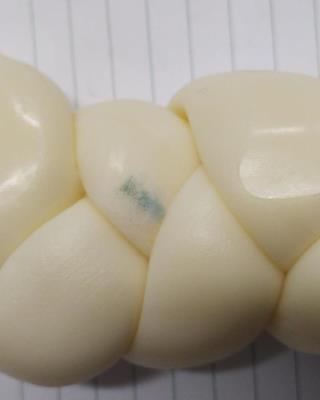
Czech Republic – Jadel – natural, steamed cheese, hand-knitted – Visible Mold/Mould

Potravinynapranyri

Illustrative photo #2

Place of inspection:
Žamberk ( Masarykovo náměstí 87, 564 01 Žamberk )
ID: 03392341
Food group: Milk and milk products Cheese

Jadel – natural, steamed cheese, hand-knitted
Category: Dangerous foods
Invalid parameter:

fungi visible to the eye

Mold was detected on the surface of the food under the intact packaging in some packages. Food is not considered safe if it shows signs of spoilage.

Unsuitable storage temperatures of this product were not detected during the inspection. The food did not have an expired minimum durability date.

Batch: 21.09.
Best before date: 25/11/2023
Packaging: plastic welded foil
Quantity of the product in the package: 110 g
Manufacturer: Dairy Polná spol. s ro, Za Nádražím 680, 588 13 Polná
Country of origin:  Czechia
Date of sample collection: 14/11/2023
Reference number: 24-000005-SZPI-CZ
The sample was detected by the official control of the State Agricultural and Food Inspection.

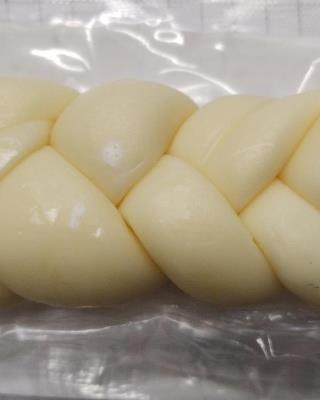
Czech Republic – Jadel – natural, steamed cheese, hand-knitted – Visible Mold/Mould

Potravinynapranyri

Illustrative photo #2

Place of inspection:
Žamberk ( Masarykovo náměstí 87, 564 01 Žamberk )
ID: 03392341
Food group: Milk and milk products Cheese

Jadel – natural, steamed cheese, hand-knitted
Category: Dangerous foods
Invalid parameter:

fungi visible to the eye

The food had passed its best before date.

The presence of mold was detected on the surface of the food under the intact packaging in all inspected packages. Food is not considered safe if it shows signs of spoilage.

Batch: 08.09.
Best before date: 11/12/2023
Packaging: plastic welded foil
Quantity of the product in the package: 110 g
Date of sample collection: 14/11/2023
Reference number: 24-000006-SZPI-CZ
The sample was detected by the official control of the State Agricultural and Food Inspection.

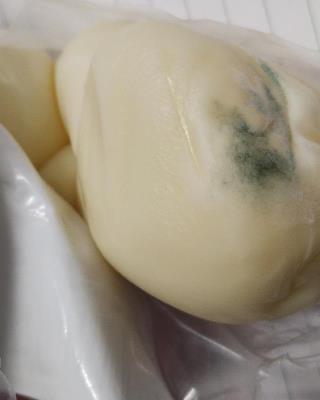
Czech Republic -Jadel – natural, steamed cheese, hand-knitted – Visible Mold/Mould

Potravinynapranyri

Illustrative photo #1

Place of inspection:
Žamberk ( Masarykovo náměstí 87, 564 01 Žamberk )
ID: 03392341
Food group: Milk and milk products Cheese

Jadel – natural, steamed cheese, hand-knitted
Category: Dangerous foods
Invalid parameter:

fungi visible to the eye

The food had passed its best before date.

Mold was detected on the surface of the food under the intact packaging. Food is not considered safe if it shows signs of spoilage.

Batch: 25.08.
Best before date: 29/10/2023
Packaging: plastic welded foil
Quantity of the product in the package: 110 g
Date of sample collection: 14/11/2023
Reference number: 24-000007-SZPI-CZ
The sample was detected by the official control of the State Agricultural and Food Inspection.

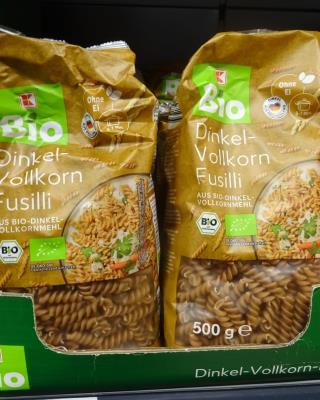
Czech Republic – To Bio Dinkel-Vollkorn Fusilli – Ergot Alkaloids

Potravinynapranyri

Illustrative photo #1

Place of inspection:
Hodonín ( Konečná 4010/4, 695 01 Hodonín )
ID: 25110161
Food group: Pasta Pasta with egg products

To Bio Dinkel-Vollkorn Fusilli
Category: Dangerous foods
Invalid parameter:

sum of ergot alkaloids

The maximum permitted limit for the content of ergot alkaloids was exceeded in the food.

Food is not considered safe if it is contaminated with foreign substances.

Ergot alkaloids are produced by the fungus Claviceps purpurea and cause poisoning (ergotism).

Batch: DMT: 11/04/2026
Best before date: 11/04/2026
Packaging: PP
Quantity of the product in the package: 0.5 kg
Manufacturer: Spaichinger Nudelmacher GmbH, Eschenwasen 7, 78549 Spaichingen
Date of sample collection: 3/10/2023
Reference number: 24-000008-SZPI-CZ
The sample was detected by the official control of the State Agricultural and Food Inspection.

Research – A 10-year analysis of RASFF notifications for mycotoxins in nuts. Trend in key mycotoxins and impacted countries

Science Direct

Abstract

The demand for tree nuts has significantly grown in recent years as epidemiological studies and clinical intervention trials demonstrated an inverse relationship between tree nut consumption and chronic diseases. However, mycotoxins are one of the main hazards responsible for increased “Rapid Alert System for Food and Feed” (RASFF) notifications and border rejections on nuts and nut products exported to the E.U. countries in the past few years. Mycotoxins are secondary metabolites that present serious threats to human and animal health. The most prevalent, toxic, and carcinogenic mycotoxins observed in human food and animal feed are the aflatoxins (AFs). This work analyzed notifications from the RASFF on nuts and nut products contaminated with mycotoxins, for a 10-year period from 2011 to 2021. A total of 4752 mycotoxin notifications were published on RASFF for food products worldwide, 63% (n = 3000) were notified in “nuts, nut products and seeds”. It was observed that 95% (n = 2669) notifications were due to AFs. Over half of these notifications (52%, n = 1545) were reported for groundnuts, where 29% (n = 441) of the notifications were received for groundnuts from China alone. Border rejection was reported for 91% (n = 2560) of the nuts and nut products which received the notifications from the E.U. countries. This study proffers understanding into the major reasons for RASFF notifications on nuts and nut products exported to E.U. countries. Also, the implications of this issue with some recommendations that could reduce the incidents of notifications for tree nuts have been outlined.

RASFF Alert- Mold/Mould – Duck Foie Gras

RASFF

Presence of mould in blocks of duck foie gras from France in Belgium and Luxembourg