Category Archives: Microbiology

USA – E.coli O157 – Outbreak in Leafy Greens

Food Poisoning Bulletin

 E.coli outbreak likely caused by leafy greens has sickened five people in Hamilton County, Ohio, Food Poisoning Bulletin has learned. The outbreak was confirmed this morning by  Mike Samet, a public information officer, for the county’s public health department.

There are five confirmed cases and one probable case of  E.coli 0157:H7 infection which were likely caused by tainted leafy greens, he said. The case patients, four females and two males,  range in age from 12 to 83 and first showed signs of illness from December 10 to December 15, 2012

Canada – E.coli O157 Outbreak Update

Food Safety NewsEcoli Istock

Canada’s eastern and adjoining provinces of Nova Scotia and New Brunswick are reporting 15 confirmed cases of E. coli O157:H7. None of the illnesses have yet been traced to a source.

Ten of the E. coli illnesses are located in central Nova Scotia, with five reported by the Capital District Health, two by the Guysborough Antigonish Strait Health Authority, and one each by the Pictou, Cumberland, and Colcherster East Hants health authorities.

On the other side of the Bay of Fundy in New Brunswick, heath officials reported two cases were reported in the St. John region and three in the Fredericton region.

Dr. Eilish Cleary, chief medical officer for New Brunswick, said it is not known if there is a common source for the cases. A number of possible sources are being investigated. Dr. Robert Strang, chief medical officer for Nova Scotia, said that it would not be uncommon for there to be additional cases as it may take as long as ten days for some people to begin to experience symptoms of E. coli O157:H7 and get tested.

One of the Nova Scotia patients experienced kidney failure, but along with the others is said to be recovering. In New Brunswick, four illnesses were treated by emergency room visits, and one victim was hospitalized.

UK – HPA Update on Norovirus Activity

HPANorovirus

Latest figures from the Health Protection Agency (HPA) show there have been 4,140 laboratory confirmed cases of norovirus this season (from week 27 to week 52 2012). The latest figures are 63 per cent higher than the number of cases reported at this point last year, when there were 2,535 cases.

The downward trend in the number of confirmed cases has continued in line with the previous report although this is to be expected following the Christmas and New Year period. We will expect to see the number of cases increase again over the following few weeks.

During the two weeks up to 6 January there were 33 hospital outbreaks reported, compared to 30 in the previous fortnight, bringing the total of outbreaks for the season to 673.

USA – Sprouts and Pathogenic Bacteria

Food Poisoning BulletinEurofins

Raw sprouts have been the cause of several food poisoning outbreaks in the last several years. In 2012, there were many recalls of raw sprouts for bacterial contamination. Several facilities, including Kroger and Jimmy John’s, decided to stop offering sprouts for sale altogether, although Jimmy John’s put the vegetables back on their menu in October 2012.

The Centers for Disease Control and Prevention (CDC) has been warning those in high risk groups to avoid sprouts completely, unless they are thoroughly cooked. And FoodSafety.gov just released information about what you, as a consumer, should know about sprouts.

USA – FDA – Releases Food Safety Rules

Food Safety News

After a year-long delay, two sweeping new food safety rules that will for the first time mandate produce safety standards and preventive controls nationwide will be released today and published to the Federal Register on Monday, according to the U.S. Food and Drug Administration.

“It’s a big deal that these two are coming out because it’s the central framework for prevention,” said Michael Taylor, FDA’s Deputy Comissioner for Foods and Veterinary Medicine, in an interview with Food Safety News. “We’re eager to get to the next phase of the process.”

The two rules were mandated by the Food Safety Modernization Act (FSMA) — a law that aims to shift the U.S. food safety system from being primarily reactive to focusing on prevention — which President Obama signed into law, with broad bipartisan support, exactly two years ago.

Since the law was enacted, the FDA has failed to keep up with the multiple deadlines set by Congress, in large part because the measures proposed by the agency were under review at the White House Office of Management and Budget’s Office of International and Regulatory Affairs for more than a year — a delay many stakeholders blamed on election politics.

USA – Cold Smoked Salmon Recall – Listeria monocytogenes

Food Poisoning Bulletin

Potential Listeria contamination in certain smoked salmon products sold at Sam’s Club stores nationwide has prompted the discount retailer to notify its customers of a recall. The products under recall were produced by Tampa Bay Fisheries Inc. of Dover Fl. and Multi-Export Foods. Inc of Miami.

The recall covers all smoked salmon products produced since November 14, 2012.Specifically, Smoked Salmon Twin Packs with the UPC numbers 0068826486705) or UPC 0068826486703  with a lot-sublot-batch number of: 931-59733-2; 933-59753-1; 933-59754-2;  875-701413-1 and 890-701413-1 are under recall. Those numbers can be found on a white sticker located on the back of the package above the UPC bar code.

World Winter Norovirus Cases Spike 2012

Food Safety NewsNorovirus

Winter months consistently produce the highest numbers of Norovirus outbreaks; however early reports suggest that the bug may be striking a particularly large number of victims this season.

In the United Kingdom, the number of confirmed Norovirus cases has risen to 72 percent higher than this time last year. In total, 3,877 citizens have been confirmed with infections, up from 2,255 a year ago.

But for every confirmed case of Norovirus, experts estimate that another 288 cases go unreported. That means that more than 1.1 million UK citizens may have already suffered bouts with the bug, which can include vomiting, diarrhea, nausea and abdominal pain.

The Canadian province of British Columbia has also seen its greatest number of November and December Norovirus cases since 2006. Some healthcare facilities in the region have closed off portions of their premises for disinfection in attempts to prevent further spread of the virus.

According to the U.S. Centers for Disease Control and Prevention, Norovirus sickens an estimated 21 million Americans each year, contributing to 70,000 hospitalizations and 800 deaths. While most cases result from human contact, Norovirus also remains the most common source of foodborne illness in the U.S. and is regularly associated with leafy greens, fresh fruits and shellfish.

European Alerts – Extended Recall Tofu – Bacillus cereus – Dog Food – Salmonella – Cheese – Listeria

AFSAC – French – English tofu

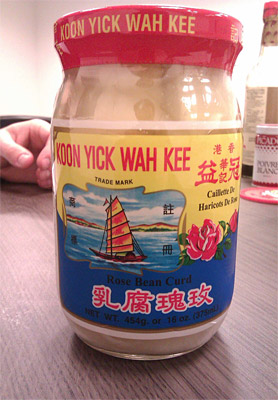
The Food Agency recommends not eating TOFU in sesame oil with or without chili brand KOON WAH KEE YICK following the detection of Bacillus cereus in this commodity. The product is sold in Asian specialty stores.

RASFF – Salmonella in Dog Food in Germany sourced in India

France – (English)

Following the detection of Listeria monocytogenes in certain lots of cheese, and as a precautionary measure, the company JUSSAC OF CHEESE shall withdraw the sale and recall of consumption of all cheeses.

The products covered by these measures were traded between 31 October 2012 and 26 December 2012.

Research Papers – Pathogens – Celery – Irradiation – Spinach – Boiling Shrimp – Low Water Activity and Pathogens

Science Direct

Illnesses from Escherichia coli O157:H7, Listeria monocytogenes, and Salmonella have been associated with the consumption of numerous produce items. Little is known about the effect of consumer handling practices on the fate of these pathogens on celery. The objective of this study was to determine pathogen behavior at different temperatures under different storage conditions. Commercial fresh-cut celery was inoculated at ca. 3 log CFU/g onto either freshly cut or outer uncut surfaces and stored in either sealed polyethylene bags or closed containers. Samples were enumerated following storage for 0, 1, 3, 5, and 7 days when held at 4 °C or 12 °C, and after 0, 8, and 17 h, and 1, and 2 days when held at 22 °C. At 4 °C, all populations declined by 0.5–1.0 log CFU/g over 7 days. At 12 °C, E. coli O157:H7 and Salmonella populations did not change, while L. monocytogenes populations increased by ca. 0.5 log CFU/g over 7 days. At 22 °C, E. coli O157:H7, Salmonella, and L. monocytogenes populations increased by ca. 1, 2, or 0.3 log CFU/g, respectively, with the majority of growth occurring during the first 17 h. On occasion, populations on cut surfaces were significantly higher than those on uncut surfaces. Results indicate that populations are reduced under refrigeration, but survive and may grow at elevated temperatures.

The Packer

Researchers say common packinghouse practices for fresh spinach are not sufficient to avoid outbreaks of salmonella-related illnesses and recently showed that irradiation eliminated almost all cross contamination from field and packing operations.

Scientists at Texas A&M University and Pusan National University in South Korea set out to develop a quantitative risk assessment model to evaluate microbial hazards during the processing of baby spinach leaves, according to their abstract recently published with their results in the journal “ScienceDirect.”

IngentaConnect

The purpose of this study was to determine whether the current consumer method of boiling shrimp until floating and pink in color is adequate for destroying Listeria and Salmonella. Shrimp samples were submerged in bacterial suspensions of Listeria and Salmonella for 30 min and allowed to air dry for 1 h under a biosafety cabinet. Color parameters were then measured with a spectrophotometer programmed with the CIELAB system. Twenty-four shrimp samples were divided into groups (days 0, 1, or 2) and stored at 4°C. The samples were treated by placing them in boiling water (100°C) on days 0, 1, and 2. The shrimp were immediately removed from the boiling water once they floated to the surface, and color parameters were measured. Bacterial counts were determined, and the log CFU per gram was calculated. The effect of sodium tripolyphosphate on the color change of cooked shrimp also was determined. Initial bacterial counts on shrimp after air drying were 5.31 ± 0.14 log CFU/g for Salmonella Enteritidis, 5.24 ± 0.31 log CFU/g for Salmonella Infantis, 5.40 ± 0.16 log CFU/g for Salmonella Typhimurium, 3.91z 0.11 log CFU/g for Listeria innocua, 4.45 ± 0.11 log CFU/g for Listeria monocytogenes (1/2a), and 3.70 ± 0.22 log CFU/g for Listeria welshimeri. On days 0, 1, and 2, all bacterial counts were reduced to nondetectable levels for shrimp samples that floated. The average time for shrimp to float was 96 ± 8 s. The bacterial counts remained at nondetectable levels (<10 log CFU/g) during refrigerated (4°C) storage of cooked shrimp for 2 days. The redness, yellowness, and lightness were significantly higher (P < 0.0001) for the cooked shrimp than for the uncooked shrimp on all days tested. The standard deviation for redness in the cooked shrimp was large, indicating a wide range of pink coloration on all days tested. The results suggest that boiling shrimp until they float will significantly reduce Listeria and Salmonella contamination, but color change is not a good indication of reduction of these pathogens because of the wide natural color variation.

IngentaConnect

Foods and food ingredients with low water activity (aw) have been implicated with increased frequency in recent years as vehicles for pathogens that have caused outbreaks of illnesses. Some of these foodborne pathogens can survive for several months, even years, in low-aw foods and in dry food processing and preparation environments. Foodborne pathogens in low-aw foods often exhibit an increased tolerance to heat and other treatments that are lethal to cells in high-aw environments. It is virtually impossible to eliminate these pathogens in many dry foods or dry food ingredients without impairing organoleptic quality. Control measures should therefore focus on preventing contamination, which is often a much greater challenge than designing efficient control measures for high-aw foods. The most efficient approaches to prevent contamination are based on hygienic design, zoning, and implementation of efficient cleaning and sanitation procedures in the food processing environment. Methodologies to improve the sensitivity and speed of assays to resuscitate desiccated cells of foodborne pathogens and to detect them when present in dry foods in very low numbers should be developed. The goal should be to advance our knowledge of the behavior of foodborne pathogens in low-aw foods and food ingredients, with the ultimate aim of developing and implementing interventions that will reduce foodborne illness associated with this food category. Presented here are some observations on survival and persistence of foodborne pathogens in low-aw foods, selected outbreaks of illnesses associated with consumption of these foods, and approaches to minimize safety risks.

Canada – First E.coli O157 of 2013

Ecoli Blog

CBC News reports that Canadian health officials say seven people in Nova Scotia have been infected with E. coli, likely E. coli O157:H7. Five people have been treated in hospital and released, while two people remain hospitalized. One is suffering from kidney failure. The people who have fallen ill range from their late teens to their 80s.

Five to six cases of E. coli O157:H7 have also been reported in New Brunswick, leading health officials to believe the common denominator is likely a food item that is sold in both provinces.

According to the Herald News, because there are no known new cases, officials are hoping that whatever caused the illness was a food with a short shelf life, such as a type of fruit or vegetable