Category Archives: Microbiology

USA – Raw Milk STEC Outbreak

 Food Poisoning Journal

The Missouri Department of Health and Senior Services (DHSS) has become aware of several cases of diarrheal illness from northwest Missouri, possibly caused by Shiga-toxin producing Escherichia coli (STEC), including one confirmed as E. coli O103. These may be related to the consumption of locally-produced, raw (unpasteurized) dairy products.

DHSS recommends that any person who has signs or symptoms of STEC infection seek medical care. Health care providers should evaluate patients adequately to determine if testing for STEC infection is warranted.

Symptoms of STEC infection include severe stomach cramps, diarrhea (which is often bloody), and vomiting. If there is fever, it usually is not very high. Most patients’ symptoms improve within 5–7 days, but some patients go on to develop hemolytic uremic syndrome (HUS), usually about a week after the diarrhea starts. The classic triad of findings in HUS are acute renal damage, microangiopathic hemolytic anemia, and thrombocytopenia.

USA – Sister Sarah Products Recall – Clostridium botulinum

Food Safety News

The California Department of Public Health (CDPH) is warning consumers not to eat “Sister Sara’s Good for You” products because they may have been improperly produced, making them susceptible to contamination with Clostridium botulinum.

No illnesses have been linked to any of the affected products at this time. The products were sold at certified farmers markets in Alameda County.

Sister Sara of Pleasanton, CA., recalled the products after CDPH discovered they were produced without the required controls to prevent formation of botulism toxin. Ingestion of botulism toxin from improperly processed foods can lead to serious illness and death.

The products were sold under the Sister Sara label and packaged in one-pint glass canning jars with screw-on metal lids. The products were labeled as “Sister Sara’s Good for You Soup,” “Sister Sara’s Bread & Butter Pickles,” “Sister Sara’s Pickled Beets,” and “Sister Sara’s Old Fashioned Dill Pickles.”

Canada – KFC – Taco Bell Lettuce – E.coli

Food Poisoning BulletinSalmonella

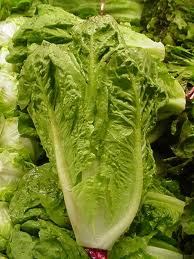
The source of an E.coli outbreak that has sickened at least 16 people in Canada was lettuce served at Taco Bell and KFC restaurants, health officials in New Brunswick have discovered.  The outbreak affected three provinces: New Brunswick, where six people became ill and Nova Scotia and Ontario which each had five cases.

“Based on the information we have collected and shared with other provinces, we believe that lettuce has been a common food source among cases,” said Dr. Eilish Cleary, New Brunswick’s chief medical officer of health. “Since lettuce has a limited shelf life, it is highly unlikely that some from the affected lots remain in restaurants.”

USA – FDA Extended Smoked Fish Call -Listeria monocytogenes

FDAFDA

GIANT Food Stores, LLC and MARTIN’S Food Markets, following a recall by Ocean Beauty Seafoods LLC, announced it removed from sale several varieties of smoked salmon due to possible contamination by listeria monocytogenes.

The following products are included in this recall:

* Nathan’s Nova Salmon, 3 o.z., UPC 7303080368, all sell by dates * Nathan’s Nova Salmon, 8 o.z., UPC 7303080369, all sell by dates * Lascco Smoked Salmon, 3 o.z., UPC 7284001703, all sell by dates

We have received no reports of illnesses to date. Customers who have purchased the product should discard any unused portions and bring their purchase receipt to GIANT/MARTIN’S for a full refund.

UK – FSA Second Update Recall of Tofu – Bacillus cereus

FSAfood_standards_agency_logo

The Food Standards Agency is issuing a second updated Food Alert for Action on the Koon Yick Wah Kee rose bean curd (tofu) and chilli bean curd (tofu) originating from China via The Netherlands, because of confirmation that further tofu from the same company has high levels of Bacillus cereus.

The affected products have a best before date of 30 December 2013 but there are currently no distributions details available. The levels of the bacteria detected can cause vomiting or diarrhoea.

Australia New Advice About Listeriosis – Rising Number of Cases

NSW Food Authority

The NSW Food Authority advises those most at risk to avoid the following ready to eat foods:

  • soft cheese such as brie, blue, fetta, camembert and ricotta
  • cold chicken or turkey particularly if sliced or diced – such as used in chicken sandwiches
  • cold meats, pate and meat spreads
  • pre-prepared or packaged salads greens and salads
  • raw seafood such as oysters, sashimi, smoked salmon or oysters (canned oysters are safe)
  • sushi
  • unpasteurised dairy products including raw goat’s milk and Roquefort cheese

“Signs of listeriosis include flu-like symptoms such as fever, muscle aches, nausea and diarrhoea that can sometimes lead to septicemia, meningitis and in some cases, miscarriage in pregnant women,” Dr McAnulty said.

Investigations into listeriosis are complex as it can be difficult to identify the source. Symptoms of illness can take up to 70 days to appear.

Healthy people usually show only mild symptoms. However, in people at risk, early symptoms of listeria infection include fever, headache, tiredness and aches and pains.

Other useful links can be found at the base of the articel in the link above.

USA – Another Smoked Fish Recall – Listeria monocytogenes

FDAFDA

As precautionary measure, Delifish has decided to expand the voluntary recall to include cold smoked products related to Julian dates 235 to 345, the previous voluntary recall included cold smoked products related to Julian dates 249- 291. There have been no new detections on products placed on the market in relation to this expansion.

The expansion means that all cold smoked products that have been produced in the same period as the product type which initially tested positive in the U.S.A. are now voluntarily recalled. The decision is taken in agreement with the FDA and is carried out as a precautionary measure.

There have been no complaints or illnesses reported. Listeria monocytogenes is an organism which can cause serious and sometimes fatal infections in young children, frail or elderly people, and others with weakened immune systems. Although healthy individuals may suffer only short-term symptoms such as high fever, severe headache, stiffness, nausea, abdominal pain and diarrhea, listeria infection can cause miscarriages and stillbirths among pregnant women.

Research – Campylobacter in Chicken Factory Workers

Food Safety NewsimagesCAYZ5I84

New analysis of Campylobacter infections among workers at a Virginia poultry plant offers hints about which employees more likely to fall ill from the bacteria.

Government researchers examined health data for plant employees from January 2008 through May 2011 and found that 29 Campylobacter cases had been confirmed during that time period.

Their findings reveal three characteristics of workers who were more likely to be sickened:

  • Recently employed: A full 83 percent of these patients had worked at the plant less than a month before falling ill, suggesting that illness is more common among new employees.
  • Worked in the live-hang area: Those whose job involved hanging live chickens were far more likely to be infected than those working in other parts of the facility. Of those sickened, 62 percent worked in a live-hang area.
  • Resided in diversion centers: Almost all the employees who contracted Campylobacter infections (26 out of 29) lived in state-operated diversion centers. The authors say the high illness rate among this group may be due to the fact that diversion center residents are disproportionately assigned to live-hang areas, where they are more likely to be exposed to the bacteria.

The fact that new employees fell ill more frequently than those who had been there more than a month is consistent with findings from other studies, which have suggested that workers develop immunity to the bacteria during the first few weeks of work.

CDC – Report

HPA – New Strain of Norovirus – Sydney 2012

HPANorovirus

As part of its surveillance for norovirus the Health Protection Agency (HPA) carries out genetic testing of norovirus strains from cases in England and Wales.

Testing carried out when cases started to rise in October revealed a cocktail of different strains that were circulating including Sydney 2012 and another called New Orleans 2009, although no one strain was dominant.

The latest testing of the most recent outbreaks, completed this week, has now shown that Sydney 2012 has overtaken all others to become the dominant strain.

Syndey 2012 was first seen in Australia (and takes its name from the place it was first identified) and has also been seen in France, New Zealand and Japan.

This new strain does not cause more serious illness than others and the methods of managing cases and outbreaks are the same for any strain of norovirus. These measures include washing the hands thoroughly and regularly particularly after using the toilet and before eating.

Dr David Brown, Director of Virology Reference Department at the HPA said, “It is always difficult to predict the norovirus season and this year is no different.

“Noroviruses mutate rapidly and new strains are constantly emerging. At the start of the season it is normal for outbreaks to be caused by a range of different strains. However as the season progresses particular strains are more successful and become dominant. The emergence of a new strain does not mean that it causes more serious illness and managing outbreaks and those will the illness remains the same.

Research – Do Reuseable Grocery Bags Present a Micro Risk?

Social Science Network

Abstract:

Recently, many jurisdictions have implemented bans or imposed taxes upon plastic grocery bags on environmental grounds. San Francisco County was the first major US jurisdiction to enact such a regulation, implementing a ban in 2007. There is evidence, however, that reusable grocery bags, a common substitute for plastic bags, contain potentially harmful bacteria. We examine emergency room admissions related to these bacteria in the wake of the San Francisco ban. We find that ER visits spiked when the ban went into effect. Relative to other counties, ER
admissions increase by at least one fourth, and deaths exhibit a similar increase.