Category Archives: Microbiology

RASFF Alerts – Animal Feed – Salmonella – Dog Chews – Sunflower Seed Meal – Rape Seed Meal

RASFF-Logo

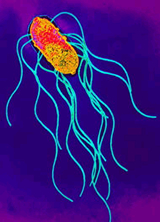
RASFF – Salmonella enterica ser. Infantis (presence /25g) and too high count of Enterobacteriaceae (1100 CFU/g) in dog chews from Germany in Austria

RASFF -Salmonella enterica ser. Senftenberg (presence /25g) in sunflower seed meal from Ukraine in Poland

RASFF – Salmonella enterica ser. Tennessee (presence /25g) in rape seed meal from Germany in Finland

USA -Pet turtles linked to latest Salmonella outbreak

Outbreak News Today Salmonella kswfoodworld

Federal health officials report investigating a Salmonella Oranienburg outbreak  linked to contact with pet turtles.

To date, 21 people have been infected with the outbreak strain from 13 states, including seven requiring hospitalization.

No deaths have been reported.

Interviews with ill people indicate that contact with pet turtles is the likely source of this outbreak. The investigation is ongoing.

Research – EU – Cryptosporidiosis – Annual Epidemiological Report for 2017

ECDC crypto

Executive summary

Key facts

  • For 2017, 21 EU/EEA countries reported 11 449 cryptosporidiosis cases, of which 11 418 were confirmed.
  • The notification rate was 3.2 confirmed cases per 100 000 population.
  • Germany, the Netherlands and the United Kingdom (UK) accounted for 71% of all confirmed cases, with the United Kingdom alone accounting for 44%.
  • Most of the cases were reported in September 2017, following the seasonal pattern of previous years.
  • Children aged 0–4 years had the highest notification rate of 12.5 cases per 100 000 population.

Download

Thumbnail

Research – Fate of Spoilage and Pathogenic Microorganisms in Acidified Cold-Filled Hot Pepper Sauces

Journal of Food Protection

ABSTRACT

Consumption of spicy foods and hot sauces is currently a popular trend worldwide. Shelf-stable acidified sauces are commonly hot-filled to ensure commercial sterility, but cold-fill-hold processes might also be suitable if microbial safety and stability are ensured. For this study, model acidified hot pepper sauces were developed and characterized. The effects of sauce pH and of two different organic acids on the survival of Pichia manshurica and Lactobacillus curvatus isolated from contaminated commercial hot sauces and on pathogenic Escherichia coli O157:H7, Salmonella enterica, and Listeria monocytogenes were assessed. Full factorial designs with three levels for pH (3.2, 3.5, and 3.9) and two for organic acid (citric and acetic) were used to determine the effects of these factors and their interactions on the survival of the microorganisms. Commercially sterile sauces were independently inoculated and kept at ambient temperature. Microbial counts were determined at different sampling times, depending on the treatment evaluated. Sauces acidified to pH 3.2 with citric or acetic acid were inoculated with cocktails of five strains or serotypes of the three pertinent pathogens, and inactivation curves were determined. Trials were performed in triplicate. A greater than 5-log reduction of P. manshurica and L. curvatus was achieved in less than 6 h in sauces adjusted to pH 3.2 with acetic acid. Greater than 5-log reductions of pathogenic bacteria were achieved 0.5 h after inoculation in sauces acidified to pH 3.2 with acetic acid. In contrast, at least 48 h was required to guarantee the same inactivation for the most tolerant pathogen when citric acid was used. Thus, a cold-fill-hold process may be a suitable alternative for acidified hot pepper sauces. Based on survival of the microorganisms evaluated in this study, microbial safety and stability can be achieved by adjusting the pH to 3.2 or less by the addition of acetic acid.

HIGHLIGHTS
  • pH and acidifier influence safety and stability of cold-filled acidified sauces.

  • Safe and stable cold-filled sauces were obtained at pH 3.2 with acetic acid.

  • Results help establish science-based conditions for cold-filled products.

Research – Hepatitis E virus genotype 3 strains and a plethora of other viruses detected in raw and still in tap water

Science Direct

In this study, next generation sequencing was used to explore the virome in 20L up to 10,000L water from different purification steps at two Swedish drinking water treatment plants (DWTPs), and in tap water. One DWTP used ultrafiltration (UF) with 20 nm pores, the other UV light treatment after conventional treatment of the water. Viruses belonging to 26 different families were detected in raw water, in which 6–9 times more sequence reads were found for phages than for known environmental, plant or vertebrate viruses. The total number of viral reads was reduced more than 4-log10 after UF and 3-log10 over UV treatment. However, for some viruses the reduction was 3.5-log10 after UF, as for hepatitis E virus (HEV), which was also detected in tap water, with sequences similar to those in raw water and after treatment. This indicates that HEV had passed through the treatment and entered into the supply network. However, the viability of the viruses is unknown. In tap water 10–130 International Units of HEV RNA/mL were identified, which is a comparable low amount of virus. The risk of getting infected through consumption of tap water is probably negligible, but needs to be investigated. The HEV strains in the waters belonged to subtypes HEV3a and HEV3c/i, which is associated with unknown source of infection in humans infected in Sweden. None of these subtypes are common among pigs or wild boar, the major reservoirs for HEV, indicating that water may play a role in transmitting this virus. The results indicate that monitoring small fecal/oral transmitted viruses in DWTPs may be considered, especially during community outbreaks, to prevent potential transmission by tap water.

Research – Prevalence of Extended-Spectrum β-Lactamase–Producing Bacteria on Fresh Vegetables in Japan

Journal of Food Protection

ABSTRACT

Extended-spectrum β-lactamase (ESBL)–producing bacteria are spreading rapidly, posing a threat to human and animal health. Contamination of vegetables with antimicrobial-resistant bacteria or those harboring antimicrobial resistance genes or a combination of both presents a potential route of transmission to humans. Therefore, the aim of this study was to determine the prevalence of these bacteria in fresh vegetables in Japan. A total of 130 samples of fresh vegetables were collected from seven supermarkets in Japan. The predominant genus detected was Pseudomonas spp., including 10 ESBL-producing strains, isolated from 10 (7.7%) of the vegetable samples. Two ESBL genes were detected, blaTEM-116 (n = 7) and blaSHV-12 (n = 3), and some of these strains were resistant to multiple antibiotics. Because vegetables are often consumed raw, those contaminated with ESBL producers could represent an important route of transmission to humans in Japan. Thus, more stringent hygiene measures and monitoring are required to prevent transmission via this source.

HIGHLIGHTS
  • Retail vegetables in Japan are not as frequently contaminated by animal feces.

  • ESBL-producing bacteria were isolated from vegetables (7.7%).

  • Two ESBL genes (blaTEM-116 and blaSHV-12) were detected in vegetables.

USA – Foodborne illness source attribution estimates for 2017 for Salmonella, Escherichia coli O157, Listeria monocytogenes, and Campylobacter using multi-year outbreak surveillance data, United States,

CDC

In an ongoing effort to understand sources of foodborne illness in the United States, the Interagency Food Safety Analytics Collaboration (IFSAC) collects and analyzes outbreak data to produce an annual report with estimates of foods responsible for foodborne illnesses caused by pathogens. The report estimates the degree to which four pathogens – Salmonella, E. coli O157, Listeria monocytogenes, and Campylobacter – and specific foods and food categories are responsible for foodborne illnesses. The Centers for Disease Control and Prevention (CDC) estimates that, together, these four pathogens cause 1.9 million foodborne illnesses in the United States each year. The newest report (PDF), entitled “Foodborne illness source attribution estimates for 2017 for Salmonella, Escherichia coli O157, Listeria monocytogenes, and Campylobacter using multi-year outbreak surveillance data, United States,” can be found on the IFSAC website.

The updated estimates, combined with other data, may help shape agency priorities and inform the creation of targeted interventions that can help to reduce foodborne illnesses caused by these pathogens. As more data become available and methods evolve, attribution estimates may improve. These estimates are intended to inform and engage stakeholders and to improve federal agencies’ abilities to assess whether prevention measures are working.

Research -Antibiotic-free poultry meat less likely to harbor multidrug-resistant Salmonella

CIDRAP Campylobacter kswfoodworld

An analysis by researchers in Pennsylvania found that meat from conventionally raised poultry harbored nearly twice as much multidrug-resistant Salmonella as meat from antibiotic-free poultry, according to a study reported today at IDWeek 2019.

The findings come from a study conducted by scientists with the Pennsylvania Department of Health, Penn State College of Medicine, and the Food and Drug Administration (FDA) that examined non-typhoidal Salmonella cultures from nearly 3,500 samples of chicken and turkey bought from randomly selected stores in Pennsylvania from 2008 through 2017. Analysis of the Salmonella cultures found that 55% of those from conventionally raised poultry meat were resistant to three or more antibiotic classes, compared with 28% of the cultures from the antibiotic-free poultry meat.

Salmonella is a leading cause of foodborne illness, affecting more than 1.2 million Americans each year. While most cases are self-limiting, some salmonellosis cases require antibiotics and hospitalization. Drug-resistant Salmonella is harder to treat and can cause more severe and sometimes deadly infections.

Research – Microbiological Testing Results of Boneless and Ground Beef Purchased for the U.S. National School Lunch Program, School Years 2015 to 2018

Journal of Food Protection

ABSTRACT

The Agricultural Marketing Service (AMS) purchases beef for the National School Lunch Program and other federal nutrition assistance programs. For beef that will be delivered to food service facilities raw, each ca. 900-kg lot of boneless beef raw material and each ca. 4,500-kg sublot of resultant ground beef is tested for standard plate count (SPC) organisms, coliforms, Escherichia coli, Salmonella, and E. coli O157:H7. In addition, 1 of every 10 lots of boneless beef, randomly selected, is tested for E. coli O26, O45, O103, O111, O121, and O145. For beef that will be cooked using a validated lethality step at a federally inspected establishment before delivery, each lot of boneless beef and each sublot of ground beef is tested for SPC organisms, coliforms, and E. coli only. Any lot or sublot exceeding predefined critical limits (CLs) of 100,000 CFU g−1 for SPC organisms, 1,000 CFU g−1 for coliforms, or 500 CFU g−1 for E. coli or for beef containing Salmonella or any of previously mentioned E. coli serotypes is rejected for purchase. For school years 2015 through 2018 (July 2014 through June 2018), 220,497,254 kg of boneless beef and 189,347,318 kg of ground beef were produced for AMS. For boneless beef, 133 (0.06%), 164 (0.07%), and 106 (0.04%) of 240,488 lots exceeded CLs for SPC organisms, coliforms, and E. coli, respectively; 2,038 (1.30%) and 116 (0.07%) of 156,671 lots were positive for Salmonella and E. coli O157:H7, respectively; and 59 (0.36%) of 16,515 lots were positive for non-O157 Shiga toxin–producing E. coli. For ground beef, 46 (0.10%), 27 (0.06%), and 19 (0.04%) of 45,769 sublots exceeded CLs for SPC organisms, coliforms, and E. coli, respectively; and 329 (1.40%) and 18 (0.08%) of 23,475 sublots were positive for Salmonella and E. coli O157:H7, respectively. All lots and sublots found to exceed indicator organism CLs or to contain pathogens were identified, rejected for purchase, and diverted from federal nutrition assistance programs.


HIGHLIGHTS
  • AMS purchases beef for the National School Lunch Program.

  • Less than 0.10% of beef samples exceeded indicator organism critical limits.

  • Salmonella was found in 1.4% and E. coli O157:H7 was found in 0.08% of samples.

  • Indicator critical limit exceedance was weakly associated with pathogen presence.

  • Beef with excessive indicator organisms or containing pathogens was rejected for purchase.

Research -Antibacterial Interactions of Colloid Nanosilver with Eugenol and Food Ingredients

Journal of Food Protection

ABSTRACT

This study was conducted to investigate antibacterial properties of the colloidal silver nanoparticles (SNPs) and eugenol, alone and in combination, on Staphylococcus aureus and Salmonella Typhimurium and their interactions with food constituents (fat, protein, and carbohydrate). We examined antibacterial activities of SNPs and eugenol in Luria-Bertani (LB) broth and 1.5 and 3% fat ultrahigh-temperature (UHT) milk. MICs of eugenol and SNPs (particle size of 31.3 nm) were also investigated in the presence of sunflower oil, meat extract, and starch at concentrations of 2, 5, and 10% to examine the interactions between food constituents and antimicrobial agents. MICs and MBCs of eugenol and SNPs for both bacteria were at 2,500 and 25 μg/mL, respectively. Combinations of the two substances had additive and synergistic effects on Salmonella Typhimurium and S. aureus, respectively. Both compounds had bactericidal activity. In food matrices, results indicated that eugenol only in sunflower oil at 5 and 10% concentrations had significant antibacterial activity. A similar result was achieved for SNPs with 10% meat extract. In LB broth, eugenol at 2,500 and 5,000 μg/mL achieved 6-log reductions in the microbial population of both bacteria after 3 h, while SNPs achieved the same effect after 9 h. In UHT milk with 1.5% fat, eugenol at 5,000 μg/mL and SNPs at 25 μg/mL achieved 6-log reductions in bacterial populations after 24 h. Thus, the antimicrobial activity of both eugenol and SNPs depended on the medium in which the experiment was conducted, and the combination of both antimicrobial agents increased the antimicrobial effect.

HIGHLIGHTS
  • The interactions of eugenol, nanoparticles, and food constituents were investigated.

  • Eugenol and SNP had synergistic effects on S. aureus.

  • Protein and lipids reduced the efficacy of eugenol.

  • Protein negatively impacted the activity of SNPs.