Category Archives: Microbiology

USA – Salmonella cases surge in multistate outbreak

Outbreak News Today


In a follow-up on the outbreak of Salmonella infections linked to contact with live poultry, 368 additional cases were reported in the past month, bringing the total to 465 ill people reported from 42 states.

86 people (36% of those with information available) have been hospitalized. One death in Oklahoma has been reported. The CDC reports about one-third of the ill people are children younger than 5 years.

Almost twice as many Salmonella infections linked to contact with backyard poultry have been reported this year as compared to this time last year.

Epidemiologic evidence shows that contact with backyard poultry (such as chicks and ducklings) is the likely source of these outbreaks.
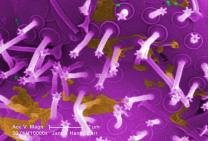
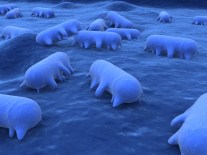
Research – Washing away stubborn biofilms using fungal cleaning products

Science Daily biofilm

Lurking inside pipes and on the surfaces of indwelling medical devices, slimy layers of bacteria, called biofilms, cause problems ranging from largescale product contamination to potentially fatal chronic infections. Biofilms are notoriously difficult to eliminate — not surprising given that one of their main functions is to protect encased bacteria from threats such as predation, antibiotics, and chemical cleaning agents.

Bleach, harsh oxidizing cleaning products, and petrochemical-derived detergents called surfactants combined with scrubbing are the most effective methods of removing biofilms. However, bleach and harsh chemicals are obviously unsuitable for use in biological settings, and while surfactants are used in products such as hand soap and cosmetics, many are toxic to the environment and can damage the surfaces that they are used on.

But in a study published this month in peer-reviewed journal Langmuir, researchers from the University of Tsukuba have found a new way of tackling biofilms, using cleaning agents derived from microbes themselves.

Kenya – Dog owners fret after losing pets to aflatoxin poisoning

The Star

Dog owners in Nairobi and Nakuru are distraught after six of their dogs died from aflatoxin poisoning in the past month.

They say their dogs started experiencing liver complications after consuming commercial dog food they had bought from supermarkets.

“We bought the same brand of dog food we have been always buying, but this time from a different supermarket. The dog food pellets consisted of maize, fish and omega-3,” Eustace, a dog owner in Loresho, said.

The dog, a pug breed, refused to eat for several days after consuming the food and subsequently developed jaundice.

“His eyes, mouth and tongue had turned yellow and he was weak. The vet came in the middle of the night to take him and later called me to say he had suffered liver damage due to aflatoxin poisoning,” Eustace said.

Research – Combination of ultraviolet light‐C and clove essential oil to inactivate Salmonella Typhimurium biofilms on stainless steel

Wiley Online

Salmonella typhimurium is able to form biofilms as a resistance mechanism against antimicrobials; therefore, it represents a problem for assuring food safety and highlights the importance of research on anti‐biofilm technologies. In this study, S. typhimurium biofilms were inactivated with the combination of clove essential oil (CEO) and ultraviolet light (UV‐C). The volatile composition of the CEO determined by gas chromatography showed eugenol as the major constituent (82%). A combination of CEO with UV‐C achieved a complete bacterial reduction (6.8 log/cm2) on biofilms with doses of 1.2 mg/ml and 76.41 mJ/cm2, respectively. Individually, the CEO at 1.2 mg/ml caused a reduction of 1.8 log CFU/cm2 of attached bacteria cells on stainless steel, while UV‐C individually used at 620.4 mJ/cm2 caused a 2.9 log CFU/cm2 reduction compared to control biofilms. In conclusion, this study demonstrated a synergistic effect of combining CEO and UV‐C irradiation to inactivate biofilms of S. typhimurium .

Research -Predictive model for growth of Salmonella Newport on Romaine lettuce

Wiley Online

Cross‐contamination of ready‐to‐eat (RTE) salad vegetables with Salmonella from raw chicken followed by growth during meal preparation are important risk factors for human salmonellosis. To better predict and manage this risk, a model (general regression neural network) for growth of a chicken isolate of Salmonella Newport (0.91 log) on Romaine lettuce (0.18 g) at times (0–8 hr) and temperatures (16–40°C) observed during meal preparation was developed with Excel, NeuralTools, and @Risk. Model performance was evaluated using the acceptable prediction zones (APZ) method. The proportion of residuals in the APZ (pAPZ) was 0.93 for dependent data (= 210) and 0.93 for independent data (= 72) for interpolation. A pAPZ ≥0.70 indicates acceptable model performance. Thus, the model was successfully validated for interpolation and can be used with confidence to predict and manage this important risk to public health.


Research – Effect of essential oils on pathogenic and biofilm-forming Vibrio parahaemolyticus strains

Tandfonline

In this study, the effect of three essential oils (EOs) – clove oil (CO), thyme oil (TO), and garlic oil (GO), which are generally recognized as safe – on the planktonic growth, minimum inhibitory concentration (MIC), minimum bactericidal concentration (MBC), motility, biofilm formation, and quorum sensing (QS) of Vibrio parahaemolyticus was investigated. All three EOs showed bacteriostatic activity, with MICs in the range 0.02%–0.09% (v/v). CO and TO completely controlled planktonic growth at 0.28% and 0.08% (v/v), which is four times their MIC (4 × MIC), after 10 min, whereas GO completely controlled growth at 0.36% (v/v) (4 × MIC) after treatment for 20 min. V. parahaemolyticus motility was significantly reduced by all three EOs at 4 × MIC (0.28% for CO, 0.08% for TO, and 0.36% for GO), whereas QS was controlled and biofilm formation reduced by all three EOs at 8 × MIC (0.56% for CO, 0.16% for TO, and 0.72% for GO) after 30 min of treatment. These results suggest that CO, TO, and GO have a significant inhibitory effect on V. parahaemolyticus cells in biofilm sand thus represent a promising strategy for improving food safety. These results provide the evidence required to encourage further research into the practical use of the proposed EOs in food preparation processes.

Research – Raw is still risky: Six years after a toddler died, Australian advocates want raw milk back on the table

Barf blog

In late 2014, three children in the Australian state of Victoria developed hemolytic uremic syndrome linked to Shiga-toxin toxin producing E. coli in unpasteurized bath milk produced by Mountain View Dairy Farm. One child died, and two others developed cryptosporidiosis.

The Victorian government quickly banned the sale of so-called bath milk, which although labeled as not fit for human consumption, was a widely recognized way for Australian consumers to access raw milk.

Research – Contamination of spinach at germination: A route to persistence and environmental reintroduction by Salmonella

ACA kswfoodworld Salmonella

The effects of using contaminated seed and water on the persistence and internalization of Salmonella Newport in organic spinach cultivars- Lazio, Space, Emilia and Waitiki were studied. Seeds were contaminated by either immersing in a suspension of Salmonella and then sprouted or were sprouted in Salmonella contaminated water in the dark at 25 °C. After 5 days, germinated sprouts were analyzed for S. Newport population and internalization. Germinated sprouts were potted in soil and grown in a plant incubator for 4 weeks. Leaves, stems and roots were sampled for Salmonella population by plating on CHROMagar™. Plants surface-sterilized with chlorine were analyzed for internalized pathogen. Potting soil and water runoff were sampled for Salmonella after 4 weeks of plant growth. Contaminated seeds and irrigation water had S. Newport populations of 7.64±0.43 log CFU/g and 7.12±0.04 log CFU/ml, respectively. Sprouts germinated using contaminated water or seeds had S. Newport populations of 8.09±0.04 and 8.08±0.03 log CFU/g, respectively and had a Salmonella population that was significantly higher than other spinach tissues (P<0.05). Populations of S. Newport in leaves, stem and roots of spinach plants were as follows: contaminated seed- 2.82±1.69, 1.69±0.86, and 4.41±0.62 log CFU/ml; contaminated water- 3.56±0.90, 3.04±0.31, and 4.03±0.42 log CFU/ml of macerated tissue suspension, respectively. Internalization was observed in plants developing from contaminated seeds and in sprouts germinated using contaminated water. S. Newport populations of 2.82±0.70 log CFU/g and 1.76±0.46 log CFU/ml were recovered from soil and water runoff, respectively. The results indicate that contamination of spinach during germination can result in persistence, internalization and environmental reintroduction of Salmonella.

Research – Escherichia coli Biofilms

Springer Link ecoli

Escherichia coli is a predominant species among facultative anaerobic bacteria of the gastrointestinal tract. Both its frequent community lifestyle and the availability of a wide array of genetic tools contributed to establish E. coli as a relevant model organism for the study of surface colonization. Several key factors, including different extracellular appendages, are implicated in E. coli surface colonization and their expression and activity are finely regulated, both in space and time, to ensure productive events leading to mature biofilm formation. This chapter will present known molecular mechanisms underlying biofilm development in both commensal and pathogenic E. coli.

Australia – Simplot Australia Pty Ltd — Leggo’s Tuna Bake with Spinach & Garlic 500g

FSANZ

Photograph of Leggos Tuna Bake

The recall is due to the incorrect pH level being detected in the sauce, which has the potential for microbial growth.

What are the hazards?

Food products with microbial contamination may cause illness if consumed.

What should consumers do?

Do not consume this product and return it to the place of purchase for a full refund.

For further information, please contact Simplot’s Consumer Information Service on 1800 061 279.

Traders who sold this product

Coles
Woolworths
IGA
Independent grocers

Where the product was sold
New South Wales
Northern Territory
Online
South Australia
Tasmania
Victoria
Western Australia
Dates available for sale
  • 21 May 2020 – 15 June 2020

Recall advertisements and supporting documentation