Category Archives: Microbiology

USA – Rochester Institute of Technology update on Norovirus Outbreak

Food Poison Journal

norovirus-1080x655

The Monroe County Department of Public Health has determined norovirus — a contagious family of viruses — is likely responsible for recent illnesses on RIT’s Henrietta campus.

The vast majority of cases were resolved within 24-36 hours without medical treatment. However, some RIT students did need care in the Student Health Center, and a few received care in a local emergency department. In response to these cases, we have substantially increased our already stringent deep cleaning and sanitization efforts on high-touch surfaces in residence halls, dining areas, restrooms, and other spaces across campus.

Even with the number of cases declining in the past few days, we all must take steps to stay safe. If you are ill, please stay home and do not attend class or go to work. Remember to wash your hands often, stay in your residence when sick, and avoid preparing food for others.
Canada – Notice not to consume smoked salmon sold by the fishmonger Marché Pêche Pêche

MAPAQ

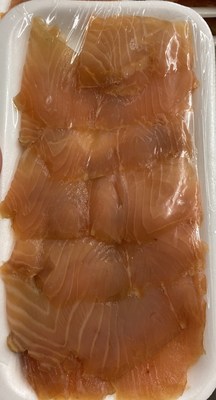
Smoked salmon (CNW Group / Ministry of Agriculture, Fisheries and Food)

WARNING TO THE POPULATION

QUEBEC, 1 st October 2021. / CNW Telbec / – The Ministry of Agriculture, Fisheries and Food (MAPAQ), in collaboration with the Division of Food Inspection of the City of Montreal and the fish Marché Pêche Pêche, located at 11686, boulevard de Salaberry, in Dollard-des-Ormeaux , advises the population not to consume the product indicated in the table below, because it has not been packaged in such a way as to ensure its safety. .

Product name

Format

Targeted lot

“SMOKED SALMON”

Variable

Units sold until September 30, 2021

The product that is the subject of this advisory has been offered for sale until September 30, 2021, and only at the establishment listed above. The product was packaged in white styrofoam trays covered with clear plastic wrap and was offered chilled. The product did not have a label.

The operator is voluntarily recalling the product in question. He agreed with the MAPAQ and the Food Inspection Division of the City of Montreal to disseminate this warning as a precautionary measure. In addition, people who have this product in their possession are advised not to consume it. They must return it to the establishment where they bought it or throw it away. Even if the affected product does not show any signs of spoilage or a suspicious odor, its consumption may represent a health risk. It should be noted that no case of illness associated with the consumption of this food has been reported to MAPAQ so far.

South Africa – South African oysters linked to illness in Hong Kong

Food Safety News

Oysters from South Africa have been linked to cases of food poisoning in Hong Kong.

The Centre for Food Safety (CFS) in Hong Kong ordered the suspension of imports of raw oysters produced by Zwembesi Farm Limited in South Africa this past week.

Six food poisoning clusters have been identified after consumption of raw oysters at one restaurant in Mong Kok and another in Tsim Sha Tsui. It is not clear what the infectious agent is or how many people are sick.

The Centre for Health Protection (CHP) previously reported it was investigating two clusters involving 11 illnesses in people that had dinner at a restaurant in Mong Kok.

New Singapore Standards for Cold Chain Management of Chilled and Frozen Food to Assure Food Safety and Quality

Click to access esg-ssc-sdo-sfa-media-release—new-singapore-standards-for-cold-chain-management-of-chilled-and-frozen-food-to-assure-food-safety-and-quality.pdf

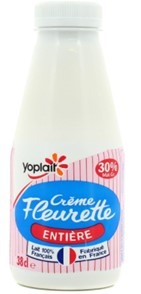
France- FLOWER CREAM 30% 38CL – Microbial Contamination

Gov france

Identifying information for the recalled product

  • Product category Food
  • Product sub-category Milk and dairy products
  • Product brand name Yoplait
  • Names of models or references FLOWER CREAM 30% 38CL
  • Product identification
    GTIN Lot Dated
    3329770062740 12-10 G1 Use-by date 10/12/2021
  • Packaging Plastic bottle – 38cl
  • Start date / End of marketing From 08/25/2021 to 09/20/2021
  • Storage temperature Product to be stored in the refrigerator
  • Health mark FR 89.263.001 CE
  • Geographical sales area Loire (42)
  • Distributors Francky Destockeur, 6 Rue Lagrange, 42270 Saint-Priest-en-Jarez

Practical information regarding the recall

  • Reason for recall Risk of microbiological contamination which may lead to alteration of sensory characteristics (odor)
  • Risks incurred by the consumer Organoleptic modifications

Research – The Use of Organic Acids (Lactic and Acetic) as a Microbial Decontaminant during the Slaughter of Meat Animal Species: A Review

MDPI

Wild ungulate species provide a much-needed protein source to many communities in developed and developing countries. Frequently, these game meat animals are slaughtered, and the meat is unknowingly contaminated by microorganisms and released to the unsuspecting public. This review investigates the global usage of organic acids (lactic and acetic acids) as microbial decontamination strategies during slaughter. The results show that there is a more open-minded approach to adopting possible decontamination plans as a tool to improve meat safety during slaughter. Developed countries continue to adopt these strategies, while developing countries are lagging behind. While decontamination of carcasses can lead to a reduction of microbial load on these carcasses, this strategy must not be seen as a replacement of hygiene management during the animals’ slaughter. View Full-Text

Research – Foodborne Botulism in Western Romania: Ten Years’ Experience at a Tertiary Infectious Disease Hospital

MDPI

Objectives: The purpose of this study was to analyze epidemiological data concerning foodborne botulism in Western Romania over the last decade. Botulism, the toxin formed by the bacterium Clostridium botulinum, results in a neuroparalytic disorder capable of severe clinical progression that begins in the cranial nerves and progressively descends. Preventing progression to a severe case entails timely diagnosis since curative assets are restricted. Ingesting food containing a preformed toxin (foodborne botulism) is the most typical form. Methods: Medical records were retrospectively analyzed from 2010 to 2020 for all food botulism cases. A seroneutralization test was performed with type A, B and E anti-botulinum sera to establish the kind of toxin involved. Results: Overall, 18 cases of foodborne botulism were admitted to the hospital during this period and confirmed by laboratory analysis. Most of the participants in our study were men (61.1%), and 77.8% of the total lived in rural areas. All the participants showed classic symptoms of botulism, and dysphagia was present in all cases. The trivalent ABE antitoxin was administered by the hospital, and toxin type B was isolated in all patients. The main sources of the toxin were pork, ham and canned pork meat. Conclusions: Stronger efforts are needed to foster community awareness of foodborne botulism, particularly in home-preserved food. View Full-Text

Research – Chemical-Based Methodologies Approaches to Extend the Shelf Life of Fresh Fish—A Review

MDPI

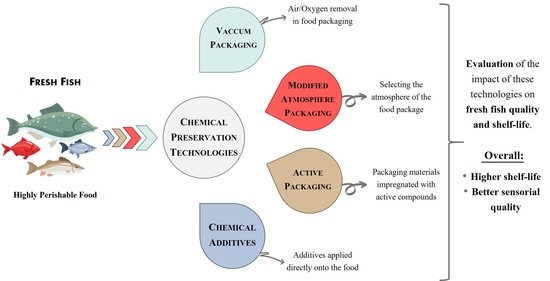
Due to its characteristics, fresh fish is a highly perishable food with a very short shelf-life under refrigeration. Several methods have been introduced to slow down its deterioration, such as by means of oxygen depletion of the food package (vacuum packaging), or by changing the natural atmosphere that is in contact with the fresh fish (modified atmosphere packaging), or by the use of chemicals generally recognized as safe: such compounds can be directly applied (by dipping or spraying) or incorporated into packaging materials and slowly migrate to the product, exerting a hurdle effect against microbial development and lipid oxidation (active packaging). This review aims to cover the most recent advances in chemical-based approaches for fresh fish preservation, applied either singly or in combination. Vacuum packaging, modified atmosphere, and active packaging preservation methodologies are presented, along with the inclusion of chemical additives, such as organic acids and natural extracts, and their combination with icing systems. Advantages and disadvantages of these methodologies and their impact on fresh fish quality and shelf-life are discussed, reaching the conclusion that both are positively influenced overall. Indeed, the contribution of chemical-based strategies for fresh fish preservation is undeniable, and is expected to be a research topic of increasing interest in the future. View Full-Text

Research – Listeria monocytogenes in a Cheese Processing Facility – Learning from Contamination Scebnarios over Three Years of Sampling

Academia Edu

The aim of this study was to analyse the changing patterns of Listeria monocytogenes contamination in a cheese processing facility manufacturing a wide range of ready-to-eat products. Characterization of L. monocytogenes isolates included genotyping by pulsed-field gel electrophoresis (PFGE) and multi-locus sequence typing (MLST). Disinfectant-susceptibility tests and the assessment of L. monocytogenes survival in fresh cheese were also conducted. During the sampling period between 2010 and 2013, a total of 1284 environmental samples were investigated. Overall occurrence rates of Listeria spp. And L. monocytogenes were 21.9% and 19.5%, respectively. Identical L. monocytogenes genotypes were found in the food processing environment (FPE), raw materials and in products. Interventions after the sampling events changed contamination scenarios substantially. The high diversity of globally, widely distributed L. monocytogenes genotypes was reduced by identifying the major sources of contamination. Although susceptible to a broad range of disinfectants and cleaners, one dominant L. monocytogenes sequence type (ST) 5 could not be eradicated from drains and floors. Significantly, intense humidity and steam could be observed in all rooms and water residues were visible on floors due to increased cleaning strategies. This could explain the high L. monocytogenes contamination of the FPE (drains, shoes and floors) throughout the study (15.8%). The outcome of a challenge experiment in fresh cheese showed that L. monocytogenes could survive after 14 days of storage at insufficient cooling temperatures (8 and 16 °C). All efforts to reduce L. monocytogenes environmental contamination eventually led to a transition from dynamic to stable contamination scenarios. Consequently, implementation of systematic environmental monitoring via in-house systems should either aim for total avoidance of FPE colonization or emphasize first reduction of L. monocytogenes to sites where contamination of the processed product is unlikely. Drying of surfaces after cleaning is highly recommended to facilitate the L. monocytogenes eradication.

Research – Biofilm Formation Ability of Arcobacter-like and Campylobacter Strains under Different Conditions and on Food Processing Materials

MDPI

kswfoodworld biofilm

Campylobacter jejuni is the most frequent cause of bacterial gastrointestinal food-borne infection worldwide. The transmission of Campylobacter and Arcobacter-like species is often made possible by their ability to adhere to various abiotic surfaces. This study is focused on monitoring the biofilm ability of 69 strains of Campylobacter spp. and lesser described species of the Arcobacteraceae family isolated from food, water, and clinical samples within the Czech Republic. Biofilm formation was monitored and evaluated under an aerobic/microaerophilic atmosphere after cultivation for 24 or 72 h depending on the surface material. An overall higher adhesion ability was observed in arcobacters. A chi-squared test showed no association between the origin of the strains and biofilm activity (p > 0.05). Arcobacter-like species are able to form biofilms under microaerophilic and aerobic conditions; however, they prefer microaerophilic environments. Biofilm formation has already been demonstrated at refrigerator temperatures (5 °C). Arcobacters also showed higher biofilm formation ability at the temperature of 30 °C. This is in contrast to Campylobacter jejuni NP 2896, which showed higher biofilm formation ability at temperatures of 5–30 °C. Overall, the results demonstrated the biofilm formation ability of many strains, which poses a considerable risk to the food industry, medical practice, and human health. View Full-Text