Category Archives: Microbiology Investigations

Mexico – At least 30 people suffered from severe food poisoning in Seyé, Yucatan

The Yucatan Times

On Sunday, June 12th, around two in the afternoon many people began to go to a private clinic located near the outskirts of the municipality of Seyé, presenting the same symptoms.

Nausea, high or low blood pressure, vomiting, and diarrhea were just some of the symptoms suffered by men, women, and children, due to the food poisoning cases that forced the municipal authorities to report the events to the Ministry of Health.

The Secretary of Public Security (SSP) transferred some people to other places for their attention, and staff from the Ministry of Health arrived in Seyé to carry out the corresponding investigations.

UK – Three dead in UK fish Listeria outbreak

Food Safety News

Three people have died in an ongoing Listeria outbreak linked to fish in the United Kingdom.

The UK Health Security Agency, Food Standards Agency (FSA), Public Health Scotland and Food Standards Scotland (FSS) are investigating the Listeria monocytogenes outbreak that was first made public in April.

Twelve patients across the UK have been identified, including three in Scotland, with onset dates of illness between October 2020 to March 2022.

Ten sick people are over the age of 65, and one is a pregnant woman. Three of those affected who are older than 65 have died.

Six people have fallen ill since January 2022. The majority of patients reported eating smoked fish.

The FSA and FSS are doing food chain and microbiological investigations including whole genome sequencing (WGS) but the cause is yet to be confirmed.

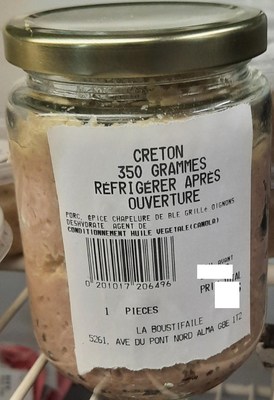
Quebec – Notice not to consume creton packaged in glass jars and sold by the company Comptoir La Boustifaille – Food Safety

Quebec

creton (CNW Group/Ministry of Agriculture, Fisheries and Food)

The Ministry of Agriculture, Fisheries and Food (MAPAQ), in collaboration with the company Comptoir La Boustifaille, located at 5261, avenue du Pont Nord, in Alma , warns the population not to consume the product indicated in the table below, because it has not been prepared and packaged in such a way as to ensure its harmlessness.

Product name

Format

Affected lot

“Creton”

350 grams

Units sold until June 13, 2022

The product that is the subject of this warning was offered for sale until June 13, 2022 at the establishment named above. The product was packaged in glass jars with a gold lid and sold chilled. The product label includes, in addition to its name, the mention “La Boustifaile” as well as the list of ingredients.

The operator is voluntarily recalling the product in question. It has agreed with MAPAQ to issue this warning as a precautionary measure. In addition, people who have this product in their possession are advised not to consume it. They must return it to the establishment where they bought it or throw it away. Even if the affected product shows no signs of tampering or suspicious odors, its consumption may represent a health risk. No case of illness associated with the consumption of this food has been reported to MAPAQ to date.

Research – Impact of chlorinated water on pathogen inactivation during wheat tempering and resulting flour quality

Journal of Food Protection

Outbreaks of enteric pathogens linked to wheat flour have led the wheat milling industry to seek solutions addressing this food safety concern. Chlorinated water at 400-700ppm has been used in the flour milling industry as a tempering aid to control growth of yeast and mold in tempering bins. However, the effectiveness of chlorinated water for inactivating enteric pathogens on wheat kernels remained unknown. Five strains of Shiga-toxin producing Escherichia coli (STEC) and two strains of Salmonella were inoculated onto hard red spring wheat at 7 log CFU/g and stored at room temperature for 1-month. Inoculated wheat was tempered with four concentrations (0, 400, 800, 1200ppm) of chlorinated water (pH 6.5). The reduction due to chlorine was determined by calculating change in cell density at each chlorine level using the response at 0ppm as a reference. Uninoculated wheat tempered with chlorinated water was used to measure flour quality parameters. Changes in pathogen density over 18 hours ranged from -2.35 to -0.30 log CFU/g with 800ppm chlorinated water and were not significantly different from changes at 400ppm and 1200ppm. Significant (p< 0.05) differences in the extent of reduction were observed among strains. However, the effect of chlorinated water at reducing native microbes on wheat kernels was minimal, with an average reduction of 0.39 log CFU/g for all concentrations. No significant (p>0.05) changes occurred in flour quality and gluten functionality, or during breadmaking for grains tempered at 400 and 800ppm chlorinated water. There were small but significant (p<0.05) changes in flour protein content, final viscosity, and water absorption when tempered with 1200ppm chlorinated water. The data showed that the level of chlorinated water currently used in industry for tempering could reduce enteric pathogen numbers by 1.22 log CFU/g for STEC and 2.29 log CFU/g for Salmonella, with no significant effects on flour quality and gluten functionality.

Research – Growth Kinetics of Listeria monocytogenes on Cut Red Cabbage

Journal of Food Protection

Listeria monocytogenes is a foodborne pathogen associated with fresh produce vectors such as leafy greens. Recent outbreaks and recalls associated with red cabbage-containing salads have brought attention to this food commodity. While data on the proliferation of L. monocytogenes is available for different varieties of white cabbage, no information is available on the fate of this pathogen on red cabbage. The aim of this study was therefore to explore the survival of L. monocytogenes on cut red cabbage (var. capitata f. rubra ) during storage at different temperatures. Red cabbage was cut into 5 × 4 cm pieces and spot inoculated with a six-strain cocktail of rifampicin-resistant L. monocytogenes , resulting in an initial inoculation level of at 4 log CFU/g. Samples were stored at 5 or 10°C for 14 d, or at 25°C for 7 d. At intervals during storage, L. monocytogenes was enumerated by homogenization of cabbage with Butterfield’s phosphate buffer (BPB), and serial dilutions were plated onto Brain Heart Infusion (BHI) agar supplemented with rifampicin. No growth of L. monocytogenes was observed on cut red cabbage during storage at 5°C, and only minimal proliferation was observed at the higher temperatures. Significant population increases of 0.83 and 1.07 log CFU/g were determined after 3 d storage at 10 and 25°C, respectively. The modeled growth rates for L. monocytogenes on cut red cabbage storage at 5 and 10°C were 0.11±0.03 and 0.27±0.07 log CFU/g per d, with calculated times to a 1 log CFU/g increase of 9.51 and 3.70 d, respectively; however, L. monocytogenes did not achieve a 1 log increase at either temperature in this study. At 25°C, the modeled growth rate of L. monocytogenes on cut red cabbage was 1.15±0.36 log CFU/g, leading to calculated and observed 1 log increases in 0.87 and 3.00 d, respectively. Results from this study aid in understand the fate of L. monocytogenes on cut red cabbage during storage at different temperatures.

Indonesia – Indonesian Masters: Organisers probe suspected food poisoning involving Malaysian, Thai players

Malay Mail

The 2022 Indonesian Masters organising committee is investigating cases of Malaysian and Thai badminton players who came down with suspected food poisoning after having breakfast at a hotel here yesterday.

A spokesman of the All Indonesia Badminton Association centre manager, Broto Happy, said they sympathised with the victims and took a serious view of the incident, which they found out through social media.

The affected players or team managers have not lodged any official reports with the organising committee so far, he said in a statement today.

After liaising with the organising committee, the Badminton World Federation (BWF) urged team managers to remind their players to be cautious when ordering food from outside the hotel or consuming certain types of food.

Meanwhile, Broto said laboratory tests showed that the players who received treatment had probably eaten unhygienic food but there was no food poisoning.

“In cases of food poisoning, the effects are immediate,” said Dr Grace Corlesa Joselini, the tournament doctor.

She said players staying at the two official tournament hotels are free to order food online or eat at nearby restaurants.

Online media reports last night said five Malaysian and Thai players had sought treatment at hospitals for food poisoning.

Research – Investigators raid Ferrero as part of Salmonella outbreak probe

Food Safety News

Authorities have searched a number of Ferrero sites as investigations continue into a large Salmonella outbreak.

Six facilities in Belgium and Luxembourg were targeted this week including the factory in Arlon which is believed to be where contaminated occurred. The Belgian food safety agency stopped production at the plant in early April but it could reopen this month.

The monophasic Salmonella Typhimurium outbreak linked to Kinder chocolate has sickened almost 450 people including 122 in the United Kingdom, 118 in France as well as four in Canada and one in the United States.

Ferrero said it was cooperating with authorities as part of the investigation.

Documents and computer hardware were seized during the operation but no arrests were made, according to the Luxembourg Public Prosecutor’s Office.

The two outbreak strains of monophasic Salmonella Typhimurium were identified in 10 of 81 samples taken in Ferrero’s Arlon plant in Belgium between December 2021 and January 2022.

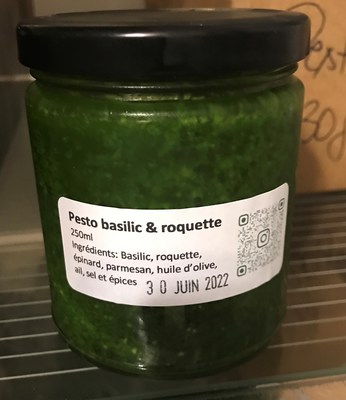
Quebec – Notice not to consume basil and arugula pesto packaged in glass jars and sold by Pastamalfi handmade inc. – Food Safety

Quebec

basil and arugula pesto (CNW Group/Ministry of Agriculture, Fisheries and Food)

The Ministry of Agriculture, Fisheries and Food (MAPAQ), in collaboration with the Food Inspection Division of the City of Montreal and Pastamalfi handmade inc., located at 6270, rue Hamilton , in Montreal, is warning the public not to consume the product indicated in the table below, because it has not been prepared and packaged in such a way as to ensure its safety. .

Product name

Format

Affected lot

“Basil & Arugula Pesto”

250ml

Units sold until June 10, 2022

The product that is the subject of this warning was offered for sale until June 10, 2022, on the Instagram account of the company named above and at the Terrone establishment, located at 124 Westminster Avenue North, Montreal West. The product was packaged in glass jars and sold chilled. The product label includes, in addition to its name, the list of ingredients.

The operator is voluntarily recalling the product in question. It has agreed with MAPAQ and the Food Inspection Division of the City of Montreal to distribute this warning as a precautionary measure. In addition, people who have this product in their possession are advised not to consume it. They must return it to the establishment where they bought it or throw it away. Even if the affected product shows no signs of tampering or suspicious odors, its consumption may represent a health risk. It should be noted that no case of illness associated with the consumption of this food has been reported to MAPAQ to date.

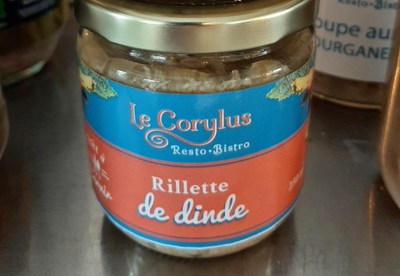
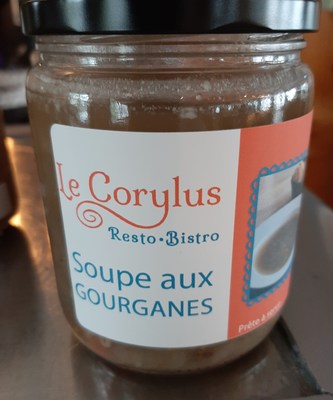
Quebec – Notice not to consume products packaged in glass jars and sold by Le Corylus Resto-Bistro (Pépinière et verger Pedneault et Frères inc.) – Food Safety

Quebec

turkey rillette (CNW Group/Ministry of Agriculture, Fisheries and Food)

fava bean soup (CNW Group/Ministry of Agriculture, Fisheries and Food)

The Ministry of Agriculture, Fisheries and Food (MAPAQ), in collaboration with Le Corylus Resto-Bistro, located at 3094, chemin des Coudriers, in Isle-aux-Coudres advises the population not to consume the products indicated in the table below, because they have not been prepared and packaged in such a way as to ensure their safety.

The products that are the subject of this warning were offered for sale until June 10, 2022, at the establishment designated above and at the Pépinière et verger Pedneault et Frères inc. , located at 3384, chemin des Coudriers, in L’Isle-aux-Coudres. They were packaged in glass jars and sold at room temperature. The label of the products includes, in addition to their name, the mention “Le Corylus Resto-Bistro”.

The operator is voluntarily recalling the products in question. It has agreed with MAPAQ to issue this warning as a precautionary measure. Also, people who have any of these products in their possession are advised not to consume it. They must return it to the establishment where they bought it or throw it away. Even if the affected products show no signs of tampering or suspicious odors, their consumption may represent a health risk. No case of illness associated with the consumption of these foods has been reported to MAPAQ to date.

Product name

Format

Affected lot

“Turkey rillettes”

250ml

Units sold until June 10,
2022

” Fava Bean Soup “

500ml

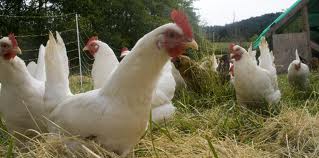
USA- CDC Media Alert: Backyard poultry contact linked to more than 200 Salmonella illnesses in 2022

CDC

Salmonella Campylobacter

A CDC investigation notice regarding multistate outbreaks of Salmonella infections has been posted: https://www.cdc.gov/salmonella/backyardpoultry-06-22/index.html

Key points:

  • CDC and public health officials in several states are investigating multistate outbreaks of Salmonella infections linked to contact with backyard poultry.
  • In total, 219 illnesses have been reported from 38 states, and 27 people have been hospitalized.
  • One in four sick people are children younger than 5 years.
  • One death has been reported from Tennessee.
  • The true number of sick people is likely much higher than the reported number, as many people recover without medical care and are not tested for Salmonella.
  • Backyard poultry can carry Salmonella germs even if they look healthy and clean. These germs can easily spread in areas where the poultry live and roam.
  • These outbreaks occur annually and coincide with the increase in baby poultry purchases, beginning in the spring. Last year in 2021, a total of 1,135 people got sick from contact with backyard poultry.
  • These Salmonella outbreaks are not related to recent cases of H5N1 bird flu viruses detected in U.S. wild birds and poultry. However, backyard poultry owners should be aware that the steps needed to stay healthy around their flocks are similar for both diseases.

Take steps to enjoy your birds while staying healthy:

  • Always wash your hands for 20 seconds after touching birds, their supplies or collecting eggs.
  • Use a pair of dedicated shoes or boots for your coop and don’t wear them inside your house.
  • Keep birds and supplies outside the house to prevent spreading germs into your house.
  • Don’t let children younger than 5 years touch the birds (including chicks and ducklings) or anything in the area where the birds live and roam. This helps protect young children from getting sick, as their immune systems are still developing,  are more likely to put items in their mouths or not wash hands fully.

About Salmonella:

  • Most people infected with Salmonella develop diarrhea, fever, and stomach cramps 6 hours to 6 days after being exposed to the bacteria.
  • The illness usually lasts 4 to 7 days, and most people recover without treatment.
  • In some people, the illness may be so severe that the patient is hospitalized.
  • Children younger than 5, adults 65 and older, and people with weakened immune systems are more likely to have severe illness.

If you have questions about cases in a particular state, please call that state’s health department.