Category Archives: Microbial growth

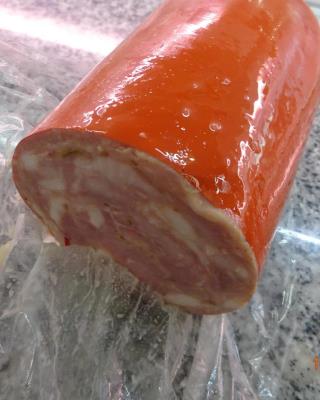
Czech Republic – Polish salami – Microbial Activity

Potravinynapranyri

Illustrative photo #1

Place of inspection:
Tanvald ( Sports 557, 468 41 Tanvald )
ID: 64913864
Invalid parameter:

appearance
scent
changes caused by microbial activity

The food smelled of spoilage and had a slimy and sticky surface. Food is not considered safe if it shows signs of spoilage. The food had an unknown expiration date.

Packaging: intestine (open technological package)
Date of sample collection: 14/08/2024
Reference number: 24-000481-SZPI-CZ
The sample was detected by the official control of the State Agricultural and Food Inspection

USA – USDA Food Safety and Inspection Service Microbiology Laboratory Guidebook Update

USDA

View the Guidebook here.

Research -Guidelines for assessing the microbiological safety of ready-to-eat foods placed on the market – 2024

UKHSA

These guidelines were completed in 2024. Since the previous edition in 2009 (1), the UK has
left the EU and this has resulted in transfer of legal responsibility from EU to UK legislation
through Statutory instruments, particularly The Food and Feed Hygiene and Safety
(Miscellaneous Amendments) (England) Regulations 2020: UK Statutory Instrument 2020
Number 1410 (2). The statutory instruments refer to EU legislation, and much remains the same or very similar such as legal obligations for food safety of food business operators and
microbiological criteria. EU references have been updated to reflect the law in force, in all new or amended guidance published since the transition.

RASFF Alert- Microbiological Growth – Enchilada/Salsa sauce

RASFF

Microbiological growth in Enchilada/Salsa sauce from Netherlands in Denmark, Germany, Norway and Sweden

Research – Microbial Diversity Across Tea Varieties and Ecological Niches: Correlating Tea Polyphenol Contents with Stress Resistance Microbial Community Differences among Different Tea Varieties and Ecological Niches

Frontiers In.org

Microorganisms exhibit intricate interconnections with tea trees plants; however, despite the well-established role of microorganisms in crop growth and development, research on microbes within the tea plant remains insufficient, particularly regarding endophytic microorganisms. In this study, we collected samples of leaves and rhizosphere soils were collected from ‘Zhuyeqi’, ‘Baojing Huangjincha#1Baojing Huangjinchayihao’, ‘Anjibaicha’Baiye#1’, and ‘Jinxuan’ varieties planted. Our analyses revealed significant variations in tea polyphenol contents among tea varieties, particularly with the ‘Zhuyeqi’ variety exhibiting higher levels of tea polyphenols (>20% contents). Microbiome studies have revealed that endophytic microbial community in tea plants exhibited higher host specificity compared to rhizospheric microbial community rhizosphere microbial community. Analyses of across-ecological niches of the microbial community associated with tea plants of the microbiota associated with tea plants revealed that soil bacteria serve as a significant reservoir for endophytic bacteria in tea plants, Balneola Bacillus may play a crucial role in shaping the bacterial community across-ecological niche within the tea plants with higher tea polyphenol levels. In the aforementioned analyses, the microbial community of ‘Zhuyeqi’ exhibited a higher degree of host specificity for leaf endophytic microorganisms, the topological structure of the co-occurrence network is also more intricate, harbouring a greater number of potential core microorganisms within its nodes. A closer examination was conducted on the microbial community. A more intricate examination was conducted on the microbial community of ‘Zhuyeqi’, further analyses of its endophytic bacteria indicated that its endophytic microbial community harbored a greater abundance of biomarkers, particularly among bacteria, and the enriched Methylobacterium and Sphingomonas in ‘Zhuyeqi’ may play distinct roles in disease resistance and drought resilience in tea plants. In summary, this study has shed light on the intricate relationships of tea plant varieties with their associated microbial communities, unveiling the importance of microorganisms and tea varieties with higher tea polyphenols, and offering valuable insights to the study of microorganisms and tea plants. this study shaded light on the intricate relationship between tea plant varieties and their associated microbial community and unveiled the importance of the tea varieties with higher tea polyphenols in microbial studies, offered valuable insights for the studies of microorganism-tea plants.

Canada – Irresistibles brand Roasted Garlic – Caesar Aïoli recalled due to possible bursting bottles – Microbial Contamination

Gov Canada

Product
Roasted Garlic – Caesar Aïoli
Issue
Food – Microbial Contamination
What to do

Do not use, sell, serve or distribute the affected product.

Audience
Retail
Distribution
Ontario

Issue

Irresistibles brand Roasted Garlic – Caesar Aïoli recalled due to possible bursting bottles.

Research – Microbial community structure of plant-based meat alternatives.

Nature

A reduction in animal-based diets has driven market demand for alternative meat products, currently raising a new generation of plant-based meat alternatives (PBMAs). It remains unclear whether these substitutes are a short-lived trend or become established in the long term. Over the last few years, the trend of increasing sales and diversifying product range has continued, but publication activities in this field are currently limited mainly to market research and food technology topics. As their popularity increases, questions emerge about the safety and nutritional risks of these novel products. Even though all the examined products must be heated before consumption, consumers lack experience with this type of product and thus further research into product safety, is desirable. To consider these issues, we examined 32 PBMAs from Austrian supermarkets. Based on 16S rRNA gene amplicon sequencing, the majority of the products were dominated by lactic acid bacteria (either Leuconostoc or Latilactobacillus), and generally had low alpha diversity. Pseudomonadota (like Pseudomonas and Shewanella) dominated the other part of the products. In addition to LABs, a high diversity of different Bacillus, but also some Enterobacteriaceae and potentially pathogenic species were isolated with the culturing approach. We assume that especially the dominance of heterofermentative LABs has high relevance for the product stability and quality with the potential to increase shelf life of the products. The number of isolated Enterobacteriaceae and potential pathogens were low, but they still demonstrated that these products are suitable for their presence.

Research – Microbiological Risks of Traditional Raw Cow’s Milk Cheese (Koryciński Cheeses)

MDPI

Abstract

Traditional and regional foods have been increasing in popularity among consumers in Poland for many years. The observed trend of searching for natural and authentic taste encourages many producers to craft products from raw milk, including Koryciński cheeses. The aim of this study was to assess the microbiological hazards resulting from the presence of pathogenic bacteria in Koryciński cheeses available in retail trade. The tests were carried out using accredited methods, including the detection of the presence of Salmonella spp., the enumeration of Listeria monocytogenes, the enumeration of coagulase-positive staphylococci, and the detection of staphylococcal enterotoxins in food when the number of coagulase-positive staphylococci in the sample exceeded the limit of 105 cfu/g. The research material consisted of 45 Koryciński cheeses. The tests conducted revealed that Salmonella spp. was not detected in any of the examined cheeses. However, coagulase-positive staphylococci were present in 68.9% of the samples. In as many as 15 tested cheeses, the level of S. aureus contamination was above 105 cfu/g; therefore, these samples were tested for the presence of staphylococcal enterotoxins. The presence of staphylococcal enterotoxins was found in one Koryciński cheese. In four cheeses, the number of L. monocytogenes exceeded the level of 102 cfu/g, the limit specified in Regulation 2073/2005 on microbiological criteria for foodstuffs. The obtained research results confirm the validity of monitoring the microbiological quality of Koryciński cheeses and the need to increase awareness of ensuring proper hygienic conditions of production, including the increased risk associated with unpasteurized milk products.

Research – Changes in the Quality and Microbial Communities of Precooked Seasoned Crayfish Tail Treated with Microwave and Biological Preservatives during Room Temperature Storage

MDPI

Abstract

The qualities of precooked foods can be significantly changed by the microorganisms produced during room temperature storage. This work assessed the effects of different antibacterial treatments (CK, without any treatment; microwave treatment, MS; microwave treatment and biological preservatives, MSBP) on the physicochemical properties and microbial communities of precooked crayfish tails during room temperature storage. Only the combination of microwave sterilization and biological preservatives significantly inhibited spoilage, as evidenced by the total viable count (4.15 log CFU/g) after 3 days of room temperature storage, which satisfied the transit time of most logistics companies in China. Changes in pH and TVB-N were also significantly inhibited in the MSBP group compared with those in the CK and MS groups. More than 30 new volatile compounds were produced in the CK groups during room temperature storage. However, in the MSBP groups, the volatile compounds were almost unchanged. The correlations between the microbial composition and volatile compounds suggested that specific bacterial species with metabolic activities related to amino acid, energy, cofactor, and vitamin metabolism, as well as xenobiotics biodegradation and metabolism, were responsible for the changes in volatile compounds. These bacteria included Psychrobacter, Arthrobacter, Facklamia, Leucobacter, Corynebacterium, Erysipelothrix, Devosia, Dietzia, and Acidovorax. Overall, our findings provide a foundation for the development of strategies to inhibit spoilage in precooked crayfish tails stored at room temperature.

Denmark Update – Outbreak of invasive Listeria infection sequence type 1607

SSI

The Statens Serum Institut is currently investigating a protracted disease outbreak with Listeria monocytogenes in collaboration with the Danish Veterinary and Food Administration and the Norwegian Food Institute DTU

A total of 17 people have been infected with the same type of listeria since the summer of 2019 (figure 1). The patients are 13 women and 4 men with a median age of 73 years, with one patient in their 20s and four in their 80s. The patients live throughout the country (table 1). All have been hospitalized. Two people have died within 30 days of detection of the infection.

The outbreaks are handled by the Central Outbreak Group, which consists of SSI, the Danish Veterinary and Food Administration and the DTU Food Institute. SSI stands for whole-genome sequencing of patients’ listeria isolates and interviews with patients or relatives with a view to identifying a possible source of infection. Since there are also people abroad who have become ill with listeria sequence type 1607, the international authorities are working on an international overview.