Category Archives: microbial contamination

RASFF Alert- Bombage and microbiological deviations – canned peeled tomatoes

RASFF

Bombage and microbiological deviations in canned peeled tomatoes from Italy in Germany

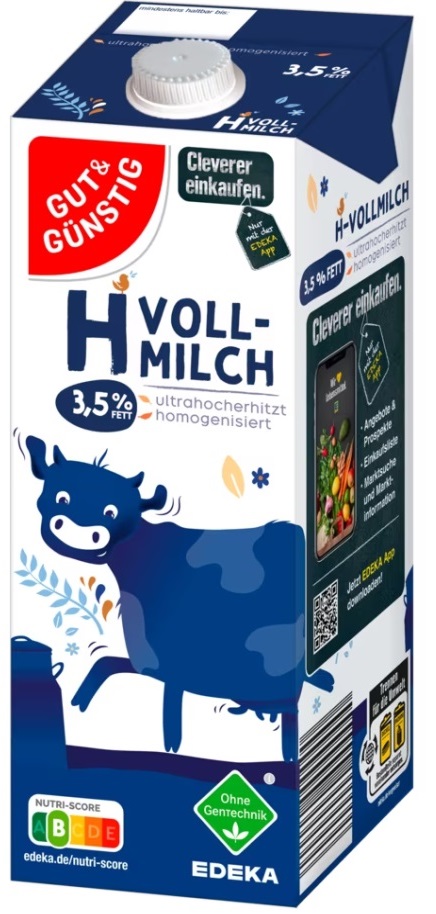
Germany – “GUT&GÜNSTIG H-whole milk 3.5% fat (1 liter)” best before date 03/27/24, health label DE BW 010 EG – Microbiological Contamination

Lebensmittelwarnung

Alert type:

Groceries

Date of first publication:

12/04/2023

Product name:

“GUT&GÜNSTIG H-whole milk 3.5% fat (1 liter)” best before date 03/27/24, health label DE BW 010 EG

Product images:

Image_HMilch.jpg
Manufacturer (distributor):

Manufacturer: Hohenloher Molkerei eG Sales: at regional level in individual EDEKA stores and Marktkauf in Baden-Württemberg, Bavaria, Hesse, Saxony and Thuringia

Reason for warning:

Microbiological contamination was detected during routine checks. It cannot be ruled out that the milk becomes thick and sour and that health problems may occur if consumed.

Packaging Unit:

1 liter

Durability:

Best before: March 27, 2024

Research -Improvement of Microbial Quality, Physicochemical Properties, Fatty Acids Profile, and Shelf Life of Basa (Pangasius bocourti) Fillets during Chilling Storage Using Pepsin, Rosemary Oil, and Citric Acid

MDPI

Abstract

Meat discoloration, lipid oxidation, and undesirable texture are inevitable phenomena in basa fish fillets during storage, which in turn limits their exportation as well as decreases consumer acceptability. In addition, increasing consumers’ requirements for high-quality, minimally processed, and ready-to-cook fish fillets with an extended shelf-life is a great challenge, particularly with lifestyle changes. Accordingly, this study aimed to improve the quality, lipid stability, fatty acid profile, and lipid nutritional quality indices (LNQI) of basa fish fillets during chilling storage at 4 °C for 15 days using pepsin enzyme (E, 0.1%), rosemary oil (R, 0.5%), citric acid (CA, 0.5%), and their combination (0.1% E + 0.5% R; 0.1% E + 0.5% CA; and 0.1% E + 0.5% R + 0.5% CA). Our results revealed that all treated samples exhibited a significant increase in protein content, a significant decrease in fat content, and a marked reduction in pH, total volatile base nitrogen (TVBN), thiobarbituric acid (TBA), free fatty acids, and shear force (SF) values in comparison to control ones. Moreover, significant improvements in sensory scores, color stability, fatty acid profile, LNQI, and microbial quality of all treated samples were observed. Such findings were more pronounced in samples treated with a mixture of pepsin, rosemary, and citric acid (TVBN: 2.04 vs. 6.52 mg%; TBA: 0.40 vs. 2.68 mg malonaldehyde/Kg; and SF: 8.58 vs. 19.51 Kgf). Based on the obtained results, there was an extension for the shelf life of all treated basa fish fillet samples, especially in samples treated with a mixture of pepsin, rosemary, and citric acids when compared with the control samples (˃15 days versus 10 days). Additionally, eucalyptol, camphor, isoborneol, and α-pinene are the main components of rosemary, with great antioxidant and antimicrobial activity. In conclusion, the mixture of pepsin, rosemary, and citric acid can be applied easily in the seafood industry and at the household level to provide ready-to-cook fish fillets of high quality with great health benefits.

Research – Sage Essential Oil as an Antimicrobial Agent against Salmonella enterica during Beef Sous Vide Storage

MDPI

Abstract

Sous-vide is a process comprising vacuum-sealing food, heating it to the desired temperature, and circulating it in a water bath in a sous vide machine. This cooking technique is increasingly common in homes and catering establishments due to its simplicity and affordability. However, manufacturers and chef’s recommendations for low-temperature and long-term sous-vide cooking in media raise food safety concerns, particularly when preparing beef tenderloin. In this study, Salmonella enterica was found to be inactivated by heat and sage essential oil (EO) in beef samples from musculus psoas major that had been sous vide processed. To determine whether heat treatment was likely to increase the sous vide efficiency, Senterica and sage EO were mixed. After being vacuum-packed and injected with S. enterica, the samples were cooked at 50–65 °C through the sous vide technique for the prescribed time. On days 1, 3, and 6, the amounts of S. enterica, total bacteria, and coliform bacteria were measured in the control and treated groups of beef processed sous vide. Mass spectrometry was used to identify bacterial isolates on different days. On each day that was measured, a higher number of all the microbiota was found in the samples exposed to 50 °C for 5 min. The most frequently isolated microorganisms from both groups of samples were Pseudomonas fragi (17%), Pseudomonas cedrina (8%), and Proteus vulgaris (8%); in the treated group, also S. enterica (21%), Pseudomonas fragi (13%), and Pseudomonas veronii (6%). After the heat treatment of samples at 65 °C for 20 min, the total count of bacteria and coliform bacteria was zero. It has been shown that adding sage essential oil (EO) in combination with sous vide processing technique leads to the stabilization and safety of beef tenderloin.

USA – Norovirus outbreak linked to $1 burrito special for Northwestern University students

CBS News

The Evanston Health and Human Services Department warned Wednesday that it was tracking a norovirus outbreak linked to the burrito special.

The department is investigating the outbreak along with Northwestern University. Investigators have learned that people reported stomach cramps, vomiting, and diarrhea after eating at Big Wig Tacos & Burritos during an event on Saturday, Nov. 18, at which the restaurant offered $1 burritos to students from the university.

The event was held between 1 p.m. and 8 p.m. this past Saturday. Big Wig Tacos & Burritos has a location at 950 Church St. in downtown Evanston.

USA- Method Update ; BAM Chapter 29: Cronobacter

FDA

Revision History

  • November 2023:
    1) Removed the use of SmartCycler for qPCR.
    2) Removed the requirement to perform qPCR without IAC and to perform qPCR on two aliquots per sample.
    3) Updated the 7500 software version.
    4) Added ROX to the qPCR assay and revised the 7500 FAST analysis settings on threshold and baseline.
    5) Revised the stock concentrations and volumes of each qPCR component without changing their final concentrations.
    6) Added extra wash buffer to the pellet to improve the quality of the resultant DNA extract.
    7) Added temperature and time tolerance ranges for incubation of enrichment and agars.
    8) Added optional use of CCI agar and ESIA agar incubated at their respective temperatures as well as R&F agar incubated at 41.5°C.
    9) Added more figures and detailed phenotype description of the colony morphologies on different agars.
    10) Removed the option to use RAPID ID 32E for cultural confirmation.
    11) Revised the chapter with updated nomenclature of Cronobacter and non-Cronobacter species.
    12) Updated other part of the chapter to improve clarity and to provide detailed instructions with additional texts and figures.
  • April 2012: Sections D.1.a, D.1.b, D.2.3; Correction: The fluorescence is recorded at the end of each annealing step, not at the end of each extension step.
  • March 2012: New Chapter (This chapter has replaced the method for Isolation and Enumeration of Enterobacter sakazakii from Dehydrated Powdered Infant FormulaExternal Link Disclaimer.

World – Nearly 150 sick in Salmonella outbreak affecting 11 countries

Food Safety News

Eleven countries, including the United States, have recorded almost 150 Salmonella infections that could be linked to tomatoes.

Since January 2023, 149 cases of Salmonella Strathcona have been reported. Germany has the most patients, with 47, while Italy has 34. Most people fell sick between August and October.

The U.S. has eight cases. Six interviewed sick people had been to Spain, Italy, Croatia, France, and Slovenia. Four patients reported travel to Italy.

Austria has 17 cases, the Czech Republic and the United Kingdom have 13, and France has nine. Other affected countries are Finland, Denmark, Luxembourg, and Norway.

Read more at the link above

Italy – Clams – VONGOLE VERACI – Microbiological Risk

Salute

Brand : CAM srl

Name : VONGOLE VERACI

Reason for reporting : Recall due to microbiological risk

Publication date : 20 November 2023

Documentation

Documentation

Wales – Egg firm fined for Salmonella testing failure

Food Safety News

An unnamed egg producer has been fined in Wales for not following Salmonella testing rules.

In September 2023, a case was brought by the Welsh Government against an egg company for non-compliance with Salmonella testing legislation for laying hens.

Not following these requirements is a criminal offence under the Eggs and Chicks (Wales) Regulations 2010.

The business was fined £1,000 ($1,220) and ordered to pay a £100 ($122) victim surcharge. They were also told to pay £2,121 ($2,600) for prosecution costs.

Canada – HO-YA brand Naturally Brewed Soy Sauce recalled due to bursting lids

CFIA

Naturally Brewed Soy Sauce
Issue
Food – Microbial Contamination
What to do

Do not use, sell, serve or distribute the affected product.

Audience
Retail
Distribution
Alberta
New Brunswick
Newfoundland and Labrador
Nova Scotia
Ontario
Quebec

Issue

HO-YA brand Naturally Brewed Soy Sauce recalled due to bursting lids.