Category Archives: microbial contamination

Research – Multistate Outbreak of Salmonella Thompson Infections Linked to Seafood Exposure — United States, 2021

CDC

In July 2021, the Colorado Department of Public Health and Environment (CDPHE) laboratory identified a cluster of five Salmonella enterica serotype Thompson isolates related to one another within one allele difference, using whole genome multilocus sequence typing (wgMLST). These five isolates, submitted to the public health laboratory as is routine process for confirmatory testing of Salmonella, were highly related to those identified in a 2020 multistate investigation, during which traceback was conducted for sushi-grade tuna and salmon; a common supplier was not identified. The 2021 investigation commenced on August 5, 2021, with five patients living in Colorado, and one each in Missouri, Washington, and Wisconsin. During August–December 2021, CDC, CDPHE, public health and regulatory officials in several states, and the Food and Drug Administration (FDA) conducted epidemiologic, environmental, and laboratory investigations of this multistate outbreak of Salmonella Thompson. Isolates were genetically related to one another and to 2020 isolates within zero to one allele difference. Implicated seafood products were traced to a single seafood distributor, in which the outbreak strain was identified through environmental sampling, and in which inspection identified inadequate sanitization and opportunities for cross-contamination of raw fish. The distributor issued a voluntary recall of 16 seafood items with high potential for contamination and completed remediation actions. This outbreak illustrated the importance of effective cleaning and sanitizing procedures and implementation of controls. When multiple products are recalled during an outbreak investigation, collaboration between public health agencies and implicated facilities can help provide food safety information to restaurants, retailers, and consumers, and to ensure disposal of all recalled products.

Italy – Snack & Vai MORTADELLA AND TARALLINI DISKS – Microbiological Risk

Salute

rand : Casa Modena

Name : Snack & Vai MORTADELLA AND TARALLINI DISKS

Reason for reporting : Recall due to microbiological risk

Date of publication : 18 May 2023

Documentation

Documentation

USA – Dave’s Sushi to reopen after sickening 50 with 2 dead – Morel Mushrooms suspect

Food Poison Journal

Gallatin City-County Health Department Rescinds Closure Order and Institutes New Health Officer Order with Corrective Actions Required Prior to Dave’s Sushi Reopening

Since being ordered to close on April 20, 2023, food samples – including salmon and morel mushrooms – from Dave’s Sushi have been collected and analyzed. To date, all samples have come back negative for a series of pathogens and toxins. A thorough investigation led by the Gallatin City-County Health Department, with support from the Montana Department of Public Health and Human Services (DPHHS), the Centers of Disease Control and Prevention (CDC), and the Food and Drug Administration (FDA), is still ongoing and it is known that this investigation may not be able to identify a specific pathogen/toxin as a source of the outbreak that impacted 50 people. Three individuals had severe outcomes, including hospitalizations, and the deaths of two individuals are being investigated after eating at the restaurant. The manner and cause of death for these two individuals will remain pending until autopsy and toxicology results are available.

RASFF Alerts – Animal Feed – Wheat Bran Pellets – Beet Pulp – Post Extraction Sunflower Meal – Sunflower Meal

RASFF

Wheat bran pellets for feed with molds and moisture from Angola in Portugal

RASFF

Wheat bran pellets for feed with molds and moisture from Angola in Portugal

RASFF

Mould in feed – post-extraction sunflower meal from Ukraine in Poland

RASFF

Mold in post-extraction sunflower meal from Ukraine in Poland and Lithuania

RASFF

Mold in post-extraction sunflower meal from Ukraine in Poland and Lithuania

RASFF

Mold in post-extraction sunflower meal from Ukraine in Poland

RASFF

Mould in sunflower meal from Ukraine in Poland and Lithuania

RASFF

Wheat bran pellets for animal feed with molds and moisture -Angola in Portugal

RASFF

Wheat bran pellets for animal feed with molds and moisture -Angola in Portugal

RASFF

Wheat bran pellets for animal feed – Angola in Portugal

RASFF

Wheat bran pellets for animal feed with molds and moisture from Angola in Portugal

RASFF

Mold in beet-pulp from Ukraine in Poland

RASFF Alert – Animal Feed – Salmonella – Rapeseed Expeller

RASFF

Salmonella in rapeseed expeller from Russia in Belgium, France and the Netherlands

Hong Kong – Food Safety Focus – Bacteria in Raw Meat vs Cooked Meat

CFS

Recently, bacterial contamination of meat has attracted public attention. According to the World Health Organization, contamination of food by microbiological agents is a worldwide public health concern; and most countries have documented significant increases over the past few decades in the incidence of diseases caused by microorganisms in food. In this article, we will introduce some factors that determine the growth of bacteria in food, and discuss the different food safety considerations for bacteria in raw meat and cooked meat and the measures to reduce risks of food poisoning caused by bacteria.

Factors Determining the Growth of Bacteria in Food

Bacteria grow best when intrinsic and extrinsic properties are optimal for their growth. Intrinsic properties are the properties that are inherent parts of the food, such as pH and water activity, while extrinsic properties are the properties of the environment in which the food is stored, such as temperature. Water activity is not the same as the moisture content of the food but is a measure, ranging from 0 to 1, of the availability of water in food which determines the growth and survival of bacteria. By controlling these factors (e.g. controlling the storage temperature of the food), bacterial overgrowth can be prevented.

USA – Cyclospora outbreak in Georgia prompts public health alert

Food Safety News

Officials in Georgia are investigating an outbreak of cyclospora infections in the northwest part of the state.

The Georgia Department of Public Health Northwest Health District has not released any numbers, but it is urging people with symptoms of cyclospora infection to seek medical treatment and report any confirmed infections to local public health officials.

Georgia public health officials say their investigation is ongoing and the number of cases is expected to increase.

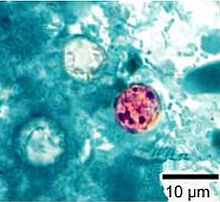
Cyclosporiasis causes an illness that can result in prolonged gastrointestinal distress, including watery diarrhea with frequent, sometimes explosive, bowel movements that can last for weeks. In severe cases, cyclospora infection can require hospitalization.220px-Cyclospora_cayetanensis_stained

Hong Kong – Bacteria and viruses that cause food poisoning

CFS

In a nutshell: Bacteria and viruses are the most common causative agents of foodborne illnesses. Bacteria grow rapidly in foods that are warm, rich in moisture or protein and low in acidity. Milk, shell eggs, poultry, fish, meat and shellfish are common foods susceptible to bacteria growth. Although viruses cannot grow in food or water, a small number of viral particles can cause sickness when consuming the contaminated food.

Information on some of the most common bacteria and viruses that cause foodborne illnesses is provided below:

Norway tests flour for STEC; issues warning about Prime beverages

Food Safety News

Norwegian surveillance has found a low level of flour samples positive for Shiga toxin-producing E. coli (STEC).

The Norwegian Food Safety Authority (Mattilsynet) commissioned a survey of STEC in wheat flour to gather data on the problem.

A total of 151 samples of flour were collected from retailers in 2021 and analyzed in 2022. Enriched samples were examined for the presence of selected genetic markers. Attempts to isolate STEC were carried out from samples that were positive for Shiga toxin (stx) 1 and/or stx2. Isolates identified as STEC were further characterized using whole genome sequencing.

Research – Six E. coli infections linked to fermented raw milk

Food Safety News

Five people are sick in France, two seriously, and one in Belgium after drinking a brand of raw fermented milk.

In France, four children and one adult have been infected by Shiga toxin-producing E. coli (STEC) O26:H11. They fell ill between the end of March and the beginning of April this year.

Santé publique France has been investigating two cases of Hemolytic Uremic Syndrome (HUS) in the Hauts-de-France and Île-de France regions. The latter was in the context of a family outbreak. The suspected food was fermented raw milk. HUS is a severe complication associated with E. coli infections that causes kidney failure.

“The sequencing of the strains isolated within these outbreaks confirmed the same genomic profile. Food investigations made it possible to identify, for the case in Hauts-de-France, the place of purchase and to sample milk on sale at the time of the inspections. It was fermented raw milk made in Belgium,” agency officials told Food Safety News.