Category Archives: Marine Biotoxin

France – Product recall: Medium shells sold at retail – ASP Toxins

Oulah

Product recall: Medium shells sold at retail

ENCOUNTERED PROBLEM

ASP marine biotoxins (amnesia toxins)

PROPOSED SOLUTION

Do not consume and bring back to the point of sale.

Food poisoning caused by these toxins results in digestive disorders (vomiting, abdominal pain, diarrhea) within 2 to 24 hours of ingestion of the contaminated shellfish. These disorders may be followed by feelings of dizziness, persistent headaches, disorientation, and possibly recent memory loss.

FURTHER INFORMATION


▸ Start date / End of marketing
Since 05/11/2021


▸ Health mark
FR.29.158.500.CE


▸ Distributors
CARREFOUR LECLERC POMONA POISSONNERIES – INDEPENDENT MARKETS


▸ Source
FURIC MAREE

UK – Northern Ireland – Consultation on the rationalisation of official control shellfish biotoxin and phytoplankton monitoring points in Carlingford Lough

FSA

Northern Ireland specific
Consultation seeking stakeholders’ views on the proposed rationalisation of biotoxin and phytoplankton monitoring in Carlingford Lough and the implementation of Representative Monitoring Points (RMPs) and Associated Harvesting Areas (AHAs).

Who will this consultation be of most interest to?

Carlingford Lough shellfish harvesters, enforcement authorities, official control sampling officers, official control testing laboratories and other interested stakeholders.

Consultation subject

A proposal by the Food Standards Agency (FSA) to rationalise the number of official control monitoring points for biotoxin and phytoplankton monitoring in Carlingford Lough and introduce Representative Monitoring Points (RMPs) and Associated Harvesting Areas (AHAs) .

Purpose of the consultation

To seek comments from industry, enforcement authorities, and other interested stakeholders on the proposed rationalisation of biotoxin and phytoplankton monitoring in Carlingford Lough and the implementation of RMPs and AHAs.

Consultation Pack

How to respond

Responses to this consultation should be emailed or posted to the addresses below:

Email: executive.support@food.gov.uk

Postal address:

Food Standards Agency in Northern Ireland
Executive Support Unit
10a-c Clarendon Road, Belfast
Co Antrim
BT1 3GB

Research – Effect of food matrix type on growth characteristics and hemolysin production of Vibrio alginolyticus

Journal of Food Protection

Food Illness

The growth and hemolysin production of two V.   alginolyticus  strains (HY9901 and ATCC17749T) at 30 °C in briny tilapia, shrimp, scallop, oyster, pork, chicken, freshwater fish and egg fried rice were investigated. Bacterial counts were enumerated by plate counting. Hemolysin production was evaluated by blood agar and hemolytic titer tests. The two V.   alginolyticus  strains displayed similar growth and hemolysin production patterns in the foods. Based on the goodness of fit primary model statistics (R 2 , MSE, BF, AF), the modified Gompertz model was a better fit to V.   alginolyticus  growth in foods than the logistic model. Growth kinetic parameters of V.   alginolyticus  displayed a higher μ max and shorter λ in briny tilapia > shrimp > freshwater fish > egg fried rice > scallop > oyster > chicken > pork. It was notable that the V.   alginolyticus  counts were similar at the stationary phase, with no significant growth behavior difference between raw and cooked foods. Significantly higher (p < 0.05) thermostable direct hemolysin (TDH) activity was produced by V.   alginolyticus  in briny tilapia > freshwater fish > shrimp > chicken > egg fried rice > scallop > oyster > pork. But the hemolytic titer was not consistent with the TDH activity, being significantly higher (p < 0.05) in briny tilapia > egg fried rice > shrimp > freshwater fish > chicken > scallop > oyster > pork. Contrary to current belief, V.   alginolyticus  displayed a higher hemolysin production in some non-seafoods (freshwater fish, egg fried rice and chicken) than in scallop or oyster. This is the first report of growth and toxicity of V. alginolyticus  in different food matrices and confirmation that some non-seafood contaminated with V. alginolyticus  can be even more pathogenic. This study will enhance the awareness of non-seafood safety and improve the V.   alginolyticus  risk assessment accuracy.

Research – Ciguatera fish poisoning on the rise.

Saipan Tribune

The Commonwealth Healthcare Corp. has lately seen an increase in ciguatera fish poisoning cases due to the consumption of various shallow- to deep-water bottom fish and has warned the public to avoid eating fish larger than about 4-6 lbs.

Ciguatera fish poisoning, or CFP, is a common food-borne illness related to the consumption of certain species of fish that have been contaminated with plankton (algae) derived toxin associated with coral reefs. The ciguatera toxin is non-detectable as it does not harm the fish and is unrecognizable when consumed. Unlike other food-borne illnesses, CFP is not transferred from cross-contamination due to inadequate food handler hygiene, food preparation, cooking, handling, and storage. In addition, the ciguatera toxin can withstand cooking and freezing temperatures and is not preventable if the fish species already harbors the toxin.

USA – Certain Dungeness crabs recalled because of poisoning risk -Domoic Acid – Amnesic Shellfish Poisoning

Food Safety News

The Quinault Tribe of the Northwestern United States is voluntarily recalling almost 58,000 pounds of live or un-eviscerated Dungeness crab because of possible domoic acid contamination, which can cause amnesic shellfish poisoning in people. 

With Dungeness crab being a popular New Year’s dish, public health officials in Washing state posted the recall notice today in hopes of reaching holiday cooks before meals are prepared. It is not clear how far the crab may have been distributed.

Domoic acid is a naturally occurring toxin produced by certain types of algae and can be harmful to humans if contaminated shellfish is consumed. 

Domoic acid can cause amnesic shellfish poisoning (ASP) with symptoms including vomiting, nausea, diarrhea, and abdominal cramps within 24 hours of ingestion. In severe cases, ASP can cause permanent short-term memory loss.

RASFF Alerts – DSP – Diarrhoeic Shellfish Poisoning – Canned Cockles

European Food Alerts

RASFF

Diarrhoeic Shellfish Poisoning (DSP) toxins – okadaic acid (> 320 µg/kg – ppb) in live cockles used in canned cockles from Portugal in Spain

Research – New file of the Map of dangers on the ciguatera

ACSA

In the Hazard Map database we have added in the group of chemical hazards, such as marine toxins, the ciguatera.

Fish poisoning called ciguatera or ciguatera fish poisoning (CFP) occurs because they have ingested a large amount of ciguatoxin-producing algae: these are benthic dinoflagellates of the genus Gambierdiscus spp .

Cytokines (CTXs) accumulate in the fish that ingest them directly (rockfish) or in their predators, where this accumulation reaches higher levels.

New Zealand – Shellfish biotoxin alert – Northland west coast

MPI

The Ministry for Primary Industries today issued a public health warning against collecting shellfish on the Northland west coast from Waipapakauri on 90 Mile Beach, south to Pouto Point on the northern head of the Kaipara Harbour. This includes the Herekino, Whangape and Hokianga Harbours. Warning signs will be posted in the coming days.

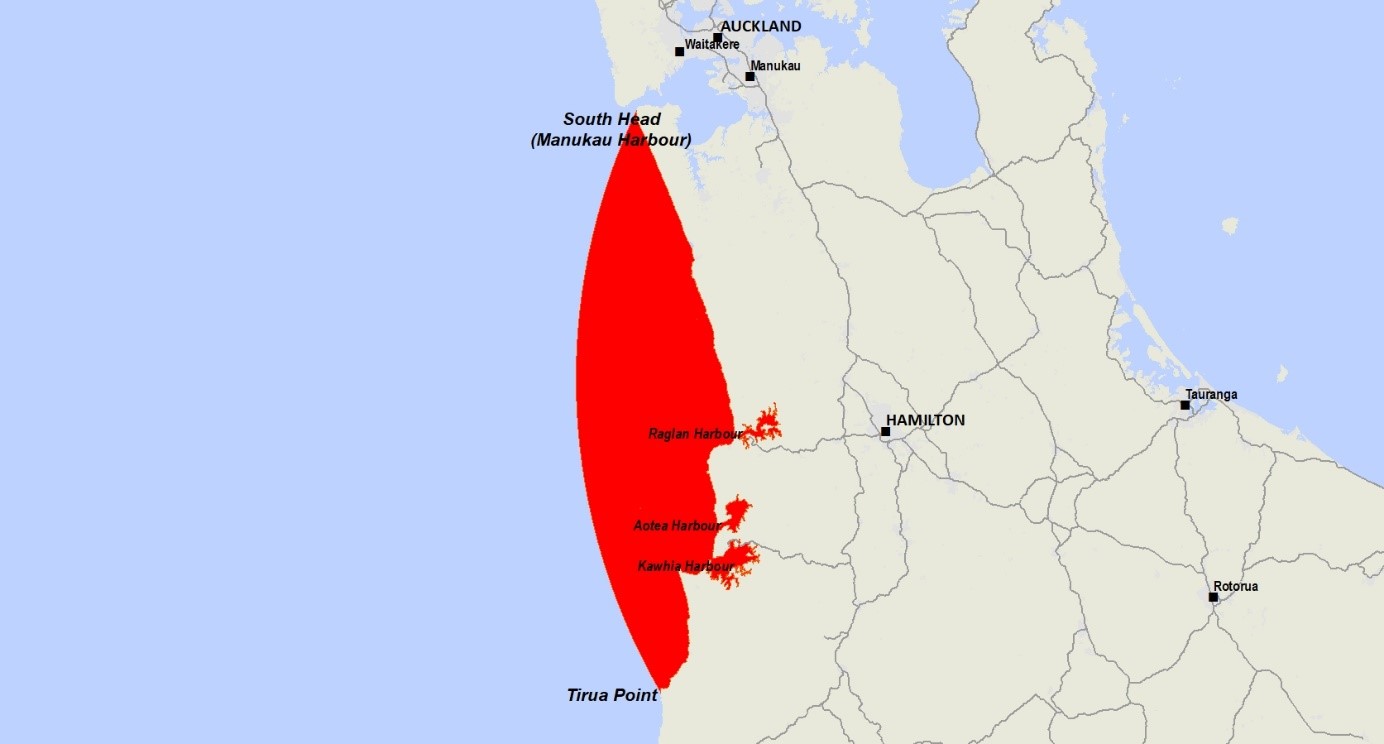
Another warning remains in place for the west coast of the North Island – from South Head (Manukau Harbour entrance) to Tirua Point (south of Kawhia).

Routine tests on shellfish samples taken from these regions have shown levels of Paralytic Shellfish Poisoning (PSP) toxins above the safe limit of 0.8 mg/kg set by MPI. Anyone eating shellfish from this area is potentially at risk of illness.

Mussels, oysters, tuatua, pipi, toheroa, cockles, scallops, catseyes, kina (sea urchin) and all other bivalve shellfish should not be eaten.

Note, cooking shellfish does not remove the toxin.

Pāua, crab and crayfish may still be eaten if the gut has been completely removed prior to cooking, as toxins accumulate in the gut. If the gut is not removed its contents could contaminate the meat during the cooking process.

Symptoms typically appear between 10 minutes and 3 hours after ingestion and may include:

  • numbness and a tingling (prickly feeling) around the mouth, face, and extremities (hands and feet)
  • difficulty swallowing or breathing
  • dizziness
  • headache
  • nausea
  • vomiting
  • diarrhoea
  • paralysis and respiratory failure and in severe cases, death.

If anyone becomes ill after eating shellfish from an area where a public health warning has been issued, phone Healthline for advice on 0800 61 11 16, or seek medical attention immediately. You are also advised to contact your nearest public health unit and keep any leftover shellfish in case it can be tested.

Monitoring of toxin levels will continue and any changes will be communicated accordingly. Commercially harvested shellfish – sold in shops and supermarkets, or exported – is subject to strict water and flesh monitoring programmes by MPI to ensure they are safe to eat.

MPI Alerts

Caribbean – CPS reports cases of fish poisoning

The Daily Herald

PHILIPSBURG–The Collective Prevention Service (CPS), as a public health agency, is advising the public to pay attention to proper food handling procedures when preparing meals.

CPS said the department had received reports of four cases of fish poisoning September 5 and 7.

“As with all reportable diseases, CPS surveillance nurses conduct case follow-up to identify the possible source(s) of exposure,” CPS said on Thursday. During the investigation, it came to light that the purchasing, storage, and preparation of the seafood played a major role in the source of food poisoning.

“CPS would like to remind persons when purchasing fish, or any type of sea food, that it is important to handle the products safely to reduce the risk of foodborne illness often called food poisoning,” said the department.

New Zealand – Shellfish biotoxin alert

MPI

ALL WARNINGS ARE UP TO DATE

Warnings are reviewed weekly following sampling results. Information on this page is then updated if needed.

If you have questions, email info@mpi.govt.nz

Current warnings

West Coast – South Head to Tirua Point (south of Kawhia) – North Island

Map showing the affected area

Previous changes
  • 2 October: Hawke’s Bay Warning removed
  • 19 August: Hawke Bay Warning extended to Young Nicks Head.
  • 12 August: NI West Coast – South Head to Tauratahi Point warning issued
  • 12 August: Port Levy warning removed.