Category Archives: Hygiene

RASFF Alerts – E.coli – Enterobacteria – Aflatoxins – Mussels – Beef – Duck Meal – Maize

RASFF – High count of Escherichia coli (330 MPN/100g) in chilled mussels (Mytilus galloprovincialis from Spain in italy

RASFF – Shigatoxin-producing Escherichia coli in chilled boneless beef (Bos taurus) from Argentina in Germany

RASFF – Too high count of Enterobacteriaceae (<10; <10; <10; 5000;<10 CFU/g) in duck meal from France in Belgium

RASFF – Aflatoxins (B1 = 32.1 µg/kg – ppb) in maize from Ukraine in the Netherlands

Australia – NSW – Cryptosporidium in Swimming Pools

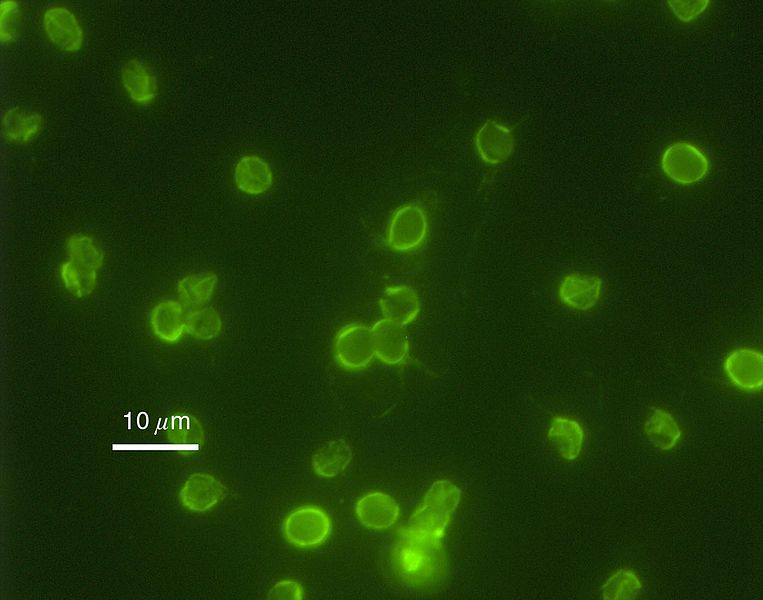
NSW763px-Cryptosporidium_parvum_01

NSW Health is urging people who have had diarrhoea not to swim in pools until at least two weeks after they have fully recovered following an increase in cryptosporidiosis in NSW.

There have been 484 cases of cryptosporidiosis reported to NSW Health to date this year. The highest rates of infections are in children under five,” Dr Jeremy McAnulty, Director, Health Protection, said.

This is the highest year to date figure since 2009 when there was a large outbreak with more than 1000 notified cases.

226 cases were reported in February which is a significant increase on the 5 year average of 121 cases. So far, 126 cases have been reported in March.

“Cryptosporidiosis is a diarrhoeal disease caused by a parasitic infection of the intestine. The most common symptoms include diarrhoea, stomach cramps and sometimes fever, nausea and vomiting. There is no specific treatment for the condition and symptoms may last a few weeks in some people,” Dr McAnulty said.

Among the cases, a range of possible risk factors have been reported including swimming in pools. However the outbreak has not been linked to a specific pool. In previous studies other risk factors have included contact with farm animals and drinking untreated water.

USA – CDC Confirms Multistates E.coli O121 Outbreak

Food Safety NewsEcoli Istock

The U.S. Department of Agriculture Food Safety and Inspection Service has posted a distribution list of where affected products were sent. That list includes Wal Mart stores nationwide, Winn-Dixie stores in Florida, and a variety of retailers in Michigan.

At least 24 people in 15 states have fallen ill with E. coli O121 in an outbreak traced back to Farm Rich brand frozen pizzas, quesadillas, philly cheese steaks and mozzarella bites, the U.S. Centers for Disease Control and Prevention has confirmed, following initial reports Thursday evening.

Seven people have been hospitalized in connection to the products, which were sold nationwide. One patient has developed hemolytic uremic syndrome.

CDC

  • A total of 24 persons infected with the outbreak strain of Shiga       toxin-producing Escherichia coli O121 (STEC O121) have been       reported from 15 states.
    • 78% of ill persons are 21 years of age or younger.
    • 33% of ill persons have been hospitalized. One ill        person developed hemolytic uremic syndrome (HUS), a type of kidney        failure, and no deaths have been reported.
  • CDC and state public health officials are interviewing ill persons to       obtain information regarding foods they might have eaten and other       exposures in the week before illness.
    • Information available to date indicates that        consumption of Farm Rich brand frozen food products is one likely source        of infection for the ill persons in this outbreak.
  • Testing conducted by the New York State Department of Health,       Wadsworth Center Laboratory, identified the outbreak strain of STEC O121       in an open package of Farm Rich brand frozen chicken quesadillas       from an ill person’s home.


USA – Hawaii – E.coli O157 Outbreak

Food Poisoning Journal

Lisa Kubota of Hawaii News Now reports that investigators with the Hawaii Department of Health are looking into at least nine people have now become ill from E. coli O157:H7.  The confirmed cases consist of three adults and six children. All of them live on Oahu except for a Canadian visitor who spent time on Oahu, but was later diagnosed on the Big Island. Officials are having trouble pinpointing the source of the infections.

Oahu healthcare providers recently received a letter from health officials warning them to be on the lookout for E. coli O157:H7. Around the same time, Dr. James Ireland saw a 67-year-old patient with symptoms like severe diarrhea and abdominal cramps.  Ireland said the man is now recovering after being hospitalized. There have been a total of 11 cases so far this year, including two unrelated to the current cluster. There were 20 last year, 9 the previous year, and 29 in 2010.

According to the state, three of the children in this latest group developed a life-threatening complication called Hemolytic Uremic Syndrome.

USA Research – Microbiology of RTE Foods In University Canteens – Control of Pathogens on Fresh Cut Fruit

Science Direct –

During a 10-year inspection survey (2001–2010), a microbiological study of ready-to-eat (RTE) foods and ready-to-bake frozen pastries from 15 canteens of the university campus was undertaken to determine their microbiological quality. The cumulative study revealed that the aerobic colony counts for the RTE product groups were as follows: from 106 to 108 CFU/g for 50% of sandwiches; under the detection limit (<10 CFU/g) for 88.6% of oven baked pastries; <105 CFU/g for 86.5% of desserts oven baked; from 103 to 109 CFU/g for desserts with dairy cream. The highest mean Enterobacteriaceae counts were recorded for desserts with dairy cream. The highest percentages of foodborne pathogens were: 20% Listeria monocytogenes and 12.5% Staphylococcus aureus in desserts with dairy cream; 17.5% Salmonella spp. and 8.5% presumptive Escherichia coli O157 in sandwiches; 14.6% Bacillus cereus in oven baked pastries. Aerobic colony counts were in the range 107–108 CFU/g for 48.8% of frozen pastries; whereas Enterobacteriaceae counts between 103 and 104 CFU/g were detected in 35.3%. Foodborne pathogens prevalences for frozen pastries were as follows: B. cereus, 31.8%; Salmonella spp., 28.6%; presumptive E. coli O157, 25%; S. aureus, 8.7%; L. monocytogenes, 8.7%. Improved sanitary conditions in the processing plants and precautionary measures are necessary for consumer protection.

Science Direct

The consumption of fresh-cut fruit has substantially risen over the last few years, leading to an increase in the number of outbreaks associated with fruit. Moreover, consumers are currently demanding wholesome, fresh-like, safe foods without added chemicals. As a response, the aim of this study was to determine if the naturally occurring microorganisms on fruit are “competitive with” or “antagonistic to” potentially encountered pathogens. Of the 97 and 107 isolates tested by co-inoculation with Escherichia coli O157:H7, Salmonella and Listeria innocua on fresh-cut apple and peach, respectively, and stored at 20 °C, seven showed a strong antagonistic capacity (more than 1-log unit reduction). One of the isolates, CPA-7, achieved the best reduction values (from 2.8 to 5.9-log units) and was the only isolate able to inhibit E. coli O157:H7 at refrigeration temperatures on both fruits. Therefore, CPA-7 was selected for further assays. Dose-response assays showed that CPA-7 should be present in at least the same amount as the pathogen to adequately reduce the numbers of the pathogen. From the results obtained in in vitro assays, competition seemed to be CPA-7’s mode of action against E. coli O157:H7. The CPA-7 strain was identified as Pseudomonas graminis. Thus, the results support the potential use of CPA-7 as a bioprotective agent against foodborne pathogens in minimally processed fruit.

UK – Research – Guidance – Pseudomonas aeruginosa in Water Systems

Health Protection Scotland

Guidance on management of Pseudomonas aeruginosa in water systems

On 12 March, the UK Department of Health published an addendum to the Health Technical Memorandum 04-01 Water sources and potential Pseudomonas aeruginosa contamination of taps and water systems – Advice for augmented care units.

The document is concerned with controlling and minimising the risk of morbidity and mortality due to P. aeruginosa associated with water outlets and provides guidance on:

  • forming a Water Safety Group and developing water safety plans
  • assessing the risk to patients when water systems become contaminated with P. aeruginosa or other opportunistic pathogens
  • remedial actions to take when a water system becomes contaminated with P. aeruginosa
  • protocols for sampling, testing and monitoring water for P. aeruginosa.

The guidance is directed towards healthcare organisations providing patient care in augmented care settings, and is specifically aimed at estates and facilities departments, and infection prevention and control teams. [Source: DH News Release, 12 March 2013. http://www.dh.gov.uk/health/2013/03/pseudomonas-addendum]

In Scotland, the same issues have been addressed in Health Protection Scotland’s Guidance for neonatal units (NNUs) (levels 1, 2 & 3) adult and paediatric intensive care units (ICUs) in Scotland to minimise the risk of Pseudomonas aeruginosa infection from water. This is due for imminent publication with an accompanying CEL letter. SHTM 04-01 Parts A&B have also been amended to reflect this latest guidance and will be published on the Health Facilities Scotland website along with the new Part G (following a consultation period) at the end of March.

Research – Norovirus Shedding

Cambridge Journals OnlineNorovirus

Norovirus is a common cause of gastroenteritis in all ages. Typical infections cause viral shedding periods of days to weeks, but some individuals can shed for months or years. Most norovirus risk models do not include these long-shedding individuals, and may therefore underestimate risk. We reviewed the literature for norovirus-shedding duration data and stratified these data into two distributions: regular shedding (mean 14–16 days) and long shedding (mean 105–136 days). These distributions were used to inform a norovirus transmission model that predicts the impact of long shedders. Our transmission model predicts that this subpopulation increases the outbreak potential (measured by the reproductive number) by 50–80%, the probability of an outbreak by 33%, the severity of transmission (measured by the attack rate) by 20%, and transmission duration by 100%. Characterizing and understanding shedding duration heterogeneity can provide insights into community transmission that can be useful in mitigating norovirus risk.

Research – Contaminated Sponges in Kitchens

JDCStaphylococcus

Introduction: Contaminated sponges might lead to cross-contamination in kitchens since they can transfer microorganisms to surfaces where microorganisms can survive for hours or days and contaminate food. The main objective of this study was to evaluate the transfer and the survival of bacteria from kitchen sponges to surfaces of AISI 316 stainless steel and polyethylene.

Methodology: Twenty-four sponges were collected from industrial kitchens in the state of Rio Grande do Sul and aseptically split into two equal parts. One part was subjected to enumeration of heterotrophic microorganisms, faecal coliforms, coagulase-positive Staphylococcus and search detection of Salmonella enterica. The other part was rubbed on surfaces of AISI 316 stainless steel (12 sponges) or polyethylene (12 sponges). The transfer and survival of microorganisms was quantified by swab collection and pour-plate method using plate count agar.

Results: All sponges were contaminated by heterotrophic microorganisms (average of 6.8 log CFU/sponge) and 83.3% with faecal coliforms (average of 5 log CFU/sponge). None of the sponges were contaminated by S. enterica and/or coagulase-positive Staphylococcus. The average transfer of microorganisms varied between 3.3 and 5.5 log CFU/cm2 for stainless steel and from 3.5 to 5.6 log CFU/cm2 for polyethylene. Although the survival rate decreased over time, more than 1 log CFU/cm2 of heterotrophic microorganisms survived after 24 hours on both surfaces.

Conclusions: The sponges used in food services were significantly contaminated and could transfer large amounts of microorganisms to surfaces of AISI 316 stainless steel and polyethylene.

UK -HPA -Burger Vans – Ecoli Contamination

ITV News

HPA Report

Research from the Health Protection Agency (HPA) has revealed that food, water, chopping boards, cleaning cloths and security wristbands sampled from mobile and outdoor food vendors were contaminated with a range of bacteria including E.coli.

The bacteria, which originates from human or animal faeces is usually an indicator of either poor hygiene, undercooking or cross-contamination in the kitchen.

The events where samples were taken included 50 concerts or music festivals, 20 sports events, 39 carnivals, fetes and fairs and 44 ‘other’ events.

8% of food samples were of an unsatisfactory quality with a further 1% containing potentially hazardous levels of bacteria.

Water samples tested revealed that 27% contained unacceptable levels of coliform bacteria which can be found in the environment in soil, water and on plants and may also be a sign of faecal contamination.

E.coli and/or enterococci bacteria (of faecal origin) were found in 8%.

Research – Antibiotic-Resistant Strain of E. Coli Increasing Among Older Adults and Residents of Nursing Homes

Science DirectEcoli Istock

Antibiotic-resistant Escherichia coli (E. coli) continues to proliferate, driven largely by expansion of a strain of E. coli know as sequence type ST131. A new study points to hospitals and long-term care facilities (LTCF) as settings in which this antibiotic-resistant strain is increasingly found.

The study is published in the April issue of Infection Control and Hospital Epidemiology, the journal of the Society for Healthcare Epidemiology of America.

E. coli is the most common gram-negative pathogen, causing both gastrointestinal disease and extraintestinal infections such as pneumonia, meningitis, and bloodstream, urinary tract, abdominal, and wound infections. Strains of E. coli that are resistant to single or multiple classes of antibiotics are becoming more prevalent. E. coli ST131 is commonly associated with fluoroquinolone resistance.

“The expansion of E. coli strain ST131 is recognized as a pandemic, but has received comparatively little attention in the United States,” said Ritu Banerjee, lead investigator of the study. “Alarmingly, the pace of new antibiotic development has not kept up with the emergence of antibiotic-resistant E. coli, making development of strategies to halt further emergence and spread of these strains a public health priority.”