Norovirus in oysters from the Netherlands in Belgium
Detection of norovirus in oysters from France in Belgium, Germany, Denmark, Luxembourg and Spain
Norovirus in oysters from France in Belgium, France, Ireland and Netherlands

Norovirus in oysters from the Netherlands in Belgium
Detection of norovirus in oysters from France in Belgium, Germany, Denmark, Luxembourg and Spain
Norovirus in oysters from France in Belgium, France, Ireland and Netherlands
Posted in food contamination, food handler, Food Hazard, Food Hygiene, Food Inspections, Food Micro Blog, Food Microbiology, Food Microbiology Blog, Food Microbiology Testing, Food Pathogen, food recall, Food Safety, Food Safety Alert, Food Temperature Abuse, Food Testing, Food Virus, Norovirus, RASFF, Virus
Norovirus in oysters from the Netherlands in Belgium
Norovirus in oysters from Ireland, processed in the Nethelands in Belgium

The Public Health Agency of Canada collaborated with federal and provincial public health partners, the United States Centres for Disease Control and Prevention (U.S. CDC), and the U.S. Food and Drug Administration to investigate an outbreak of norovirus and gastrointestinal illnesses involving five provinces: British Columbia, Alberta, Saskatchewan, Manitoba and Ontario. The outbreak appears to be over and the outbreak investigation has been closed.
Investigation findings identified consumption of raw oysters from British Columbia as the source of the outbreak. As a result, some oyster harvesting areas in British Columbia that were associated with the outbreak were closed as a part of the investigation.
The Canadian Food Inspection Agency (CFIA) issued several food recalls throughout February, March, and April. Links to each food recall associated with this investigation can be found at the end of this public health notice.
The outbreak investigation is an important reminder to Canadians and businesses that raw oysters can carry harmful germs that can lead to foodborne illness if not properly handled and cooked prior to consuming.
In total, 339 confirmed cases of norovirus and gastrointestinal illness were reported in the following provinces: British Columbia (301), Alberta (3), Saskatchewan (1), Manitoba (15) and Ontario (19). Individuals became sick between mid-January and early April 2022, and no deaths were reported.
Some oyster harvest areas in British Columbia that were associated with illnesses in the outbreak were closed as a part of the investigation. The CFIA issued several food recalls throughout February, March, and April. For more information on the recalled products, please consult the Government of Canada’s Recalls and Safety Alerts website.
The U.S. CDC also investigated a multistate norovirus outbreak linked to raw oysters from British Columbia.
Acute gastrointestinal illnesses such as norovirus illness are common in North America and are very contagious, affecting all age groups. However, pregnant women, people with compromised immune systems, young children and the elderly are at risk for developing more serious complications, like dehydration.
Raw oysters contaminated with noroviruses may look, smell and taste normal. The following safe food-handling practices will reduce your risk of getting sick:
Noroviruses can be transmitted by ill individuals and are able to survive relatively high levels of chlorine and varying temperatures. Cleaning and disinfecting practices are the key to preventing further illnesses in your home.
People with norovirus illness usually develop symptoms of gastroenteritis within 24 to 48 hours, but symptoms can start as early as 12 hours after exposure. The illness often begins suddenly. Even after having the illness, you can still become re-infected by norovirus.
The main symptoms of norovirus illness are:
Other symptoms may include:
Most people feel better within one or two days, with symptoms resolving on their own, and experience no long-term health effects. As with any illness causing diarrhea or vomiting, people who are ill should drink plenty of liquids to replace lost body fluids and prevent dehydration. In severe cases, patients may need to be hospitalized and given fluids intravenously. If you have severe symptoms of norovirus, consult your healthcare provider.
The Government of Canada is committed to food safety. The Public Health Agency of Canada leads the human health investigation of an outbreak and is in regular contact with its federal and provincial partners to monitor and take collaborative steps to address outbreaks.
Health Canada provides food-related health risk assessments to determine whether the presence of a certain substance or microorganism poses a health risk to consumers.
The CFIA conducts food safety investigations into the possible food source of an outbreak. CFIA also monitors for biotoxins in shellfish in harvesting areas and is responsible for registering and inspecting fish and shellfish processing plants. The CFIA may recommend that affected sites or areas be opened or closed based on epidemiological information, sample testing results and/or relevant harvest area information.
Fisheries and Oceans Canada is responsible for opening and closing shellfish harvest areas, and enforcing closures under the authority of the Fisheries Act and the Management of Contaminated Fishery Regulations.
Under the Canadian Shellfish Sanitation Program, Environment and Climate Change Canada monitors pollution sources and sanitary conditions in shellfish growing waters.
The Government of Canada will continue to update Canadians as new information related to this investigation becomes available.
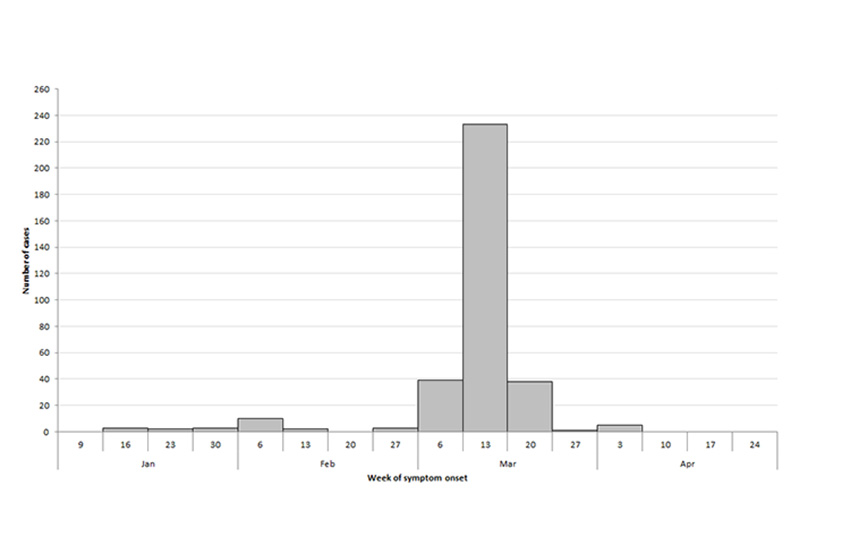
Figure 1 is an epidemiological curve for this outbreak, which shows the numbers of new cases by week. Outbreak investigators use this information to show when illnesses begin, when they peak, and when they trail off. It can take several weeks from the time a person becomes ill to when the illness is reported and linked to the outbreak. Data are available for 339 cases.
Public Health Agency of Canada
Media Relations
613-957-2983
media@hc-sc.gc.ca
Call toll-free: 1-866-225-0709
Email: info@hc-sc.gc.ca
Posted in food bourne outbreak, food contamination, food handler, Food Hazard, Food Hygiene, Food Illness, Food Inspections, Food Micro Blog, Food Microbiology, Food Microbiology Blog, Food Microbiology Testing, Food Pathogen, food recall, Food Safety, Food Safety Alert, Food Testing, Food Virus, Foodborne Illness, foodborne outbreak, foodbourne outbreak, Illness, Norovirus, outbreak, Virus
Norovirus (GI – GII viral genome) in clams (ruditapes ph.) from Spain in Italy and Portugal
Norovirus (GI-GII viral genome) in sea truffles (Venus verrucosa) from Spain in Portugal and Italy

Fast Facts
Illnesses: 103 illnesses* have been reported as of April 6, 2022
States affected: CA, CO, FL, HI, IL, MA, MN, NJ, NV, NY, OR, TX and WA
Recall: No
Investigation Status: Active
*This number is an estimate based on the information we have at this time. CDC is working with state and local partners to determine a more accurate number of illnesses in this outbreak and will update this number as more information is gathered.
CDC is working with the U.S. Food and Drug Administration (FDA) state, and local officials, and with Canadian public health authorities to investigate a multistate norovirus outbreak linked to raw oysters from British Columbia, Canada.
As of April 6, 2022, at least 103 norovirus illnesses have been reported from 13 states: CDC is working with state and local partners to determine a more accurate number of illnesses in this outbreak and will update this number as more information is gathered. FDA Advises Restaurants and Retailers Not to Serve or Sell Potentially Contaminated Raw Oysters from Canada (April 2022)external icon
Norovirus is the leading cause of foodborne illness in the United States. However, state, local, and territorial health departments are not required to report individual cases of norovirus illness to a national surveillance system. That’s why we may not know about many cases, especially if people do not go to a doctor’s office or hospital. Each year, there are about 2,500 reported norovirus outbreaks in the United States. Norovirus outbreaks occur throughout the year but are most common from November to April.
State and local public health officials are interviewing people about the foods they ate a day to four days before they got sick. In interviews, many of the sick people reported eating raw oysters.
State and local officials have collected information about the source of oysters from restaurants where sick people ate. FDA has confirmed that potentially contaminated raw oysters were harvested in the south and central parts of Baynes Sound, British Columbia, Canada. The FDA and the states are conducting a trace forward investigation to determine where the raw oysters were distributed and to ensure they’re removed from the food supply.
This investigation is ongoing. CDC will update the public as more information is gathered.
Posted in food bourne outbreak, Food Illness, Food Micro Blog, Food Microbiology, Food Microbiology Blog, Food Microbiology Research, Food Microbiology Testing, Food Virus, Foodborne Illness, foodborne outbreak, foodbourne outbreak, Illness, microbial contamination, Microbiological Risk Assessment, Microbiology, Microbiology Investigations, Norovirus, outbreak, Virus
Norovirus in ostriche concave origine Francia/Norovirus in concave oyster from France in Italy
Norovirus in live oysters (Crassostrea gigas) from France in Italy
Norovirus in ostriche concave origine Francia//Norovirus in concave oysters from France in Italy and Ireland
Newswise — Washington D.C. — New research on hazards in low-moisture foods fills critical knowledge gaps and identifies cutting-edge decontamination tools that empowers food safety professionals to reduce risks in low-moisture foods and prevent foodborne illness outbreaks. To evaluate these hazards, the Institute for the Advancement of Food and Nutrition Sciences (IAFNS) supported a body of research on this topic.
The persistence of pathogens and viruses in ingredients and ready-to-eat foods has wide-ranging impacts on our food supply, and ultimately our health. Because low-moisture foods (LMF) such as nuts, dried fruits, cereal products, and chocolate are often used as ingredients in the manufacture of other foods, they carry significant potential for the amplification of outbreaks and recalls over a wide variety of products.
There has been worldwide recognition of the need to more seriously manage the microbiological hazards associated with these products. In particular, the underlying factors that mediate pathogen survival in LMF under standard processing and storage conditions—as well as mechanisms for isolating and inactivating them—have yet to be fully understood.
To address this need, IAFNS supported a body of research on this topic. Part of these studies were performed as part of a multi-center research collaboration between the University of Guelph, Health Canada, and North Carolina State University. This collaboration between investigators in the United States and Canada enabled the investigators’ diverse perspectives and expertise to strengthen this line of research.
For example, foodborne bacterial and viral pathogens such as Listeria monocytogenes, Salmonella, and norovirus can survive in LMF and in dry food processing environments for months, or even years. Whether—and for how long—these pathogens remain capable of causing human illness is not completely understood. According to Dr. Jeff Farber of the University of Guelph, “the increased awareness of the importance of low-moisture foods as a possible vehicle for foodborne illness has already led to better approaches towards prevention and control and will continue to do so in the future.”
Furthermore, the lower moisture content of dry foods and manufacturing environments can substantially increase the heat resistance of foodborne pathogens and can increase their tolerance to further treatments, posing a vexing food safety challenge. As such, IAFNS supported further work by Dr. Meijun Zhu at Washington State University to comprehensively evaluate L. monocytogenes survival in LMF during heat processing, and to examine factors impacting their resistance. According to Dr. Zhu, “L. monocytogenes can survive in LMF for an extended period. The desiccation stability of L. monocytogenes in LMF is impacted by water activity, food matrices, and storage temperature. The thermal resistance of L. monocytogenes in LMF is inversely related to water activity and depends on the food composition. In general, L. monocytogenes is more stable at lower water activity and fat-rich food matrix.”
The key findings from this series of studies and their impact on public health are summarized below.
Findings
Identifying Novel Genes That Facilitate Survival of Salmonella in LMF
Ten genes important to Salmonella survival on LMF were impaired and their survival studied on pistachios. Pistachios were treated with pathogens and then measured after treatment, after drying, and after 120 days. The findings support a mutagenesis and sequencing strategy to identify genes key to Salmonella survival on LMF.
Modeling L. monocytogenes Survival on Model LMF
Three model LMF were inoculated with a 4-strain cocktail of L. monocytogenes to evaluate their survival under long-term (8-12+ months) storage at 23°C and 4°C. Decreases in L. monocytogenes during storage on the LMF were the result of both cellular inactivation and transition to a viable-but-not-nonculturable state. The surviving cells — specifically after long-term storage at 4°C on the chocolate liquor and pistachios — remained infectious and capable of replication. These findings will help predict future microbial health risk incidents. The paper also calls for adding LMF to food safety questionnaires used during listeriosis outbreaks because of this concern.
Pathogen Inactivation
Two decontamination methods were studied for inactivating a cocktail of Salmonella or Listeria monocytogenes inoculated on dried strawberry, dried apple, raisins, chocolate crumb, cornflakes and pistachios. One method was based on an acid-ethanol sanitizer and the other combined UV radiation, ozone and peroxide. Both methods show promise in reducing risks in LMF depending on the type of pathogen and product.
Virus Isolation
Foodborne viruses such as norovirus and hepatitis A virus (HAV) are highly transmissible, persist in the environment, and resist inactivation. Foods can become contaminated with these viruses during harvest, handling or processing. This study compared a bead-based magnetic assay with an existing International Organization for Standardization (ISO) method for virus recovery and tested it on chocolate, pistachios and cornflakes. Thus, depending on the food matrix and the virus, the bead-based assay efficiently and rapidly extracts viruses from LMF.
L. monocytogenes Survival and Virulence on Apples, Strawberries and Raisins
The survival of Listeria monocytogenes was measured during long-term storage on three fruits. After dry inoculation and storage at two different temperatures and humidity levels, the results show that L. monocytogenes is rapidly inactivated during storage on raisins and dried strawberries at 23°C, but capable of long-term survival at 4°C.
Virus Inactivation
This study examined the survival of foodborne viruses in LMF during 4-week storage at room temperature. It also evaluates a treatment geared toward inactivating viruses. Pistachios, chocolate and cereal were inoculated with hepatitis A virus and two related viruses. Then viral survival was measured over a four-week incubation at room temperature. The study found that while foodborne viruses can persist for a long time in LMF, combining UV radiation, ozone and peroxide as a treatment may represent an effective inactivation method.
Viable but Nonculturable
In this study, dried apples, strawberries and raisins were mixed with a five-strain cocktail of Salmonella and then dried. However, Salmonella could not be recovered, even after being enriched. The use of microscopy methods revealed that 56-85% of Salmonella cells were still viable despite their nonculturable state. These data suggest that the unique combination of stressors on dried fruit can keep pathogens viable but undetectable by culture, posing hidden risks for food safety.
The safety of low moisture foods in the food supply is capturing more scientific attention. Examining the survival and inactivation of pathogens and viruses on specific foods under common production conditions provides insights into the extent of contamination and methods to prevent it. This new information fills critical knowledge gaps and identifies cutting-edge decontamination tools that empower food safety professionals to reduce risks in low-moisture foods and prevent foodborne illness outbreaks.
The Institute for the Advancement of Food and Nutrition Sciences (IAFNS) Food Microbiology Committee continues to proactively improve the understanding and control of microbial food safety hazards to enable scientifically informed decision making. IAFNS committed to leading positive change across the food and beverage ecosystem. IAFNS is a 501(c)(3) science-focused nonprofit uniquely positioned to mobilize government, industry and academia to drive, fund and lead actionable research. iafns.org.
Posted in Decontamination Microbial, Food Micro Blog, Food Microbiology, Food Microbiology Blog, Food Microbiology Research, Food Microbiology Testing, Food Virus, Listeria, Listeria monocytogenes, microbial contamination, Microbiological Risk Assessment, Microbiology, Microbiology Investigations, Norovirus, Research, Salmonella, Virus

Public Health is investigating an outbreak of norovirus associated with vomiting, diarrhea, abdominal pain, and chills at La Fuente in Renton.
Since April 13, 2022, 10 people from 2 separate meal parties reported becoming ill after eating food from La Fuente on April 10, 2022. We have not identified any ill employees.
Posted in food contamination, food handler, Food Hazard, Food Hygiene, Food Illness, Food Inspections, Food Micro Blog, Food Microbiology, Food Microbiology Blog, Food Microbiology Testing, Food Pathogen, food recall, Food Safety, Food Safety Alert, Food Testing, Food Virus, Foodborne Illness, Norovirus, Virus
Do not consume, use, sell, serve, or distribute the recalled products
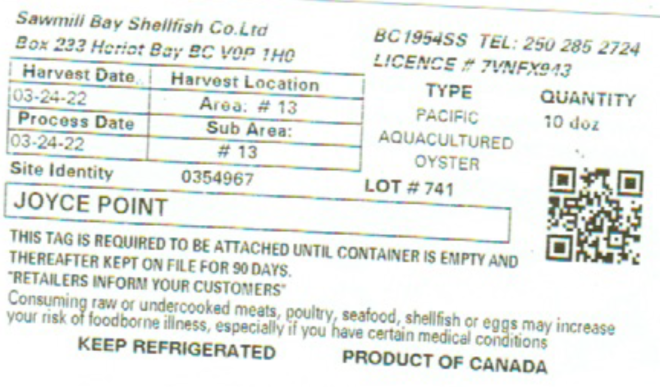
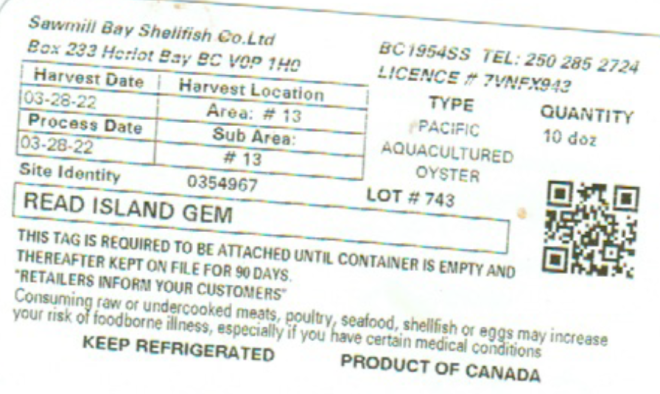
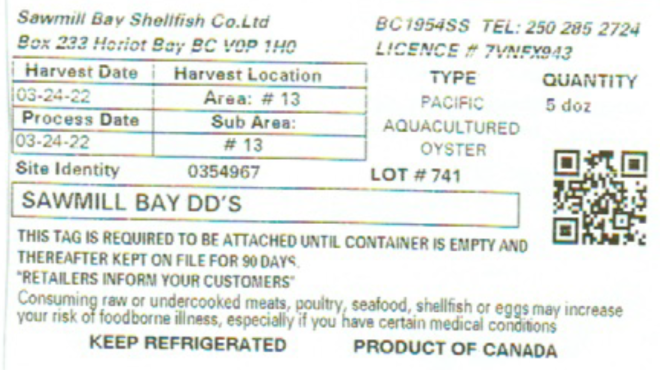
Sawmill Bay Shellfish Co. Ltd. is recalling certain Pacific Oysters from the marketplace due to possible norovirus contamination.
The recalled products have been sold in British Columbia and Alberta and may have been distributed in other provinces and territories.
People with norovirus illness usually develop symptoms of gastroenteritis within 24 to 48 hours, but symptoms can start as early as 12 hours after exposure. The illness often begins suddenly. Even after having the illness, you can still become re-infected by norovirus. The main symptoms of norovirus illness are diarrhea, vomiting (children usually experience more vomiting than adults), nausea and stomach cramps. Other symptoms may include low-grade fever, headache, chills, muscle aches and fatigue (a general sense of tiredness). Most people feel better within one or two days, with symptoms resolving on their own, and experience no long-term health effects. As with any illness causing diarrhea or vomiting, people who are ill should drink plenty of liquids to replace lost body fluids and prevent dehydration. In severe cases, patients may need to be hospitalized and given fluids intravenously.
Do not consume, use, sell, serve, or distribute the recalled products
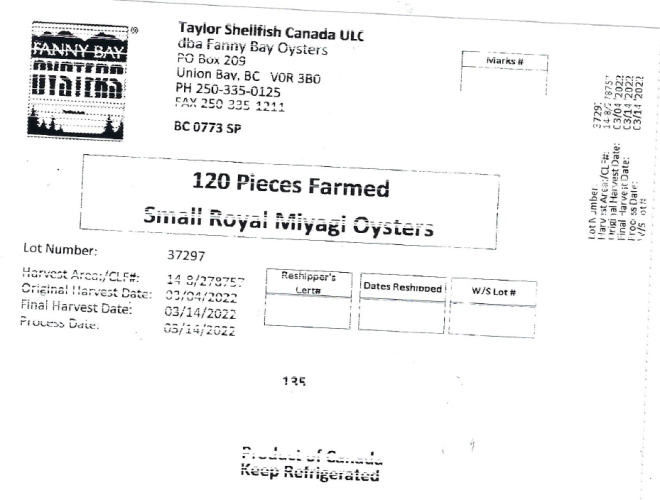
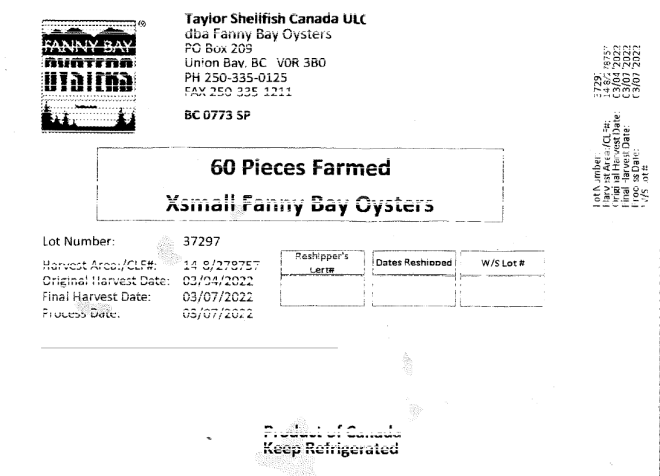
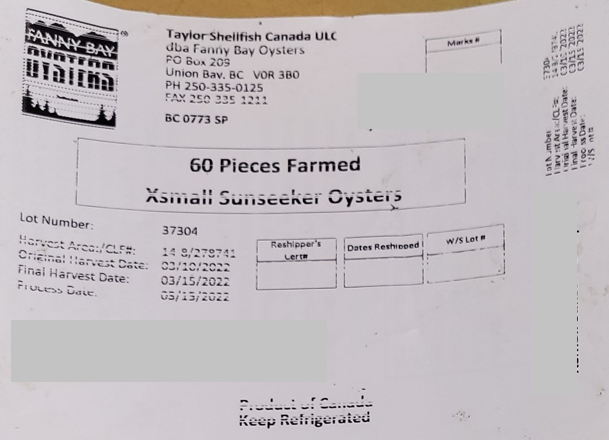
| Taylor Shellfish Canada ULC | Fanny Bay Oysters
(Petite, Xsmall, Small, Medium, Large, Xlarge) |
Variable | None | Lot Number: 37297 Harvest Area/CLF#: 14-8/278757 Original Harvest Date: 03/04/2022 Process Date: 03/07/2022 to 03/16/2022 Lot Number: 37311 Lot Number: 37316 Lot Number: 37317 |
| Taylor Shellfish Canada ULC | Royal Miyagi Oysters
(Petite, Xsmall, Small, Medium, Large, Xlarge) |
Variable | None | Lot Number: 37297 Harvest Area/CLF#: 14-8/278757 Original Harvest Date: 03/04/2022 Process Date: 03/07/2022 to 03/16/2022 Lot Number: 37311 Lot Number: 37316 Lot Number: 37317 |
| Taylor Shellfish Canada ULC | Fanny Bay Oysters
(Petite, Xsmall, Small, Medium, Large, Xlarge) |
Variable | None | Lot Number: 37303 Harvest Area/CLF#: 14-8/278741 Original Harvest Date: 03/08/2022 Process Date: 03/08/2022 to 03/21/2022 Lot Number: 37304 |
| Taylor Shellfish Canada ULC | Sunseeker Oysters
(Petite, Xsmall, Small, Medium, Large, Xlarge) |
Variable | None | Lot Number: 37303 Harvest Area/CLF#: 14-8/278741 Original Harvest Date: 03/08/2022 Process Date: 03/08/2022 to 03/21/2022 Lot Number: 37304 |
Taylor Shellfish Canada ULC dba Fanny Bay Oysters is recalling certain Taylor Shellfish Canada ULC brand Oysters from the marketplace due to possible norovirus contamination.
The recalled products have been sold in Alberta, British Columbia, Ontario and Quebec and may have been distributed in other provinces and territories.
People with norovirus illness usually develop symptoms of gastroenteritis within 24 to 48 hours, but symptoms can start as early as 12 hours after exposure. The illness often begins suddenly. Even after having the illness, you can still become re-infected by norovirus. The main symptoms of norovirus illness are diarrhea, vomiting (children usually experience more vomiting than adults), nausea and stomach cramps. Other symptoms may include low-grade fever, headache, chills, muscle aches and fatigue (a general sense of tiredness). Most people feel better within one or two days, with symptoms resolving on their own, and experience no long-term health effects. As with any illness causing diarrhea or vomiting, people who are ill should drink plenty of liquids to replace lost body fluids and prevent dehydration. In severe cases, patients may need to be hospitalized and given fluids intravenously.

 FoodWorld