Category Archives: Food Testing

UK – Belgian alert for Hepatitis A linked to supplements; update to UK outbreak

Food Safety News

Belgian officials have issued a warning because of incidents of hepatitis infections being linked to dietary supplements containing curcumin.

The Federal Agency for the Safety of the Food Chain (FASFC) cited a notification in the Rapid Alert System for Food and Feed (RASFF) detailing cases of acute cholestatic hepatitis following consumption of various dietary supplements containing curcumin.

This alert is not public and the agency has not yet responded to a request for more information from Food Safety News.
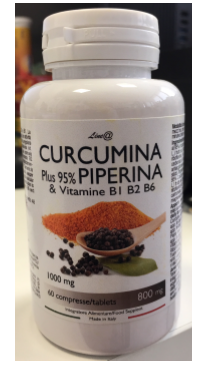
Food supplement recalled in Italy

FASFC reported the exact source of contamination was not yet clearly established but was probably due to the presence of curcumin. Curcumin is a substance in turmeric.

The curcumin was used in lot 1810224 of the food supplement “Curcuma Liposomal and poivre noir.” The company Plastimea SA decided to withdraw the product branded Nutrimea from sale. It has an expiration date of October 2021 and was sold between Oct. 23, 2018, and May 24 this year on Amazon France.

Italian authorities first raised the alert in May with two reports of hepatitis. The National Institute of Health (Istituto Superiore di Sanità) in the country reported 21 cases as of June 20.

The number of products affected has grown from two to more than 20 involving firms such as Frama SRL, Scharper S.p.A, Vanatari International GmbH, Ekappa Laboratori S.r.l., and Fidia Farmaceutici S.p.A.

Meanwhile, the number of people with hepatitis A connected with a school in Ripon, a city in North Yorkshire County in England, has increased by two to 19. Reports of new infections connected to Outwood Academy have slowed down during the past week.

Public Health England (PHE) is reviewing data on food eaten in the school canteen to find the source of the outbreak.

Canada – Dongé brand Coulommiers raw milk cheese recalled due to Listeria monocytogenes

CFIA

Recall details

Ottawa, July 2, 2019 – Les Dépendances is recalling Dongé brand Coulommiers raw milk cheese from the marketplace due to possible Listeria monocytogenes contamination. Consumers should not consume the recalled product described below.

This product may have been sold cut in half or in quarters. Consumers who are unsure if they have purchased the affected product are advised to contact their retailer.

Recalled products

Brand Name Common Name Size Code(s) on Product UPC
Dongé Coulommiers 500 g Best before 2019 JL 12
LOT: MA010419CO
8 31014 41211 0

Dongé - Coulommiers

UK – P & B Foods extends its recall of Heera Chilli Powder Extra Hot because of the presence of Salmonella

FSA

P & B Foods Ltd is extending its recall of Heera Chilli Powder Extra Hot to include an additional pack size, because salmonella has been found in the product.

Product details

Heera Chilli Powder Extra Hot

Pack size 6 x 1kg
Batch code PB9446M/4
Best before end: April 2021
Heera Chilli Powder Extra Hot

Pack size 10 x 400g
Batch code PB9446M/4
Best before end: April 2021

No other P & B Foods Ltd products are known to be affected.

Risk statement

The presence of salmonella in the product listed above. Symptoms caused by salmonella usually include fever, diarrhoea and abdominal cramps.

Action taken by the company

P & B Foods Ltd is recalling the above products. Point-of-sale notices will be displayed in all retail stores that are selling these products. These notices explain to customers why the products are being recalled and tell them what to do if they have bought the product. Please see the attached notice.

Our advice to consumers

If you have bought any of the above products, do not eat them. Instead, return the product to the store from where it was bought for a full refund.

USA – Growers Express Issues Voluntary Recall of Multiple Fresh Vegetable Products Due to Potential Contamination of Listeria monocytogenes

FDA

Summary

Company Announcement Date:
June 30, 2019
FDA Publish Date:
July 01, 2019
Product Type:
Food & Beverages
Produce
Reason for Announcement:
Listeria monocytogenes
Company Name:
Growers Express
Brand Name:
Green Giant Fresh, Growers Express, Signature Farms, Trader Joe’s
Product Description:
Butternut squash, cauliflower, zucchini, and butternut squash based veggie bowl products

Company Announcement

Growers Express takes issues of food safety seriously and is issuing a voluntary recall of select fresh vegetable products in an abundance of caution and in the interest of protecting its customers and end consumers. The fresh vegetable products include packaged varieties of butternut squash, cauliflower, zucchini and a butternut squashed based veggie bowl. Please refer to the detailed chart below for specific product names and retailers.

The products originate from a Growers Express production facility in Biddeford, Maine and were distributed to the states referenced in the chart below. The voluntary recall was issued due to the potential for contamination with Listeria monocytogenes. There are no reported illnesses.

Listeria is an organism that can cause serious and sometimes fatal infections in young children, frail or elderly people, and others with weakened immune systems. Although healthy individuals may suffer short-term symptoms such as high fever, severe headaches, stiffness, nausea, abdominal pain and diarrhea. Listeria infection can cause miscarriages and stillbirths among pregnant women.

Most of the affected products are labeled with a “Best If Used By” Date of June 26 – June 29, 2019. No other Growers Express products are impacted or part of this recall. This recall does not affect or include any Green Giant® canned or frozen vegetable products.

“The safety of our consumers is our first priority,” said Tom Byrne, President of Growers Express. “We selfreported the need for this recall to the U.S. Food and Drug Administration (FDA) and stopped production immediately after being notified of a single positive sample by the Massachusetts Department of Health. We are deep sanitizing the entire facility and our line equipment, as well as conducting continued testing on top of our usual battery of sanitation and quality and safety tests before resuming production.”

Consumers who purchased any of the products listed below from the affected sell by dates or with an unreadable date code are urged not to consume them and to throw the products away.

USA – Outbreak Investigation of Salmonella Uganda Potentially Linked to Whole, Fresh Papayas, June 2019

FDA

June 28, 2019

The U.S. Food and Drug Administration (FDA), along with the Centers for Disease Control and Prevention (CDC), and state and local partners, are investigating a multistate outbreak of 62 Salmonella Uganda illnesses potentially linked to whole, fresh papayas imported from Mexico.  These illnesses have been reported in eight states: Connecticut, Massachusetts, New York, New Jersey, Pennsylvania, Rhode Island, Florida, and Texas.

The FDA is increasing import screening for whole, fresh papayas and will continue to investigate the cause and source of the outbreak as well as the distribution of products. Preliminary analysis of product import records indicates that the whole, fresh papayas that made people sick in this outbreak were from Mexico. As this outbreak investigation continues, the FDA will work with our Mexican food safety regulatory counterparts to better define this outbreak. Additionally, the FDA will update this advisory as more information becomes available.

Recommendations

For Consumers, Restaurants, and Retailers in Specific States:

CDC is advising that consumers in Connecticut, Massachusetts, New Jersey, New York, Pennsylvania, and Rhode Island not eat any whole, fresh papayas from Mexico, and should throw them away. Retailers, restaurants, and other food service providers in those states should not serve or sell whole, fresh papayas imported from Mexico, until more is known about this outbreak. Of the 62 illnesses, 60 have been reported in six states in the Northeast. One patient from Florida who was reported ill had traveled to Connecticut before becoming ill. Another patient from Texas was also reported ill, and at this time additional information about this patient is being collected. More information will be provided as it becomes available.

For Restaurants, Retailers, Importers, Suppliers, and Distributors in All States:

The FDA strongly advises importers, suppliers, and distributors, as well as restaurants, retailers, and other food service providers from all states to hold whole, fresh papayas imported from Mexico. This hold is intended to prevent or limit further distribution of potentially contaminated papayas that may already be in the supply chain until more information on the potential source of papayas linked to the outbreak becomes available. Any product that is held beyond expiration date should be discarded.

Research – Modeling for Survival of Clostridium perfringens in Saeng-sik, a Powdered Ready-to-Eat Food with Low Water Activity

Journal of Food Protection

ABSTRACT

Saeng-sik is a powdered ready-to-eat food with very low moisture that contains dried raw materials such as grains, fruits, mushrooms, and seaweeds. This product is consumed as a convenient and nutritious meal replacement. The objective of this study was to develop a mathematical model for predicting the survival of Clostridium perfringens vegetative cells and spores in saeng-sik as a function of temperature and to validate the model using saeng-sik samples with different microbial communities analyzed by matrix-assisted laser desorption–ionization time-of-flight mass spectrometry. Kinetic data for C. perfringenssurvival in saeng-sik fit well to the Weibull model with high goodness of fit (R2 = 0.92 to 0.98). The obtained δ values (required time for first decimal reduction) for each temperature were 19.62 to 864.86 h, and concave curves (p < 1) were observed under all experimental conditions (5 to 40°C). Kinetic parameters were further described in a secondary model as a function of temperature using a Davey model (R2 = 0.99). The developed model was validated by the bias factor, accuracy factor, and root mean square error, and the values were within acceptable ranges for predictive models, even for saeng-sik samples with different microbial communities. When saeng-sik was rehydrated according to the manufacturer’s recommendations, germination and outgrowth of C. perfringens was observed when the sample was subjected to unusual temperatures during storage, such as at 30°C for 15 h. C. perfringens spores survived in saeng-sik with very low water activity. Because C. perfringens could germinate and grow under such conditions, care must be taken to avoid initial contamination of C. perfringens during the manufacturing process. Our model developed with samples with different microbial communities provides useful information for next-generation microbiological risk assessment taking into consideration the ecology of the food-associated microbial community.

HIGHLIGHTS
  • We developed a mathematical model to predict the survival of C. perfringens in food.

  • C. perfringens vegetative cells and spores were inoculated into dried powder food.

  • The aw of saeng-sik was below 0.1.

  • Weibull and Davey models can successfully describe the survival of C. perfringens.

  • The developed model can be applied to samples with different microbial communities.

Research – Use of Cold Atmospheric Plasma To Preserve the Quality of White Shrimp (Litopenaeus vannamei)

Journal of Food Protection

ABSTRACT

The enzymatic oxidation process that causes black spots on shrimp, named melanosis, leads to spoilage and economic losses. Therefore, there is an urgent need for strategies to reduce melanosis in the food industry. Cold plasma is an emerging nonthermal food processing technology. This work explores a novel application of cold plasma for the preservation of shrimp quality. This study aimed to evaluate the effects of cold plasma on the quality attributes of Pacific white shrimp (Litopenaeus vannamei). The shrimp samples were divided in two groups: the control group and the plasma group. Samples were exposed to nonthermal plasma for 10 min at a frequency of 500 Hz. Microbiological assays, including total counts of mesophilic and psychrotrophic bacteria, Staphylococcus spp., and Salmonella sp., were performed along with investigations of physicochemical parameters, such as pH, color, water-holding capacity, cooking loss, and shear force. In addition, sensory (quality index method) tests were conducted. The plasma group exhibited a shelf life of 14.07 days, while the control group exhibited a shelf life of 9.78 days. The experimental protocol used in this study was not enough to obtain significant reduction in the bacterial load. However, treatment with the cold plasma contributed to improving the physicochemical properties during storage.

HIGHLIGHTS
  • Discharge of dielectric barriers significantly reduced microbial populations.

  • Treatments resulted in improvement in physical characteristics during storage.

  • Nonthermal plasma provided a 43% (4-day) increase in sample lifetime.

Research – Prevalence and Diversity of the Thermotolerant Bacterium Bacillus cytotoxicus among Dried Food Products

Journal of Food Protection

ABSTRACT

Bacillus cytotoxicus, a member of the Bacillus cereus group, is a thermotolerant species originally reported from a lethal foodborne infection in France in 1998. The strain NVH391-98, isolated from this outbreak, produces cytotoxin K1, a potential cytotoxic enterotoxin. However, the habitat and diversity of B. cytotoxicus isolates so far have been poorly explored. The objective of this study was to assess the prevalence of this bacterium in different food products (mainly dried) and to estimate its diversity. Among the 210 samples analyzed, all potato flakes contained the bacterium at low concentrations (≤102 CFU/g). However, prepared and kept at room temperature for 2 days, the puree contained ca. 105 CFU/g B. cytotoxicus. Besides potato flakes, some samples of millet flour, salted potato chips, and soups also contained B. cytotoxicus. From these samples, 55 thermotolerant B. cytotoxicus isolates were obtained. When classified into six distinct random amplified polymorphism DNA patterns, they showed the existence of 11 distinct plasmid profiles. Although most isolates (including the reference strains NVH391-98 and NVH883-00) contained no detectable plasmid, some displayed one to three plasmids with sizes from ca. 8 to 90 kb. It also emerged from this study that a single food sample could contain B. cytotoxicus isolates with different genetic profiles.

HIGHLIGHTS
  • Bacillus cytotoxicus was found in all tested potato flakes but at loads lower than 102 CFU/g.

  • B. cytotoxicus was observed in other potato-containing products and in millet flour.

  • B. cytotoxicus isolates (n = 57) fell into six RAPD patterns and 11 plasmid profiles.

  • A large proportion of B. cytotoxicus isolates contained small and/or large plasmids.

USA – Occurrence of Foodborne Agents at Food Service Facilities in the Czech Republic

Journal of Food Protection

ABSTRACT

The aim of this study was to investigate the occurrence of foodborne agents at food service facilities in the Czech Republic. The sampling, performed from April 2016 to November 2017, focused on the microbiological monitoring of the environment at the establishment (EFS; n = 298) and the hands of staff (HFS; n = 159). The analysis targeted the presence of the following bacteria: Escherichia coli (focusing on the presence of Shiga toxigenic E. coli), Bacillus cereus, Staphylococcus aureus, Listeria monocytogenes, Salmonella spp., and Campylobacter spp. A swab method using sterile abrasive sponges was used to detect bacteria in EFS; a glove-juice method was used to monitor microbial contamination on HFS. The presence of E. coliwas confirmed in 11.8% of samples (12.4%, EFS; 10.7%, HFS; P = 0.650). The presence of Shiga toxigenic E. coli was not confirmed in the samples. B. cereus was detected most frequently, in 39.6% of all samples taken (44.6%, EFS; 30.2%, HFS; P= 0.003). S. aureus was detected in 17.9% of samples (17.4%, EFS; 18.9%, HFS; P = 0.703). Of S. aureus isolates, 58.5% were found to be positive for the presence of genes producing staphylococcal enterotoxins (70%, HFS; 52.0%, EFS). L. monocytogenes was detected in only one sample (0.2%; EFS). The presence of Salmonella spp. and Campylobacter spp. was not confirmed. The occurrence of B. cereus, S. aureus, and E. coli was dependent on the season of the year. B. cereus and S. aureus occurred less frequently in the summer months, although E. coli was recorded more frequently. B. cereus, S. aureus,and E. coli were detected in almost half of the tested samples. The relatively high percentage of B. cereus and S. aureusisolates from EFS corresponded with the model in the final European Food Safety Authority reports on the occurrence of foodborne disease outbreaks in the European Union. Managers of food service facilities should focus on reducing the occurrence of B. cereus and S. aureus.

HIGHLIGHTS
  • Contamination of food service facilities in the Czech Republic by foodborne agents was determined.

  • Bacillus cereus, Staphylococcus aureus, and Escherichia coli were detected in almost 50% of samples.

  • The occurrence of B. cereus, S. aureus, and E. coli depended on the season of the year.

  • Regular monitoring of food service facilities for agents of foodborne disease is necessary.

Research – Distribution of Listeria spp. on Carcasses of Regularly Slaughtered Swine for Italian Dry Cured Ham

Journal of Food Protection

ABSTRACT

In recent years, the role of Listeria monocytogenes as a foodborne pathogen in public health has increased. Its presence poses a risk for humans, especially in ready-to-eat foods, such as ham. Understanding the presence and distribution of Listeria spp. on swine carcasses meant for Italian dry-cured hams can be a useful tool to improve food safety. This study assessed the distribution of Listeria spp. (as a marker of contamination with L. monocytogenes) on slaughtered pig carcasses intended for the production of high-quality, Italian, dry-cured ham and examined the roles of the site sampled on the carcass, farming cycle (open versus closed), farm-to-slaughterhouse distance, and time spent in lairage. Samples were collected from swine carcasses (n = 150) before refrigeration, from three different carcass locations (head, shoulder, and thigh), and assessed for the presence of listeriae. A total of 115 carcasses were contaminated with Listeria spp. in at least one location. In all, 178 listeriae were isolated and identified: 130 Listeria innocua, 28 Listeria welshimeri, 17 Listeria ivanovii, and 3 L. monocytogenes. Listeriae were detected on 62.7% of heads, on 25.3% of shoulders, and on 30.7% of thighs, with significant differences between heads versus shoulders and thighs. Animals reared in closed-cycle farms were more contaminated (P < 0.05) than were animals from open-cycle farms (90 versus 71.8%). The distance between farms and slaughterhouse was not related to the contamination rate. Carcasses of swine that stayed in lairage before slaughtering for more than 10 h showed a higher degree of contamination (90%) and were positive for Listeria spp. in more sample sites (55%) compared with those held for less than 2 h (73% of carcasses and 33.3% of samples). Our results show that heads should be detached from carcasses immediately after slaughter for meat-safety purposes and the amount of time animals stay in lairage should be limited. These results will be useful for a more-valid implementation of good manufacturing processes for slaughtering.

HIGHLIGHTS
  • Swine carcasses are often contaminated with Listeria spp.

  • Heads are more contaminated than shoulders and thighs.

  • Lairage time higher than 10 h is a risk factor for Listeria spp. contamination.

  • Closed-cycle farms presented greater carcass contamination.