Category Archives: Food Technology

Research -Extension of shelf life of pasteurized trim milk using ultraviolet treatment

Wiley Online

The demand for minimally processed foods has increased in the last few years and gains high acceptability among consumers as it has better nutritional value than highly processed foods. Pasteurized milk is minimally processed and consumed largely for its fresh taste and higher nutritional value compared to ultrahigh temperature (UHT) and powdered milk. However, one of the constraints is its limited shelf life under refrigeration, as it cannot retain quality and safety for more than 14 days. Nonthermal technologies can extend the shelf life of milk while using low energy. Ultraviolet (UV‐C) is well known to inactivate spores as well as vegetative cells. In this study, it was shown that 2.64 J/ml of UV‐C treatment applied on pasteurized trim milk can extend shelf life up to 53 days under refrigeration. This finding was also supported by the inactivation of 3.40 ± 0.14 log of thermoresistant Geobacillus stearothermophilus spores (ATCC 7953) in UHT (or sterilized) trim milk with similar UV‐C operating conditions. Therefore, microbial study together with physicochemical properties demonstrated that pasteurization followed by UV‐C can enhance the shelf life of trim milk considerably.
Research – Novel composite antimicrobial film could take a bite out of foodborne illnesses

Science Daily

A novel composite film — created by the bonding of an antimicrobial layer to conventional, clear polyethylene plastic typically used to vacuum-package foods such as meat and fish — could help to decrease foodborne illness outbreaks, according to researchers in Penn State’s College of Agricultural Sciences.

The antimicrobial lining of the film is comprised of a pullulan-based biopolymer produced from starch syrup during a fermentation process, which is already approved for use in foods. Pullulan, a water-soluble “polysaccharide,” is essentially a chain of sugar, glycerin and cellulose molecules linked together. To kill pathogens such as SalmonellaListeria and pathogenic E. coli, researchers infused the pullulan with Lauric arginate, made from naturally occurring substances and already approved for use in foods.

Development of the composite antimicrobial film is important because 76 million cases of foodborne illnesses occur each year in the U.S. alone, resulting in 300,000 hospitalizations and 5,000 deaths, according to the U.S. Centers for Disease Control and Prevention. In light of this problem and the commercial potential of this discovery, Penn State has applied for a provisional patent on the composite antimicrobial film.

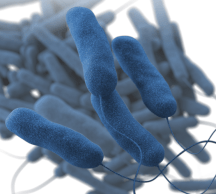
Research – Can Hard Water & Limescale Increase Legionella Risks?

Legionella Control

CDC legionella

Image CDC

This specialist guide has been written by the water safety experts at Legionella Control International and asks if the presence of hard water and limescale increases the risks from Legionella bacteria and Legionnaires’ disease. The guide looks at the formation of scale in water systems, fittings and appliances and how it can encourage the growth of biofilm and bacteria including legionella. It concludes by reviewing what practical measures can be taken to prevent, or at least reduce the risks that limescale brings with it.

Research -Evaluation of the Efficacy of Three Direct Fed Microbial Cocktails To Reduce Fecal Shedding of Escherichia coli O157:H7 in Naturally Colonized Cattle and Fecal Shedding and Peripheral Lymph Node Carriage of Salmonella in Experimentally Infected Cattle

Journal of Food Protection

ABSTRACT

Two experiments were conducted to evaluate the feeding of direct fed microbials (DFMs) on fecal shedding of Escherichia coli O157:H7 in naturally infected cattle (experiment I) and on Salmonella in the feces and peripheral lymph nodes (PLNs) of experimentally infected cattle (experiment II). Thirty cattle, 10 per treatment, were used in each experiment. Treatments in experiment I consisted of a control (lactose carrier only); DFM1, a 1:1 ratio of Enterococcus faecium and Lactobacillus animalis; and DFM2, a 1:1 ratio of Lactobacillus acidophilus and Pediococcus acidilactici. In Experiment II, DFM1 was replaced with DFM3, a 1:2 ratio of Lactobacillus reuteri and other Lactobacillus strains. Additives were mixed in water and applied as a top-dressing to each pen’s daily ration for 50 days. Approximately half-way through each experiment, the DFM concentration was doubled for the remainder of the study. Fecal samples were collected throughout experiment I and cultured for E. coli O157:H7. Cattle in experiment II were inoculated intradermally with Salmonella Montevideo on days 32, 37, and 42 and then necropsied on days 49 and 50 (five cattle per treatment on each day). Innate immune function was assessed on days 29, 49, and 50. In experiment I, fecal concentration and prevalence of E. coli O157:H7 were not different (P > 0.10) nor was there an effect (P = 0.95) on the percentage of super shedders (cattle shedding ≥3.0 log CFU/g of feces). In experiment II, no treatment differences (P > 0.05) were observed for Salmonella in the PLNs except for the inguinal nodes, which had a significantly lower Salmonella prevalence in DFM-supplemented cattle than in the controls. Immune function, as measured by monocyte nitric oxide production and neutrophil oxidative burst, was decreased (P < 0.05) in the DFM treatment groups. Although results of this research indicate little to no effect of these DFMs on E. coli O157:H7 or Salmonella in cattle, an increase in the duration of administration to that similar to what is used for commercial cattle might elicit treatment differences.

HIGHLIGHTS
  • Direct fed microbials were evaluated for pathogen mitigation in cattle.

  • No treatment effects on fecal shedding of E. coli O157:H7 were observed.

  • DFM treatment reduced Salmonella in only one the four lymph node types examined.

  • Under these experimental conditions, short-term feeding of DFMs failed to mitigate pathogens.


Research – Effect of Eryngium caeruleum essential oil on microbial and sensory quality of minced fish and fate of Listeria monocytogenes during the storage at 4°C

Wiley Online

The present study investigated in vitro antimicrobial activity of Eryngium caeruleum essential oil (EEO) against five foodborne pathogenic bacteria based on microdilution and disk diffusion methods. Moreover, its effects on specific spoilage microorganisms, inoculated Listeria monocytogenes, and its sensory changes in minced fish were evaluated during 12 days of storage at refrigeration temperature. The results showed that Staphylococcus aureus and Escherichia coli were the most sensitive and the most resistant bacteria with a minimum inhibitory concentration of 0.125 and 1 mg/ml, as well as inhibition zones of 15.66 and 11.66 mm, respectively. Regarding the antimicrobial effect of EEO on the microbial profile and inoculated L. monocytogenes, treating with 0.4% EEO caused a significant decrease in the studied microorganisms when compared to the control group (p < 0.05). In addition, considering the sensory evaluation, the best scores were observed for the samples treated with 0.2% and 0.4% EEO. However, none of the groups obtained acceptable scores until the final day of storage except for the color attribute. In general, sensory evaluation and its correlation with microbial counting indicated that the treatment with 0.4% EEO was able to preserve the microbial quality of the minced fish at refrigeration temperature without any undesirable sensory effects.

Information – Food Safety Charts – Meat and Poultry Charts

Food Safety.gov

Raw meat and poultry should always be cooked to a safe minimum internal temperature. When roasting meat and poultry, use an oven temperature no lower than 325 °F. Use a food thermometer to assure that meat and poultry have reached a safe minimum internal temperature. Explore the charts in the link above to learn how to get great results every time you cook.

Research – Prevalence of Salmonella in cucumbers, antibiotic and acid resistances and description of the kinetic behavior with dynamic model during storage

Wiley Online

This study isolated Salmonella from cucumbers, analyzed the antibiotic resistance and acid resistance for the isolates and developed a dynamic model. Salmonella prevalence in cucumbers and their resistances were determined. To describe the kinetic behavior of Salmonella isolates, the isolates were inoculated into cucumbers, and Salmonella cell counts were enumerated during storage at 10–30°C. The Baranyi model was fitted to the cell count data to calculate kinetic parameters (lag phase duration [LPD] and maximum specific growth rate (μmax)], and a polynomial model was fitted to the kinetic parameters as a function of temperature. The model performance was evaluated with root mean square error (RMSE). Using these models, a dynamic model was developed. Salmonella were detected in 3 of 24 cucumbers, all of which were multidrug‐resistant and one was acid‐resistant. As storage temperature increased, LPD decreased and μmax increased. These models were appropriate with 0.367 of RMSE. These results suggest that cross‐contaminated Salmonella could increase during transportation, and it may lead to human infection.

Research – Treatment of fresh produce with a Salmonella‐targeted bacteriophage cocktail is compatible with chlorine or peracetic acid and more consistently preserves the microbial community on produce

Wiley Online

Diets rich in minimally processed foods are associated with numerous health benefits, in part, due to their diverse, natural microbiota. However, antimicrobials, such as chlorine and peracetic acid (PAA), that are used to address food safety concerns may damage the natural microflora of fresh produce. One promising approach for targeting pathogenic bacteria in foods without impacting the normal food microbiota are bacteriophages. In this study, we observed that combinational treatment of conventional antimicrobials (PAA and chlorine) and bacteriophages, specifically the Salmonella‐targeted preparation SalmoFresh, retained the bactericidal effectiveness of individual interventions, and in some cases, achieved substantially increased efficacy. Additionally, the bacterial microbiomes of farm fresh and organic produce were less affected after phage treatment compared to PAA and chlorine. Finally, our study revealed that resistance rates against SalmoFresh were relatively minor and unaffected by the stresses introduced after chemical washes and/or bacteriophage treatment.

Research-Nisin-Based Organic Acid Inactivation of Salmonella on Grape Tomatoes: Efficacy of Treatment with Bioluminescence ATP Assay

Journal of Food Protection

ABSTRACT

The antimicrobial activity of a new nisin-based organic acid sanitizer (NOAS), developed in our laboratory, was tested against viable aerobic mesophilic bacteria and Salmonella populations inoculated on produce surfaces. The activity of NOAS was compared with 200 ppm of chlorinated wash water and a bioluminescence ATP technique to determine the efficacy of treatments compared with plate count methods. The activity of the 10% final concentration of NOAS against viable populations of 109 CFU/mL Salmonella in phosphate-buffered saline (PBS), sterile deionized distilled water, and buffered peptone water was tested in vitro and on grape tomatoes inoculated with Salmonella at 2.5 log CFU/g. A similar batch of inoculated tomatoes were treated with 200 ppm of total available chlorinated water. All treatments for inactivation of viable Salmonella in vitro was tested up to 30 min and 5 min for the attached populations on tomatoes. Inactivation of viable Salmonella at 109 log CFU/mL by 10% the NOAS solution averaged >107 log CFU/mL in PBS, sterile deionized distilled water, and buffered peptone water. Similarly, Salmonella bacteria inactivated on tomato surfaces by the NOAS solution was significantly (P < 0.05) greater than numbers on chlorinated washed tomatoes, and surviving bacterial populations on NOAS and chlorine-treated tomatoes were <1 and 4 CFU/g, respectively. A significant linear correlation coefficient (r2 = 0.99) between the bioluminescence ATP assay and aerobic plate counts of inoculated and untreated grape tomatoes were recorded but not with NOAS and chlorine-treated tomatoes, as bacterial populations were less than the minimum baseline for determination. Also, the results indicated that the NOAS solution is a better alternative antimicrobial wash solution than 200 ppm of chlorinated water.

HIGHLIGHTS
  • The antimicrobial activity of NOAS was compared with chlorinated water.

  • Salmonella bacteria were more susceptible to NOAS than chlorinated water.

  • Assay correlated with aerobic plate count of inoculated and untreated tomatoes, not treated ones.

  • NOAS is an excellent alternative antimicrobial wash solution compared with chlorinated wash water.

Research – Inactivation of Murine Norovirus on Fruit and Vegetable Surfaces by Vapor Phase Hydrogen Peroxide

Journal of Food Protection

ABSTRACT

Vapor phase hydrogen peroxide (H2O2) can be utilized to inactivate murine norovirus (MNV), a surrogate of human norovirus, on surface areas. However, vapor phase H2O2 inactivation of virus on fruits and vegetables has not been characterized. In this study, MNV was used to determine whether vaporized H2O2 inactivates virus on surfaces of various fruits and vegetables (apples, blueberries, cucumbers, and strawberries). The effect of vapor phase H2O2 decontamination was investigated with two application systems. Plaque assays were performed after virus recovery from untreated and treated fresh produce to compare the quantity of infective MNV. The Mann-Whitney U test was applied to the test results to evaluate the virus titer reductions of treated food samples, with significance set at P ≤ 0.05. The infective MNV populations were significantly reduced on smooth surfaces by 4.3 log PFU (apples, P < 0.00001) and 4 log PFU or below the detection limit (blueberries, P = 0.0074) by treatment with vapor phase H2O2 (60 min, maximum of 214 ppm of H2O2). Similar treatments of artificially contaminated cucumbers resulted in a virus titer reduction of 1.9 log PFU. Treatment of inoculated strawberries resulted in 0.1- and 2.8-log reductions of MNV. However, MNV reduction rates on cucumbers (P = 0.3809) and strawberries (P = 0,7414) were not significant. Triangle tests and color measurements of untreated and treated apples, cucumbers, blueberries, and strawberries revealed no differences in color and consistency after H2O2 treatment. No increase of the H2O2 concentration in treated fruits and vegetables compared with untreated produce was observed. This study reveals for the first time the conditions under which vapor phase H2O2 inactivates MNV on selected fresh fruit and vegetable surfaces.

HIGHLIGHTS
  • Produce was treated with vapor phase H2O2 for 60 min (maximum of 260 ppm of H2O2).

  • A 4-log reduction in MNV was achieved by H2O2 treatment on apples and blueberries.

  • Reductions of MNV on treated strawberries and cucumbers were not significant.